

Iran in Turmoil: Khamenei’s Death Ignites Calls for Intervention Amidst Civilian Bloodshed and Regional Instability
The Islamic Republic of Iran is navigating an unprecedented period of upheaval following the confirmed death of its Supreme Leader, Ali Khamenei, in a series of targeted airstrikes attributed to a joint operation by the United States and Israel. This seismic event, which has also claimed the lives of Iran’s chief of army staff and defense minister, has not only created a profound political vacuum at the pinnacle of power but has also galvanized calls for international intervention from within the nation, most notably from the Iranian Independent Filmmakers Association (IIFMA).
The IIFMA, a collective claiming to represent hundreds of Iran’s dissident film community, has issued a stark and unequivocal statement supporting the very military actions that led to Khamenei’s demise. Their position, articulated amidst a backdrop of escalating internal repression and regional conflict, underscores a deep-seated desperation among segments of Iranian society for an end to the current regime. “The Islamic regime in Iran, following the national uprising and tragic massacre of January 2025, has left its defenseless citizens with no option but to seek urgent humanitarian intervention from the international community,” the organization declared.
This “national uprising” refers to the brutal crackdown on nationwide anti-government protests that erupted in early January 2025. Over a harrowing 48-hour period, from January 8-9, Iran’s Islamic Revolutionary Guard Corps (IRGC) unleashed a campaign of extreme violence against its own populace, resulting in an estimated 40,000 civilian fatalities. The scale of this massacre, described by the IIFMA as a turning point, appears to have extinguished any remaining hope among these filmmakers for internal reform, pushing them towards the controversial stance of welcoming foreign military intervention.
The IIFMA’s statement is not merely a cry for help but a carefully worded appeal for targeted, protective action. “In this context, the Iranian Independent Filmmakers Association (IIFMA) calls upon the international community to uphold Iran’s sovereignty and to prioritize the protection of tens of millions of citizens held hostage by the Islamic regime,” the statement urged. This nuanced plea suggests a desire to distinguish between the Iranian state apparatus and the Iranian people, seeking to protect the latter while dismantling the former. They further clarified their expectations: “We advocate for targeted actions against government officials and oppressive agents while avoiding harm to innocent civilians. It is essential to put an end to this archaic cycle of patriarchal violence.” The explicit reference to “patriarchal violence” resonates particularly strongly within a women-focused discourse, highlighting the gendered dimensions of the regime’s oppressive tactics and the yearning for a more equitable society.
The death of a Supreme Leader, especially one who has ruled for decades, inherently triggers a succession crisis, even under the most stable circumstances. Ali Khamenei, who succeeded Ayatollah Ruhollah Khomeini in 1989, had overseen Iran for over three decades, consolidating power, guiding its foreign policy, and steering its ideological course. His passing under such dramatic circumstances not only removes a central figure but also throws the highly opaque and intricate succession process into disarray. While the Assembly of Experts is constitutionally tasked with choosing a new leader, the suddenness and violent nature of Khamenei’s death could exacerbate factional rivalries and power struggles within the clerical establishment, potentially leading to prolonged instability.
The implications of this event reverberate far beyond Iran’s borders. The U.S.-Israel joint operation marks a significant escalation in regional tensions, drawing a direct line between the Western powers and the internal dynamics of Iran. Iran’s immediate retaliation, launching missiles and drones against Israeli targets and U.S. military installations in Bahrain, Kuwait, and Qatar, underscores the perilous cycle of escalation that now threatens to engulf the wider Middle East. The initial humanitarian toll of these retaliatory strikes is already emerging, with HRANA, a Washington-based Iranian rights group, reporting at least 133 civilians killed and 200 injured as of Saturday. The U.S. and Israeli militaries have yet to offer official comments on these reports, leaving a vacuum of information that contributes to heightened anxiety.
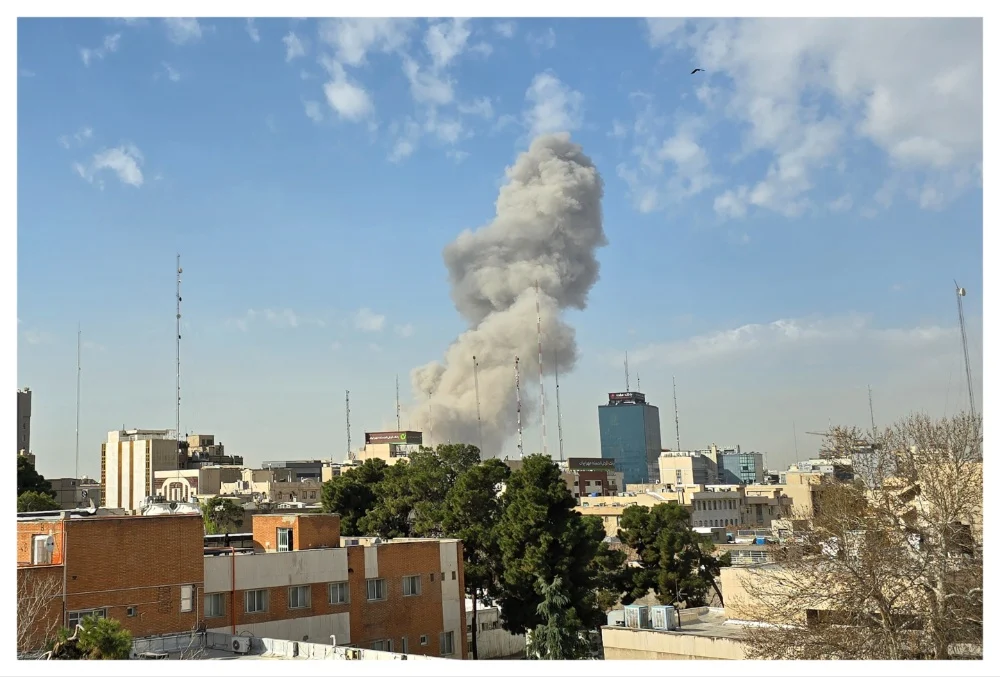
Adding to the chaotic scene, massive explosions were reported on Sunday in Tehran, the Iranian capital. These blasts follow a day of stark contrasts within the city: Saturday saw jubilant celebrations, with fireworks lighting up the night sky and dancing in the streets, as news of Khamenei’s death spread. These displays of public elation, however, were juxtaposed with counter-protests by loyalist supporters of the late Supreme Leader, illustrating the deep ideological schisms fracturing Iranian society. The precise nature and targets of Sunday’s explosions remain unclear, but they further contribute to a sense of a capital city in the grip of profound uncertainty and potential conflict.
For the Iranian independent film community, their outspoken support carries immense risk. Historically, artists and intellectuals in Iran have faced severe repression, including imprisonment, censorship, and even execution, for dissenting against the regime. Filmmakers like Jafar Panahi, Asghar Farhadi, and Mohamed Rasoulof – internationally acclaimed auteurs who have often explored themes of social injustice and individual struggle within Iran – have famously navigated the treacherous waters of state censorship, with some enduring house arrest and travel bans. Their silence on the joint U.S.-Israel attack, in contrast to the IIFMA’s bold statement, is notable. This could stem from a myriad of reasons: strategic caution to protect themselves and their families, a reluctance to endorse foreign military action despite their opposition to the regime, or a calculated decision to observe the evolving political landscape before weighing in. Their past experiences, marked by intricate dances with authority to create their art, undoubtedly inform their current reticence, highlighting the complex moral and practical dilemmas faced by prominent cultural figures in a nation undergoing such profound change.
The prospect of regime change in Iran, while long a subject of international debate and internal aspiration, is widely considered a highly complicated and fraught endeavor. The Islamic regime, despite widespread opposition, has cultivated deep roots throughout the country, embedding its ideological and security apparatus into nearly every facet of Iranian life. The IRGC, a powerful military, economic, and political force, alongside the Basij militia, forms a formidable bulwark against internal dissent. Furthermore, the absence of a unified, internationally recognized opposition leadership, coupled with the potential for external interference to back disparate factions, raises concerns about the stability of any post-Khamenei transition. A political vacuum, while offering a glimmer of hope for some, could also devolve into internecine conflicts, civil strife, or even the rise of alternative authoritarian forces, evolving in profoundly unpredictable ways.
The “archaic cycle of patriarchal violence” denounced by the IIFMA speaks to the enduring systemic oppression within Iran that extends beyond political dissent to permeate social and gender relations. For a professional women-focused news and entertainment platform, this particular phrasing underscores the unique challenges faced by women under the Islamic Republic – from restrictive dress codes and guardianship laws to limited access to public life and severe penalties for challenging these norms. The aspiration for an end to this cycle resonates with a global movement for women’s rights and bodily autonomy, positioning the Iranian struggle within a broader human rights framework. The hope, articulated by the filmmakers, is not just for a change in leadership, but for a fundamental societal transformation that champions human dignity, freedom, and equality for all, particularly for women who have often been at the forefront of the nation’s protest movements.
As Iran grapples with the immediate aftermath of its leader’s death and the ensuing geopolitical fallout, the world watches with bated breath. The calls for intervention, the retaliatory strikes, the civilian casualties, and the deep divisions within Iranian society paint a picture of a nation at a critical crossroads. The path forward is fraught with peril, but the collective voice of those seeking freedom and an end to oppression, as exemplified by the IIFMA, serves as a poignant reminder of the human cost and profound aspirations at stake in this rapidly unfolding drama.