


If you purchase an independently reviewed product or service through a link on our website, Variety may receive an affiliate commission.
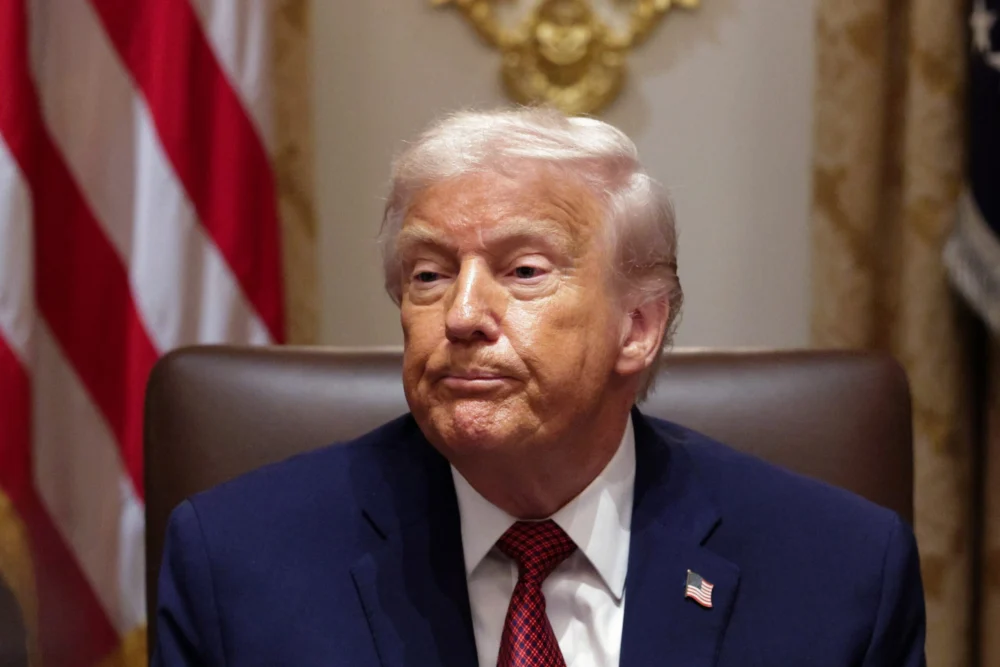
As the nation prepares for a pivotal political moment, President Donald Trump is slated to deliver his 2026 State of the Union address this Tuesday night. Set for 6 p.m. PT/9 p.m. ET, this primetime event is more than just a ceremonial speech; it’s a strategic platform for the President to articulate his vision and rally support amidst a highly charged political landscape. The address will unfold before a joint session of Congress, an esteemed gathering of lawmakers, justices, and military leaders, and will be broadcast live across every major news network, ensuring widespread national coverage.
The State of the Union address holds a unique place in American political tradition, serving as a constitutional mandate for the President to report on the nation’s condition. Historically, it has evolved from a simple written message to a grand televised spectacle, a moment when the President directly addresses both Congress and the American people. For a second-term president like Donald Trump, this 2026 address carries particular weight. It marks his first formal State of the Union of his second term, following an initial joint-session speech in his first year. This timing places it strategically just months before the crucial 2026 midterm elections, transforming the speech into an unofficial kickoff for the fall campaign season. Both Republican and Democratic strategists will be meticulously dissecting every word, treating it as a critical “message test” that could shape public opinion and election narratives for months to come.
The President’s address comes at a moment of heightened political tension in Washington and across the country. Recent legislative battles, ongoing debates about executive authority, and a divided electorate all contribute to an environment where every presidential pronouncement is scrutinized. Against this backdrop, President Trump is expected to lay out a comprehensive midterm-year message, with a primary focus on the economy and the remaining objectives of his second-term agenda. His unique rhetorical style, characterized by direct communication and an emphasis on nationalistic themes, is anticipated to be on full display as he seeks to galvanize his base and persuade swing voters.
One of the most anticipated segments of the address will undoubtedly center on the economy. The President has consistently championed his economic policies, often highlighting job growth, market performance, and trade initiatives as pillars of his administration’s success. However, the current economic narrative is complex. Attention will be particularly drawn to his remarks on tariffs and trade, a cornerstone of his economic philosophy. This focus is amplified by a recent Supreme Court ruling that limited certain aspects of his tariff program, creating an immediate challenge to his executive authority in this critical area. Observers will be keen to see how he frames this setback, whether he pivots to new trade strategies, or doubles down on his existing protectionist stance, appealing to a national audience that is keenly attuned to issues of economic stability and global competition. The broader economic picture, including inflation, consumer spending, and the future of American manufacturing, will likely be woven into his narrative, painting a picture of prosperity under his leadership while outlining future goals to sustain economic momentum.
Beyond the economy, immigration and Department of Homeland Security (DHS) funding are expected to feature prominently in the President’s speech. These issues have remained central to his political agenda throughout his presidency, often sparking intense debate and legislative gridlock. The 2026 address provides an opportunity for him to reiterate his commitment to border security, possibly detailing new initiatives or renewing calls for specific funding allocations for border infrastructure and enforcement agencies. Discussions around immigration reform, the status of undocumented immigrants, and the mechanisms for legal entry are constant fixtures in the national dialogue. His remarks could touch upon recent border challenges, proposed legislative solutions, or executive actions aimed at controlling migration flows. For many, particularly those within communities directly affected by immigration policies, these sections of the speech will be among the most closely watched, as they often signal shifts in enforcement priorities or future policy directions.
Foreign policy, particularly tensions involving Iran and the possibility of further U.S. military action, is also slated to be a significant component of the address. The Middle East remains a volatile region, and the dynamics between the U.S. and Iran have been a source of ongoing concern. The President’s approach to international relations has often been characterized by a willingness to challenge established norms and prioritize American interests through a “America First” lens. His speech could provide updates on diplomatic efforts, articulate red lines, or signal potential responses to perceived threats. The implications of any proposed military action, or even the discussion of such possibilities, would reverberate globally, affecting international markets, alliances, and the lives of service members. The SOTU offers a rare moment for the President to communicate directly with the world regarding his administration’s foreign policy doctrines and strategic imperatives, potentially shaping global perceptions and geopolitical alignments.
For those eager to tune into this consequential address, a wide array of viewing options are available, catering to both traditional cable subscribers and the growing number of “cable-cutters.” Every major news network in the United States, including ABC, PBS, CBS, NBC, Fox, CNN, MS NOW (formerly MSNBC), and C-SPAN, will broadcast the speech live. These networks will provide varying degrees of pre- and post-show analysis, offering diverse perspectives on the President’s message and its immediate reception. For a deeper, often unedited look, C-SPAN remains an invaluable resource, providing gavel-to-gavel coverage of congressional proceedings without commercial interruption or pundit commentary. Additionally, several Spanish-language networks, such as Telemundo, will carry the address, ensuring accessibility for a broader demographic.
The shift towards digital consumption means that cable-cutters have more avenues than ever to access live political events. Disney+ and Hulu, for example, will be streaming ABC’s live broadcast, complete with additional pre- and post-show coverage from ABC News programming. This integration offers a seamless experience for subscribers already using these platforms for entertainment. PBS NewsHour, known for its in-depth, non-partisan journalism, will also carry the speech live, with its comprehensive coverage commencing before the address and extending through the Democratic response and subsequent expert analysis. These streaming options ensure that viewers can access high-quality news coverage from their preferred devices, whether at home or on the go.
Beyond these specific platform partnerships, a variety of live TV streaming services offer comprehensive access to all major news networks without the need for a traditional cable subscription. Services like DirecTV Stream, Sling TV, Hulu + Live TV, and Fubo TV provide robust channel lineups that include all the networks broadcasting the State of the Union. These platforms are designed for flexibility, often allowing users to customize their channel packages and offering cloud DVR functionalities to record live events. They represent a convenient and increasingly popular alternative for those who desire live television without the long-term contracts and bundled services often associated with cable providers.
For those looking for a temporary solution to watch the State of the Union address free of charge, several of these streaming services offer enticing trial periods. DirecTV Stream, for instance, provides a generous five-day free trial that unlocks access to over 90 live television channels, including dozens of cable news networks. This free trial presents an ideal opportunity to livestream President Trump’s State of the Union speech online, along with the subsequent analysis and the Democratic response, entirely free. Similarly, other services may offer shorter trial periods or promotional bundles that could be leveraged for a one-time viewing of this significant national event. This accessibility underscores the evolving media landscape, where critical political discourse is no longer confined to traditional viewing models but is readily available to a diverse and digitally connected audience.
The 2026 State of the Union address is more than just a presidential speech; it is a barometer of the nation’s political climate and a blueprint for the path ahead. With the midterm elections looming, the President’s words on the economy, trade, immigration, and foreign policy will be scrutinized not just by lawmakers and pundits, but by millions of Americans weighing their choices for the future. The accessibility of the event across traditional and digital platforms ensures that citizens from all walks of life can engage directly with this crucial moment in American democracy.
Stream Trump’s State of the Union address live online free with a free trial to DirecTV here.