
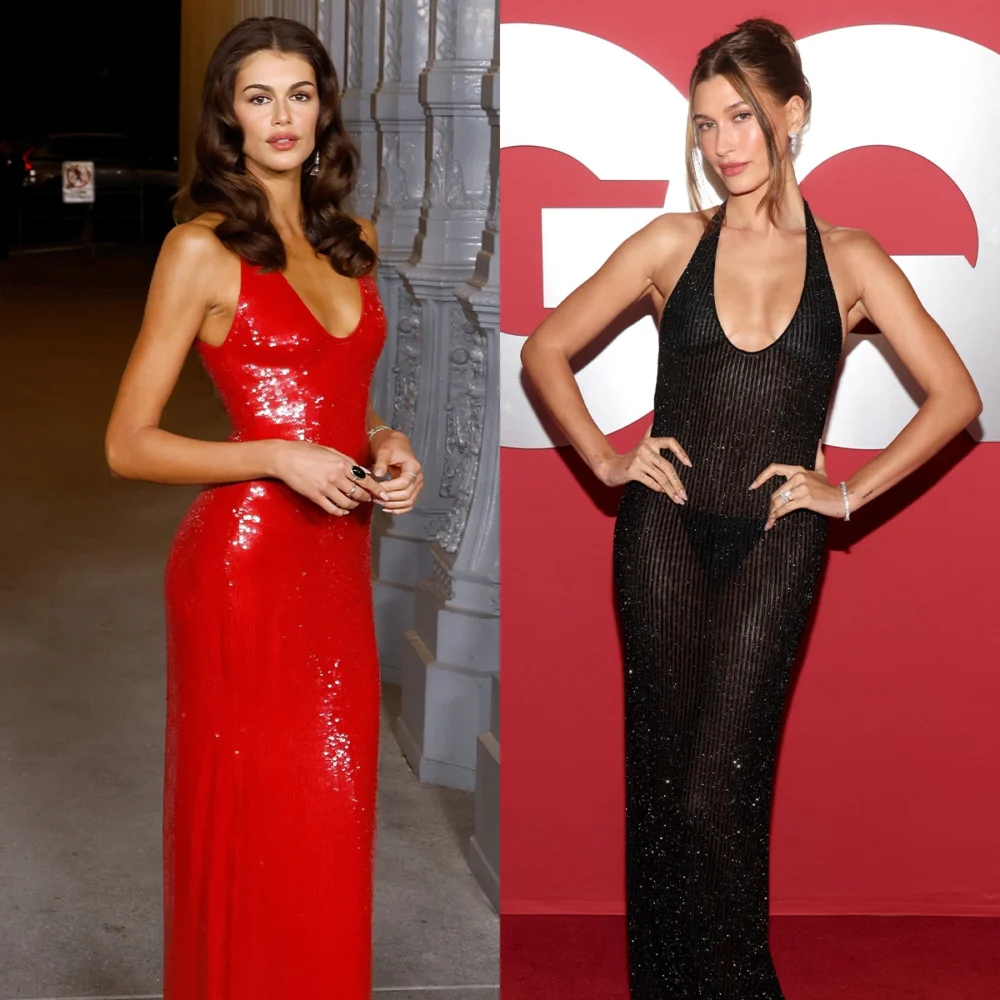
In the glittering ecosystem of Tinseltown, the concept of the "family business" has long been the bedrock of its foundation. However, in recent years, a cultural lightning rod has struck the industry, rebranding the age-old tradition of legacy as the "nepo baby" phenomenon. While the surnames Apatow, Depp, and Kravitz have long signaled Hollywood royalty, a new generation of performers is finding that their lineage is being scrutinized under a digital microscope, fueled by a viral internet discourse that shows no signs of slowing down. This conversation, while seemingly modern, is a resurgence of a century-old debate regarding meritocracy, privilege, and the undeniable power of a famous last name.
The term "nepo baby"—short for nepotism baby—became a ubiquitous part of the cultural lexicon following a series of viral TikToks and a high-profile magazine cover that mapped out the intricate web of Hollywood connections. For many young stars, the label is a double-edged sword. On one hand, it represents the foot in the door that thousands of aspiring artists dream of; on the other, it creates a ceiling of skepticism that can be difficult to shatter.
Take, for example, Taylor Dearden. As the daughter of Emmy winner Bryan Cranston and actress Robin Dearden, she has navigated her career with a deliberate sense of autonomy. Cranston himself noted in a 2023 interview with GQ that his daughter is "very conscientious of not having any association or hint thereof of nepotism." This sentiment is echoed by many of her peers who feel the weight of their parents’ shadows. Margaret Qualley, the daughter of screen icon Andie MacDowell, has been candid about her position. Starring in the visceral body-horror film The Substance, Qualley admitted to Josh Horowitz on the Happy Sad Confused podcast that she is comfortable being called a "nepo baby," though she remains haunted by the desire to "deserve to be in the room."
The defense most often cited by Hollywood veterans is the "industrial analogy." Tom Hanks, a man often referred to as "America’s Dad," famously compared the film industry to a plumbing dynasty. When his son Truman Hanks was cast to play a younger version of his character in A Man Called Otto, the elder Hanks told Reuters that if the family ran a florist shop or a plumbing supply business, the children would naturally be expected to put in time and learn the trade. "This is what we’ve been doing forever," he remarked, suggesting that storytelling is simply the Hanks family’s inventory.
Zoë Kravitz, daughter of Lenny Kravitz and Lisa Bonet, shares this perspective, grounding it in historical nomenclature. Speaking to GQ, she pointed out that last names often originated from family trades—a blacksmith’s children became the "Black" family. To Kravitz, following in the footsteps of her parents is a natural human inclination. Yet, she acknowledged to Elle that while she worked hard from a young age, her privilege undoubtedly helped her secure an agent and gain entry into rooms that remain closed to others.
The modeling world has seen a similar influx of legacy talent. Kaia Gerber, the daughter of supermodel Cindy Crawford, has been refreshingly transparent about her advantages. While she admits to having a "really great source of information" in her mother, she argues that in the realm of high-stakes filmmaking and art, no director is going to compromise their vision just to cast a celebrity’s child. Leni Klum, daughter of Heidi Klum, echoed this, stating that while her parents helped her start, it is her own work ethic that keeps her traveling and working independently today.
However, the discourse has not always been met with such level-headedness. Lily-Rose Depp, daughter of Johnny Depp and Vanessa Paradis, found herself at the center of a social media firestorm after suggesting to Elle that "nothing is going to get you the part except for being right for the part." The internet’s reaction was swift, accusing the actress of a lack of self-awareness regarding the "lucky" start her name provided. In a follow-up with i-D, a more cautious Depp acknowledged that her childhood was "not a normal childhood" and expressed a heightened awareness of how her upbringing differed from the general public.
This lack of perceived self-awareness is exactly what Ireland Baldwin, daughter of Kim Basinger and Alec Baldwin, warned her peers about. In a TikTok that resonated with many, Baldwin argued that the frustration from the public doesn’t stem from the existence of privilege, but from the denial of it. She suggested that the conversation would be far more relatable if legacy stars simply owned their starting positions.
The psychological toll of these expectations is something Elizabeth Olsen understood even as a child. The younger sister of Mary-Kate and Ashley Olsen, Elizabeth once considered using "Elizabeth Chase" as her professional name to distance herself from her sisters’ massive fame. She recalled an inherent understanding at age ten that there was an "association of not earning something" that bothered her deeply, a sentiment that drove her to establish herself as a powerhouse in the Marvel Cinematic Universe on her own merits.
For those who have been in the industry for decades, the "nepo baby" tag feels like a reductive label for a complex reality. Jamie Lee Curtis, the daughter of Tony Curtis and Janet Leigh, famously leaned into the title during her 2023 SAG Awards acceptance speech. At 64, with an Oscar-winning career behind her, she acknowledged her lineage with a wink, knowing that while the door was opened by her parents, she was the one who stayed in the room for half a century.
Similarly, Jane Fonda has reflected on the duality of being Henry Fonda’s daughter. She admitted that people paid more attention to her early on because of her father, but that attention served as a catalyst for her to work four times as hard. She didn’t want to be viewed as a "dilettante," a fear that seems to be a common thread among legacy actors from every era.
The debate also features "nepo dads" who are stepping up to defend their children’s talent. Ethan Hawke, who directed his daughter Maya Hawke in Wildcat, jokingly embraced the title of "nepo dad." He told Variety that he wasn’t embarrassed to work with his daughter because they genuinely enjoy each other’s creative company. Maya, for her part, has a pragmatic view: she believes her name might get her a few chances, but if she fails to deliver, she will be "kicked out of the kingdom," as she told People.
The conversation has even reached the world of politics and business. Lily Allen, daughter of actor Keith Allen and producer Alison Owen, stirred the pot by tweeting that society should be more concerned with "nepo babies" in legal firms, banks, and politics, where the stakes of inherited power have "real-world consequences." While she faced backlash for seemingly deflecting, her point highlighted a broader societal frustration with wealth inequality and the lack of social mobility across all sectors.
As the "nepo baby" conversation continues to evolve on platforms like TikTok and Instagram, it has become a permanent fixture of Hollywood’s narrative. Whether it’s Hailey Bieber reclaiming the term on a T-shirt or Dakota Johnson calling the debate "lame" and "boring," the industry is forced to grapple with its own reflection. The consensus among the most respected legacy stars seems to be a blend of Jack Quaid’s philosophy: acknowledge the parentage, do the work, and let the performance speak for itself. As the son of Meg Ryan and Dennis Quaid, Jack noted that he knew people would always assume he didn’t earn his spot, but as long as he knew the truth of his own effort, that would have to be enough.
Ultimately, Hollywood remains a business of both who you know and what you can do. The "nepo baby" era has simply pulled back the curtain on the former, demanding a level of transparency that previous generations never had to provide. In an industry built on the magic of storytelling, the most compelling story today is the one about who gets to tell those stories in the first place.