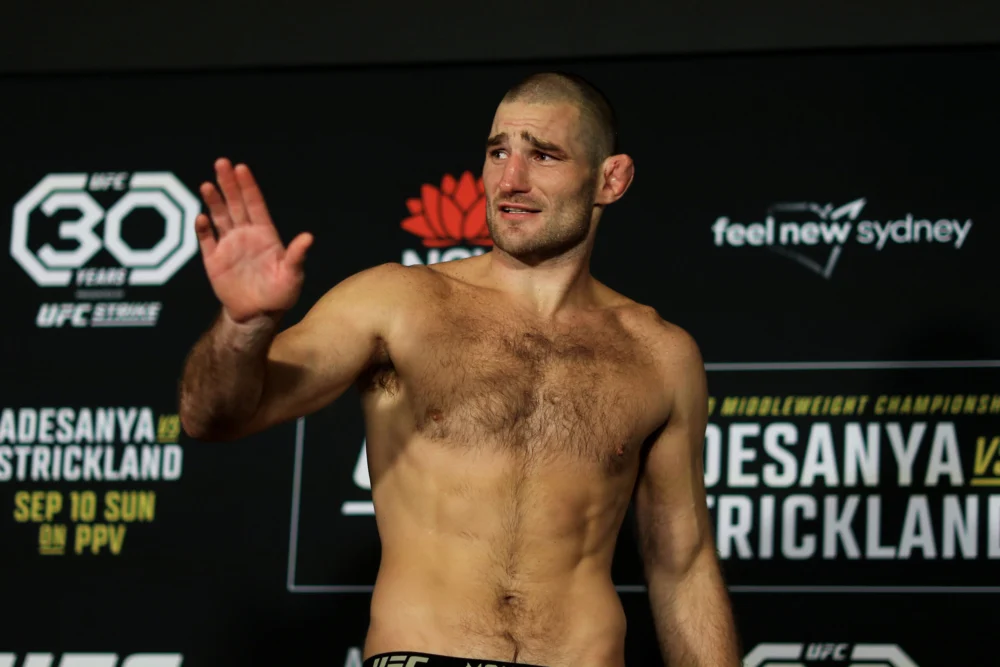
A recent media day event, intended to promote an upcoming fight, devolved into a spectacle of prejudice as mixed martial arts (MMA) fighter Sean Strickland unleashed a torrent of bigoted remarks. During the Paramount+ and UFC Media Day, Strickland, known for his unfiltered and often provocative persona, used derogatory slurs, disparaged women, and attacked LGBTQ+ individuals, sparking widespread condemnation and raising serious questions about accountability within professional sports and media partnerships.
The controversy erupted on Wednesday, just days before Strickland’s anticipated return to the octagon against Anthony Hernandez. This bout marks his first appearance since a July 2025 suspension from the UFC, incurred after an incident where he attacked another fighter while serving as a cornerman. His history of volatile behavior and controversial statements has long preceded him, yet the nature and severity of his latest tirade have amplified calls for a more robust response from the organizations that provide him with a platform.
One of the most egregious comments targeted Grammy-winning artist Bad Bunny, whom Strickland shamefully referred to with a homophobic slur. He further elaborated on his homophobic views by lamenting the perceived “feminization” of the National Football League (NFL), suggesting that league leadership conspires to “gay it up.” Mocking what he imagined as NFL executives’ dialogue, Strickland quoted, “‘Why don’t we bring in a gay foreigner who doesn’t speak fucking English and have him perform [the halftime show]?'” This specific attack on Bad Bunny, a global icon who has consistently championed LGBTQ+ rights and challenged gender norms through his art and public image, drew immediate and sharp criticism. Bad Bunny’s groundbreaking role as a Super Bowl LX halftime performer represented a significant moment for representation and cultural diversity, making Strickland’s remarks not just offensive, but also a direct assault on progress and inclusivity.
Strickland’s tirade extended far beyond homophobia, delving into deeply misogynistic territory. He declared that women have been empowered “too much,” asserting that this empowerment has “ruined society.” Such a sweeping generalization, attributing societal decline to women’s advancement, echoes harmful, antiquated ideologies that seek to diminish women’s roles and agency. This sentiment was further underscored by his dismissive attitude towards women’s sports, stating unequivocally that “no one gives a f*** about women’s sports.” In a condescending attempt to mitigate his statements, he added, “There’s nothing wrong with women. They do great things. They cook, they clean.” These remarks not only invalidate the immense talent, dedication, and athleticism of female athletes but also reinforce reductive stereotypes about women’s primary societal value.
The fighter also turned his attention to two legendary figures in women’s MMA, Ronda Rousey and Gina Carano, while commenting on Netflix’s upcoming exhibition match between them. He dismissed the idea as “insane” and disturbingly suggested they should fight “half naked.” His comments about Rousey were particularly jarring; while acknowledging “Ronda Rousey can fight… That bitch can fight,” he then made a callous joke about her past abusive relationship, stating, “I think she lost a few fights to her ex, but bitchh can fight.” This flippant reference to domestic violence, even in jest, is deeply insensitive and irresponsible, especially coming from a public figure in a combat sport. His remarks about Carano were similarly objectifying: “I like Gina. She’s like super conservative. She was hot, you know. I was like a kid when she fought. I may have jerked off to her once or twice back in the day.” These statements strip both athletes of their professional accomplishments and reduce them to their physical appearance or past trauma, perpetuating a culture where female athletes are judged differently than their male counterparts.
The context of these remarks — a media day event hosted by Paramount+ and UFC — amplifies the concern. Paramount, a global entertainment giant, finalized a seven-year deal with TKO Group (UFC’s parent company) in August 2025, making Paramount+ the exclusive U.S. home for all UFC events. This monumental contract, valued at an average annual value of $1.1 billion and an overall value of $7.7 billion, signifies a deep partnership. As such, both organizations bear a significant responsibility for the content and conduct promoted on their platforms. The immediate silence from both Paramount+ and UFC representatives, who did not immediately respond to requests for comment from media outlets, has been notable and concerning, leaving many to wonder about the extent of their commitment to fostering an inclusive and respectful environment.
The Broader Implications: Women in Sports and Combating Prejudice
Strickland’s comments arrive at a critical juncture for women in sports, particularly in MMA. The landscape of combat sports has undergone a dramatic transformation, largely thanks to pioneers like Ronda Rousey and Gina Carano. Rousey, in particular, was instrumental in breaking down barriers, demonstrating the marketability and competitive prowess of female fighters, and ultimately forcing the UFC to introduce women’s divisions. Her success, along with that of other formidable athletes, shattered the long-held misconception that “no one gives a f*** about women’s sports.” Today, women’s MMA divisions are vibrant, producing some of the sport’s most exciting and technically skilled athletes, consistently drawing significant viewership and contributing substantially to the UFC’s global appeal.
To dismiss these achievements, as Strickland did, is not merely ignorant; it actively undermines years of struggle and progress. His assertion that women’s primary value lies in domestic roles (“cook, they clean”) is a regressive viewpoint that flies in the face of modern society’s push for gender equality. In a world where women are excelling in every field, including the physically demanding and traditionally male-dominated arena of combat sports, such rhetoric attempts to relegate them to outdated stereotypes, perpetuating the very systems of oppression that women have fought tirelessly to dismantle.
Moreover, the suggestion that Rousey and Carano should fight “half naked” is a stark reminder of the hyper-sexualization often faced by female athletes. It diverts attention from their athletic skill and prowess, reducing them to objects of male gaze rather than respected competitors. This objectification is a pervasive issue in women’s sports, often leading to unfair scrutiny of their appearance, attire, or personal lives, rather than their performance.
Homophobia in Sports: A Lingering Challenge
Strickland’s homophobic slurs and his attack on Bad Bunny also highlight the persistent issue of homophobia within professional sports culture. While leagues like the NFL and organizations like the UFC have made strides towards promoting diversity and inclusion, overt expressions of prejudice by prominent figures demonstrate that much work remains. Bad Bunny’s willingness to challenge toxic masculinity and embrace fluidity in his public persona has made him a target for those resistant to social change. His groundbreaking Super Bowl performance, which brought Latin culture and LGBTQ+-inclusive messaging to a global audience, was a moment of triumph for many, and Strickland’s comments serve as a painful reminder of the backlash that often accompanies such progress.
For LGBTQ+ fans and athletes, comments like Strickland’s create an unwelcoming and unsafe environment. They reinforce the idea that certain identities are not accepted in these spaces, despite efforts by organizations to project an image of inclusivity. The sports world has a long history of struggling with homophobia, and while progress has been made with more athletes coming out and leagues implementing diversity initiatives, the casual use of slurs by public figures like Strickland sets back these efforts significantly.
Accountability and the Path Forward
The incident at the Paramount+ and UFC Media Day places significant pressure on both organizations. As global brands, they have a responsibility not only to their shareholders but also to their diverse audience and the broader community. Providing a platform for hate speech, even inadvertently, can be detrimental to their brand image and alienate large segments of their consumer base, particularly women and LGBTQ+ individuals who are increasingly vocal about their values.
In the wake of such a public display of prejudice, questions of accountability become paramount. What message does a lack of immediate, decisive action send to aspiring female athletes, LGBTQ+ fans, and the wider public? Will the UFC and Paramount+ choose to prioritize financial partnerships over ethical conduct and social responsibility? The incident serves as a crucial test of their commitment to fostering a respectful and inclusive environment within the competitive and lucrative world of combat sports. As the fight with Anthony Hernandez approaches, the focus is now split between the athletic competition and the larger societal implications of Sean Strickland’s inflammatory remarks, demanding a thoughtful and robust response from all involved parties.