**FCC’s Equal Time Stance Ignites Media Firestorm, Putting “The View” and Late-Night Hosts in Regulatory Crosshairs**
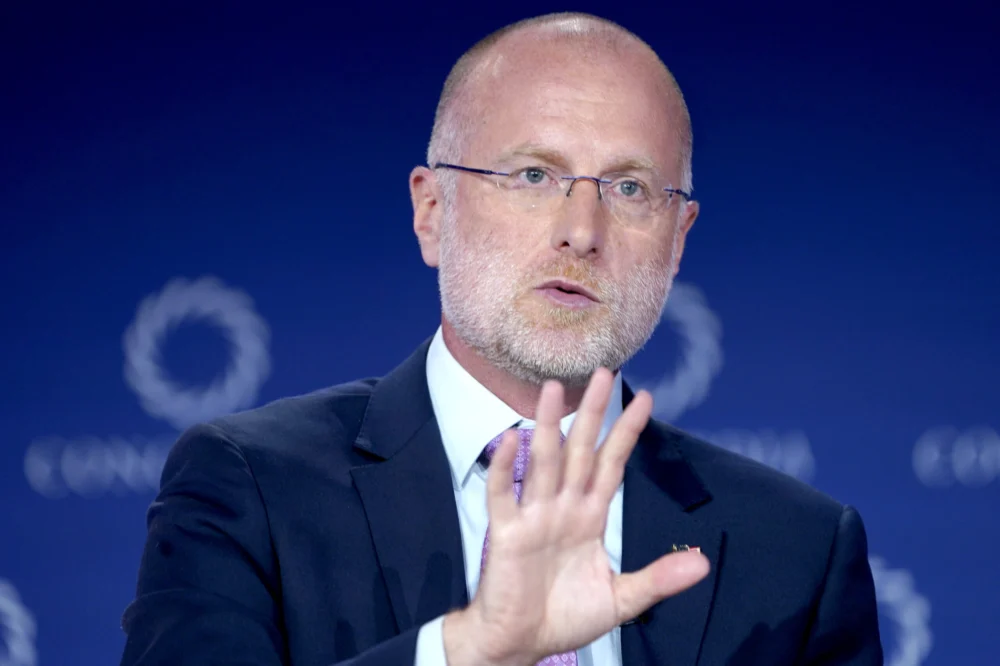
A significant shift in the enforcement of the Federal Communications Commission’s (FCC) “equal time” rule has sent ripples through the broadcast industry, with FCC Chairman Brendan Carr confirming that enforcement proceedings have commenced against ABC’s long-running daytime talk show, “The View.” The move signals a more aggressive posture by the regulatory body, challenging the traditional understanding of which programs are exempt from demanding parity for political candidates during election cycles. This development, revealed during Carr’s appearance on Fox News’ “The Ingraham Angle,” has also drawn in CBS’s “The Late Show with Stephen Colbert,” highlighting a burgeoning debate over media’s role in political discourse and the interpretation of established broadcast regulations.
At the heart of the controversy is Section 315 of the Communications Act of 1934, commonly known as the “equal time rule.” This bedrock regulation mandates that if a broadcast station permits a legally qualified candidate for public office to use its facilities, it must afford equal opportunities to all other such candidates for that office. The intent is to prevent broadcasters from using their platforms to favor one candidate over another, thereby ensuring a level playing field in political campaigns. However, the rule comes with crucial exemptions, most notably for “bona fide news” programs, news interviews, news documentaries, and on-the-spot coverage of news events. For decades, shows like “The View,” with its mix of current events discussion and celebrity interviews, and late-night talk shows that often feature political figures, have largely operated under the assumption that they qualify for these exemptions, particularly the “bona fide news interview” or “news event” categories.
Chairman Carr’s recent public statements have made it clear that this traditional interpretation is now under direct challenge. His consistent rhetoric indicates a deliberate strategy to put broadcast networks on notice, suggesting that the FCC intends to scrutinize programs that historically have been considered exempt. During his segment on “The Ingraham Angle,” Carr explicitly stated, “If you are bona fide news, you don’t have to give candidates equal air time. But, Disney and ‘The View’ have not established that that program is, in fact, bona fide news. We’ve started enforcement proceedings, taking a look at that. And, again, we’re going to hold broadcasters accountable.” This declaration marks a departure from previous FCC approaches, potentially redefining what constitutes “news” in the context of political candidate appearances on television. The absence of an immediate comment from a representative for “The View” only underscored the gravity of these unfolding enforcement actions.
The implications for “The View” are particularly profound. As a daytime staple, the show reaches millions of viewers daily, offering a platform where political figures frequently engage in discussions. The program’s format, featuring a panel of diverse voices discussing current events, often includes candid interviews with politicians. If the FCC were to rule that “The View” does not qualify as “bona fide news,” it could force the show to drastically alter its interview practices with political candidates or face significant penalties. Such a reclassification would not only impact the show’s content but also set a precedent for other similarly formatted programs across the broadcast landscape.
Beyond “The View,” Carr’s scrutiny extended to late-night television, specifically targeting Stephen Colbert and CBS’s “The Late Show.” This particular facet of the controversy emerged earlier in the week following a planned interview segment with James Talarico, a Democratic candidate for the U.S. Senate in Texas. On Monday evening, Colbert informed his audience that CBS had prevented him from airing the interview due to Carr’s escalating focus on the equal time rule and its application to late-night programming. This announcement sparked immediate public debate and raised questions about potential censorship and the chilling effect of regulatory pressure.
However, the narrative took a twist on Tuesday when CBS issued a statement denying that it had blocked the interview. The network clarified that it had merely been advising “The Late Show” producers on the legal guidelines surrounding candidate appearances, in light of Chairman Carr’s recently articulated, stricter interpretation of the equal time rule. This clarification suggested that rather than an outright blockage, the network was exercising caution, navigating the evolving regulatory landscape to ensure compliance and avoid potential penalties. The incident highlighted the uncertainty and confusion that Carr’s pronouncements had introduced into network legal departments.
Chairman Carr was quick to seize upon CBS’s denial, using it as further ammunition to criticize both Colbert and, more broadly, Democrats and what he termed “legacy media.” During his Fox News appearance, Carr lauded former President Donald Trump, crediting him with “smashing the facade” of traditional media’s influence. “President Trump has been so far ahead the curve on so many issues, on the economy, on border security, and perhaps nowhere else when he called out the legacy media for being fake news,” Carr asserted. He continued, “And yesterday the American people got to see that on full display. It’s why people have more trust and faith in gas station sushi today than they do in the legacy news media. This was Democrat-on-Democrat violence.” This highly charged rhetoric underscored the political undertones of the FCC’s actions, framing the regulatory enforcement within a broader cultural battle over media credibility and bias.
Carr further escalated his critique by casting doubt on the entire Colbert-Talarico episode. He pointed out that the controversy had unexpectedly propelled Talarico’s campaign into the national spotlight, resulting in a significant surge of over $2 million in donations. Without offering concrete evidence, Carr suggested that the entire “dust-up” was a calculated maneuver. “This was all about a political candidate trying to get attention and clicks,” he claimed, adding, “And the news media ran with it like lemmings. They just ate it up.” This assertion of a manufactured controversy, designed to benefit a specific political candidate, added another layer of complexity to the unfolding situation, implying a deliberate manipulation of both the media and regulatory concerns for political gain.
The FCC’s heightened scrutiny of the equal time rule and its application to popular broadcast programs raises critical questions about the future of political discourse on television. For a professional women-focused audience, the implications are particularly salient. Many women rely on shows like “The View” for a blend of news, entertainment, and diverse perspectives on current events. If these programs are forced to shy away from interviewing political candidates due to stringent equal time enforcement, it could diminish avenues for accessible political information and engagement. The line between “news” and “entertainment” has become increasingly blurred in modern media, and the FCC’s attempt to draw a sharper distinction could inadvertently stifle political discussions on platforms where many women consume their information.
Moreover, the politicization of a regulatory body like the FCC, with its chairman openly aligning with specific political narratives and making unsubstantiated claims about media collusion, raises concerns about the impartiality of oversight. The equal time rule was designed to ensure fairness, but its application under the current FCC leadership appears to be viewed by some as a tool to pressure or punish broadcasters perceived as having a particular political leaning. This shift could have a chilling effect on broadcasters, leading them to self-censor or avoid political content altogether, rather than risk costly enforcement proceedings. Such an outcome could paradoxically reduce, rather than increase, the diversity of political voices and information available to the public.
As the enforcement proceedings against “The View” move forward, and as broadcasters grapple with the new interpretations of the equal time rule, the media landscape is poised for significant adjustments. The outcome of these actions will not only redefine the boundaries of political coverage on popular television programs but also set a precedent for how regulatory bodies engage with an evolving and increasingly complex media environment, ultimately impacting how audiences, including a significant demographic of professional women, receive and interpret political information.