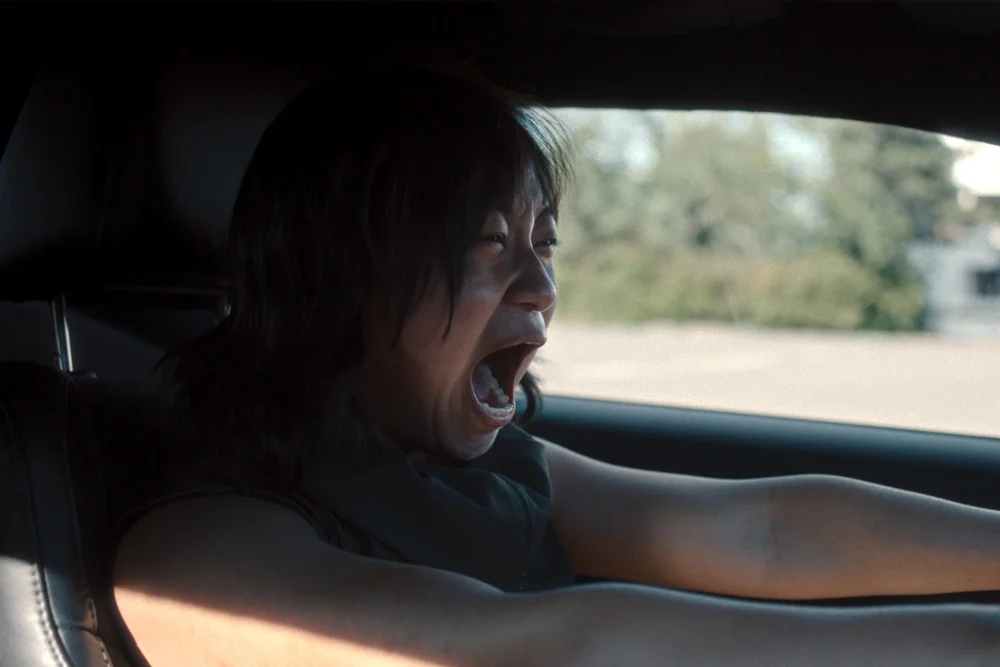
Faraz Shariat, the acclaimed German-Iranian filmmaker, has once again captivated audiences and industry insiders alike with his latest thriller, “Prosecution.” Following its powerful world premiere in the Panorama section of the prestigious Berlinale, the film has quickly secured a significant international distribution deal, with Memento acquiring the rights for France. This early success underscores the film’s potent narrative and Shariat’s growing reputation as a director unafraid to tackle urgent societal issues with nuance and intensity. New Europe Film Sales is diligently managing the global sales, hinting at a broader international reach for this timely and compelling work.
“Prosecution” plunges viewers into the fraught landscape of contemporary Germany, centering on the indomitable spirit of Seyo Kim, a young prosecutor whose unwavering commitment to justice places her directly in the crosshairs of a dangerous far-right movement. Set against the backdrop of eastern Germany, a region grappling with complex socio-economic and political undercurrents that sometimes fuel extremist ideologies, Seyo’s mission is clear: to dismantle the insidious networks of violence that threaten the fabric of her community. Her determination is not merely professional; it is deeply personal, driven by an acute awareness of the systemic vulnerabilities that allow such hatred to fester.
The film’s narrative takes a chilling turn when Seyo herself becomes a target. Surviving a brutal racist attack on her life, an event that shatters the professional distance she might once have held, she is propelled into a dangerous, solitary quest for truth. Defying explicit orders from her superiors, who urge caution and adherence to established protocols, Seyo makes a defiant choice: to investigate the attack and the broader network behind it on her own terms. This decision is not taken lightly; it is a profound act of courage that stakes her career, her personal safety, and indeed, her very life against a formidable and shadowy enemy. Her journey becomes a powerful exploration of personal conviction versus institutional inertia, highlighting the immense pressure faced by individuals who dare to challenge entrenched systems of power and prejudice.
As Seyo relentlessly pursues her investigation, the film masterfully builds suspense, transforming from a straightforward legal drama into a taut, psychological thriller. When she finally manages to bring one of her attackers to trial, it marks not an end, but a new beginning in her arduous battle. Seyo’s objective extends far beyond securing a conviction for a single individual; her true fight is to expose him as merely a cog in a much larger, more menacing right-wing extremist network. Her methodology is as audacious as it is perilous. She delves deep into her office’s forgotten archives, painstakingly re-examining long-closed “isolated cases” that, under her discerning eye, begin to reveal disturbing patterns and connections. Each reopened file, each re-interviewed witness, serves to chip away at the official narratives, slowly uncovering the uncomfortable truths about the justice system’s own complicity, whether through negligence or active ties, not only to the wider extremist network but also, chillingly, to the attack on her own life. The film thus transforms into a gripping commentary on institutional accountability, the courage required to confront uncomfortable truths, and the profound personal cost of pursuing justice against overwhelming odds.
The stellar ensemble cast brings this gripping narrative to life with compelling performances. Chen Emilie Yan takes on the challenging lead role of Seyo Kim, embodying the character’s fierce intelligence, vulnerability, and unwavering resolve. She is joined by a formidable lineup of German acting talent, including the celebrated Julia Jentsch, known for her powerful roles in films like “Sophie Scholl – The Final Days,” Alev Irmak, Arnd Klawitter, and Sebastian Urzendowsky. Their collective performances add layers of authenticity and emotional depth to a story that is as intellectually stimulating as it is emotionally resonant. The meticulously crafted screenplay by Claudia Schaefer forms the backbone of the film’s intricate plot and character development. Behind the scenes, the film was produced by Paulina Lorenz, Jorgo Narjes, and Faraz Shariat himself, under the banner of Jünglinge Film, a production company that has quickly established itself for its commitment to socially relevant and artistically daring projects.
Faraz Shariat’s journey as a filmmaker is as compelling as the stories he chooses to tell. A German-Iranian artist, Shariat brings a unique bicultural perspective to his work, often exploring themes of identity, belonging, and the complexities of navigating multiple cultural landscapes. His distinctive voice first gained widespread recognition with his autobiographical coming-of-age feature debut, “Futur Drei” (released internationally as “No Hard Feelings”), which premiered at the Berlinale in 2020. That film was a revelation, earning the festival’s prestigious Teddy Award for Best Queer Film, an accolade that celebrates outstanding films with LGBTQ+ themes. “Futur Drei” delved into the tender and often tumultuous world of Parvis, a confidently “out” second-generation German-born Iranian navigating his identity, who falls for an Iranian refugee newly arrived in the West. The film resonated deeply with audiences for its honest portrayal of queer love, immigrant experiences, and the search for connection across cultural divides, establishing Shariat as a significant new voice in contemporary cinema.
Since his acclaimed debut, Shariat has expanded his directorial repertoire, showcasing his versatility across various formats and genres. He has lent his directorial talents to episodes of popular series such as the German youth drama “Druck,” a compelling adaptation of the Norwegian hit “Skam.” His work on the British high-end horror comedy “The Baby” for HBO/Sky further demonstrated his ability to master diverse tones and narratives, garnering critical attention for its unique blend of dark humor and social commentary. Additionally, he has directed episodes for the German true crime anthology series “Zeit Verbrechen” for Paramount+, proving his adeptness at exploring human psychology within factual storytelling. Beyond directing, Shariat has also taken on executive producer roles, notably for “Schwarze Früchte” (Black Fruits) for ARD, a dramedy that premiered to critical acclaim at the Tribeca Film Festival in June 2024 and subsequently enjoyed a successful release in Germany in October 2024. This consistent output across different platforms and roles highlights Shariat’s comprehensive understanding of storytelling and his burgeoning influence in the industry.
Shariat’s ambition and international outlook are further underscored by his current endeavors. As a distinguished fellow of Villa Aurora in Los Angeles, a renowned residency program that fosters transatlantic cultural exchange and supports artists in their creative pursuits, he is actively engaged in developing his English-language debut. This highly anticipated project, titled “The Beach Boy,” is being developed in collaboration with the critically acclaimed American author Ottessa Moshfegh, known for her darkly humorous and psychologically incisive novels. This partnership signals a significant step towards a broader international audience and promises a unique fusion of Moshfegh’s distinct literary voice with Shariat’s compelling directorial vision.
“Prosecution” stands as a testament to Faraz Shariat’s evolution as a filmmaker, moving from intimate, personal narratives to broad, socially charged thrillers without losing the emotional depth and keen observation that define his work. Its strong female protagonist, Seyo Kim, embodies the resilience and courage required to confront systemic injustice, making the film a particularly resonant watch for audiences seeking stories of empowerment and profound social commentary. As the film secures its international distribution, it solidifies Shariat’s position as a vital voice in contemporary cinema, one whose work continues to challenge, provoke, and inspire across global screens.