



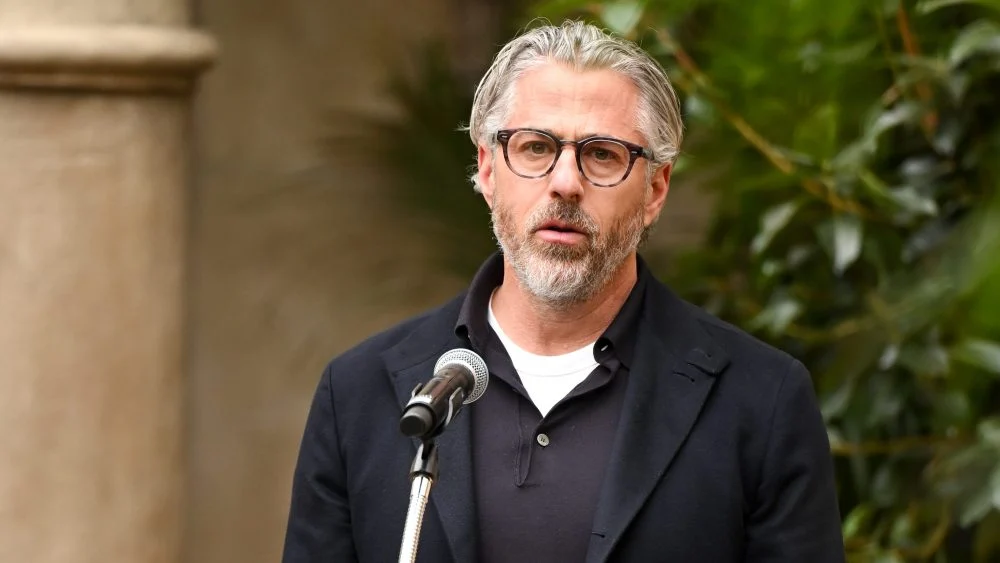
The esteemed Wasserman agency finds itself at a critical juncture, facing a significant leadership transition and an impending sale following the unexpected departure of its founder, Casey Wasserman. The dramatic shift, triggered by revelations stemming from the Justice Department’s Epstein files disclosures, has sent ripples through the entertainment, sports, and marketing industries. Majority owner Providence Equity has swiftly moved to quell internal anxieties and chart a stable course for the influential firm, which manages a vast array of high-profile talent and brands globally.
The news broke on a Friday night, delivering a jolt to the agency’s extensive network of clients and employees. The catalyst for this seismic event was the public disclosure of Casey Wasserman’s past intimate relationship with Ghislaine Maxwell in 2003. While the relationship predates Maxwell’s conviction for sex trafficking and was described as consensual, its emergence within the context of the chilling Epstein files has ignited a fierce public and professional backlash. This association, however indirect or temporally distant from Maxwell’s criminal activities, proved untenable for a leader at the helm of a major talent and marketing agency, particularly in today’s heightened climate of ethical scrutiny.
Casey Wasserman’s position as a prominent figure in both media and sports has been undeniably shaken. The grandson of legendary Hollywood mogul Lew Wasserman, he inherited a powerful legacy and built his own empire, expanding the Wasserman agency into a global powerhouse across sports, music, and entertainment. Beyond his agency work, Wasserman held a crucial civic role as the leader of the Los Angeles Olympics organizing body, LA28, a position that brought him considerable public visibility and influence. The revelations from the Epstein files immediately spurred calls from Southern California political and civic leaders for his resignation from the LA28 post, highlighting the profound impact of perceived ethical breaches on public trust. This current maelstrom also comes barely 18 months after Wasserman navigated a separate, tabloid-fueled scandal concerning accusations of inappropriate office relationships, leading many within the industry to note a concerning "pattern of behavior."
Rhode Island-based Providence Equity, a private equity firm with a significant footprint in media and communications, became a key investor in the Wasserman agency in late 2022, eventually acquiring a majority stake. The firm now finds itself at the forefront of managing this unprecedented crisis. Providence’s immediate priority is to ensure the continuity and stability of the Wasserman agency, which notably includes the long-standing and respected talent management firm Brillstein Entertainment Partners. As Casey Wasserman steps away, Providence has publicly affirmed its commitment to preserving the company’s integrity and exploring all strategic options for its long-term future, including potential mergers and acquisitions designed to enhance and expand its extensive operations.
In the immediate aftermath of the announcement, Casey Wasserman named Mike Watts, the agency’s president, as the interim leader, tasked with guiding the company through this turbulent transition. Providence Equity wasted no time in publicly endorsing Watts, issuing a strong statement of support on Saturday. A spokesperson for Providence Equity articulated the firm’s unwavering confidence: "We believe deeply in the strength of the company and have full confidence in Mike and the leadership team, as well as in the exceptional employees across the organization. We remain fully committed to investing in its growth, expanding its capabilities across sports, music, and entertainment, and supporting the extraordinary talent, brands and properties the company is proud to represent." This statement served as a crucial message to employees, clients, and the broader industry, signaling Providence’s intent to provide a steady hand and maintain the agency’s foundational values and business objectives.
The Friday night surprise ignited a flurry of activity across the competitive landscape of Hollywood and professional sports. Talent representatives at rival firms immediately began scrutinizing Wasserman’s various imprints, assessing potential opportunities for client poaching or agent recruitment. Speculation ran rampant regarding which of the industry’s behemoths—Creative Artists Agency (CAA), WME, or United Talent Agency (UTA)—might contend for parts of Wasserman’s diverse portfolio, or if another well-resourced player might emerge to partner with Providence. The prospect of such a prominent agency undergoing a sale, particularly under these circumstances, represents a significant shake-up in an industry where client relationships and public perception are paramount.
Within the ranks of high-ranking agents, the decision by Casey Wasserman to divest his company while simultaneously attempting to retain his LA28 Olympics post was met with a mixture of disbelief and cynicism. One veteran motion picture talent agent sharply remarked, "It’s like a child deciding which toy he’ll give up as punishment," underscoring the perceived self-serving nature of the move. Despite the public outcry surrounding his past association, Wasserman’s favor to remain atop LA28 was reportedly solidified earlier in the week when the board issued a statement of support. Multiple sources indicated that former DreamWorks chief Jeffrey Katzenberg, a mogul with deep local political connections and significant influence, played a pivotal role as Wasserman’s biggest advocate on the LA28 board, appearing "hellbent" on mitigating his fall.
A top Hollywood dealmaker, speaking anonymously, distilled the prevailing sentiment: "He hasn’t violated any law that we know of. But when you couple this with the scandal from a year ago, you see a pattern of behavior. The sleaze factor is too high, and no client wants to be near that." This sentiment captures the essence of the ethical dilemma facing Wasserman and, by extension, his agency. In an era where public figures and their affiliated organizations are held to increasingly stringent standards of conduct and transparency, the legal definition of wrongdoing often diverges from public and professional expectations. The perceived "sleaze factor" can be as damaging as, if not more so than, a legal infraction, particularly for a business built on trust, reputation, and the careful curation of talent’s public image.
Prior to the formal announcement of the sale, leadership teams within Wasserman’s sports, music, and talent management divisions were reportedly engaged in direct negotiations with Providence, working to safeguard the company’s assets as a unified entity. The pressure for Casey Wasserman to step away was particularly acute from the agency’s music artists, who are acutely aware of how public perception and ethical associations can impact their brand and fan base. The scrutiny would have inevitably extended to Brillstein Entertainment Partners, which manages a roster of high-profile actors. The move by manager Doug Wald, along with star Emma Stone, to Brillstein only a year ago, and Sydney Sweeney’s longtime talent agent, Jennifer Millar, making the pivot to management and relocating to Brillstein in December, highlights the immediate and tangible impact such controversies can have. There was little doubt that female stars of Stone and Sweeney’s caliber would have felt immense pressure and potential professional repercussions had Casey Wasserman not made the decision to bow out, underscoring the critical importance of a clean and trustworthy management team in today’s entertainment landscape.
The Wasserman agency now embarks on a complex journey of rebuilding and reaffirmation. Under Mike Watts’ interim leadership and with Providence Equity’s financial backing and strategic guidance, the focus will undoubtedly be on restoring client confidence, maintaining employee morale, and ensuring operational excellence. The incident serves as a stark reminder of the evolving demands placed on leaders in the public eye, where past associations, even if not legally culpable, can have profound professional consequences. For an agency whose very foundation rests on nurturing and protecting the careers and public images of its talent, the imperative to uphold the highest ethical standards has never been more clear. The path forward will require transparent communication, decisive action, and an unwavering commitment to the values that underpin successful, enduring relationships in the dynamic worlds of sports, music, and entertainment.