
Halftime Headlines: Randy Fine’s FCC Demand Over Bad Bunny’s Super Bowl Performance Ignites Bipartisan Backlash and Celebrity Showdown
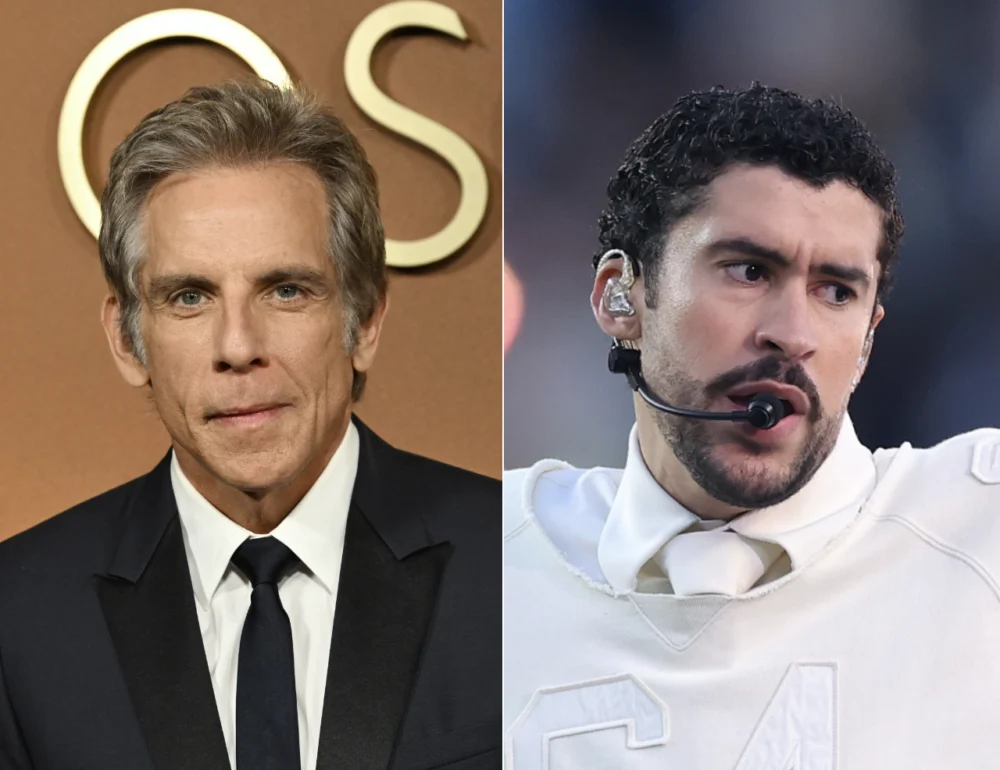
A heated cultural and political debate erupted in the wake of the recent Super Bowl Halftime Show, as U.S. Representative Randy Fine, a Republican serving Florida’s 6th congressional district, publicly called for an immediate and thorough investigation by the Federal Communications Commission (FCC) into Bad Bunny’s performance. This demand, articulated in a formal letter to FCC Chairman Brendan Carr, quickly transcended political lines, drawing widespread criticism and becoming a flashpoint for a broader discussion on broadcast standards, artistic expression, and the increasingly intertwined worlds of entertainment and politics. The controversy gained significant traction on social media, particularly on X (formerly Twitter), where it sparked a spirited defense from prominent Hollywood figures, most notably actor Ben Stiller.
Representative Fine’s core argument centered on what he described as flagrant violations of broadcast decency standards during the live Super Bowl transmission. In his strongly worded letter, Fine asserted that the performance contained elements explicitly promoting illegal drug use and featuring expletives. “It doesn’t matter if you say it in Spanish. Encouraging children to use cocaine in a live television broadcast is a crime. It doesn’t matter who is singing,” Fine wrote, leaving no ambiguity about his interpretation of the content. He further claimed that “Broadcasting the F-word during the Super Bowl is illegal. Both of these things happened during Sunday’s Super Bowl broadcast.” Fine urged the FCC to “conduct a thorough investigation and to pursue the maximum penalties permitted by law,” warning that “Anything less would signal that indecency is tolerated so long as it is profitable, and that it a message that cannot be allowed to stand.” His statement underscored a firm belief that the integrity of public airwaves and the protection of younger audiences were at stake, irrespective of the artist’s popularity or the event’s global reach.
The Super Bowl Halftime Show, a cultural behemoth watched by tens of millions globally, has historically been a stage for grand spectacle and, at times, controversy. Bad Bunny, the Puerto Rican global superstar known for his genre-bending music and significant cultural influence, delivered a performance that, to many, was a vibrant celebration of Latin culture, individuality, and inclusivity. His show was lauded by a vast segment of the audience for its energetic choreography, innovative staging, and powerful message. However, for a vocal contingent, including Representative Fine, the performance crossed a line, igniting concerns over content deemed inappropriate for a family-friendly broadcast. This divide quickly became apparent as reactions poured in from across the political and social spectrum.
While Fine’s call for an investigation found support among some conservative circles, it also immediately ignited a “bipartisan backlash” on X. Many users, including those who do not typically align with liberal viewpoints, found the demand excessive or misplaced, questioning the prioritization of such an inquiry amidst pressing national issues. The perception that the demand was an overreaction to a popular cultural event fueled a wave of mockery and criticism online, setting the stage for celebrity intervention.
Among the most prominent voices to challenge Fine’s campaign was Emmy Award-winning actor and director Ben Stiller. Known for his comedic roles and often understated public persona, Stiller entered the fray with a series of sharp, yet playful, retorts that quickly went viral. His initial response directly addressed Fine’s demand for an investigation, but humorously reframed its focus. “Focus of investigation: how did Bad Bunny manage to kick ass at such a high level and deliver the most watched and well produced half time show about inclusion and love ever made?” Stiller quipped on X, effectively turning Fine’s serious demand into a celebration of the artist. He continued, “Investigators plan to explore source of Bunny’s huge talent, off the charts charisma and an even bigger heart.” Stiller’s tweet encapsulated the sentiments of many who viewed the performance as a positive, unifying event, rather than a source of moral outrage.
Stiller’s witty defense of Bad Bunny did not go unchallenged. Supporters of Representative Fine and other critics of the halftime show quickly engaged with the actor, attempting to discredit his perspective. One social media user, evidently attempting to dismiss Stiller’s opinion as out of touch, responded with a pointed jab: “When you spend your entire life in the bubble of Hollywood where everything is given to you because of your family…. You become self righteous, unaware Ben Stiller.” This critique, common in online discourse targeting celebrities, aimed to paint Stiller as disconnected from everyday realities. Stiller, however, met the attack with calm and clarity. “Thanks. I live and am from New York City, and am grateful for my family and wish you all the best,” he replied, elegantly deflecting the personal attack while affirming his roots and expressing goodwill, a stark contrast to the often aggressive nature of online debates.
Another X user attempted to fact-check Stiller’s claim about Bad Bunny’s performance being the “most watched,” stating, “wasn’t the most watched halftime. Kendrick [Lamar] was,” seemingly implying that this detail diminished Bad Bunny’s achievement or the validity of Stiller’s praise. Stiller, ever gracious, simply responded, “Kendrick was amazing, too.” This response not only acknowledged the excellence of another artist but also sidestepped the argumentative trap, reinforcing his broader appreciation for talent rather than engaging in a competitive comparison.
The online exchanges escalated further when a user, who identified themselves as “a Knicks fan and longtime Ben Stiller fan,” posted a bizarre and unfounded accusation: “All of your friends were just caught raping and eating babies. You should definitely sit this one out even if you’re right.” This extreme and baseless attack, reflective of the darker corners of internet conspiracy theories, could have prompted a furious reaction. Instead, Stiller maintained his composed demeanor, responding with dignity and setting clear boundaries. “Wishing you all the best. I love my friends and family (none criminals) and wish you yours only good things. Xx,” he wrote. This measured reply demonstrated a refusal to engage with hateful rhetoric, instead choosing to project positivity and reinforce his personal values, effectively ending the exchange on a high note of civility.
Stiller was not alone in his celebrity defense of Bad Bunny. Andy Cohen, the popular host of Bravo’s “Watch What Happens Live,” also spent a considerable portion of the day after the Super Bowl actively “trolling Bad Bunny haters” on Threads. Cohen’s engagement underscored a broader sentiment among entertainment figures who viewed the criticism as an overreach and an attack on artistic freedom, particularly for an artist who represents a significant cultural shift and appeals to a diverse, global audience.
The controversy surrounding Bad Bunny’s Super Bowl Halftime Show and Representative Fine’s subsequent demand for an FCC investigation highlights a recurring tension in contemporary American culture: the clash between conservative moral values and modern artistic expression, amplified by the pervasive reach of social media. The Super Bowl Halftime Show, by its very nature, is a massive platform, designed to push boundaries and entertain a diverse viewership. For many, Bad Bunny’s performance was a testament to the evolving landscape of global music and the celebration of diverse identities, themes of “inclusion and love” that Stiller aptly referenced. His performance resonated deeply with a younger, more diverse demographic, for whom his music and persona represent authenticity and progress.
Conversely, for individuals like Representative Fine, such performances trigger alarms about the erosion of traditional values and the perceived moral decay of society. The claims of promoting drug use and using profanity, whether accurately interpreted or not, tap into deep-seated concerns about the influence of media on youth. The FCC, as the regulatory body for broadcast content, is tasked with upholding decency standards, a responsibility that has led to numerous controversies over the years, from Janet Jackson’s infamous “wardrobe malfunction” to debates over explicit lyrics and visuals. Fine’s call for “maximum penalties” reflects a desire for strict enforcement, signaling that this was not merely a call for review but a demand for punitive action against content he deemed harmful.
The rapid mobilization of celebrities like Ben Stiller and Andy Cohen in defense of Bad Bunny also speaks volumes about the role of cultural figures in political discourse. In an era where online platforms provide direct access to public figures, the lines between entertainment and activism have blurred. Stiller’s engagement, marked by wit and a refusal to descend into aggressive personal attacks, offered a masterclass in navigating online toxicity while still making a clear point. His responses underscored a defense not just of Bad Bunny, but of artistic freedom and cultural acceptance against what he and many others perceived as an unwarranted political intrusion into the realm of entertainment.
Ultimately, the episode serves as a microcosm of the ongoing “culture wars” playing out in America. It showcases how a single cultural event can ignite a national conversation, drawing in politicians, celebrities, and the public into a dynamic, often polarized, debate. The Super Bowl Halftime Show, intended as a moment of collective enjoyment, once again proved to be a powerful stage for the collision of deeply held beliefs, artistic vision, and the ever-present scrutiny of public figures.