


Agnis Shen Zhongmin, a Chinese filmmaker whose multidisciplinary background spans literature and journalism, is poised to make a significant impact on the global cinematic landscape with her poignant debut feature, "Shanghai Daughter." The film is set to have its highly anticipated world premiere in the prestigious Panorama section of the 2026 Berlin International Film Festival, an announcement that has already generated considerable buzz among critics and cinephiles alike. This unveiling by Variety marks a pivotal moment for Shen Zhongmin, whose deeply personal narrative promises to resonate far beyond the festival circuit.
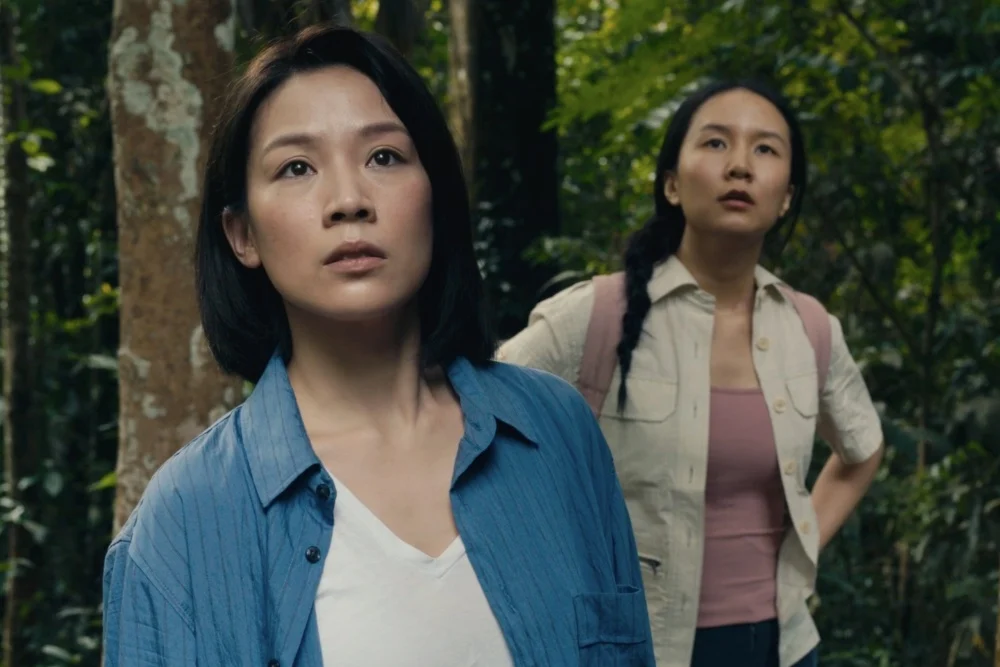
"Shanghai Daughter" is not merely a film; it is an introspective journey, a historical reckoning, and an exploration of identity forged against the backdrop of profound societal change. At its core, the drama follows Ming, a woman from Shanghai who embarks on a solitary pilgrimage to the remote and verdant rubber tree plantations of Xishuangbanna, a region nestled along China’s southwestern border. Her mission is intensely personal: to trace the echoes of her late father’s life, seeking out individuals who knew him during the tumultuous "Down to the Countryside Movement" — a defining chapter of the Cultural Revolution that unfolded half a century ago.
The film’s setting in Xishuangbanna is as much a character as any human protagonist. This ethnically diverse, tropical borderland, famed for its lush biodiversity and rich cultural tapestry, serves as a poignant canvas for Ming’s quest. However, the idyllic landscape is not untouched by the march of progress and its attendant challenges. As Ming navigates this unfamiliar terrain, she confronts the stark realities of a transforming world: old production team houses, relics of a bygone era, face imminent demolition, while mining companies and expansive modern agricultural projects inexorably reshape the land that once sustained the vast rubber plantations. It is within this rapidly changing environment that Ming encounters a diverse array of individuals – a pragmatic farm officer, a compassionate rural doctor, a wise Dai elder, a resilient rubber tapper, an idealistic young ecologist, and a mysterious woman whose connection to Ming’s past runs unexpectedly deep. Each encounter peels back another layer of history, not just of her father, but of a generation and a nation grappling with its own complex legacy.
The genesis of "Shanghai Daughter" is rooted deeply in director Agnis Shen Zhongmin’s personal narrative, a fact she openly shares, lending the film an undeniable authenticity and emotional weight. "The seed of this film was sown 14 years ago, when my father had just passed away from illness," Shen Zhongmin explains in her director’s statement. This profound personal loss, the sudden void left by a parent, became the catalyst for her artistic exploration. "His death and absence drove me to embark on a journey alone to the remote tropical land." This initial, solitary expedition mirrored the fictional Ming’s quest, transforming personal grief into a profound inquiry into memory, history, and the enduring bonds of family.
Shen Zhongmin’s repeated visits to Xishuangbanna over the years cultivated a deep, symbiotic bond with the region and its people. This sustained engagement allowed her to move beyond superficial observation, fostering a nuanced understanding of the local culture, the environmental shifts, and the human stories embedded within the landscape. "Rooted in my family history, this film expands its thematic scope to an exploration of ecofeminism as well as the pivotal chapters of China’s social history," Shen Zhongmin articulates, revealing the layers of complexity she has woven into her debut. The film, she adds, is also "an experiment to explore a non-dual realm that blurs the lines between fiction and documentary, and between the private and the public, through a simple and meditative cinematic language." This philosophical approach underscores her commitment to a cinema that transcends conventional boundaries, inviting audiences into a space of reflection and introspection.
The inclusion of "ecofeminism" as a central theme is particularly noteworthy for a film set in rural China. This perspective suggests an exploration of the interconnectedness between the exploitation of nature and the subjugation of women, often highlighting the resilience of female characters in the face of environmental degradation and societal upheaval. Ming’s solitary journey as a woman seeking truth in a rapidly changing, male-dominated landscape offers fertile ground for such an inquiry. Her quest for her father’s past is not just about personal history but also about understanding how historical movements, like the "Down to the Countryside Movement," impacted individuals and the environment, often with disproportionate effects on vulnerable communities and natural ecosystems. The narrative promises to intertwine the personal and the planetary, examining how individual lives are shaped by broader historical and environmental forces.
The "Down to the Countryside Movement," or Zhiqing (Educated Youth) Movement, provides a crucial historical backdrop for Ming’s journey. Initiated by Chairman Mao Zedong in the late 1960s and continuing into the 1970s, this massive social engineering campaign saw millions of urban youth, primarily high school graduates, sent to remote rural areas across China. The stated goals were to reduce urban unemployment, spread revolutionary ideology, and allow educated youth to "learn from the peasants." However, for many, it meant years of arduous labor, separation from families, and the deferment of personal aspirations. The movement profoundly impacted a generation, leaving an indelible mark on their lives, their families, and the social fabric of China. Ming’s father was one of these "educated youth," and his experiences in Xishuangbanna undoubtedly shaped the man he became. Her search for those who knew him is a poignant attempt to reconstruct a past that was not fully her own, to understand the forces that shaped her lineage, and perhaps to reconcile with the silences and unspoken histories within her family.
In her pursuit of authenticity, Shen Zhongmin has made deliberate choices in her casting, opting to feature non-actors and real-life individuals alongside the professional lead actress, Liang Cuishan. This blend of professional performance and genuine lived experience is intended to imbue the film with a raw, documentary-like quality, blurring the lines between the staged and the real, echoing the director’s stated interest in a "non-dual realm." Liang Cuishan, known for her compelling performances in independent cinema, brings a quiet intensity to her roles. Her previous work includes "Cloud in Her Room," which garnered the prestigious Golden Tiger Award at the International Film Festival Rotterdam, and "Till Love Do Us Part," which screened at the Pingyao International Film Festival. Her presence suggests a commitment to art-house aesthetics and emotionally complex storytelling, aligning perfectly with Shen Zhongmin’s vision.
Beyond the human characters, Shen Zhongmin emphasizes the critical role of the natural world in her cinematic tapestry. "Beyond the non-actors/real-life individuals and the female lead, the landscapes, flora, and fauna of southwest China are also portrayed as silent characters in their own right," she explains. This perspective elevates the environment from mere backdrop to an active participant in the narrative, reflecting the film’s ecofeminist leanings. The ancient trees, the rustling leaves of the rubber plantations, the vibrant and sometimes harsh tropical ecosystem—all contribute to the film’s immersive quality. "I hope this film can immerse the audience in a tangible geographical space, inviting them to walk, observe, listen, and feel alongside the characters," Shen Zhongmin adds, articulating her ambition to create a sensory experience that transcends traditional storytelling. This approach not only deepens the thematic resonance but also offers a unique window into a specific, vibrant, yet vulnerable region of China.
Agnis Shen Zhongmin’s journey to filmmaking is as multifaceted as her debut feature. Before stepping behind the camera, she established herself as a respected writer, authoring acclaimed short story collections such as "Notes on Shanghai Geography," "Deep Simulator," and "A Traveler’s Desire." These titles hint at an artist preoccupied with themes of place, identity, and the inner lives of individuals navigating complex landscapes, both physical and psychological. Her academic foundation includes a degree in film directing and screenwriting from Tongji University, providing her with the technical and theoretical grounding for her cinematic endeavors. Prior to her immersion in the arts, Shen Zhongmin honed her observational and storytelling skills as a journalist and newspaper editor. This rich, cross-disciplinary background—spanning contemporary art, literature, and film—has undoubtedly shaped her unique directorial voice, allowing her to approach storytelling with a profound understanding of narrative, character, and the subtle interplay of various artistic mediums. Her journalistic eye for detail, combined with a literary sensitivity for nuance, promises a film that is both meticulously crafted and deeply resonant.
The production of "Shanghai Daughter" is spearheaded by producers Xu Ruijing and Liao Yong for Twelve Oaks, a collaboration that underscores the film’s independent spirit and artistic ambition. The visual artistry is overseen by cinematographer Pu Wei, whose lens will undoubtedly capture the breathtaking yet threatened beauty of Xishuangbanna. Sound supervision by Dukar Tserang suggests a meticulous attention to the aural landscape, further enhancing the immersive experience Shen Zhongmin seeks to create. The project’s journey to the screen has already garnered significant industry recognition, having been previously selected for the highly regarded work-in-progress section of SIFF Project at the 2025 Shanghai International Film Festival. This early recognition is a testament to the film’s potential and its ability to captivate industry professionals, signaling its artistic merit and compelling narrative.
Securing international distribution is a crucial step for any independent film, and "Shanghai Daughter" is in capable hands with Parallax Films managing international sales. Their involvement indicates confidence in the film’s global appeal and its capacity to connect with diverse audiences worldwide. The film’s linguistic authenticity is further highlighted by its use of both Mandarin Chinese and the Dai dialect, enriching its cultural texture and providing an intimate portrayal of the region’s ethnic diversity.
As the 2026 Berlin International Film Festival approaches, anticipation for "Shanghai Daughter" continues to build. Agnis Shen Zhongmin’s debut promises to be a powerful and meditative cinematic experience, inviting audiences to journey alongside Ming not just through a geographical space, but through layers of personal grief, historical memory, and the enduring spirit of a land in transition. It stands as a testament to the power of cinema to illuminate personal truths against the grand tapestry of history, offering a vital female perspective on China’s past and its evolving present.
[Insert Trailer Embed here, if actual embed code is available]