

SPOILER ALERT: This article contains spoilers for “Valerie Gets a New Chapter,” the Season 3 premiere of “The Comeback,” now streaming on HBO Max.
From its inception, the groundbreaking series “The Comeback,” co-created by the incomparable Lisa Kudrow and visionary Michael Patrick King, was envisioned as an ongoing, satirical exploration of Hollywood’s relentless pursuit of fame. At its heart was Valerie Cherish (Kudrow), a resilient sitcom actress navigating her "comeback" under the unforgiving gaze of reality television cameras. These cameras, intended to chronicle her ascent on a subpar network show called "Room & Bored," instead captured every excruciating slight and public humiliation, offering an unvarnished, often uncomfortable, look at the price of celebrity. Valerie, a character destined to become a fixture in the television landscape, was meant to simply be.
Yet, fate had a different plan. The 2005 premiere of "The Comeback" arrived during an uncharacteristic lull for HBO, a network previously defined by cultural touchstones like "Sex and the City" (which King famously steered for years) and "The Sopranos." Grappling with an identity crisis, the network’s leadership made a fateful decision, canceling "The Comeback" after a mere 13-episode run. This abrupt end, however, was far from the series’ true demise.

In the ensuing years, a remarkable phenomenon occurred. "The Comeback," initially embraced by a dedicated but small audience who recognized its prescient genius, began its ascent to cult-classic status. Its biting meta-commentary on reality TV, celebrity culture, and the entertainment industry’s often-cruel machinery resonated deeply with viewers who discovered it long after its initial broadcast. This growing affection prompted HBO to do something truly rare in 2014: they approached King and Kudrow about a revival. At a time when reboots and IP exploitation weren’t the industry norm they are today, "The Comeback" returned, not out of corporate strategy, but, as King eloquently puts it, "by love."
The eight-episode second season plunged Valerie back into the Hollywood fray, darker and more complex than before. This time, her nemesis from "Room & Bored," Paulie G. (Lance Barber), had channeled his heroin-addled demons into "Seeing Red," a gritty HBO dramedy. The series depicted his torment at the hands of a red-haired sitcom star named Mallory Church, an unmistakable caricature of Valerie herself. Driven by a potent mix of outrage and ambition, Valerie stormed HBO, intending to sabotage the project, only to find herself cast in the very role of Mallory. Her husband, Mark (Damian Young), voiced understandable concerns about re-entering Paulie’s toxic orbit, while her former "Comeback" producer, Jane (Laura Silverman), ever the documentarian, recognized the perils but saw the potential for compelling footage. Despite the emotional cost, Valerie’s performance in "Seeing Red" ultimately earned her an Emmy.
In a poignant turn that signaled a profound shift in her priorities, Valerie famously abandoned the Emmy ceremony. Her loyal hairdresser and unwavering confidante, Mickey (Robert Michael Morris), had been hospitalized. In a move that surprised even herself, Valerie chose genuine human connection over professional triumph, rushing to Mickey’s side. This departure from the public spectacle marked a pivotal moment for "The Comeback" itself. For the first time, Valerie was seen on screen not through the distorting lens of reality TV or Jane’s documentary, but as her authentic self, stripped of the performative layers she had meticulously constructed. It was a moment of raw vulnerability and hard-won self-awareness.
Now, more than 11 years after that poignant second season, the highly anticipated third and, as creators insist, final season of "The Comeback" is upon us. The world Valerie Cherish inhabits has profoundly changed, reflecting the rapid shifts in media and culture. The season premiere opens in the summer of 2023, amidst the palpable tension of the writers’ strike and on the precipice of the actors’ strike. Valerie, ever eager for the spotlight, is attempting to join the procession of Roxie Harts stunt-cast into Broadway’s "Chicago," a desperate bid for relevance documented by her new social media assistant, Patience (Ella Stiller), with a reluctantly present Jane in tow. Notably, Mickey is no longer by Valerie’s side; Robert Michael Morris, who filmed the second season while battling Stage 4 melanoma, passed away in 2017, leaving a profound void both within the show and in Valerie’s life.

Following a three-year time jump, Valerie finds herself at a confounding crossroads. Her ever-optimistic manager, Billy (Dan Bucatinsky), presents her with what some might consider forbidden fruit: the lead role in the first sitcom ever to be written entirely by artificial intelligence. This offer forces Valerie, and by extension the audience, to confront the evolving anxieties and ethical dilemmas facing the entertainment industry.
In a candid interview held recently in Michael Patrick King’s office on the Warner Bros. lot, Kudrow and King reflected on the journey of bringing "The Comeback" back for what they firmly state will be its last iteration. They shared that, unlike previous seasons, they meticulously crafted every episode of Season 3 together, with King taking the directorial helm for the entire run. Their process, beginning in November 2024, involved in-person brainstorming sessions, a testament to their deep creative partnership. They view this third season not merely as another chapter, but as the "completion of a trilogy," a narrative arc that has unfolded in unexpected, decade-long intervals.
King describes the show’s intermittent returns as a "weird gift," materializing only when a "seismic shift" has occurred in the industry or wider culture. Kudrow echoed this sentiment, emphasizing the episodic nature of their returns: "It’s been an event," she mused. "So I don’t know how to make another event in a year." This philosophy underscores their commitment to only reviving the show when there’s a compelling, timely story to tell, ensuring each "comeback" feels significant and earned.
The enduring spirit of Valerie Cherish, Kudrow confirms, resides within both creators. "Yeah. She does," Kudrow affirmed, acknowledging the character’s profound connection to their creative consciousness. King elaborated on their unique writing process, likening it to a collaborative swing: "We feel like there’s a tee that you put the golf ball on, and then Lisa takes a swing at it. And we both take swings at all the characters." He noted that moments of "emotional density" and Valerie’s signature laugh are often indicators of something "definitely in the show." Despite the seemingly improvisational nature of Valerie’s character, King explained that the season’s structure was organically conceived. "We know where we’re starting, and we knew where we were ending," he stated, revealing a deliberate framework beneath the comedic chaos. The true challenge, he admitted, was "figuring how we get the wheels to sort of wobble and almost come off this fictionalized thing."

The pervasive influence of artificial intelligence became a central theme for this final season. Kudrow, approaching the topic with a "scientist’s" curiosity, emphasized their research into public perception. "People react badly, not to medical AI, not to organizational AI, not even to clerical or personal. But when it comes to art, that was the one place people push back," she observed. This insight provided King with what he dubbed the "Deep Throat spine" of the season: "It’s a secret. Don’t tell anybody." The clandestine nature of Valerie’s potential AI-driven sitcom becomes a powerful metaphor for the industry’s conflicted relationship with emerging technology.
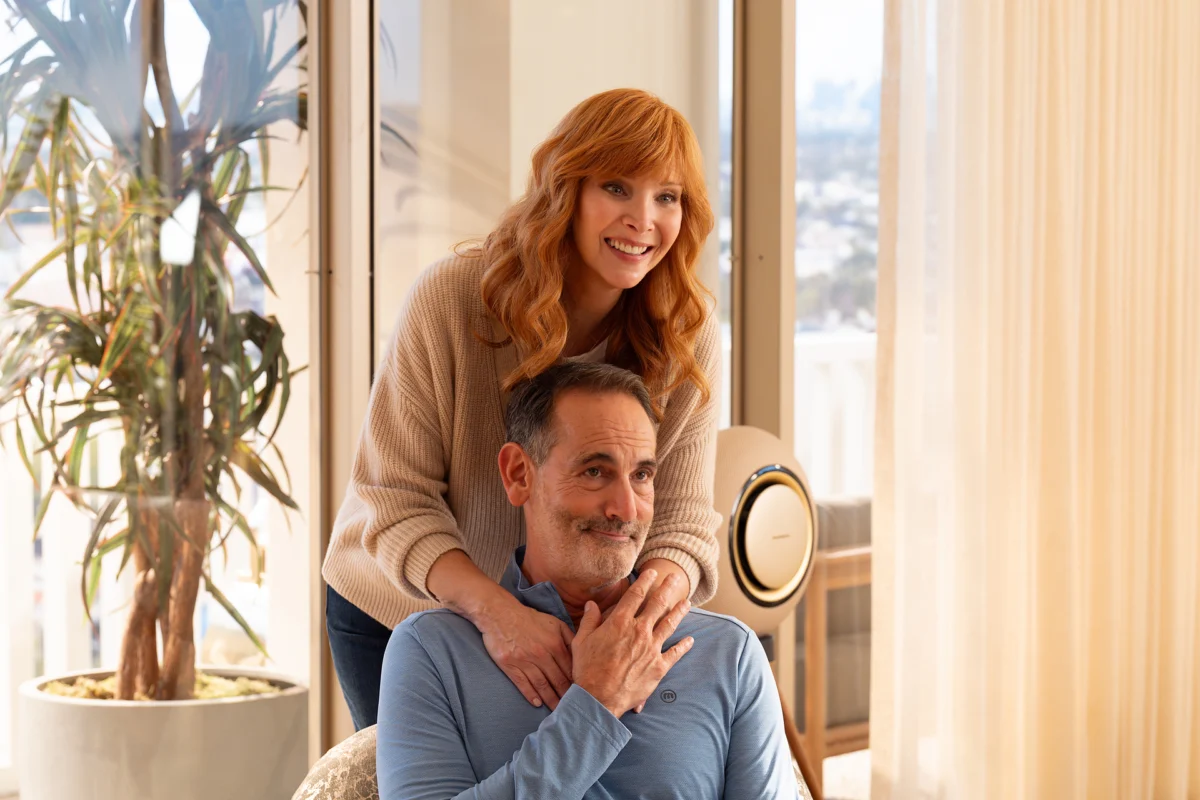
The question of who reappears in Valerie’s orbit is always a delicate balance. "Every character we’ve ever seen in ‘The Comeback’ is legitimately someone we’d like to see again," King confessed. However, the ultimate criterion is their ability to "push Valerie to some place we need her to go." Familiar faces like Jane and Mark were essential. "We always want a reason to see Jane, and we like Valerie being married to Mark," Kudrow explained. Their relationship, having weathered a "rough patch in Season 2," is now "even more solid," a quiet anchor amidst Valerie’s professional storms. Mark and Valerie, now "empty nesters" with their daughter Francesca on the East Coast, have traded Brentwood for the "mythic" Sierra Towers, a change of scenery that King felt symbolized the "world shifted."
The absence of Mickey necessitated new additions. Patience, Valerie’s young social media assistant played by Ella Stiller, fills a crucial role, albeit with a different dynamic. "We lost that off-camera person thinking about what Valerie just said," King noted, referring to Mickey’s silent reactions. Patience, described by King as "Mona Lisa" and "non-threatening," represents the contemporary need for constant digital documentation. Kudrow highlighted the humor in Valerie employing a 24/7 social media person for a life where "nothing’s happening!"
Another vital new character is Tommy Tomlin, Valerie’s new hairdresser, portrayed by Jack O’Brien. King explained the need for someone who, like Mickey, "saw Valerie as a star" and could provide comfort in her darker moments. "He knew Mickey," Kudrow added, emphasizing the emotional connection. Tommy’s initial declaration, "I’m not Mickey," was a deliberate choice to manage audience expectations, allowing him to carve out his own unique place in Valerie’s world. O’Brien, an 86-year-old non-actor, brings an "amazing being" quality to the role, yet even he falls prey to the insecurities show business can awaken, claiming to be 70 and wearing a toupee on set.

Valerie’s aspiration to play Roxie Hart in "Chicago" was a stroke of comedic genius, made believable by the real-life trend of reality stars, like NeNe Leakes and Erika Jayne, taking on the iconic role. King shared that they brought in a legitimate Broadway cast for the production numbers, a "decadent" touch that underscored the show’s commitment to authenticity within its satire. He dryly observed Valerie "failing" at even "the easiest number" in the show.
Jane’s re-entry into Valerie’s documented life is equally nuanced. Kudrow noted Jane’s aversion to social media and her reluctance. King revealed the financial hook: Valerie had loaned Jane money, compelling her to participate "out of guilt." Jane, who desires to "do meaningful, important things that no one cares about," finds her peaceful life on a Topanga Canyon ranch unraveling when she reconnects with the industry. "Show business brings up who you are or want to be," King summarized, a recurring theme for many characters.
Fran Drescher’s cameo, playing herself, was a delightful surprise. King explained their desire to feature Drescher’s powerful SAG-AFTRA strike speech, where she famously declared, "Wake up and smell the coffee — AI is coming for us." When Drescher expressed interest in doing more, they crafted a second scene: the "dueling photo approvals," a classic "Comeback" moment of celebrity cringe. "That tells you that you’re in ‘The Comeback,’" King chuckled. "It’s the first familiar cringe thing: Valerie talking too much to a celebrity."
The three-year time jump also introduces Valerie’s new podcast, "Cherish the Time," which, in true Valerie fashion, is about mundane topics like watching "The Goodbye Girl" on TV. "There is nothing happening," Kudrow quipped, highlighting Valerie’s talent for elevating the unremarkable.

One of the season’s most profound lines comes when Valerie, offered the AI sitcom, tells Mark, "I need writers to like me." Kudrow elaborated on the deep truth embedded in this statement. "Writers, writer-producers, the showrunners, the decision-makers… they decide who they want in their shows," she explained. "So if you’re blackballed, then, no, you’re not going to work." For Valerie, AI is "the villain of the strike." Her desperate plea highlights her understanding of Hollywood’s power dynamics: "The point is, I need them to like me so that they’ll cast me!" King affirmed its quintessential Valerie-ness: "She’s from the ‘I’m It!’ world. Writers were king then… You’re in TV Guide — not without writers liking you, you’re not." Kudrow also stressed the high stakes: being the first on an AI-written show could be career suicide if it fails.
The absence of Mickey is perhaps the most significant emotional shift for Valerie. "Who is she without Mickey beside her? She’s on her own," Kudrow reflected. "She’s her own cheerleader. She kind of has been, and he’s just been affirming for her what she’s already doing. But without him, there’s no echo." King succinctly added, "There’s no backup." Writing without Robert Michael Morris was challenging, Kudrow admitted, especially finding "who’s gonna be the one making a face?" They recalled a line Mickey had said in Season 2 about naked women: "’Were they wearing pantyhose? And why?’" a memory that still makes them laugh and cry, a testament to Morris’s indelible impact. "He’s missed! That’s amazing," Kudrow said, validating the character’s lasting appeal.
The Season 3 premiere culminates in Valerie’s dramatic change of heart regarding the AI sitcom. After a demoralizing experience as a day player in an indie movie filmed at an assisted living facility, where a resident suffers a heart attack in front of her while she’s dressed in spandex, Valerie immediately calls Billy. King explained their intention was for the audience to connect with "Valerie’s desperation" and understand why she would finally embrace the controversial offer. Kudrow wryly added, "She says, ‘Billy, I’m being stupid — set the meeting.’ Which I like, because, yeah, you are being stupid for setting the meeting if you’re looking to avoid trouble!" Valerie, ever the optimist, approaches it with a hopeful, albeit misguided, perspective.
The looming threat of AI, so central to the season, is a concern shared by the creators themselves. Kudrow expressed less worry for established artists like herself, but deep concern for "the younger people coming up who aren’t licensable yet," and for writers. "It’s been shrinking and shrinking since we started this. I don’t think it’s a popular, obvious career choice anymore," she lamented. King echoed this, fearing AI’s impact on the "classroom" of creative development. "It’s taking away the room… for people to learn how to think. To move their individual spark into a structure that can carry the day for them," he articulated. He worries it will "replace the growth spurt of a lot of writers," eliminating the crucial "trial and error" phase. Beyond entertainment, Kudrow added, "people are very afraid they’re going to be replaced." Yet, King, like Valerie, harbors a sliver of optimism: "I, like Lisa, have oddly adapted Valerie’s point of view, which is, maybe we’ll keep going as humans."

Despite the emotional investment and critical acclaim, Kudrow and King remain steadfast that this is the final "comeback." "Because it’s been every 10 years, it’s been an event. So I don’t know how to make another event in a year," Kudrow reiterated. King emphasized their gratitude and the profound effort invested: "We really put everything we had into this one. And it’s not a ploy." He acknowledged the irony of the show’s evolution. Initially, they envisioned an annual series, but the cancellation reshaped its very "brand" into a rare, decade-spanning event. "We became kind of a satire of time and civilization moving forward in a weird way," King concluded, capturing the essence of a show that, against all odds, has returned not just to entertain, but to reflect and critique the ever-shifting landscape of fame, ambition, and self-perception in the 21st century. Valerie Cherish’s final act promises to be as uncomfortably hilarious and profoundly resonant as her entire relentless journey.