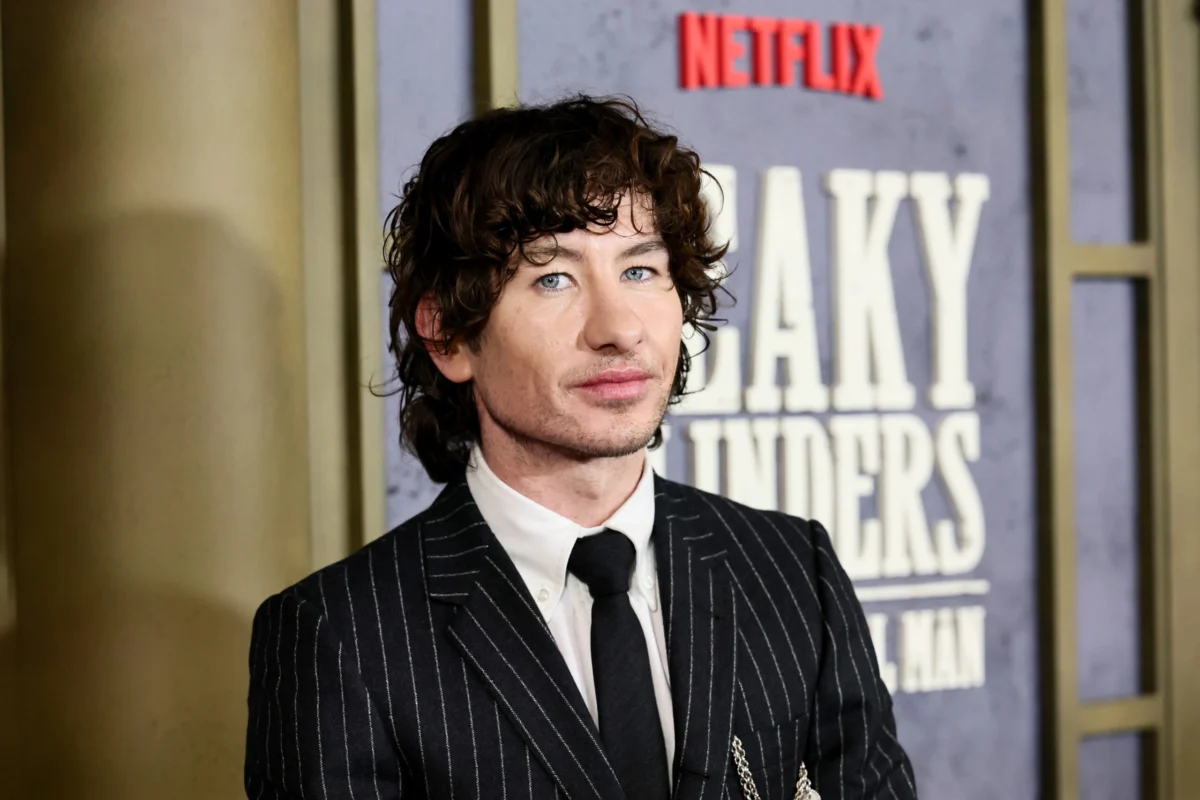
In an era where celebrity is often synonymous with omnipresence, the raw, candid confession from acclaimed actor Barry Keoghan has sent a ripple of concern through Hollywood and beyond. Known for his captivating, often intense performances that have earned him critical acclaim and a burgeoning fan base, Keoghan recently unveiled a deeply personal struggle that speaks volumes about the darker undercurrents of digital fame. In a revealing interview on SiriusXM’s “The Morning Mash Up,” the Irish star admitted that the relentless online abuse directed at his appearance has reached such a devastating pitch that it has driven him into self-imposed isolation, eroding his desire to even venture outside his home.
Keoghan, whose distinctive features and arresting screen presence have become his cinematic hallmarks, articulated the profound emotional toll this constant scrutiny has exacted. “There’s a lot of hate online,” he explained with a palpable sense of vulnerability. “There’s a lot of abuse of how I look, and it’s kind of past the point of — you know, everyone goes through that… but it’s made me shy away. It’s made me really go inside myself, not want to attend places, not want to go outside.” His words paint a stark picture of a public figure, celebrated for his craft, yet crippled by the very public gaze that fuels his career. The actor’s raw honesty underscored the severity of his experience, culminating in a poignant declaration: “I say this being absolute pure and honest to you. It’s becoming a problem.” This isn’t merely the fleeting sting of a negative comment; it’s a systemic barrage that has begun to dismantle his sense of security and well-being.
Keoghan’s journey to the upper echelons of film has been nothing short of remarkable. From a challenging upbringing in Dublin, navigating the foster care system, he emerged as a talent with an undeniable magnetism. His early roles in films like “Dunkirk” and Yorgos Lanthimos’s chilling “The Killing of a Sacred Deer” showcased an actor unafraid to inhabit complex, often unsettling characters. This unique acting sensibility, coupled with his distinctive facial structure and expressive eyes, quickly set him apart. His career truly soared with his Oscar-nominated turn in “The Banshees of Inisherin,” and more recently, his mesmerizing, boundary-pushing performance in “Saltburn” cemented his status as a major force in contemporary cinema. Yet, for all the accolades and critical adoration, the digital realm has proven to be a treacherous landscape, where individuality, often celebrated offline, can become fodder for anonymous cruelty online.
The paradox of Keoghan’s situation is particularly acute. His performances are lauded for their authenticity and depth, often requiring him to bare not just his character’s soul but a raw, unvarnished humanity. Audiences connect with his vulnerability on screen, drawn to the very qualities that make him unique. However, the internet, in its relentless pursuit of perfection and conformity, weaponizes these same distinct features. What is considered compelling on screen — a face that tells a story, an unconventional charm — becomes a target for a faceless mob emboldened by the perceived anonymity of the digital sphere. The “abuse of how I look” is a chilling reminder that in the age of social media, the physical appearance of public figures is perpetually open season for criticism, mockery, and outright cruelty, often devoid of any constructive purpose or human empathy.
Keoghan elaborated on his attempts to shield himself from this onslaught, revealing that he has largely distanced himself from social media. However, the nature of his profession, which demands public engagement and an awareness of audience reception, makes complete disengagement nearly impossible. He confessed to occasionally venturing back online after a premiere or a significant event, driven by a natural curiosity to gauge how his work was received. Tragically, these forays often end in disappointment, as he finds the reactions predominantly “not nice.” This pattern of seeking validation only to encounter further negativity creates a vicious cycle, reinforcing the painful message that his appearance is somehow unacceptable. For an actor whose livelihood depends on public perception and connection, this constant barrage can be profoundly disorienting and damaging.
The psychological ramifications of such sustained online harassment are immense. Keoghan’s admission of “hiding away” and actively avoiding public spaces is a classic symptom of social anxiety and a profound erosion of self-esteem. When one’s public image is constantly attacked, the internal narrative can shift, leading to self-doubt and a pervasive sense of inadequacy. For a celebrity, whose life is inherently public, this withdrawal is not just a personal choice but a professional dilemma. The very essence of his job requires him to be seen, to be present, to engage. Yet, the cost of that visibility has become too high, compelling him to shrink from the world rather than embrace it. His words, “I actually don’t go to places because of these things,” are a stark testament to the debilitating power of digital hatred.
Beyond the immediate personal anguish, Keoghan voiced a deeper, more insidious fear: that this pervasive anxiety about his appearance could begin to compromise his artistic integrity and career trajectory. “When that starts leaking into your art, it becomes a problem,” he articulated with a clear understanding of the stakes, “because then you don’t want to even be on screen anymore.” This is a terrifying prospect for any artist. The creative process demands vulnerability, confidence, and a willingness to inhabit characters fully. If an actor is constantly battling internal demons spawned by external negativity, the ability to deliver authentic, uninhibited performances can be severely hampered. The fear of being judged for one’s appearance could lead to self-censorship, reluctance to take on certain roles, or even a complete retreat from the profession. It highlights the often-unseen burden that modern celebrity culture places on the mental and emotional health of its stars, particularly when body shaming and superficial judgments overshadow genuine talent.
Perhaps the most heartbreaking revelation from Keoghan’s interview concerned his young son, Brando. The actor expressed a profound worry about the day his child will be old enough to understand and read the deluge of online hate directed at his father. The thought of his son encountering such vitriol adds another layer of pain to Keoghan’s already heavy burden. “It is disappointing for the fans,” he conceded, acknowledging the impact of his withdrawal on those who admire his work, “but it’s also disappointing that my little boy has to read all of this stuff when he gets older.” This parental anguish resonates deeply, highlighting the generational trauma that online toxicity can inflict. Parents strive to shield their children from harm, yet in the digital age, the very public lives of celebrities mean that their children are often inadvertently exposed to the ugliness of online discourse. The legacy of a father’s public shaming becomes a potential future burden for his innocent child, a cruel and inescapable consequence of living under the relentless glare of the internet.
Barry Keoghan’s candid disclosure serves as a powerful, sobering reminder of the devastating human cost of unchecked online negativity. His story is not an isolated incident but a poignant example of a broader societal problem that extends far beyond the confines of celebrity. In a world increasingly intertwined with digital platforms, the lines between public persona and private vulnerability have become dangerously blurred. His experience underscores the urgent need for a more empathetic, responsible, and humane approach to online interaction. It calls into question the very culture that permits, and often encourages, anonymous attacks on individuals, regardless of their public standing.
For a women-focused audience, Keoghan’s struggle resonates with a particular intensity, as women in the public eye often face an even more virulent strain of appearance-based criticism and body shaming. His story offers a vital perspective on the shared human experience of battling societal pressures and the insidious impact of judgment. It prompts a critical examination of how we, as a society, engage with public figures and, more broadly, with each other in digital spaces. What responsibility do social media platforms bear in cultivating environments that prioritize well-being over viral cruelty? What role can fans and media play in fostering a culture of support and appreciation, rather than one of demeaning scrutiny?
Keoghan’s bravery in speaking out, despite his pain, offers a moment for collective reflection. His retreat from public life is not a sign of weakness, but a stark illustration of the extreme measures individuals are forced to take to protect their mental health in an increasingly toxic digital landscape. It’s a powerful call for a shift in collective consciousness, urging us to remember the human being behind the screen, the individual beneath the celebrity, and the profound, lasting damage that can be inflicted by a seemingly harmless comment. His plea for understanding and an end to the abuse is a testament to the fact that even the most celebrated stars are not immune to the crushing weight of online hatred, and that true empathy remains our most valuable, and often most scarce, digital commodity.