
The Season 1 finale of “The Beauty,” now captivating audiences on FX on Hulu and Disney+, has left viewers reeling, not just from its intricate plot but from its truly groundbreaking and visceral practical effects. The series, a chilling exploration of body horror from the visionary mind of Ryan Murphy, plunges into the dark side of an injectable, sexually transmitted virus. This insidious pathogen promises heightened physical allure, yet delivers lethal, grotesque transformations. For actors and audiences alike, the journey through “The Beauty” is a masterclass in the art of the grotesque, a testament to the dedication of its prosthetics team who brought Murphy’s darkest imaginings to life.
Evan Peters, a long-time collaborator with Ryan Murphy, is no stranger to the macabre. Having etched a memorable career portraying serial killers, tormented spirits, and deeply disturbed individuals across various Murphy-helmed productions, Peters has cultivated a reputation for fearlessly embracing the dark, often blood-soaked, corners of storytelling. His most recent turn as FBI agent Cooper Madsen in “The Beauty” once again saw him navigate the grimy, unsettling landscapes that are a hallmark of Murphy’s aesthetic. However, even for Peters, the demands of “The Beauty” pushed boundaries, culminating in a transformation scene that stands as one of the series’ most shocking.
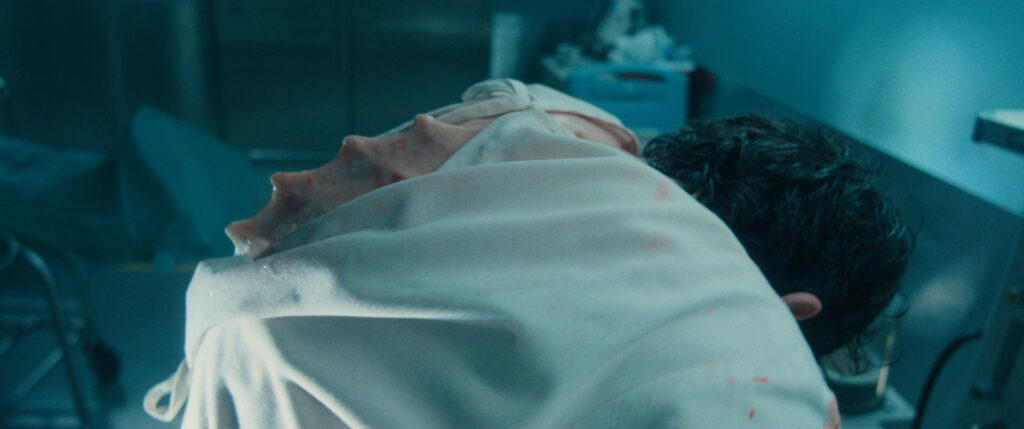
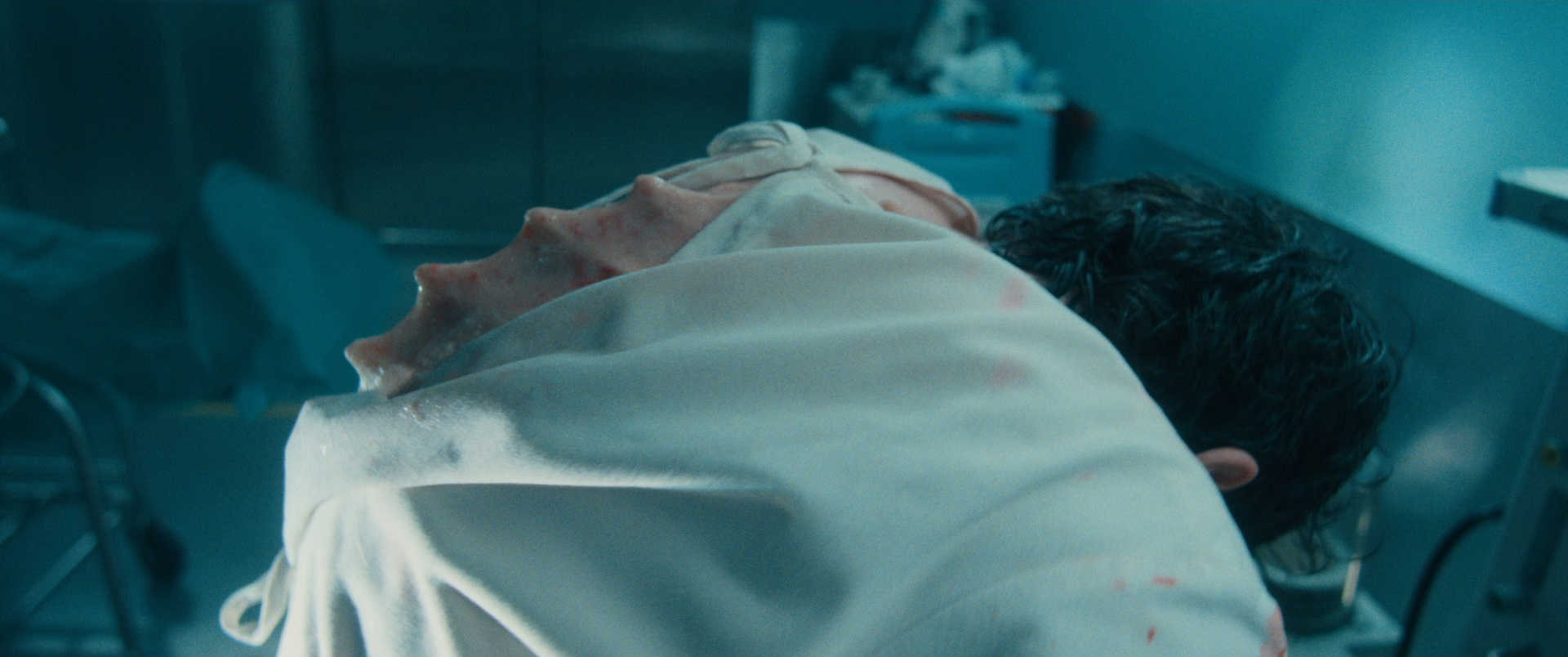
The premise of “The Beauty” is inherently unsettling: a drug designed to perfect physical appearance instead morphs its users into something horrifyingly other. Throughout the season, a parade of characters falls prey to the virus, each emerging from a slimy, skin-like chrysalis as a supposedly “beautified” version of their former selves, albeit at a devastating cost. But it was in Episode 9 that Peters’ character underwent his own metamorphosis, defying expectations. Instead of emerging as an idealized form, Madsen regressed, astonishingly transforming into a pre-pubescent teenager. This twist, a cruel subversion of the virus’s promised outcome, provided a chilling commentary on the elusive and often unpredictable nature of beauty and perfection.
While not the absolute final transformation depicted in the series, Peters’ bloody, agonizing rebirth marked the last such sequence to be fully showcased on-screen. Each of these pivotal transformation scenes was meticulously crafted, designed to be distinct and uniquely horrifying by the show’s exceptional prosthetics team. Led by prosthetic makeup designers Brett Schmidt, Greg Pikulski, and Dave Presto, alongside department head Philip Harrah and key prosthetic makeup artist Lindsay Gelfand, this collective of artists embarked on an extensive research and development process to create the iconic, fleshy sacks from which the characters emerge.
The creation of these “sacks”—the show’s grotesque cocoons of rebirth—was a journey of trial and error, requiring innovative thinking and a deep understanding of materials science. The team initially experimented with combinations of latex and various plastic bags, seeking the perfect balance of translucence, texture, and durability. Their goal was to create something that looked organic, repulsive, yet strangely compelling on screen. After rigorous testing and iteration, they ultimately settled on silicone as the ideal material. Silicone offered the desired elasticity, a disturbingly realistic skin-like texture, and the ability to hold the significant volume of slime and blood crucial to the transformations.

Throughout this intricate process, samples and tests were continuously sent to Ryan Murphy for his feedback. His discerning eye and specific vision were instrumental in guiding the team, leading to tweaks and refinements at each stage. This collaborative back-and-forth ensured that the final product aligned perfectly with Murphy’s artistic intent, creating effects that were not just visually striking but also narratively resonant. Dave Presto recounted the escalating scale of their creations, underscoring the monumental effort involved: “The mould just kept getting bigger and bigger. It started at three or four feet and is now nine by six feet. It’s this massive thing that we have to roll around.” This growth in size was a direct reflection of Murphy’s evolving vision, demanding ever-more ambitious and encompassing physical effects.
The construction process extended far beyond merely fabricating the sacks. Each transformation scene in “The Beauty” is characterized by an extravagant, almost theatrical, effusion of blood and slime. As the skin-like chrysalis pods are violently torn open, the newly transformed characters are revealed, drenched in a concoction that signifies both birth and decay. The team experimented with various substances to achieve the desired effect, ultimately creating their own bespoke slime from scratch. This custom-made goo was critical for achieving the specific consistency, color, and viscous flow that Murphy envisioned, enhancing the overall sensory horror of each reveal.
For the actors, stepping into these elaborate creations was a physical and mental ordeal. Once meticulously covered in the specialized goop and character makeup, they would then carefully enter the silicone sacks, which weighed a substantial “60 to 70 pounds.” A pre-designated, delicate area was built into each sack, allowing the actors to break through at the precise moment during filming, creating a dramatic, explosive reveal. To ensure the actors’ safety and relative comfort within the thick, suffocating walls of the sacks, a specially designed vent in the back allowed for crucial air circulation. Communication during these intense scenes was equally challenging; Murphy and the directors would relay instructions to the actors via a strategically placed radio under the sack, battling the muffled acoustics of the dense silicone.
On set, Dave Presto played a crucial role in coordinating these chaotic yet meticulously planned moments. He would stand by, armed with buckets of the custom-made slime, ready to douse the sack the instant directors called “action.” This hands-on approach was paramount to achieving the show’s signature look. “In the shots, you could see slime falling off the sacks; that’s all real,” Presto affirmed, highlighting the team’s commitment to practical effects. “The only thing they added [in post-production] was a little smoke and the bubbling effect.” This dedication to tangible, in-camera effects, with minimal reliance on digital enhancements, is a defining characteristic of “The Beauty” and a nod to a bygone era of horror filmmaking. Presto further emphasized the sheer scale of materials involved: “It took a lot of silicone. We used around 200 gallons of silicone to make 25 to 30 sacks. The sacks are very heavy too, and with the slime, they’re almost impossible to manage and move around.”
Ryan Murphy’s creative process is famously fluid, often evolving as production unfolds. This dynamic approach meant the prosthetics team had to remain adaptable and innovative. Brett Schmidt explained, “Ryan was coming up with things as filming went [on], because he was seeing things, and then changing the direction he wanted to go in. Originally, we weren’t sure if all the transformations were going to be the same. But that’s not how it ended up being. Every transformation was its own animal.” This flexibility allowed for a diverse range of gruesome spectacles, preventing any sense of visual repetition and keeping audiences perpetually on edge.
Evan Peters’ transformation, in particular, was designed to be arguably the most visceral and psychologically disturbing. Beyond the shocking regression to a child-like state, the scene was replete with grotesque details: Peters’ character violently losing teeth and nails, his chest exploding to reveal his ribs, and two overlapping, pulsating bladders meticulously created by the team. To achieve the excruciating visual of nails being ripped away, the prosthetics team engineered “tight and tiny” prosthetics placed atop Peters’ natural fingernails, which served as a secure base for the fake nails to be gruesomely detached. Dave Presto articulated the primal fear these specific elements tap into: “Two of the craziest and most visceral things are nails and teeth. When you break a nail, and it goes backwards and or lifts off, or a tooth comes loose — those are two things where everyone looks away.” This deliberate targeting of universal bodily anxieties elevated the horror of the scene.

The on-screen gore and body horror elements throughout “The Beauty” were consciously infused with an aesthetic reminiscent of classic 1980s horror cinema. This was a deliberate choice by Ryan Murphy, who aimed to create an 80s-themed horror experience for the show. The team drew significant influence from iconic films such as David Cronenberg’s 1986 science fiction body horror masterpiece “The Fly,” known for its revolutionary practical effects and unsettling transformations. Further inspiration came from Cronenberg’s “Scanners,” with its infamous exploding head sequence, and James Gunn’s 2006 homage to 80s creature features, “Slither.” This retro-horror sensibility provided a rich visual language, allowing the prosthetics team to push boundaries while paying tribute to the genre’s golden age.
One particularly inspired and challenging creation manifested in Episode 11, focusing on a teenage girl named Bella (Emma Halleen). Driven by societal pressures and a desperate desire for idealized beauty, Bella self-contaminates with the virus, hoping for a transformative outcome. The camera pans through her blood-splattered room, building tension towards a closet where viewers expect to finally see a beautiful girl emerge. Instead, they are met with a truly grotesque, indecipherable creature—a nightmarish entity that the prosthetics team affectionately dubbed “the monster.”
The realization of “the monster” was, by far, the most complex endeavor for the team. “The monster was probably the most complex thing we did,” Presto revealed. The initial concept envisioned the creature emerging from the floor, a plan that ultimately had to be scrapped due to practical set restrictions. This necessitated a rapid and radical re-engineering of their approach. The team planned for the actor’s upper body to portray the core monster, with additional appendages—an extra set of arms and legs—controlled from beneath the floor using intricate cable mechanisms. This innovative solution allowed for dynamic, lifelike movement. Presto explained the technical hurdles: “Usually when you have to cable control something, everything is built inside. We had to re-engineer everything, going the opposite way that you normally would. We had to take the core apart and figure out how to animate this and do it in a week and a half.” This incredibly tight deadline for such a complex mechanical and organic creation underscored the team’s ingenuity and tireless work ethic.
The development of Bella’s monster began with Presto sending Ryan Murphy a series of pencil sketches, video samples of potential animation styles, and various skin texture references. This extensive pre-visualization phase ensured Murphy’s vision was captured before the arduous physical construction began. The final look involved hours of live-casting the actor’s entire body, a multi-stage process to create the intricate molds, followed by a separate, equally long day dedicated solely to the application of the elaborate prosthetics. Though “the monster” graced the screen for less than a minute, its construction represented one of the most time-consuming and technically demanding processes in the entire show.
Beyond these monumental transformations, the team also crafted numerous customizable, practical elements for individual characters. For Jeremy Pope’s character, Jeremy (who transforms from his “incel persona” portrayed by Jaquel Spivey into a post-serum version), the prosthetics team developed specialized spine prosthetics. While the initial rippling effect under his skin was digitally altered with VFX, the underlying practical elements provided a tangible base for the digital enhancements, grounding the effect in reality.
Similarly, for Ben Platt’s character, Manny, a contaminated victim confined against his will, the team had to work quickly to create specific, gruesome pieces. In just two days, they whipped up a fake arm, a leg, and various flaps of skin, designed for Platt to violently tear off his body as Manny struggled to break free from wrist cuffs. This scene, combined with a distinct spine prosthetic, highlighted Manny’s escalating horror and the desperate fight against his own deteriorating form.

Another deeply intricate process was the creation of the multi-layered prosthetics for Jon Jon Briones’ character, Dr. Guy. This particular application was so complex that the prosthetics team reported it took approximately six hours to apply each day of shooting, a testament to its detail and precision. Ryan Murphy provided very specific guidance for Dr. Guy’s appearance. “For Jon Jon specifically, Ryan kept saying ‘imagine he’s on his ninth or 10th facelift. It had to be aggressive and look very, very odd,'” Schmidt recounted. This vision translated into an exaggerated, almost grotesque portrayal of extreme cosmetic surgery: “An exaggerated brow lift, an exaggerated nose job, big filler cheeks — things you do see people get a little too aggressive with.”
To achieve this hyper-real, yet disturbingly unnatural look, the team created several smaller, overlapping prosthetic pieces for Dr. Guy, including separate elements for his upper lip, chin, nose, forehead, and cheeks. The application process was akin to a surgical procedure, with Philip Harrah and Lindsay Gelfand spending painstaking hours meticulously working on the color of each prosthetic, ensuring a seamless, perfect match to Briones’ real skin. This dedication to subtle, believable color transitions was crucial in making the exaggerated features appear disturbingly plausible.
The creation of such a vast and varied array of practical effects was a true “labor of love,” as Schmidt aptly described it. He and Greg Pikulski were brought onto the project just two months before principal photography commenced, embarking on a whirlwind of design and fabrication. Throughout and during filming, the team consistently worked extensive hours, handcrafting countless prosthetics, often responding to last-minute requests from Murphy with impressive speed and precision. This ability to adapt and deliver under pressure was a hallmark of their success on the show.
In an era increasingly dominated by computer-generated imagery, the commitment of “The Beauty” to practical makeup and prosthetics stands out as a powerful statement. Philip Harrah articulated this sentiment: “I really appreciate a show like this coming at the time that it did, when A.I. is so threatening to all of us. To have a show like this, where they really went for practical makeup and allowed us the time and space and opportunity to do it, we owed it to our industry and our fellow colleagues to deliver the best possible product that we can.” This dedication to traditional artistry not only honored the craft but also delivered a tangible, visceral quality to the horror that often eludes purely digital effects. The tactile realism of the silicone sacks, the homemade slime, and the meticulously crafted prosthetics brought an undeniable authenticity to “The Beauty’s” unsettling world, cementing its place as a groundbreaking work of modern body horror.