

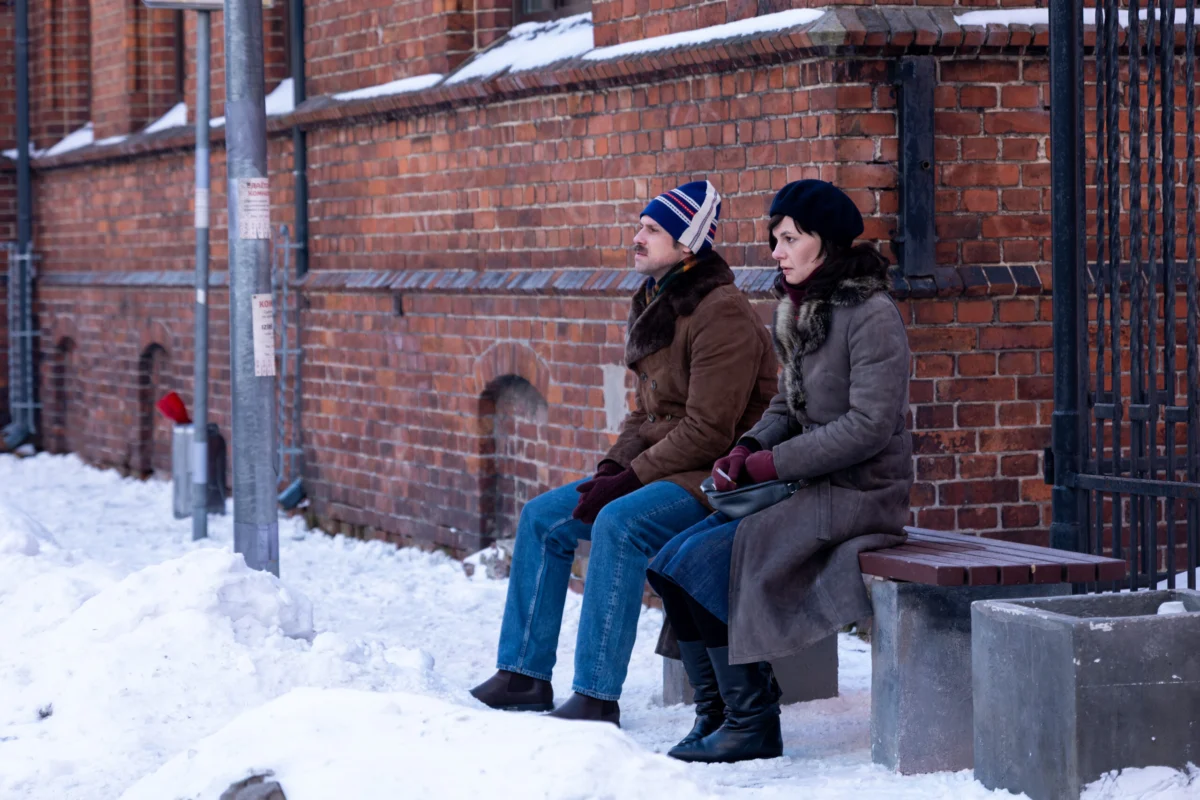
The creative minds behind "Soviet Jeans," the critically acclaimed breakout hit that garnered significant attention and awards a couple of years ago at Series Mania, are poised to captivate audiences once again with their latest ambitious project: "The Last Divorce of Communism." This compelling six-part period drama series, currently entering production, promises an intimate yet epic exploration of love, survival, and quiet rebellion set against the tumultuous backdrop of Latvia in 1988, as the Soviet Union teetered on the brink of its historic collapse.
"The Last Divorce of Communism" delves into the extraordinary measures an ordinary couple must take to safeguard their most fundamental possession – their home – from the unforgiving machinery of the USSR’s rigid real-estate policies. In a society where private property was anathema and the state held ultimate dominion, the threat of apartment nationalization loomed large. For our protagonists, an audacious plan emerges: a staged divorce. This desperate charade is designed to circumvent bureaucratic directives and save their cherished living space, yet it forces them to navigate a treacherous landscape of suspicion, where every glance, every whispered word, could be interpreted by watchful informants and nosy neighbors. As they meticulously conceal their enduring love, they must simultaneously contend with the seismic shifts occurring in their homeland – a nation grappling with the promise of newfound freedom and the agonizing pangs of an empire in decline.
To truly grasp the high stakes of this series, one must understand the peculiar and often brutal realities of Soviet housing policy. In the USSR, private property as understood in the West simply did not exist. Apartments were typically allocated by the state, often based on employment, family size, or social standing, rather than purchased. Citizens held a right of tenure, not ownership. The concept of "nationalization" wasn’t merely the state taking over private land for public use; it was an inherent aspect of a system that viewed all significant assets as belonging to the collective. Families often lived in communal apartments (kommunalkas), sharing kitchens and bathrooms with multiple households, or were assigned small, standardized flats. While reforms under Khrushchev in the late 1950s and early 60s saw a boom in housing construction, aiming to give every family a separate apartment, the underlying principle of state control remained absolute.
By 1988, while some forms of cooperative housing existed, and a limited ability to exchange apartments had emerged, the idea of an individual "owning" their home in a Western sense was still foreign. The state could reallocate, seize, or consolidate living spaces based on various criteria, often leaving families vulnerable. For a couple, particularly if one partner was associated with a "less desirable" profession or social group, or if their apartment was deemed "too large" for their needs, the threat of nationalization could be very real. A divorce, even a fake one, could potentially alter their legal status regarding the dwelling, perhaps allowing one partner to retain it as a single occupant, or creating a new legal loophole within the labyrinthine bureaucracy. This context imbues the couple’s desperate act with a profound sense of urgency and vulnerability, turning a domestic drama into a potent symbol of individual resistance against an omnipotent state.

The historical canvas of 1988 Latvia adds further layers of complexity and intrigue. This was a pivotal year in the Soviet Union, marked by Mikhail Gorbachev’s policies of Perestroika (restructuring) and Glasnost (openness). While intended to revitalize the stagnant Soviet system, these reforms inadvertently unleashed forces that would ultimately lead to its dissolution. For Latvia, one of the Baltic states forcibly annexed by the USSR in 1940, these policies meant a cautious but undeniable thawing of political and cultural repression. Nationalist sentiments, long suppressed, began to resurface. The "Singing Revolution" – a series of massive, non-violent demonstrations involving public singing of banned national songs – was gaining momentum across the Baltics. The Popular Front of Latvia, a mass political organization advocating for greater autonomy and eventually independence, was founded in 1988.
Against this backdrop of cautious hope and underlying tension, the concept of "constant surveillance" was not mere paranoia but a lived reality. The KGB (Committee for State Security) maintained an extensive network of informants, and even ordinary citizens, conditioned by decades of state control, often reported on their neighbors, colleagues, and even family members, out of fear, self-preservation, or genuine ideological conviction. In such an environment, maintaining a secret – especially one as fundamental as a couple’s true marital status and affection – would have been an emotional tightrope walk, fraught with peril. The series promises to vividly recreate this atmosphere, where trust was a luxury and the private sphere was constantly under threat of public scrutiny.
The creative synergy behind "The Last Divorce of Communism" comes from the highly lauded duo, Teodora Markova and Stanisļavs Tokalovs. Their previous collaboration, "Soviet Jeans," resonated deeply with audiences and critics alike, earning them the Audience Award and Best Actor prize in the International Panorama Competition at Series Mania a couple of years ago. "Soviet Jeans" was praised for its offbeat humor, authentic portrayal of the era, and its ability to find the human story within the absurdities of Soviet life. This track record suggests that "The Last Divorce of Communism" will likewise offer a unique blend of poignant drama and insightful social commentary, skillfully balancing the gravitas of historical events with the relatable struggles of its characters. Their talent for unearthing the "comedy in the cracks of history," as producer Aija Bērziņa eloquently puts it, is a rare and precious gift, perfectly suited to illuminate the human spirit’s enduring capacity for joy, defiance, and love even in the darkest of times.
Aija Bērziņa, representing the Latvian outfit Tasse Film, expressed profound enthusiasm for the project and her creative team. "Teodora and Stanisļavs have the rare gift of finding comedy in the cracks of history," Bērziņa remarked, highlighting the distinctive approach that sets their work apart. She continued, "’The Last Divorce of Communism’ is our love letter to everyone who’s ever bent the rules for the people they love — a fake divorce, a real love story, and the full weight of the Soviet Union standing in the way. What more could you ask for?" This statement encapsulates the emotional core of the series, promising a narrative that champions personal connection and ingenious resilience over the imposing might of a totalitarian regime. It speaks to the universal desire to protect loved ones and the lengths to which individuals will go when faced with seemingly insurmountable obstacles. For a women-focused audience, this emphasis on emotional depth, relational dynamics, and the quiet heroism of everyday people is particularly resonant.
The ambition of "The Last Divorce of Communism" extends beyond its compelling narrative. The production is set to be a meticulous recreation of late-Soviet Riga, the vibrant capital of Latvia, and will shoot across multiple seasons in both Latvia and Lithuania. This extensive filming schedule underscores the commitment to authenticity, promising a rich visual tapestry that immerses viewers in the period. The creative team plans to seamlessly blend archival materials with newly filmed footage, a technique that will not only enhance the historical accuracy but also imbue the series with a sense of lived history. The process of recreating a past era, especially one with such distinct architectural, social, and cultural characteristics, is a demanding artistic endeavor, requiring careful attention to detail in set design, costumes, and overall atmosphere. The decision to shoot across multiple seasons implies a dedication to capturing the evolving moods and landscapes of the late 1980s, reflecting the gradual shifts in the political and social climate. The series is slated for a highly anticipated premiere in 2027.

"The Last Divorce of Communism" is a testament to the power of international collaboration in contemporary storytelling. Backed by Latvian Public Media, the series benefits from a robust co-production model involving several European partners. Greta Akcijonaitė at Lithuania’s Magic Films and Martichka Bozhilova at Bulgaria’s Agitprop are instrumental co-producers, bringing diverse perspectives and resources to the project. Further bolstering this formidable team is Danna Stern of In Transit Productions, serving as executive producer, whose experience and vision will undoubtedly contribute to the series’ global appeal. The project also enjoys significant financial backing from the Lithuanian Film Centre and the Bulgarian National Film Center, highlighting a strong regional commitment to historical narratives that resonate beyond national borders. This multi-national effort not only pools creative talent and financial resources but also ensures a broader cultural lens through which to tell a story with universal themes.
The project has already generated considerable buzz and critical acclaim within the industry, even before cameras fully roll. It has been strategically presented at several prestigious European co-production markets, garnering significant recognition. At TV Days at the Serial Killer festival in Brno, it captivated industry professionals. More notably, it secured the Best Pre-development award in the scripted series category at NEM Zagreb, a key event for content creation in Central and Eastern Europe. Further underscoring its potential, the series won the Best Fiction Series Pitch award at the Heart of Europe TV Festival in Warsaw, affirming its strong narrative concept and market viability. The project is also scheduled to be showcased at Media Play in Sofia in May, further solidifying its promising trajectory. Such early accolades are strong indicators of the series’ compelling premise and the industry’s confidence in the creative team’s ability to deliver a high-quality production.
The directorial reins are shared by co-creators Stanisļavs Tokalovs and Teodora Markova, who are joined by the accomplished Lithuanian filmmaker Tomas Vengris. This collaborative directorial approach promises a multifaceted artistic vision, blending diverse talents to bring the intricate story to life. The ensemble cast assembled for "The Last Divorce of Communism" is equally impressive, featuring a roster of respected actors known for their compelling performances. The series stars Ieva Segliņa and Edgars Samītis in pivotal roles, likely as the central couple whose love defies the system. They are joined by the renowned Chulpan Khamatova, known for her powerful dramatic portrayals, alongside Ieva Estere Barkāne, Kaspars Znotiņš, and Vilis Daudziņš. The collective talent of this cast suggests a nuanced and emotionally rich portrayal of characters caught in the crosscurrents of history, ensuring that the human drama remains at the forefront of this ambitious period piece.
"The Last Divorce of Communism" stands as more than just a historical drama; it is a profound testament to the indomitable nature of human connection and the quiet acts of rebellion that define our resilience. In a world increasingly fragmented, this series offers a poignant reminder that even under the most oppressive regimes, love finds a way to endure, to adapt, and to ultimately triumph, leaving an indelible mark on the canvas of history. It invites audiences to reflect on the universal yearning for freedom, the sanctity of home, and the extraordinary courage found in ordinary lives. As it moves from concept to production, the anticipation for this powerful narrative continues to build, promising a viewing experience that is both historically enlightening and deeply, profoundly human.