


The Academy Awards are, at their core, a grand spectacle designed to celebrate the magic of cinema. In their most transcendent form, they are an electrifying convergence of artistry, emotion, and suspense, leaving audiences with an indelible sense that movies genuinely matter. We crave the unexpected, the moving acceptance speeches, the moments of genuine connection that remind us why we fall in love with storytelling. Conversely, the Oscars can devolve into a tedious affair – a parade of predictable outcomes, bland presentations, and a suffocating aura of kitsch, stripped of any discernible import. Yet, this year’s ceremony navigated a delicate middle ground, delivering an experience that was neither profoundly dull nor exhilaratingly dynamic, but rather thoughtfully executed, finding its stride in a nuanced equilibrium.
This particular Academy Awards telecast successfully sidestepped the pitfalls of outright boredom that have plagued past iterations. The wins felt substantive, reflecting what many perceived as genuinely strong cinematic choices, and the collective efforts of the production team were evident in a noticeably smoother, more polished presentation. It was clear that lessons had been learned from years of public "gripes" about interminable runtimes and awkward segments. The rough edges were sanded down, missteps largely avoided, and the overall spectacle maintained a commendable pace, ensuring that the momentum rarely flagged. However, while the show was commendably competent, it stopped short of achieving true excitement. There was an underlying sense of caution, a commitment to the safest possible route that, while preventing disaster, also reined in the potential for truly memorable, spontaneous brilliance.
This cautious approach was palpable in the very aesthetic of the evening. The set design, featuring a towering wall of slatted windows that offered glimpses of lush greenery beyond, evoked the ambiance of an upscale, open-air steak restaurant, perhaps nestled within the polished lobby of a sprawling corporate hotel. Later, the backdrop subtly shifted, morphing into something more akin to a minimalist sushi establishment. It was undeniably pleasing to the eye, offering a comfortable and sophisticated visual experience, yet it remained distinctly generic. This pleasing, yet ultimately uninspired, backdrop served as a fitting metaphor for the show itself – polished, comfortable, and a touch too safe to truly ignite the senses.
The choice of host, Conan O’Brien, perfectly encapsulated this balancing act. Stepping onto the stage, O’Brien delivered a monologue that was both entertainingly sharp and strategically tempered. His characteristic wit was on full display, from a pointed jab at Netflix CEO Ted Sarandos ("This is his first time in a theater!") that playfully underscored the streaming giant’s evolving relationship with traditional cinema, to a wry nod to the anxieties surrounding artificial intelligence ("I’m honored to be the last human host of the Academy Awards!"). He even indulged in a benign, almost affectionate, tweak of Hollywood’s reigning heartthrob, Timothée Chalamet, joking about "concern about attacks from both the opera and ballet communities" – a testament to Chalamet’s widespread appeal across diverse cultural realms. O’Brien also delighted with a moment of pure, unadulterated juvenilia that landed with surprising hilarity: "Between ‘Hamnet’ and ‘Bugonia,’ it’s been a big year for movies that sound like off-brand lunch meat."
What distinguished Conan’s performance, and arguably set the tone for the entire evening, was its deliberate shift away from the often-incisive, boundary-pushing humor that has characterized some past Oscar hosts. While figures like Jimmy Kimmel or even the legendary Billy Crystal have historically engaged in more pointed satire, O’Brien struck a note of friendly, winning mockery. His humor was inclusive, disarming, and ultimately aimed at bringing people together rather than creating divisions. This approach culminated in a genuinely touching statement at the close of his monologue, where he spoke eloquently about the inherent joy and optimism that movies incarnate – a powerful reminder of cinema’s capacity to uplift and inspire. With this thoughtful opening, the ceremony smoothly transitioned into its main business, adhering to a well-oiled routine.
The pre-show buzz had hinted at significant suspense, particularly in the major categories, promising a horse-race thrill that often elevates the viewing experience. The Best Actor category, in particular, lived up to its billing as a nail-biter. It was one of those rare instances where, even after the names of the nominees – Michael B. Jordan, Timothée Chalamet, Ethan Hawke, and Wagner Moura – had been read, the outcome felt genuinely unpredictable. Each nominee had delivered a performance worthy of the gold, making the final reveal a moment of palpable tension. For this reviewer, adding a layer of surrealism to the suspense, my personal pick, Leonardo DiCaprio, whose raw and complex portrayal in a critically acclaimed historical drama had resonated deeply, was notably absent from the final four contenders.
Michael B. Jordan’s eventual triumph provided one of the night’s most cathartic moments. His win served as the Academy’s most profound acknowledgment of the sheer power and resonance of "Sinners," a film that had clearly captivated voters with its depth and emotional impact. Watching Jordan deliver his beautiful acceptance speech, a moving blend of gratitude, historical reverence, and forward-looking confidence, it became abundantly clear just how much of the film’s unique personality and compelling spirit emanated from his commanding presence. His words were a testament to the transformative power of performance and the enduring legacy of cinematic art.
However, despite the Best Actor suspense, early indications began to subtly telegraph the eventual trajectory of the night, signaling a decisive victory for "One Battle After Another." The film’s initial win in the newly established Best Casting category was a significant harbinger. This particular award, designed to recognize the crucial art of assembling the perfect ensemble, had been widely predicted by many to go to "Sinners," given its acclaimed performances. "One Battle After Another" securing this prize suggested a broader, underlying strength that would manifest throughout the evening. This feeling was only reinforced by the triumph of Sean Penn, who, despite his absence from the ceremony, secured an acting award for his pivotal role in "One Battle After Another." Penn’s non-attendance, often a silent but potent statement in itself, simply underscored the film’s momentum. By the time the revered Paul Thomas Anderson stepped forward to claim the Best Director prize for "One Battle After Another," the night’s dominant narrative had firmly established itself. Anderson, known for his meticulous craftsmanship and deeply atmospheric films, maintained his season-long persona of pensive, grateful modesty. Yet, in a rare moment of candidness, he echoed a sentiment perhaps borrowed from the effusive Chalamet, admitting how profoundly he had yearned for that director’s statuette. A curious, almost endearing, quirk was observed during his acceptance speeches: Anderson repeatedly rubbed his golden statuettes, as if they were magic lamps he feared might vanish, a small, humanizing detail from the director of cinematic masterpieces like "Boogie Nights" – still, for many, his most profound work.
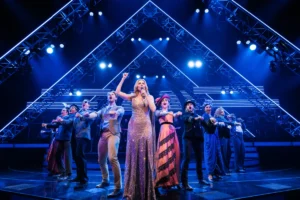
Beyond the awards themselves, the ceremony offered a rich tapestry of entertainment, with several segments standing out. The two performances of numbers nominated for Best Song were particularly captivating. The transcendent "Golden," from the vibrant animated feature "K-Pop Demon Hunters," was a dazzling display of kinetic energy and vocal prowess, embodying the film’s unique blend of cultural influences and fantastical storytelling. Equally impactful was the international restaging of the "Pierce the Veil" sequence from "Sinners," performed during "I Lied to You." This complex and emotionally charged segment from the film was brought to life on stage with breathtaking choreography and powerful vocal delivery, leaving a lasting impression.
The evening also featured several notable reunions, tapping into Hollywood’s rich history. The pairing of Ewan McGregor and Nicole Kidman, celebrating the 25th anniversary of their iconic musical "Moulin Rouge!," was both tart and touching, a nostalgic nod to their enduring on-screen chemistry and the film’s lasting legacy. However, not all reunions achieved the same resonance. The cast of "Bridesmaids," who gathered to present the award for Best Score, attempted a comedic bit involving reading ostensibly sexist notes "written" to them by Stellan Skarsgård. While intended to be humorous and subversive, the segment ultimately failed to "levitate" in the same way, perhaps falling short in its execution or simply feeling out of step with the evening’s overall tone.
The In Memoriam segment, always a poignant highlight, was particularly well-crafted this year, making room for several deeply personal and resonant tributes. Billy Crystal delivered a pitch-perfect homage to his dear friend Rob Reiner, celebrating the populist artistry that defined Reiner’s diverse career as a director and actor. Similarly, Barbra Streisand offered a touching tribute to her "The Way We Were" costar, Robert Redford, evoking the magic of their iconic on-screen pairing. However, even in this thoughtfully curated segment, a glaring omission raised eyebrows: the complete absence of any mention of Brigitte Bardot. While Bardot’s later years were undeniably marked by controversial right-wing views that alienated many, her monumental status as an essential and groundbreaking figure in 20th-century film history cannot be overstated. Her exclusion prompted a necessary discussion about how the Academy balances artistic legacy with personal conduct in its posthumous recognitions.
Despite the careful curation and smooth execution, a crucial element felt conspicuously absent from the evening: a more explicit and direct acknowledgment of what "One Battle After Another," as a cinematic work, truly represented. There was no need for obnoxious political preaching or heavy-handed grandstanding – indeed, the audience has grown weary of such displays, as evidenced by Javier Bardem’s sloganeering ("No to war. And free Palestine!"), which felt like a dated throwback to an era when Oscar celebrities routinely transformed the podium into a soapbox. By contrast, Pavel Talankin, the co-director of the Best Documentary winner "Mr. Nobody Against Putin," delivered a powerful and well-received speech, speaking out against the "complicity" that allows fascism to take root, connecting his film’s message directly to urgent global concerns.
However, "One Battle After Another" is a film deeply embedded with the political currents of contemporary America, a narrative that explores the very fabric of society and power structures. It wasn’t merely a piece of "resistance" cinema, designed to overtly oppose or provoke; rather, it was a work of cathartic political art, offering audiences a profound space to process and engage with complex societal realities. For a film that garnered six Academy Awards, this inherent political reality should have been at the forefront of its celebration. Instead, a casual viewer tuning into the Oscars, unfamiliar with the movie most ardently saluted, might never have grasped the slightest idea of its profound and timely subject matter. This oversight represented a missed opportunity to truly elevate the conversation around cinema’s enduring power to reflect, challenge, and ultimately shape our understanding of the world.