Empowerment on Screen: ‘Silent Rebellion’ Takes Top Honor at Dynamic Joburg Film Festival
Swiss Period Drama ‘Silent Rebellion’ Takes Top Honors at Joburg Film Festival
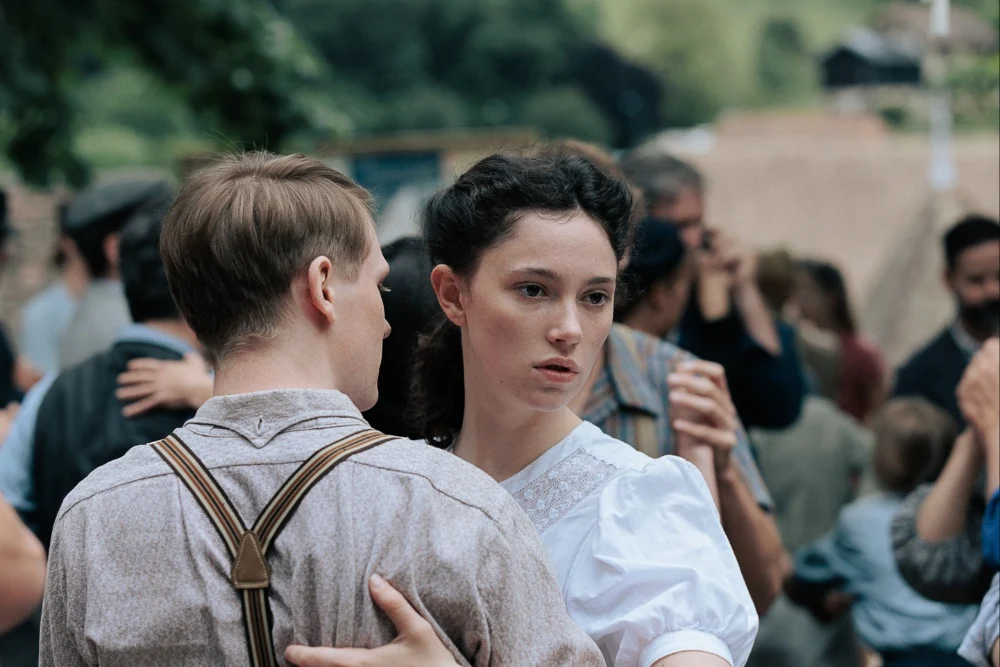
Johannesburg buzzed with cinematic energy as the 8th Joburg Film Festival concluded, crowning Marie-Elsa Sgualdo’s poignant Swiss drama, “Silent Rebellion,” with its coveted Nguni Horn for Best Feature Film. The victory on Saturday, March 8th, marked a significant moment for storytelling that champions resilience, particularly narratives exploring the intricate journey of female survival and defiance against societal oppression. Sgualdo’s feature debut resonated deeply with the jury and audiences alike, offering a powerful testament to the human spirit’s capacity for transformation in the face of profound adversity.
“Silent Rebellion” is a period drama that transports viewers to a conservative rural Protestant community shadowed by the lingering trauma of World War II. At its heart is Emma, a 15-year-old girl whose life is irrevocably altered after she becomes pregnant following a rape. Rather than succumbing to the suffocating expectations and moral hypocrisy of her village, Emma embarks on a courageous journey of self-determination. Her story is one of converting deep-seated trauma into a catalyst for personal emancipation, challenging the rigid social structures and judgmental gazes that seek to define her. The film masterfully navigates Emma’s inner turmoil and outward struggle, portraying her quest for agency in a world intent on silencing her. This powerful exploration of a young woman reclaiming her narrative against overwhelming odds is particularly relevant in contemporary discussions about reproductive rights, victim-blaming, and the enduring strength required to forge one’s own path.
The festival’s founder and executive director, Tim Mangwedi, lauded “Silent Rebellion” for its “perfect pairing of an engaging narrative with striking cinematography.” This commendation underscores the film’s artistic excellence, where compelling storytelling is elevated by visual artistry. The cinematic choices, brought to life by Director of Photography Benoît Dervaux, who also scooped the award for best cinematography, were instrumental in crafting the film’s immersive and emotionally resonant atmosphere. Dervaux’s work likely contributed to the film’s ability to transport viewers into Emma’s world, allowing for a deeper connection to her struggle and triumph. Furthermore, the jury extended a special mention to lead actress Lila Gueneau, whose portrayal of Emma evidently captured the nuanced complexities of the character’s journey from victim to survivor, embodying the quiet strength required to ignite a personal revolution.
The recognition at Joburg follows a prestigious premiere for “Silent Rebellion” in the Venezia Spotlight section at the 82nd Venice Film Festival, signaling its international appeal and critical acclaim early in its run. This international validation speaks volumes about the universal resonance of Emma’s story and Sgualdo’s directorial vision. For a women-focused audience, the film’s success highlights the critical importance of bringing female-centric stories, especially those dealing with challenging themes like sexual violence and resilience, to global cinematic platforms. It reinforces the idea that such narratives are not only vital for social commentary but also hold immense artistic merit.
Beyond the top prize, the Joburg Film Festival celebrated a diverse array of cinematic achievements, showcasing the rich tapestry of global and African storytelling. The award for Best African Feature went to South African directing duo Jason Jacobs and Devon Delmar for their sophomore film, “Variations on a Theme.” This compelling drama, which previously earned the top prize in Rotterdam’s Tiger Competition, delves into the poignant story of an elderly goat herder. She becomes entangled in a scam promising long-overdue reparations for her father’s service during World War II. The film’s narrative touches on themes of historical injustice, the enduring impact of conflict on families, and the vulnerability of marginalized communities. *Variety*’s Guy Lodge praised the film following its Rotterdam triumph for its “warmly observational, literary quality” that is “lovingly attentive to language and local custom.” This attention to cultural specificity and authentic representation is crucial, particularly in African cinema, where local customs and linguistic nuances often carry profound meaning and context for the narratives being told. For a women-focused platform, “Variations on a Theme” resonates by centering an elderly woman’s quest for justice, highlighting the often-unseen struggles and quiet determination of older women in post-colonial contexts.
The festival also acknowledged excellence in documentary filmmaking, with Nolitha Refilwe Mkulisi taking home the award for Best Documentary for her Rotterdam-premiering “Let Them Be Seen.” Mkulisi’s film offers a prismatic and intimate portrait of Tapoleng, her small hometown in South Africa’s Eastern Cape. This work exemplifies the power of documentary to illuminate local realities, giving voice and visibility to communities that might otherwise remain unseen. It underscores the importance of indigenous storytelling, allowing filmmakers to share authentic perspectives from within their own cultural landscapes. “Let Them Be Seen” offers a window into the daily lives, challenges, and triumphs of a specific South African community, contributing to a more nuanced global understanding of the continent. For women, this film speaks to the power of personal narrative and the act of reclaiming and celebrating one’s heritage through art.
Further underscoring the festival’s commitment to diverse and impactful narratives, the award for Best Editing went to Anna Johnson Ryndová for her work on Czech director Ondřej Provazník’s #MeToo drama, “Broken Voices.” This recognition highlights the critical role of editing in shaping the emotional arc and message of a film, especially one tackling such a sensitive and globally relevant issue as the #MeToo movement. “Broken Voices” likely contributes to the ongoing dialogue surrounding sexual harassment and assault, giving cinematic expression to the experiences of survivors and the systemic issues they confront. The acknowledgment of Ryndová’s editing prowess demonstrates that technical artistry can profoundly enhance the social and emotional weight of a film’s subject matter.
The festival’s commitment to nurturing emerging talent was evident in its awards for shorter formats and student works. Tevin Kimathi and Millan Tarus’s “Stero” was recognized as Best Short Film, while George Temba’s “The Silent Inheritance” earned the title of Best Student Film. Khaya Dube’s “Umxoxiso” won the Young Voices Competition, indicating a robust pipeline of future storytellers. These awards celebrate the innovation and fresh perspectives brought by new generations of filmmakers, ensuring the continued evolution and dynamism of the cinematic landscape. Additionally, veteran South African producer Harriet Gavson received a special recognition at Saturday night’s awards gala. Gavson’s honor acknowledges her significant contributions to the South African film industry, likely spanning decades of groundbreaking work, mentorship, and advocacy, serving as an inspiration for aspiring female producers and filmmakers.
The diverse and esteemed festival jury was comprised of leading figures in the film industry, including producer Cait Pansegrouw (“This Is Not a Burial, It’s a Resurrection,” “The Wound”), producer Bongiwe Selane (“Happiness Is a Four-Letter Word”), producer and director Sia Stewart (“Why Not Us: Southern Dance”), filmmaker and Septimius Awards founder Jan-Willem Breure, Berlinale curator and World Cinema Fund jury member Dorothee Wenner, and programmer Keith Shiri, founder of Africa at the Pictures. The strong presence of women producers and curators on the jury is particularly noteworthy, ensuring a breadth of perspectives and a keen eye for stories that resonate with a women-focused audience.
The 8th Joburg Film Festival, which commenced on March 3rd, will officially wrap on March 8th, International Women’s Day, with the highly anticipated world premiere of “The Trek,” a western-horror film from first-time director Meekaaeel Adam. This powerful closing choice reflects the festival’s embrace of genre diversity and new voices, providing a thrilling conclusion to a week of impactful cinema.
This year marked the JFF’s biggest edition to date, a testament to its growing influence and reach on the global stage. Festival curator Nhlanhla Ndaba proudly announced that organizers received a record 770 submissions from nearly 100 countries, a clear indication of the festival’s international appeal and its role as a vital platform for diverse narratives. From this vast pool, a carefully curated selection of 60 films was presented, offering audiences a rich and varied cinematic experience.
At the festival’s opening ceremony, Ndaba delivered a profound address, acknowledging the challenging global context in which this year’s edition unfolded while emphatically reminding filmmakers of the enduring vitality of their voices. “This festival happens at the moment when the world feels anything but nuanced — at the moment when artists are being asked: Should you speak or should you stay silent?” Ndaba reflected, referencing recent debates at the Berlinale concerning the intersection of art and politics. He challenged the notion that artists should remain detached from political discourse, asserting, “It was suggested that artists should stay away from politics because films are a counterweight to politics.”
Ndaba firmly positioned the Joburg Film Festival as a crucible where artistic expression and socio-political engagement coalesce. “The Joburg Film Festival has always been a space where politics and artistry meet, where the African continent and the world connect, where politics are just but another story,” he declared. He further elaborated on the festival’s philosophy, emphasizing that storytelling cannot exist in a vacuum, detached from the realities of the world. “Where we don’t pretend that storytelling happens in a vacuum,” he continued, “The moment we stop reflecting the world in all its beauty and in all its brokenness, it’s the moment we stop being relevant.” These powerful words encapsulate the festival’s ethos, highlighting its role not just as a showcase for films, but as a crucial forum for dialogue, reflection, and social change, particularly resonant for a women-focused audience that values narratives of truth, struggle, and empowerment. The festival, running from March 3rd to 8th in Johannesburg, ultimately served as a beacon for compelling narratives that dare to speak truth to power and illuminate the human experience in all its multifaceted glory.