
The highly anticipated debut of *Saturday Night Live U.K.* kicked off with a sketch that brilliantly blended historical reverence with irreverent humor, bringing together a fantastical assembly of Great Britons, including the indelible Princess Diana, in a bid to uncover the true essence of British greatness. This audacious opening sketch, titled “David Attenborough’s Last Supper,” immediately set a distinctive tone for the U.K. adaptation of the iconic American comedy institution, demonstrating a keen understanding of British cultural touchstones and a willingness to poke fun at its most revered figures.
From its very inception, the prospect of *Saturday Night Live* landing on British shores generated considerable buzz. The American original, a cultural juggernaut now in its fifth decade, has launched countless comedic careers and shaped late-night television. Translating its unique blend of topical satire, celebrity cameos, and live sketch comedy to a British sensibility was no small feat. The inaugural episode, therefore, carried the weight of immense expectation, and its opening sketch was poised to be a critical indicator of its potential success. By choosing a premise that was both deeply British and inherently absurd, *SNL U.K.* signaled its ambition to carve out its own comedic identity.
The sketch’s conceit was as imaginative as it was familiar: the beloved natural historian Sir David Attenborough, a figure of near-universal admiration in the United Kingdom, takes center stage. Portrayed with uncanny accuracy by comedian George Fouracres, Attenborough introduces himself with a wry, self-aware nod to his advanced age, stating, “I’m David Attenborough and it can’t be long now.” This immediate connection with the audience, acknowledging Attenborough’s status as a national treasure approaching his centenary year, grounds the fantastical elements that are about to unfold. The meta-humor of Fouracres’ portrayal perfectly captured Attenborough’s gentle demeanor while hinting at a mischievous streak.
The premise quickly escalated into a comedic sci-fi scenario. Fouracres-as-Attenborough reveals his grand experiment: “Using DNA sampling and my own brother’s ‘Jurassic Park’ technology I reanimated some of history’s greatest Britons for one night only so I can ask them what really makes Britain great.” The reference to “Jurassic Park” technology is a brilliant, layered joke, playing on the fact that Sir David Attenborough’s elder brother was the late, great Sir Richard Attenborough, who famously directed and starred as John Hammond in Steven Spielberg’s blockbuster dinosaur epic. This familial tie-in adds a layer of ingenious meta-comedy that is both clever and uniquely British in its subtle, understated delivery.
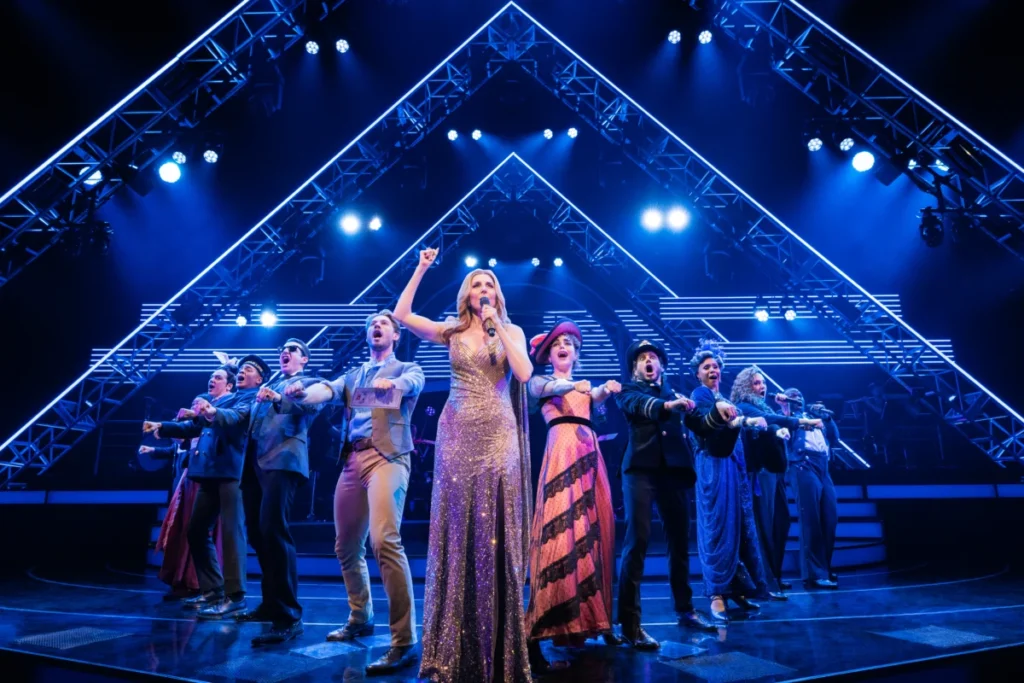
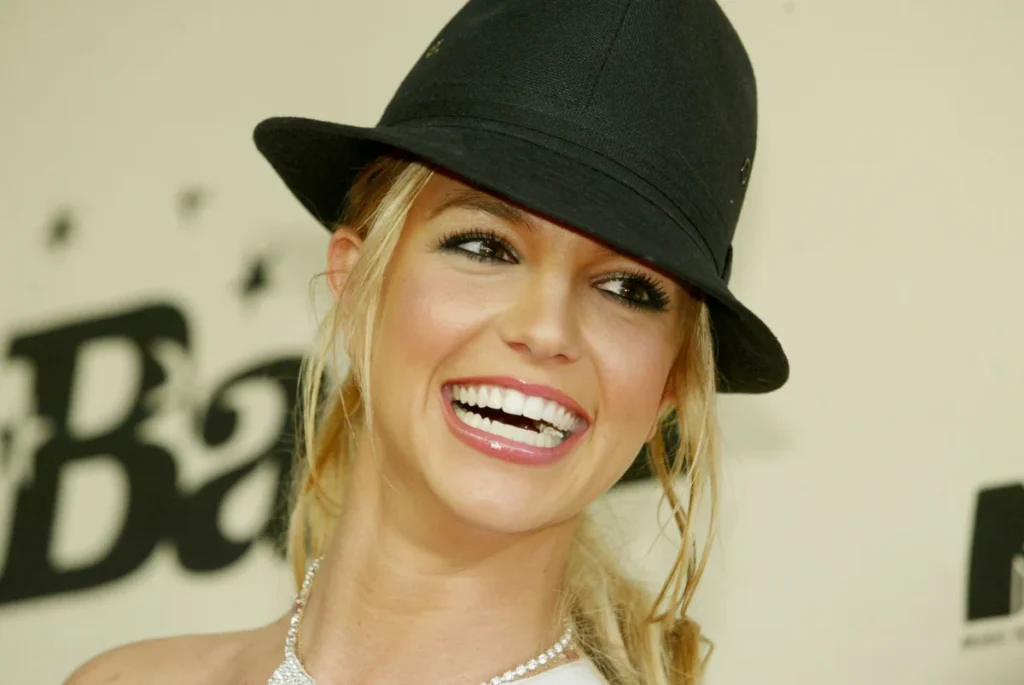
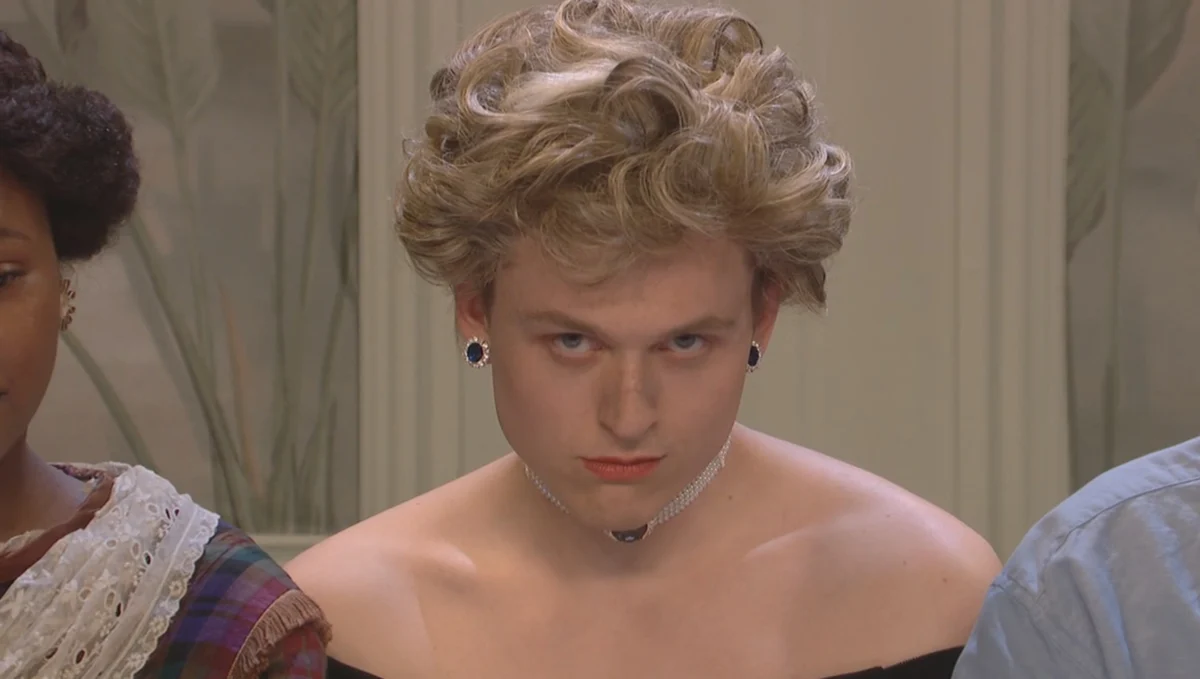
The stage was then set for a truly extraordinary dinner party, a historical reunion of epic proportions. Around a lavish table, a who’s who of deceased British icons were brought back to life, each actor embodying their character with a blend of reverence and comedic caricature. The guest list itself was a masterclass in diverse British identity, spanning royalty, science, literature, music, and public service. Among them sat the “People’s Princess,” Princess Diana, played by Jack Shep, whose portrayal, with fluttering eyes and an impeccably observed upper-class accent, immediately captivated. Diana’s enduring presence in the British consciousness, particularly among women, makes her inclusion a potent choice. Her image—graceful, compassionate, and sometimes subtly mischievous—continues to resonate, and her reanimation for a comedic dinner party offers a fresh, albeit playful, perspective on her legacy.
Joining Princess Diana at this anachronistic banquet were figures representing the breadth of British history and culture: Winston Churchill, the formidable wartime leader; Isaac Newton, the scientific giant whose laws shaped our understanding of the universe; Mary Seacole, the pioneering Jamaican-British nurse and businesswoman who defied racial prejudice to care for soldiers during the Crimean War; Benjamin Zephaniah, the beloved poet, writer, and activist whose recent passing added a poignant layer to his comedic resurrection; Freddie Mercury, the flamboyant and incomparable frontman of Queen; Elizabeth I, the iconic Tudor monarch whose reign defined an era; Cilla Black, the cherished singer and television presenter who became a household name; and, adding another layer of transatlantic comedy, American comedy legend Tina Fey, who made a special guest appearance as the iconic mystery writer Agatha Christie, acting as the dinner party’s somewhat bewildered hostess.
The ensemble cast was a carefully curated blend of comedic talent and cultural significance. For a women-focused audience, the presence of such powerful and influential female figures—Princess Diana, Mary Seacole, Elizabeth I, Cilla Black, and Agatha Christie—is particularly resonant. Each woman, in her own way, broke barriers and left an indelible mark on society, inspiring generations. Their collective presence at this fantastical dinner highlights the rich tapestry of female achievement in British history, even as the sketch playfully undermines their gravitas.
The sketch’s comedic genius, however, lay in its subversion of expectations. Sir David’s lofty question – “what really makes Britain great?” – a question that has preoccupied historians, politicians, and philosophers for centuries, was met not with profound insights but with decidedly mundane bickering. The revered figures, rather than engaging in a high-minded debate about empire, innovation, or democratic values, devolved into squabbling over the dinner menu. This brilliantly satirical twist highlights the often-absurd reality that even the greatest minds can be preoccupied with the most trivial concerns.
Princess Diana’s interaction with Freddie Mercury perfectly encapsulated this humor. When Mercury, ever the showman, expressed confusion over the menu, Shep-as-Diana, with a comforting yet slightly prim air, reassured him: “Thanks so much for hosting this dinner party Sir David,” before adding, “if it has an asterisk next to its name then it comes with free rice.” This line, delivered with an upper-class lilt, is a masterstroke of understated comedy. It’s a relatable, almost domestic detail that humanizes the “People’s Princess,” revealing a concern for practicalities that contrasts sharply with her regal image. It’s a moment that gently pokes fun at the British preoccupation with value for money, even in the most extraordinary circumstances.
Attenborough, witnessing the chaos unfold, tried to rein in his reanimated guests, reminding them of the investment made: “The BBC has spared no expense bringing you back to life,” he quipped, adding a touch of self-deprecating humor about public broadcasting budgets, “I’m sure they’re happy to cover one dinner at The Ivy.” This reference to The Ivy, a famously upscale London restaurant, further underscores the sketch’s Britishness, hinting at the aspirational yet sometimes ostentatious nature of public funding for cultural endeavors.
Ultimately, Attenborough’s grand experiment yielded no profound answers from his illustrious guests. Exasperated by their inability to focus on his philosophical query, he declares, “This experiment has been a complete waste of time and money.” His frustration leads him to provide his own, deeply satirical answers to the question of what truly makes Britain great: “The answer I was looking for as to what makes Britain truly great was the NHS and Centerparcs. There. You’ve ruined it.” This punchline is a masterstroke, juxtaposing the universally cherished National Health Service – a symbol of collective care and a source of national pride – with Centerparcs, a popular chain of family holiday resorts. It’s a hilarious, quintessentially British observation, highlighting the mundane comforts and collective experiences that often define national identity more than grand historical narratives. The sketch then veers into even greater absurdity with Attenborough’s abrupt announcement, “Now we should move onto the lovemaking portion of the evening. Anybody who wants to leave now’s your chance,” leaving both the reanimated guests and the audience in stitches.
The “David Attenborough’s Last Supper” sketch served as a triumphant opening for *Saturday Night Live U.K.* It showcased the show’s potential to blend sharp, topical satire with a uniquely British comedic sensibility. By tackling a grand question about national identity through the lens of absurdity and mundane squabbles, and by featuring a diverse array of beloved and sometimes controversial historical figures, the sketch demonstrated a willingness to be edgy and thought-provoking. The nuanced portrayals, particularly Jack Shep’s Princess Diana, ensured that while the figures were lampooned, their enduring legacies were also implicitly acknowledged. For audiences, especially those attuned to the nuanced roles women have played in shaping British culture, the sketch offered a refreshing and humorous re-evaluation of national heroes, proving that even the most iconic figures are not immune to a good-natured laugh.