
**When “Something Very Bad” Unfolds: A Deep Dive into Horror’s Television Predicament and a Nuanced Netflix Thriller**
The landscape of modern television has often found itself at odds with the demands of horror as a genre. There’s a pervasive theory, one often echoed among discerning viewers and critics alike, that the sustained tension essential for truly effective scares struggles to endure over the sprawling canvas of multiple episodes and seasons. The delicate dance of mystery, designed to build suspense and keep audiences on edge, frequently clashes with television’s inherent need for exposition, world-building, and profound character development. While visionary auteurs like Mike Flanagan have carved out a niche for deeply emotional and genuinely terrifying narratives, and Ryan Murphy’s influential “American Horror Story” once dominated cultural conversations, even these exceptions highlight the rule, with “AHS” itself experiencing a perceived decline in impact after its groundbreaking initial seasons. Then there’s the colossal success of “Stranger Things,” which, despite its monstrous creatures and dark undertones, has always leaned more into the realm of youthful adventure, using horror accents rather than defining itself purely as a genre piece.
This ongoing debate about horror’s place on the small screen takes on new relevance with the recent debut of “Something Very Bad Is Going to Happen” on Netflix. The series marks the first non-“Stranger Things” production for the streaming giant from the Duffer Brothers, who are notably set to transition their creative partnership from Netflix to Paramount in the coming month. While their next sci-fi venture, “The Boroughs,” is slated for May, this new eight-episode series, crafted and showrun by the talented Haley Z. Boston, offers an immediate litmus test for the enduring challenges of televised horror. My initial encounters with “Something Very Bad Is Going to Happen” seemed to confirm my long-held suspicions about the genre’s awkward fit. For nearly half of its season, the show diligently guards its true nature, immersing viewers in a slow-burn mystery set against the backdrop of an upstate wedding. Yet, once its cards are finally laid bare, the series blossoms into something quite compelling, prompting a re-evaluation – not of its quality, but of its chosen format and the journey it asks its audience to undertake.
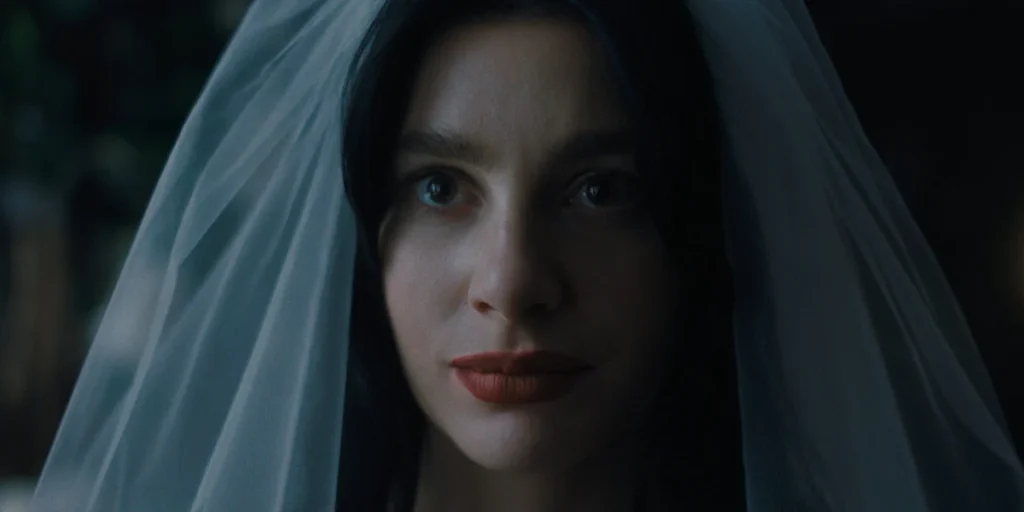
The premise initially unfolds with the seemingly conventional anxieties surrounding an impending wedding. Psychology graduate student Rachel (portrayed with a compelling blend of vulnerability and nascent resilience by Camila Morrone) is already grappling with a difficult past – having lost her mother as an infant and being estranged from her father. These existing traumas amplify her unease about her upcoming nuptials to the sweet, if somewhat unassuming, Nicky (Adam DiMarco). Her trepidation is entirely understandable: she has never met Nicky’s family, the Cunninghams, nor has she set foot in their remote, snowbound country cabin, which is slated to host the celebration in just five days. This immediate sense of isolation and unfamiliarity is fertile ground for psychological dread, tapping into a universal fear of the unknown and the daunting prospect of integrating into a new, potentially hostile, family unit.
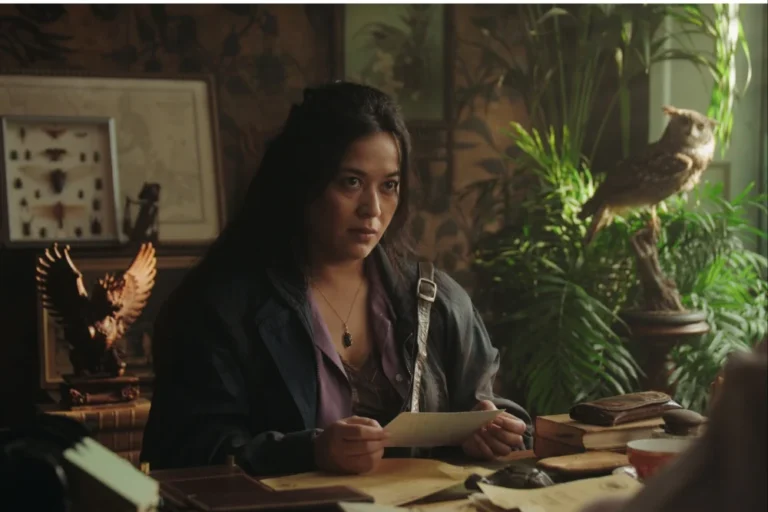
The Cunningham clan, true to the horror trope, certainly doesn’t go out of their way to make a welcoming first impression. Patriarch Boris (the always-chilling Ted Levine) reveals a penchant for taxidermy as a form of “stress relief,” transforming deceased animals into macabre household ornaments – a hobby that speaks volumes about his character’s unsettling detachment and control. His wife, Victoria (a masterfully enigmatic Jennifer Jason Leigh), glides through the house in her nightgown, dispensing cryptic pronouncements that only deepen the mystery and Rachel’s growing paranoia. Nicky’s sister, Portia (Gus Birney, in a standout performance), appears overtly intent on seizing control of every aspect of the wedding, from catering to decor, effectively sidelining Rachel and further asserting the family’s dominance. Meanwhile, Nicky’s brother, Jules (Jeff Wilbusch), presents as openly antagonistic, a blunt instrument of discomfort. Adding another layer of familial tension, Jules’ wife, Nell (Karla Crome), also happens to be Nicky’s former girlfriend, a detail that introduces an immediate, palpable romantic and social friction into an already strained environment. Each family member is meticulously crafted to contribute to Rachel’s escalating sense of dread, painting a picture of a unit bound by unspoken rules and unsettling secrets.
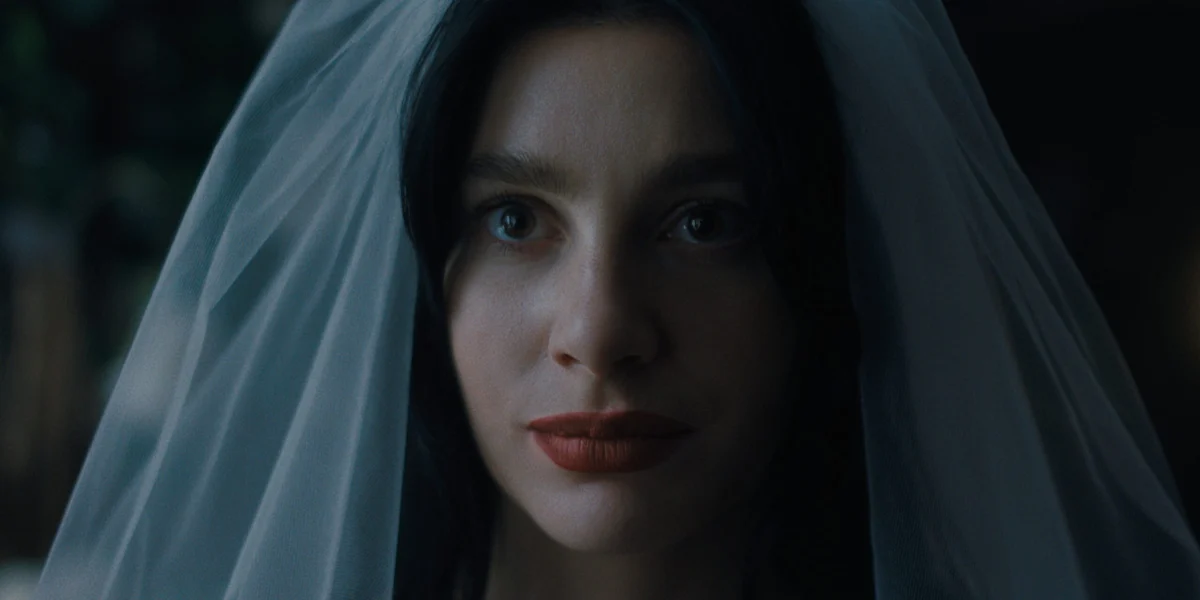
Rachel’s growing suspicions that the Cunninghams are orchestrating some form of conspiracy against her are not unfounded. She overhears hushed conversations that cease abruptly upon her approach. Her wedding dress mysteriously vanishes, only for Portia to eagerly substitute it with Victoria’s antiquated gown, a symbolic gesture of Rachel’s erasure and assimilation into the family’s strange traditions. A peculiar family portrait hangs prominently, featuring a conspicuous blank space reserved for Nicky’s future wife – a chilling visual metaphor for the pre-ordained role Rachel is expected to fill. Given the pervasive narrative of malevolent, predatory wealth in contemporary pop culture – a trope seen in everything from “Get Out” to “Ready or Not” and even in the romantic drama “Love Story” – the revelation that the Cunninghams’ “humble country retreat” is, in fact, a sprawling, isolated estate only heightens the sense of foreboding. These early, almost overt, omens, however, serve as a subtle meta-narrative clue for the astute viewer: their very obviousness suggests that the true horror lies not in these surface-level anxieties, but in something far deeper and more intricately woven, hinting at further, more profound twists yet to come.
The creative vision behind “Something Very Bad Is Going to Happen” is notably steered by an all-female directing team, with producing director Weronika Tofilska at the helm for half the season’s episodes. Their collective expertise is evident in the show’s initial construction of unease, employing well-executed jump scares and leveraging desolate, snow-covered landscapes to amplify Rachel’s isolation and growing paranoia. The visual language effectively translates her internal turmoil into an external environment that feels both beautiful and menacing. However, this meticulously crafted slow burn comes with its own structural considerations. It takes an entire episode simply for the betrothed couple to arrive at the remote cabin, and several more for the series to peel back the layers of its initial premise and reveal its true thematic core. While the reviewer, bound by embargoes, cannot disclose the specifics of this pivotal shift, it is characterized by a significant tonal metamorphosis. The show transitions from its initial psychological thriller setup into a narrative that embraces a more wryly comedic and delightfully deadpan sensibility, a stark contrast to the preceding tension.
This shift, occurring in what could be termed “Side B” of “Something Very Bad Is Going to Happen,” fundamentally reorients the show’s focus. The narrative gravitates towards an intense scrutiny of Rachel and Nicky’s relationship, moving beyond the external threats to probe the internal dynamics of their bond. Initially, Camila Morrone and Adam DiMarco embody classic horror archetypes: Rachel as the panicked, potentially “final girl” protagonist, and Nicky as the seemingly clueless, possibly gaslighting partner who acknowledges her fears without truly validating them. Yet, as the series progresses, it begins to pose deeper questions about their compatibility, the authenticity of their connection, and the inherited expectations of marriage they both carry from their respective families. This retrospective transformation of their characters into complex individuals with a nuanced dynamic presents a challenge. The lengthy initial setup, while effective for building suspense, ultimately compresses the time available to fully explore and shade in the intricate layers of their relationship, leaving some of these crucial developments feeling somewhat rushed.
Television, in its serialized form, has historically proven to be an unparalleled medium for dissecting the complexities of romantic bonds. Recent successes like “Love Story,” celebrated for both its commercial appeal and critical acclaim, underscore how the extended narrative canvas of TV allows for an in-depth exploration of relationships, their origins, challenges, and evolution. “Something Very Bad Is Going to Happen,” in its dedication to obscuring the “real deal” with the Cunninghams and, by extension, Rachel’s own true predicament, inadvertently constrains the very relational undertaking it later seeks to explore. The show’s commitment to its initial mystery means that the rich, intricate character work required to fully develop Rachel and Nicky’s dynamic is compressed into a space too narrow to do it complete justice. This structural choice occasionally blurs the line between a “refreshingly wacky tone” and what some might perceive as “straight-up messy storytelling.” A sudden introduction of Portia’s ability to communicate with the dead, conveniently timed to Rachel’s need for a medium, exemplifies this narrative tightrope walk. However, even amidst these structural quirks, Gus Birney’s performance as Portia shines through. Her “shrill mania,” which initially contributes to the unsettling atmosphere, gradually evolves into a wonderfully comic and expertly off-putting presence, becoming a highlight of the series.
Ultimately, “Something Very Bad Is Going to Happen” hinges on the profound question of whether Rachel and Nicky are genuinely convinced they are soulmates. It’s an intriguing premise, one the show cleverly unpacks by revisiting their charming airport meet-cute origin story. Yet, by delaying the establishment of these core relational stakes until so late in the season, the narrative risks losing its audience to other, more immediate mysteries. One can’t help but ponder alternative formats: would this story have benefited from being condensed into a feature film, allowing for a more focused and immediate exploration of its central themes? Or perhaps a slightly shorter series, one that dispensed with some of the prolonged preamble to grant the true “meat” of the story – the relationship dynamics and the post-reveal narrative – more room to breathe and flourish? The answers remain elusive. What is clear, however, is that while parts of “Something Very Bad Is Going to Happen” proved immensely enjoyable and thought-provoking, the series’ inherent strengths might have been amplified by a structural approach better suited to showcasing its unique blend of horror, mystery, and relationship drama.
All eight episodes of “Something Very Bad Is Going to Happen” are now available for streaming on Netflix.