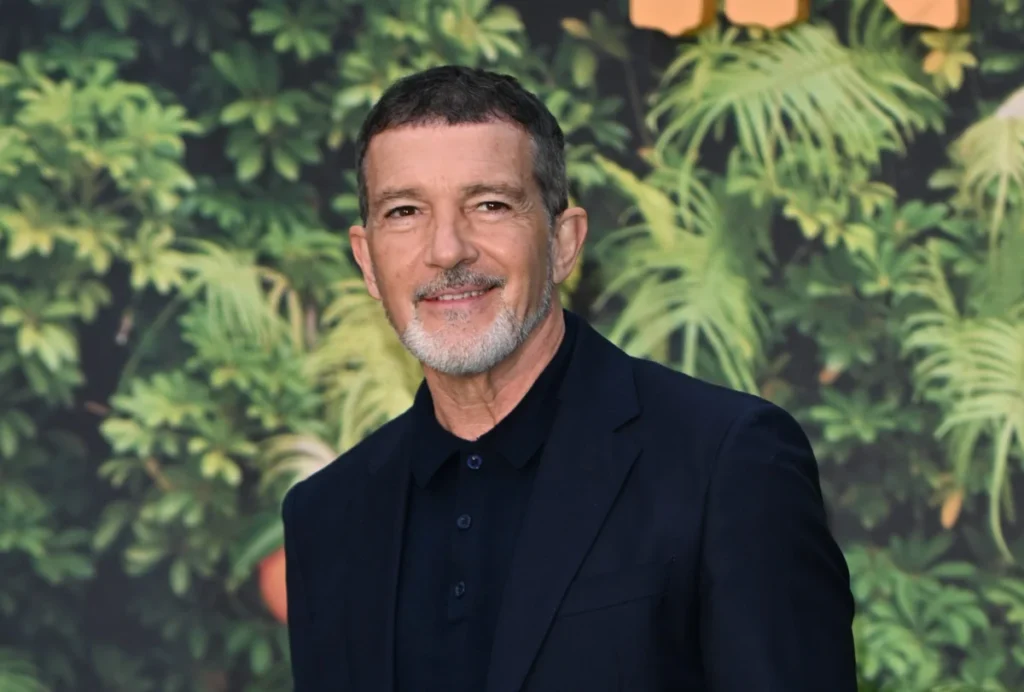



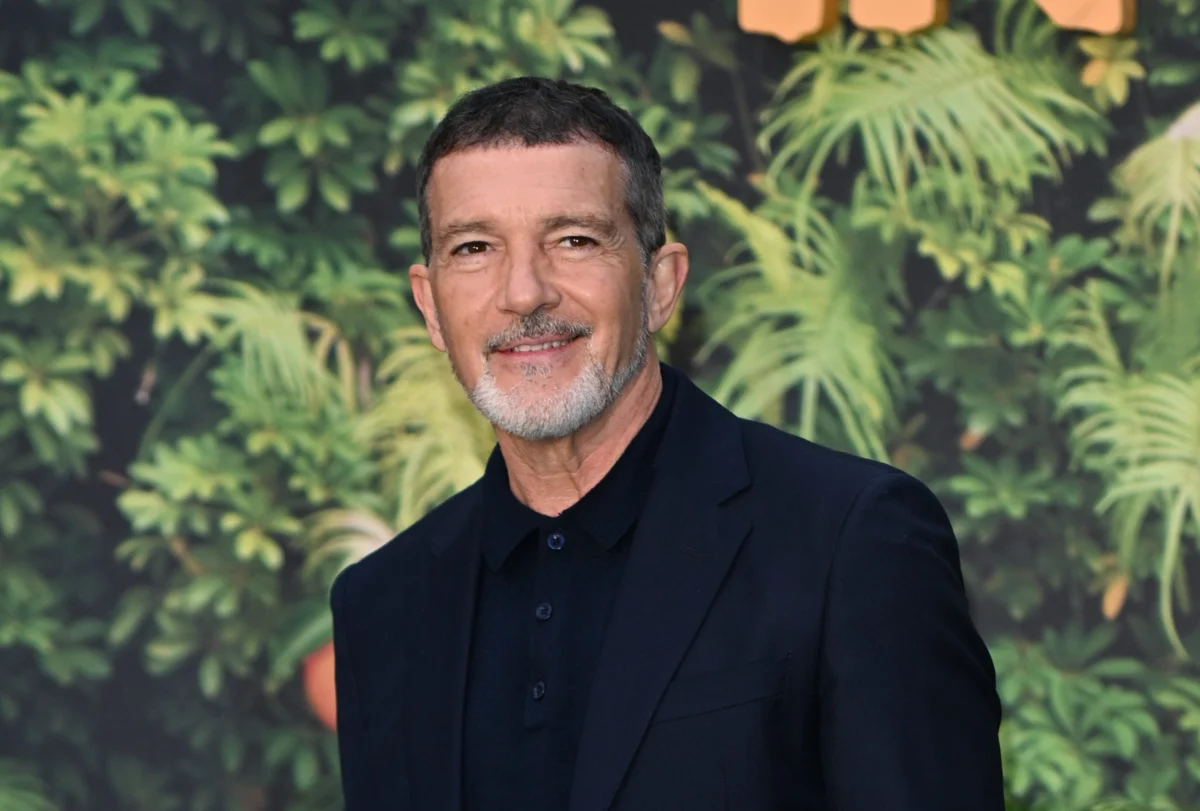
Before he donned the iconic black mask and wielded a rapier with unparalleled grace, Antonio Banderas faced a stark reality upon his arrival in Hollywood: a pervasive casting bias that sought to confine actors of color to a narrow, often villainous, corner of the cinematic landscape. It was a disheartening welcome for an actor who had already achieved significant acclaim in his native Spain, but one that he would ultimately challenge and triumph over, carving out a legacy that resonated far beyond the silver screen.
Banderas, a magnetic presence who had become synonymous with the daring and often controversial cinema of Pedro Almodóvar, made the transatlantic leap to Los Angeles in the early 1990s. He brought with him an undeniable talent, a potent charisma, and a unique sensibility honed by years in European arthouse films. However, the American film industry of the era presented a different set of expectations, often rooted in antiquated stereotypes. In a candid interview with The Times of London, Banderas recounted the explicit warning he received, a blunt summation of Hollywood’s limited vision: “They said, ‘You are here, like the Blacks and the Hispanics, to play the bad guys.'” This declaration laid bare the systemic barriers that many actors from diverse backgrounds encountered, revealing a film industry often hesitant to envision them in roles that transcended harmful tropes.
The cultural landscape of Hollywood in the late 20th century was one where representation was heavily skewed. For Black and Hispanic actors, opportunities for leading roles, particularly those portraying heroes or complex, sympathetic characters, were scarce. Often, their presence was relegated to supporting parts as antagonists, drug lords, gang members, or one-dimensional caricatures. This not only limited the artistic scope for talented individuals but also reinforced damaging stereotypes for audiences worldwide. Banderas’s statement is a powerful testament to the explicit nature of this bias, not merely an unspoken understanding but a direct directive given to newcomers.
Yet, Banderas, with his inherent dynamism and relentless drive, refused to be pigeonholed. His career trajectory quickly demonstrated an ambition that defied these restrictive warnings. And then, a pivotal moment arrived that would fundamentally challenge and ultimately shatter this imposed stereotype: the opportunity to embody the legendary swashbuckler, Zorro. In 1998’s “The Mask of Zorro,” Banderas stepped into a role traditionally associated with a dashing hero of justice, a figure who fought for the oppressed and championed the innocent. This casting was revolutionary, placing a Latino actor at the forefront of a major Hollywood action-adventure film as the undisputed protagonist.
Banderas himself eloquently articulated the seismic shift this role represented, directly contrasting it with the earlier prophecy: “The problem was a few years later I had a mask, hat, sword and cape and the bad guy was Captain Love, who was blond and had blue eyes.” This poignant observation underscored the profound irony and poetic justice of his casting. Here was a Latino actor, initially told he was destined for villainy, now portraying the ultimate hero, while the antagonist—Captain Love, played by Matt Letscher—was depicted with features traditionally associated with Hollywood’s “hero” archetype. It was a powerful inversion of expectations, sending a clear message about who could be a hero and who could be a villain on the global stage.
The impact of “The Mask of Zorro” extended far beyond its critical and commercial success. Directed by Martin Campbell, the film was a vibrant, classical adventure that captivated audiences worldwide, grossing an impressive $250 million at the global box office against a production budget under $100 million. Banderas, alongside screen legends Anthony Hopkins and the captivating Catherine Zeta-Jones, delivered a performance that critics lauded. Variety’s review specifically highlighted the film’s classical grandeur and Banderas’s commanding presence, stating, “‘The Mask of Zorro’ stands as a pointed riposte to those who say they don’t make ’em like that anymore. The return of the legendary swordsman is well served by a grandly mounted production in the classical style,” before praising its leading man: “Darkly handsome, self-confident, physically agile and sensitive with his lady love, Banderas is everything one could want as Zorro.” This affirmation from a leading industry publication underscored not just his talent, but his ability to embody a universally beloved hero, irrespective of his ethnicity.
The success of Zorro was not merely a personal triumph for Banderas; it was a watershed moment for Latino representation in Hollywood. It proved, unequivocally, that audiences were eager to embrace heroes from diverse backgrounds, and that talent and charisma knew no racial or ethnic bounds. This film paved the way for future generations of Latino actors to be considered for a broader range of roles, challenging the industry to look beyond its entrenched biases.
Banderas’s commitment to breaking stereotypes didn’t end with Zorro. He further cemented his status as a beloved heroic figure, particularly for younger audiences, through his iconic voice work as Puss in Boots in the “Shrek” franchise and its subsequent spin-off films. This animated character, a charming, swashbuckling feline with a distinctive Spanish accent, became a global sensation. As Banderas himself noted, “Even more important is ‘Puss in Boots,’ because it’s for young kids. They see a cat that has a Spanish, even an Andalusian accent and he’s a good guy.” The significance of this role cannot be overstated. For millions of children around the world, Puss in Boots became an early, positive association with a character who spoke with a Spanish accent, embodying bravery, wit, and kindness. This powerful representation in animated children’s media contributes to shaping perceptions from a young age, normalizing diversity and celebrating cultural heritage in a joyous, heroic light.
Banderas’s journey to Hollywood was preceded by a decade of prolific and critically acclaimed work in Spain. He became a muse for visionary director Pedro Almodóvar, collaborating on a series of groundbreaking films that established Banderas as a fearless and versatile actor. Films like “Matador,” “Women on the Verge of a Nervous Breakdown,” and “Tie Me Up! Tie Me Down!” showcased his ability to portray complex, often darkly comedic, and emotionally raw characters. Almodóvar’s cinema, known for its vibrant aesthetic, queer themes, and exploration of human desire, provided Banderas with a profound artistic foundation that set him apart from many Hollywood actors of his generation. These roles, often pushing boundaries and defying conventional masculinity, honed his craft and prepared him for the diverse challenges he would face in the American film industry.
His official Hollywood debut arrived in 1992 with Warner Bros.’ “The Mambo Kings,” where he starred alongside Armand Assante as brother musicians who flee Cuba for the vibrant music scene of New York City. The film, a poignant portrayal of the immigrant experience and the pursuit of the American dream through music, introduced Banderas to a wider American audience, allowing him to showcase his dramatic range and musical talent, even as he was still refining his English language skills. This initial foray into Hollywood was a far cry from the villainous roles he was warned about, hinting at the diverse path he was destined to forge.
The 1990s saw Banderas’s profile steadily rise in Hollywood, as he navigated a diverse array of projects that showcased his range and versatility. He appeared in Oscar-nominated dramas like “Philadelphia” (1993), a groundbreaking film about AIDS, where he delivered a sensitive and nuanced performance as Miguel Álvarez, the partner of Tom Hanks’s character. This role was significant not only for its critical acclaim but for its empathetic portrayal of an LGBTQ+ character during a time when such representation was rare and often stereotypical. He then moved to bigger budget tentpoles such as “Interview With a Vampire” (1994), where he held his own alongside superstars Tom Cruise and Brad Pitt, and later embraced the indie action scene with Robert Rodriguez’s cult classic “Desperado” (1995). In “Desperado,” Banderas honed the charismatic, action-hero persona that would serve him well in Zorro, blending grit with undeniable charm and a flair for physical performance.
His career continued its upward trajectory, leading him to star as Che opposite Madonna in Alan Parker’s lavish 1996 musical “Evita.” This role, which required both powerful singing and dramatic acting, further solidified his status as a multifaceted international star capable of tackling demanding and high-profile projects. Each of these roles, from the sensitive partner in “Philadelphia” to the charismatic revolutionary in “Evita,” demonstrated Banderas’s refusal to be limited by typecasting. He consistently sought out characters that offered depth and complexity, steadily building a reputation as an actor who could deliver powerful performances across genres and scales.
The enduring appeal of Antonio Banderas lies not just in his undeniable talent or his captivating screen presence, but in his unwavering commitment to challenging and dismantling the narrow confines of Hollywood’s traditional casting. From his initial warning about being relegated to “bad guy” roles to his iconic portrayal of Zorro and the beloved Puss in Boots, Banderas has consistently championed positive representation. His career serves as a powerful testament to the impact one individual can have in shifting cultural narratives, proving that heroes come in all forms and voices, and that authenticity and talent will ultimately triumph over prejudice. He didn’t just play heroes; he became a hero for many, inspiring a generation to see themselves reflected in stories of bravery, justice, and unwavering spirit.