


**Locarno Film Festival Unearths Hollywood’s Red Scare: A Timely Retrospective on Courage and Artistic Resistance**
The Swiss Alps are poised to host a profound cinematic journey into one of American entertainment’s most chilling chapters, as the Locarno Film Festival announces an extensive retrospective dedicated to the infamous Hollywood Blacklist. Set to unfold during its upcoming 79th edition from August 5-15, this meticulously curated program, titled “Red & Black – Hollywood Left and the Blacklist,” promises to peel back layers of history, revealing the human cost and defiant spirit that defined an era of unprecedented political pressure on artists.
Unveiled with significant anticipation at the Academy Museum in Los Angeles on March 26, the retrospective arrives at a moment when discussions around artistic freedom, political polarization, and public accountability resonate with renewed urgency. Curated by Ehsan Khoshbakht, a distinguished figure known for his work with Locarno’s indie cinema focus and as co-director of Bologna’s esteemed Cinema Ritrovato Festival, the program is a collaborative effort, produced by Locarno in partnership with the Cinémathèque suisse and bolstered by the support of the UCLA Film and Television Archive. This powerful alliance underscores the gravity and scholarly depth intended for this historical excavation.
At its heart, “Red & Black” confronts the harrowing period when the burgeoning Cold War between the United States and the Soviet Union cast a long, ominous shadow over the creative landscape. As the festival elaborated in a recent statement, “right-wing voices in the American political system alleged communist infiltration of Hollywood,” triggering a moral panic that would systematically dismantle careers and stifle artistic expression for over a decade. This wasn’t merely a political skirmish; it was a cultural war waged against the very soul of storytelling, driven by fear and suspicion.
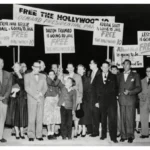
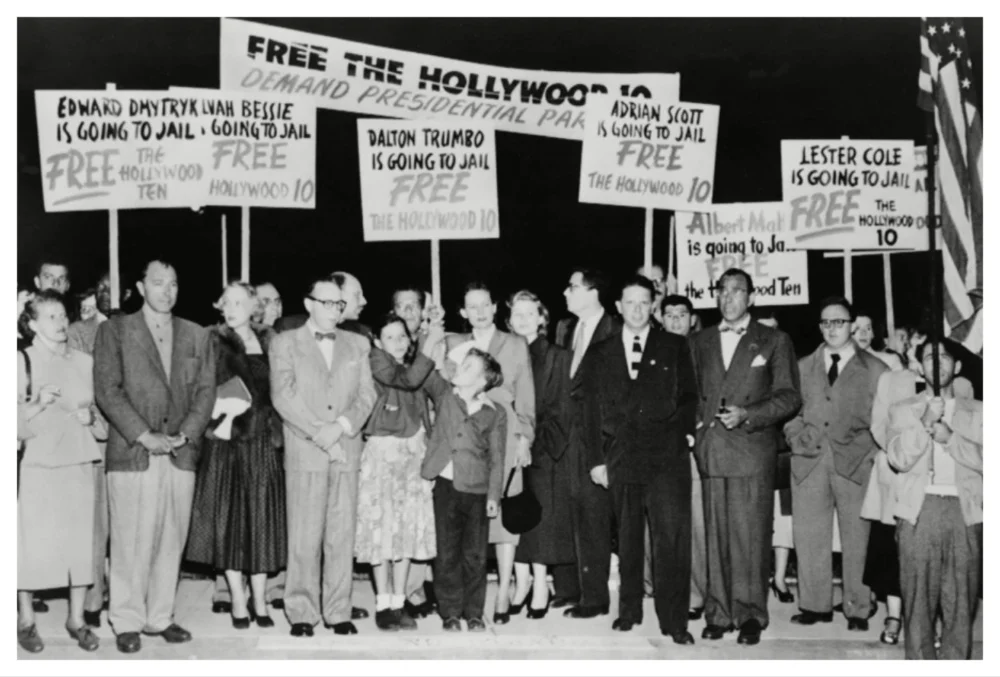
The catalyst for this dark period was the House Un-American Activities Committee (HUAC), a congressional committee that began its investigations into Hollywood in the late 1940s. What started as inquiries quickly devolved into what the festival aptly described as “hearings that more closely resembled prosecutions.” Artists, writers, directors, and actors were summoned to testify, often pressured to name names—to betray colleagues as supposed communist sympathizers or face severe repercussions. The atmosphere was rife with intimidation, and the stakes were existential: cooperate or be cast out.
The industry’s response, tragically, was largely one of capitulation rooted in fear. Studio executives, desperate to protect their businesses from public outcry and government scrutiny, enforced a “blacklist.” This unofficial but universally understood agreement meant that hundreds of individuals deemed “uncooperative” or “subversive” were barred from working in Hollywood. Their names were circulated, their talents rendered worthless overnight. Careers were irrevocably upended, financial stability evaporated, and personal lives were shattered.
The blacklist forced many artists to adopt pseudonyms, laboring in the shadows to contribute to films they couldn’t openly claim. Others, facing professional annihilation, were compelled into self-exile, seeking creative havens in Europe or other parts of the world. The specter of “guilt by association” tore families apart and fostered a climate of paranoia where even casual friendships or past political affiliations could lead to ruin. Films with even subtly left-leaning ideas—whether real or imagined—were suppressed, leading to a chilling effect on the kind of stories Hollywood dared to tell. The vibrant, socially conscious cinema of the pre-blacklist era gave way to a more cautious, often bland, output.
Yet, amidst this profound abuse of state and industry power, there emerged a fierce artistic resistance. The “Red & Black” program aims to capture this complexity, painting a portrait of creatives who, despite immense pressure, met the challenge with remarkable courage and integrity. It is a testament to the enduring human spirit and the unyielding power of art, even when threatened with censorship and suppression.
The retrospective will feature a rich tapestry of films—still unspecified in their entirety but promising a compelling selection—from a wide array of directors, writers, and stars whose lives and careers were irrevocably marked by this period. Icons like John Garfield, a charismatic actor whose career was tragically cut short by the blacklist and who died prematurely at 39, will be remembered. Dalton Trumbo, one of the “Hollywood Ten” who famously served time in prison for contempt of Congress, embodies the spirit of defiance. Trumbo’s story is particularly poignant; he continued to write under pseudonyms, even winning two Academy Awards that he couldn’t claim for years, eventually making a triumphant return to public credit with blockbusters like Stanley Kubrick’s “Spartacus” and Otto Preminger’s “Exodus.” His struggle became a symbol of the eventual breaking of the blacklist.
Joseph Losey, another director forced into exile, found a new artistic life and critical acclaim in Europe, directing masterpieces like “The Servant” and “The Go-Between.” The brilliant writer and wit Dorothy Parker, a prominent figure of the Algonquin Round Table and a political activist, also found herself blacklisted, her sharp pen silenced in Hollywood. Richard Wright, the acclaimed author of “Native Son” and “Black Boy,” faced intense scrutiny and chose to expatriate to France, continuing his literary work away from American pressures. And perhaps one of the most famous cases, the legendary Charles Chaplin, who, despite his global icon status, was denied re-entry into the United States while traveling abroad for the premiere of his film “Limelight,” a devastating blow that forced him into permanent European exile. These are just a few of the many personal sagas the Locarno retrospective will illuminate, tracing the Red Scare’s origins and its far-reaching aftermath across the United States, in Europe, and beyond.
The scope of the “Red & Black” program is remarkably comprehensive, transcending geographical and genre boundaries. It will showcase not only fiction films but also documentaries, newsreels, and shorts from a diverse array of countries including the U.S., Britain, Spain, Italy, France, Mexico, and Argentina. This international perspective is crucial, illustrating how the American blacklist had global repercussions and how artists found solidarity and new opportunities in foreign lands, often contributing to the cinematic richness of their adopted homes. The festival plans to assemble both digital restorations and archival prints, offering a unique opportunity to experience these films in their intended glory, many of which have been rarely seen in their original context.
Beyond the screenings, the retrospective will be enriched by a companion book featuring contributions from international film scholars and critics. This publication will offer fresh academic perspectives on the films of the Hollywood left and the broader historical context of the blacklist. Additionally, a podcast written by Khoshbakht himself will provide aural insights, diving deeper into the narratives and analyses presented in the program. This multi-platform approach ensures a comprehensive and immersive educational experience, inviting audiences to engage with the material on various levels.
Ehsan Khoshbakht expressed the profound personal and professional significance of this undertaking, stating that this retro is “the timeliest one I have worked on in my life.” His sentiment resonates deeply in today’s world, where debates around free speech, political ideologies, and the power of media continue to dominate public discourse. He elaborated, “The imaginative ways of incorporating political consciousness into film, and the tragic consequences of that political determination, form the thrilling story of this program, offering new angles on the witch-hunts of the McCarthy era.” This focus on “new angles” suggests a nuanced exploration that moves beyond simple condemnation, delving into the creative strategies and personal resilience of those who refused to be silenced.
Giona A. Nazzaro, Locarno’s artistic director, echoed Khoshbakht’s enthusiasm, highlighting the program’s scholarly and critical ambition. “This retrospective will be a unique critical and historical endeavour that sheds new light on a grim passage of Hollywood history,” Nazzaro commented. His vision for the festival consistently emphasizes bold programming that challenges conventional narratives and fosters deeper understanding of cinema’s role in society. This particular program aligns perfectly with Locarno’s identity as a hub for independent, thought-provoking cinema that doesn’t shy away from complex historical or social issues.
Ultimately, “Red & Black – Hollywood Left and the Blacklist” is more than just a series of film screenings; it is an act of historical remembrance and critical re-evaluation. By reframing the conflicts of that turbulent time, the program will provide invaluable context, allowing contemporary audiences to grapple with the enduring questions of artistic integrity, freedom of expression, and the insidious nature of political persecution. It serves as a powerful reminder of how easily democracy can be eroded when fear triumphs over reason and how vital it is to protect the voices of dissent and creativity. The 79th Locarno Film Festival invites cinephiles and history enthusiasts alike to bear witness to this essential cinematic reckoning.