

**Cultural Crossroads: Kennedy Center Honors Rebranded Amidst Venue Shift and Political Tides**
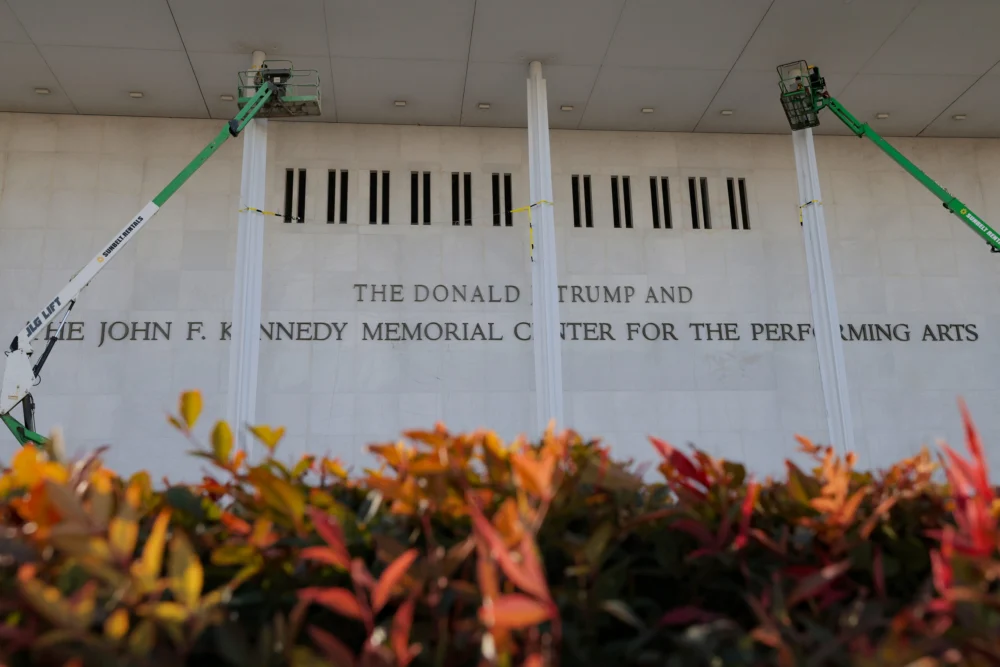
A significant shift is underway at one of America’s most revered cultural institutions, as “The Kennedy Center Honors” — a long-standing hallmark of artistic achievement — has been presented under its original name for what is likely the final time in the foreseeable future. The prestigious awards program is set to undergo a dramatic rebranding, henceforth to be known as “The Trump Kennedy Center Honors,” a move that reflects the concerted efforts of the board appointed by President Donald J. Trump to imbue the institution with his name. This change, slated to endure for at least the next three years, signals a profound departure from decades of tradition and has sparked considerable debate across the arts community and political spectrum.
Beyond the controversial name change, the annual gala, celebrated for its star-studded tributes and national recognition of performing artists, will also relocate from its historic Washington, D.C. home. For at least the next two years, the event will unfold in an alternative, smaller venue, stepping away from the grand hall that itself reportedly underwent a name change to bear the president’s name, a decision whose authority remains a point of contention among legal and cultural experts. This dual transformation — in nomenclature and location — underscores a period of unprecedented upheaval for an institution traditionally seen as a beacon of non-partisan artistic excellence.
The Kennedy Center, officially known as The John F. Kennedy Center for the Performing Arts, was established in 1971 as a living memorial to President Kennedy. Its mission has always been to present and produce a broad range of performing arts, foster arts education, and serve as a national cultural center. The Kennedy Center Honors, inaugurated in 1978, quickly became a cherished annual tradition, celebrating five individuals each year for their lifetime contributions to American culture through the performing arts. Past honorees have represented a diverse tapestry of talent, from legendary musicians and actors to dancers, choreographers, and playwrights, chosen for their enduring impact rather than their political affiliations. The institution has long stood as a symbol of American cultural diplomacy, its grand architecture and prestigious programs attracting visitors and artists from around the globe, fostering a sense of national pride in artistic accomplishment. The abrupt rebranding and relocation thus represent a significant rupture with this carefully cultivated legacy of artistic independence and national unity.
Richard Grenell, the president of the center, confirmed these sweeping changes in an interview with D.C. news radio station WTOP, assuring listeners that the program “will definitely go forward.” He acknowledged the necessity of a smaller venue, projecting that this constraint would only serve to heighten exclusivity and drive up ticket demand. “It will probably just be in a smaller venue, which just means ticket demand will be even higher,” Grenell stated, framing the logistical challenge as a potential boost for the event’s allure. The exact location for the inaugural “Trump Kennedy Center Honors” remains “yet to be determined,” though Grenell indicated that the search for suitable alternative sites was already actively underway. These revelations, first aired on local radio, were subsequently corroborated by representatives of the center on Saturday, as confirmed by The Washington Post, solidifying the impending reality of these transformative plans.
The immediate catalyst for the Honors’ displacement is the impending closure of the Kennedy Center — or, depending on one’s perspective, the Trump Kennedy Center — for an extensive, and highly controversial, multi-year overhaul. This renovation, scheduled to commence this year, follows a period of escalating scrutiny and concern for the center’s programming. Prior to Grenell’s announcement of the closure, a series of news reports detailed a troubling trend of withdrawals by prominent cultural institutions and individual artists, leaving the center’s calendar for 2026 noticeably sparse and underpopulated. Critics of the Trump administration’s influence over the center have posited that this unexpectedly grand makeover is a convenient pretext to mask the institution’s struggles to attract top-tier acts and full audiences amidst an increasingly polarized cultural landscape. Conversely, Grenell has steadfastly maintained that the renovation is a vital necessity, asserting that the building is genuinely “dilapidated” and requires urgent structural and aesthetic improvements. This divergence of opinion underscores the deep divisions permeating discussions around the center’s future.
The politicization of the Honors became strikingly evident during the most recent broadcast of what was still formally “The Kennedy Center Honors.” For the first time, the event was hosted by President Trump himself, who candidly articulated his desire to “weed out wokesters” from consideration for the prestigious awards. He proudly noted that the five chosen recipients — iconic rock band Kiss, Hollywood action star Sylvester Stallone, disco legend Gloria Gaynor, country music titan George Strait, and Broadway luminary Michael Crawford — “all went through me.” This assertion signaled a dramatic departure from the traditional selection process, which historically emphasized artistic merit and broad cultural impact, free from direct executive oversight. The president’s explicit intervention in the selection process, coupled with his stated ideological criteria, sent ripples of concern through the arts community, raising questions about artistic freedom and the future integrity of national cultural recognition.
President Trump had high expectations for this new era of the Honors, predicting that the December 23 broadcast on CBS and Paramount+ — featuring him as host and curator — would achieve “the highest-rated show that they’ve ever done.” However, these predictions did not materialize. The 48th annual broadcast regrettably delivered the lowest ratings in the program’s history, experiencing a significant 26 percent decline from the previous year, with Nielsen reporting an average viewership of just 4.1 million. This viewership dip sparked further debate, with critics pointing to it as evidence of public disapproval of the politicized changes.
In response to the disappointing ratings, Roma Daravi, Vice President of Public Relations for the center, issued a robust defense, dismissing any direct comparisons to prior years as a “classic apples-to-oranges comparison and evidence of far-left bias.” Daravi argued that the program “performed extremely well across key demographics and platforms,” despite what she termed “industry and timing disadvantages,” specifically citing a Tuesday air date just two days before Christmas. She highlighted that, even with overall television usage down approximately 20% year-over-year, the broadcast impressively “tied for the No. 1 spot among adults aged 25–54, alongside a live NBA doubleheader.” While her statement sought to reframe the narrative, the significant overall decline in total viewership remained a stark data point, prompting questions about the broader appeal and reception of the newly configured Honors.
The extensive renovation of the Kennedy Center building itself was a topic President Trump addressed at a February news conference. He affirmed his intention to preserve the exterior of the iconic structure but made no guarantees regarding its interior. “I’m not ripping it down,” he assured reporters in the Oval Office, “I’ll be using the steel. So we’re using the structure.” Touting the ambitious $200 million renovation project, he elaborated on its necessity, claiming the building was “in very bad shape… sort of dangerous.” He painted a grand vision for the revitalized center, promising it would feature “the highest-grade marbles, the highest-grade everything… I think there won’t be anything like it in the country.” This commitment to a lavish interior overhaul, while maintaining the exterior, suggests a blend of preservation and radical transformation that mirrors the broader changes affecting the institution’s identity.
As the “Trump Kennedy Center Honors” prepares to navigate its new, temporary home, many eyes will be fixed not only on the chosen venue but also on the selection process for the second cohort of hand-picked honorees. The previous year’s choices, while perhaps not universally embraced by traditional arts critics, generally featured artists whose fan bases were unlikely to vehemently oppose their association with the president. However, the ripple effects of politicization were already felt, notably by the band Cheap Trick, who performed in tribute to their long-time friends, Kiss. Their participation at the event triggered a significant backlash on social media, demonstrating the real-world consequences artists face when performing at events perceived as politically charged. This incident highlights the growing dilemma for artists who wish to celebrate their peers but find themselves inadvertently embroiled in a cultural conflict.
Richard Grenell, in his capacity as the center’s director, has consistently maintained that it is solely the political left that is politicizing the institution. However, his own public conduct frequently contradicts this assertion. Grenell has shown no reticence in openly sharing his political convictions, often leveraging his X (formerly Twitter) account to post dozens of pro-MAGA or anti-Democrat tweets daily. This active engagement in partisan political discourse, coming from the head of a national cultural institution, challenges the traditional expectation of neutrality and non-partisanship that has historically defined such roles. His public persona and actions inevitably feed into the very politicization he claims to be combating, further entrenching the Kennedy Center in the ongoing cultural wars.
For women in the arts, these developments at the Kennedy Center carry particular significance. Historically, national honors like these have been crucial platforms for recognizing the contributions of women artists, who often face unique challenges in gaining visibility and equitable recognition. The introduction of a politicized vetting process, with explicit criteria like “weeding out wokesters,” could disproportionately affect women and other marginalized artists who frequently use their platforms to address social and political issues. Such an environment might deter women from accepting honors or even from being considered if their artistic expression or personal beliefs are perceived as out of alignment with the administration’s ideology. The shift could potentially narrow the scope of recognized talent, moving away from the diverse and inclusive representation that the arts community strives for, and thereby diminishing the opportunities for women to be celebrated on a national stage. The future of the Kennedy Center, under its new name and leadership, presents a critical juncture for the representation and celebration of diverse voices within American culture.