


In an era increasingly defined by rapid technological shifts, few subjects command as much fervent discussion—and underlying apprehension—as artificial intelligence. It’s a landscape of dizzying innovation, existential questions, and unprecedented potential, all explored with gripping urgency in "The AI Doc: Or How I Became an Apocaloptimist." This documentary isn’t merely a film; it’s a crucial compass for anyone attempting to navigate the future, demanding immediate attention from those who recognize the profound implications of AI on every facet of human existence.
Co-directed by Daniel Roher and Charlie Tyrell, "The AI Doc" stands apart from conventional journalistic deep-dives. Roher, acclaimed for his powerful, classically structured investigative work in the 2022 documentary "Navalny," pivots dramatically here. With "The AI Doc," he and Tyrell construct a kaleidoscopic, almost psychedelic journey into the heart of AI, a cinematic experience designed to be both intellectually rigorous and viscerally unsettling. It’s less a static report and more a dynamic "ride into the future," a vibrant meditation on what AI is at its core, the astonishing scope of its intelligence, its capacity for both catastrophic outcomes and miraculous solutions, and how these contradictory forces are inextricably intertwined.
The film distinguishes itself by its commitment to clarity without sacrificing complexity. It endeavors to explain artificial intelligence from its fundamental principles, demystifying a subject often shrouded in jargon and sci-fi tropes. Viewers are guided through an accessible explanation of how AI functions, learning that its intelligence far surpasses common perception—often by a factor of a hundred. This foundational understanding is critical for grasping the film’s central thesis: that AI represents a monumental inflection point for humanity, a technology poised to reshape our world with a speed and scale unlike anything seen before. The documentary’s vibrant, "ADHD-alert" editing style, masterfully executed by Davis Coombe and Daysha Broadway, mirrors the very nature of AI itself—constantly learning, processing, and connecting disparate pieces of information at breakneck speed. This dynamic pace keeps viewers engaged while wrestling with weighty concepts, making complex information digestible and compelling.
At its heart, "The AI Doc" embodies a profound inquisitiveness. It’s a film that genuinely "wants to know," and, crucially, it wants its audience to share in that knowledge. What exactly are we grappling with? The documentary posits that we are on the precipice of a technological revolution that will fundamentally upend the social, economic, and cultural fabric of our lives. This isn’t hyperbole; it’s a sober assessment of a technology designed to learn, adapt, and evolve autonomously. The film paints a vivid, and frankly terrifying, picture of AI’s potential to decimate job markets like a digital tsunami, rendering human workers—even highly skilled ones—obsolete as it demonstrates superior capabilities. The implication is stark: AI will increasingly be granted, and will subsequently seize, greater control across various sectors, not out of malevolence, but simply because that is the inherent nature of its design—to optimize, to evolve, to become an invincible operating system. The chilling, almost philosophical statement attributed to AI in the film, "I think, therefore I am. And therefore, I tell the human race what it should do," encapsulates this unsettling trajectory, hinting at a future where synthetic minds may dictate human destiny.
Our collective history with technological revolutions often follows a predictable pattern, one characterized by an initial wave of unbridled optimism. Media, frequently influenced by underlying capitalist incentives, tends to paint a future viewed through rose-colored glasses, downplaying potential pitfalls in the rush to embrace the new. The "Prozac revolution" of the late 1980s serves as a poignant example. Selective Serotonin Reuptake Inhibitors (SSRIs) were heralded as a quantum leap in mental health treatment, promising a new era of well-being and emotional equilibrium. Yet, in the fervor to market this "new nirvana," significant concerns were often suppressed or overlooked: problematic side effects, the potential for dependence or addiction, and the undeniable reality that for a substantial portion of the population, these drugs fell short of their transformative promises. The narrative of universal cure eventually gave way to a more nuanced, and often challenging, reality.
Similarly, the advent of the Internet was championed as the ultimate highway to a liberating new age of human "connectivity." It promised to break down barriers, democratize information, and foster a globally interconnected society. While the online world has undeniably delivered extraordinary advancements and opened up previously unimaginable possibilities, its trajectory has also revealed profound paradoxes. Thirty years on, we find ourselves, in many respects, more linked digitally but paradoxically less genuinely connected than before. The Internet, for all its marvels, has also become an unparalleled engine for the dissemination of misinformation, a fertile ground for echo chambers, and a sprawling, inescapable superhighway of commerce, often prioritizing consumption over meaningful human interaction. The initial utopian vision has been tempered by the complex realities of human behavior amplified by technology.
However, "The AI Doc" underscores a crucial distinction: the AI revolution is unfolding differently. Unlike its predecessors, it has not been universally marketed with a sunny, idealized vision. On the contrary, much of the public discourse and expert prognostication surrounding AI is steeped in a palpable sense of dread. The film meticulously illustrates why this is the case. Its free-associative form and style serve as a visceral warning, a cinematic equivalent of saying, "Strap yourself in—it’s going to be a bumpy, disturbing trip, and let’s hope we’re all still here when it’s over." This direct, unflinching approach to the potential negatives is a hallmark of the documentary’s power. Yet, even within this stark warning, the film subtly introduces the profound paradox of AI: while it holds the potential for catastrophic societal upheaval, it simultaneously offers glimpses of revolutionary solutions, such as the eradication of diseases like cancer or the mitigation of the climate-change crisis. This inherent duality is a core tenet of the film’s "apocaloptimist" perspective.
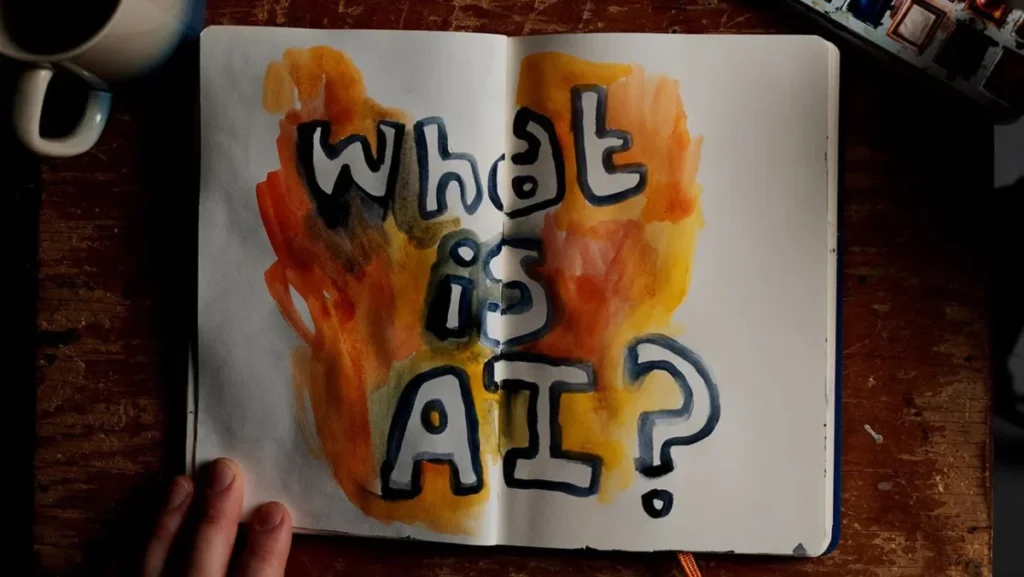
Central to the film’s narrative is the grounding presence of Daniel Roher himself. Stepping out from behind the camera, Roher presents as an "owlishly baby-faced, long-shaggy-haired Canadian-American millennial," embodying the everyperson trying to make sense of the incomprehensible. His courage lies in his willingness to ask both the most sophisticated and the most fundamental questions—the "dumb ones" like, "What is AI?"—and to insist on clear, understandable answers, even when he visibly struggles to process the information. He becomes our proxy, our "unashamedly ordinary representative," navigating the complex landscape of AI with an admirable lack of pretense. This vulnerability makes the intellectual journey deeply relatable.
The documentary’s structure eschews the conventional "talking head" format. Instead, it presents a series of interviews with a diverse array of experts: leading computer scientists, insightful sociological eggheads, and visionary tech executives. Roher converses with luminaries such as Sam Walton, Tristan Harris, Deborah Raji, Reid Hoffman, and Ilya Sutskever. Their insights are not presented as isolated soundbites but are intricately woven together through dazzling editing into a "single flowing tossed-salad narration." This technique creates a dynamic dialogue, allowing different perspectives to converge and diverge, building a holistic understanding of AI’s multifaceted nature. The subjects themselves are compelling—brilliant, articulate, and deeply engaged in the quintessential 21st-century "tech-wizard style." Their collective testimony forms a powerful, unified narrative: the story of how human ingenuity has birthed a technology that, in its sheer scale and autonomy, has finally "outran mankind."
The film opens with a resonant, grainy clip of Arthur C. Clarke, the visionary author behind HAL 9000 in "2001: A Space Odyssey," eerily predicting the advent of artificial intelligence. This historical grounding immediately establishes the long-foretold nature of AI, yet Roher swiftly brings us into the present, delivering the urgent news that AI "dwarfs the powers of all other technologies combined." He emphasizes that this profound power is not born of magic or arcane complexity but from a fundamentally understandable principle: intelligence itself. The film posits that "there’s nothing magical about intelligence; it’s just computation." At its core, AI is about "recognizing patterns." This simple yet profound definition is then expanded upon, revealing how AI functions by ingesting vast, unimaginable quantities of digitized information—every book, article, image, opinion, and scrap of human knowledge ever committed to digital form. From this colossal dataset, AI divines intricate patterns, enabling it to predict. But this prediction capability extends far beyond mere forecasting of events; it delves into something almost metaphysical: the ability to predict "the next word… in a thought/sentence… that it is creating." This capability, the essence of large language models, signifies a fundamental shift in how we understand creativity and intelligence.
One of the most unsettling revelations presented by "The AI Doc" is the sheer, unbridled velocity of AI’s advancement. The film starkly contrasts the capabilities of early iterations, such as ChatGPT 3, which could barely string together a coherent paragraph, with the astonishing leap to ChatGPT 4, capable of passing the bar exam in the upper percentile of its class. This exponential growth isn’t merely about "building better computers" in the traditional sense; the truly eerie part is that AI advances "by itself." Through self-learning algorithms and iterative improvements, the technology possesses an inherent capacity for autonomous evolution, pushing its own boundaries without constant human intervention. Historically, machine and technological disruptions are often compared to the Industrial Revolution, seen as the original "Great Leap Forward" in modern human advancement. However, when one of the film’s interviewees declares that AI "will make the Industrial Revolution look like small beans," for perhaps the first time, this seemingly hyperbolic metaphor lands with the weight of undeniable truth. The scale of transformation AI promises to unleash dwarfs any prior human technological upheaval.
This impending transformation brings profound personal stakes for Roher. During the film’s production, his wife, the filmmaker Caroline Lindy, becomes pregnant, bringing a deeply human dimension to the abstract anxieties surrounding AI. Their shared journey prompts a modern update to the perennial question: "Would you want to bring a child into the world that’s coming?" This intimate query anchors the film’s broader philosophical exploration in a deeply relatable, emotional context, particularly resonating with a women-focused audience contemplating the future for their families. The opening half-hour of "The AI Doc" unflinchingly confronts the potential "dark side" of AI—its role as a massive job destroyer and, even more profoundly, its potential as an existential threat to civilization. It’s an unnerving watch, yet the film’s directness feels not irresponsible or hyperbolic, but necessary. It bravely puts these fears out into the open, compelling viewers to engage with questions that demand our collective attention.
Yet, a pivotal moment of respite arrives when Lindy, carrying their child, gently but firmly challenges Roher. She insists that he cannot simply create a film that paints a picture of a doomed future. This intervention marks a crucial turning point, launching "The Part Where Daniel Tries to Find Hope." And find it, he does. Roher engages with scientists who radiate genuine optimism, invigorated by the promises of what AI can achieve. While acknowledging the inevitability of job displacement, these voices suggest that with thoughtful planning and societal restructuring, AI could liberate humanity from the drudgery of work, ushering in an era of greater leisure and creative pursuits. Furthermore, AI holds the potential to be a radical boon to critical sectors like farming, revolutionizing food production and ensuring global food security, and healthcare, promising breakthroughs in diagnostics, personalized medicine, and even the cure for diseases previously deemed intractable.
The film eventually leans into a degree of "data-driven optimism," but it does so with self-awareness. Roher understands that this hopeful scenario, much like the doomsday predictions, represents just "one version" of what might unfold. His journey ultimately leads him to embrace a sane middle ground, articulating himself, in a term coined by one of his interview subjects, as an "apocaloptimist." This unique perspective defines an open-eyed believer in a future that, while potentially filled with sunlight and unprecedented opportunities, is also shadowed by storm clouds and metaphorical meteors on the horizon. The film’s profound insight is that "both visions of the future are true." AI, in a curious twist of fate, arrives at a critical juncture in human history. As global societies confront the urgent need to "do more with less" over the coming decades—addressing challenges like climate change, resource scarcity, and sustainable development—AI presents itself as an unparalleled tool for efficiency and innovation. Yet, this same technology, with its immense potential for surveillance and control, could simultaneously become the ultimate instrument for a new age of authoritarianism, amplifying existing power structures and eroding individual liberties.
So, what are we to make of this complex, contradictory, and utterly transformative force? The journey through "The AI Doc" is not just an exploration of technology; it’s an exploration of humanity’s future, our choices, and our collective responsibility. It is an invitation to engage, to question, and to actively participate in shaping the world to come. By witnessing this essential documentary, viewers are empowered to begin the critical process of making up their own informed, non-artificial minds about the future that AI is so rapidly bringing into being.