


Reckless abandon meets profound grief in “Crash Land,” a poignant exploration of male camaraderie and the bumpy road to adulthood.
For a generation coming of age in the early 2000s, the cultural phenomenon of “Jackass” offered a raw, unfiltered glimpse into a specific brand of hyper-masculinity. It was a world built on gross-out stunts, self-inflicted pain, and an almost absurd dedication to physical risk, all framed by sidesplitting laughter and an undeniable, if unconventional, sense of brotherhood. These men pushed boundaries, tested limits, and found a warped form of connection in shared acts of idiocy and endurance. Their antics, while often shocking, inadvertently highlighted a unique language of male bonding—one rooted in physical challenge and a defiant embrace of the ridiculous.
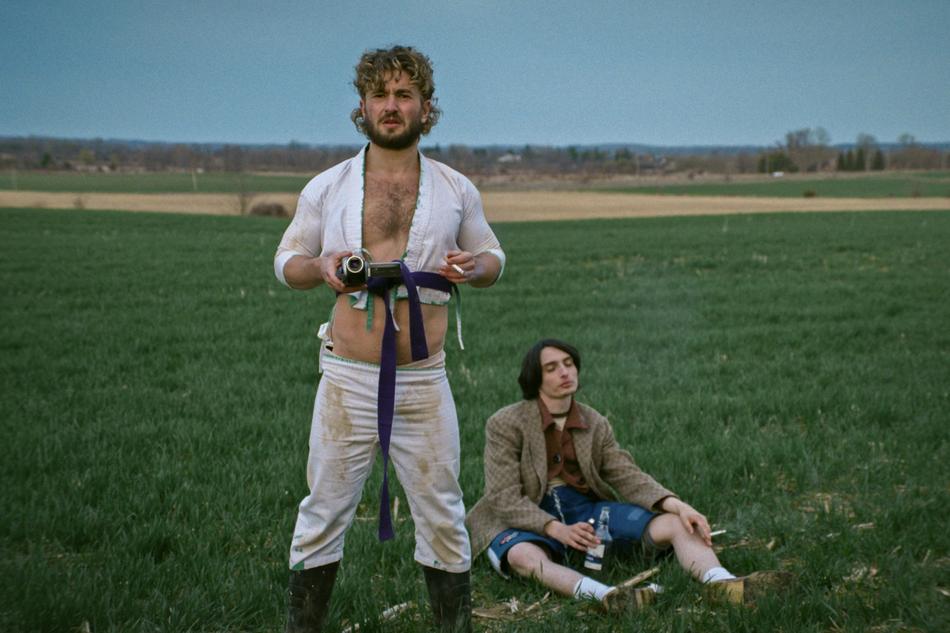
It is this unruly, often bewildering approach to brotherhood that pulsates at the heart of “Crash Land,” actor Dempsey Bryk’s compelling directorial debut. The film masterfully navigates the treacherous terrain between crass humor and genuine pathos, plunging viewers into the lives of young men whose preferred mode of diversion involves courting bodily harm for the fleeting thrill of a “cool” video or the simple, shared joy of a raucous cackle. From punches to the groin to ill-advised encounters with fire and firearms—often undertaken while under the influence—these dangerous escapades are the daily bread for Bryk’s trio of amateur stuntmen, or “stunt boys,” dwelling in the confines of the small, isolated Canadian town of Inch.
The film opens by immersing us in this chaotic existence, establishing the tight-knit, almost symbiotic relationship between Darby (played by Billy Bryk, the director’s brother), Lance (Gabriel LaBelle), and Clay (Noah Parker). Their lives in Inch are a blur of adrenaline, low-grade camcorder footage, and the kind of boisterous banter that only lifelong friends can share. This initial glimpse into their world is both exhilarating and unsettling, painting a vivid picture of youthful exuberance teetering on the edge of genuine danger. The audience quickly understands that for these boys, these stunts are not merely pastimes; they are the very fabric of their identity, a defiant roar against the perceived monotony and limitations of their small-town lives.
However, the precarious balance of their world shatters with the unexpected death of Darby. Crucially, his passing isn’t the dramatic consequence of a botched stunt, but rather the silent, indiscriminate blow of an aneurysm. This detail is pivotal, stripping away any sense of heroic sacrifice and instead confronting the remaining friends with the stark, unglamorous reality of loss. Darby’s death forces Lance and Clay to confront not only their profound grief but also the dismissive pronouncements of those around them who claim that their lives, and Darby’s, amounted to nothing more than reckless waste. This external judgment, coupled with their internal turmoil, ignites a desperate need for validation, a desire to prove their detractors—and perhaps their own lurking fears—wrong.
In the wake of this tragedy, Clay, reeling from the loss and spurred by an almost desperate idealism, proposes an audacious plan: they will create “the greatest movie of all time.” This cinematic endeavor, a tribute to Darby, will ingeniously weave together existing footage of their departed friend with new scenes where Clay, in a touch of heartbreaking absurdity, will don a paper mask to portray him. The premise is as ridiculous as it sounds, yet it’s precisely this blend of the absurd and the deeply heartfelt that gives “Crash Land” its unique resonance. Beneath the heartwarming idiocy of their pursuit festers a raw, unaddressed grief and a terrifying fear that those who deem their existence meaningless might, in fact, be right.
The film’s aesthetic choices further root it in a specific time and sensibility. The technology available to the characters—a grainy digital camcorder and rudimentary flip phones—firmly places their narrative in the early 2000s. This deliberate choice is more than just a nostalgic nod; it imbues the film with an authentic, unpolished feel. The rough, shaky footage of their past stunts isn’t merely a stylistic flourish; it’s a window into their unrefined, rough-around-the-edges personas and the untamed spirit of their youth. The wildness of their banter, the spontaneous bursts of laughter, and the palpable sense of danger all feel remarkably genuine. This authenticity, extending beyond mere aesthetic shoddiness, is a testament to Bryk’s astute casting. The young actors inhabit their roles with a convincing naturalism, embodying the complex dynamics of lifelong friends bound by a shared, albeit foolish, devotion.
Gabriel LaBelle delivers a standout performance as Lance, the “walking ruckus” of the group. Lance is an agent of chaos, a character perpetually on the verge of an explosive reaction, driven by a singular, often destructive, focus. His volatility provides a healthy dose of amusement, but it also underscores his erratic and potentially dangerous nature. LaBelle masterfully portrays Lance’s raw energy, suggesting that his bravado might be a shield against the pain of loss, a desperate attempt to maintain the familiar chaos in a world suddenly rendered orderly by grief. His performance captures the raw, unchanneled energy of youth, often misdirected but undeniably potent.
However, the true revelation of “Crash Land” lies in Noah Parker’s portrayal of Clay. Parker, a Quebecois actor recently recognized for his work in the French-language drama “Who By Fire,” carries the emotional weight of “Crash Land” on his endearingly confused visage. Clay’s initial innocent expression of sadness following Darby’s death gradually transforms, giving way to the face of a young man whose inner world is expanding with nascent realizations. He begins to question whether amateur, vulgar stunts are a sustainable path forward, particularly as he glimpses the possibility of other opportunities beyond the familiar, limiting horizons of Inch. Each time Parker graces the screen, his performance serves as a poignant reminder of the film’s underlying soulfulness, elevating it far beyond a simplistic “boys will be boys” narrative. Clay’s journey becomes the emotional anchor, charting the difficult, often clumsy transition from unthinking youth to a budding awareness of self and future.
As the narrative progresses, “Crash Land” introduces a familiar, yet thoughtfully integrated, trope: a romantic interest for Clay. Jemma (Abby Quinn), a soft-spoken, seemingly overprotected girl from Quebec who is in town for a spell, arrives not as a damsel in distress, but as a gentle yet firm catalyst for the boys’ long-overdue consideration of growing up. Jemma possesses a remarkable empathy; she doesn’t judge their silly bravado or their poor decision-making. Instead, she perceives these actions as a sincere, if misguided, expression of who they are, while simultaneously recognizing that these antics do not define the entirety of their being. She sees the potential beneath the recklessness, offering a perspective that challenges their insular world without condemning it. Her presence subtly encourages them to explore other facets of themselves, to consider a future beyond their self-imposed limitations.
Adding another layer to this intricate dynamic is Sander (Finn Wolfhard of “Stranger Things” fame), an eccentric, almost neurotically humorous third man in their operation. As an orphan, Sander brings his own quiet vulnerabilities to the group, tasked with the pivotal role of directing Darby’s tribute film. There’s a meta-element at play here, as “Crash Land” itself is the newest feature from Kid Brother, the production company co-founded by Wolfhard and Billy Bryk, following their earlier collaboration on “Hell of a Summer.” This self-awareness subtly enriches the narrative, blurring the lines between the film’s fictional world and the real-life creative bonds of its makers, underscoring the themes of artistic collaboration and the lasting impact of shared experiences.
Dempsey Bryk’s profound understanding of his characters’ psychology is the true key to why these seemingly brutish young men become more lovable than unbearable. He delves into their internal landscapes, revealing their unawareness of the disconnect between how they perceive their actions and how the world perceives them. For instance, Clay is genuinely heartbroken upon learning that their neighbors view them as “bad boys.” In his mind, their wacky and irresponsible outings are not born of malice or a desire to harm, but rather function as a unique, often inarticulate, language through which he and his friends communicate their affection, their frustrations, and their very existence. This insight transforms them from mere caricatures of reckless youth into complex individuals struggling to make sense of their place in the world.
Through the timid charisma of Abby Quinn’s performance as Jemma, Bryk articulates a nuanced message. Jemma, far from being a conventional romantic interest, serves as a voice of reason, a mirror reflecting their potential without demanding they abandon their core identities. She doesn’t suggest that Lance, Clay, or even Sander should forsake the playfulness and fearless spirit that binds them. Instead, she gently encourages them to allow themselves the chance to explore other facets of their selves, to embrace growth without losing their essence. In this reciprocal relationship, Jemma, in turn, gains a modicum of their fearlessness, learning to step outside her own comfort zone. This dynamic enriches the film, presenting a balanced view of growth where characters inspire and challenge each other in meaningful ways.
“Crash Land” stands as a significant new entry into the “dudes rock” canon—a burgeoning category of films that celebrate male camaraderie at its most earnest, less toxic, and often profoundly vulnerable. Simultaneously, it functions as a compelling coming-of-age yarn, navigating familiar structural avenues with a fresh perspective. While its narrative beats might echo established cinematic traditions, the film’s greatest virtue lies in its winsome nitwits. These characters, with all their flaws and endearing foolishness, become the heart and soul of the story, elevating “Crash Land” beyond a simple tale of youthful antics into a deeply felt meditation on grief, identity, and the enduring power of friendship. Bryk’s film reminds us that even in the most unconventional of bonds, and amidst the most absurd of circumstances, profound emotional truths can emerge, guiding young men through the chaotic landscape of growing up and into a future they never quite anticipated.