Gilead’s Next Generation Rises: ‘The Testaments’ Debuts at Series Mania, Igniting Hope and Sparking Global Dialogue
The highly anticipated world premiere of “The Testaments,” the compelling sequel to the groundbreaking series “The Handmaid’s Tale,” captivated audiences at the prestigious French festival, Series Mania. This monumental event marked a significant moment for fans globally, as the new series, produced by MGM Television and based on Margaret Atwood’s critically acclaimed novel of the same name, gears up for its eagerly awaited debut on Disney+ this April. Set within the chilling dystopia of Gilead, “The Testaments” promises a dramatic and poignant exploration of a young woman’s coming of age amidst a society steeped in oppression and control, offering a fresh lens on the world Atwood so brilliantly created.
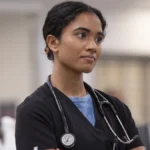
The original “The Handmaid’s Tale” carved out a formidable legacy, not only as a television phenomenon but also as a powerful cultural touchstone, reflecting and amplifying discussions around women’s rights, bodily autonomy, and totalitarianism. Its stark imagery, particularly the red cloaks and white bonnets, became iconic symbols of resistance and subjugation. “The Testaments” picks up the narrative years after the events of its predecessor, delving deeper into the inner workings of Gilead and introducing a new generation poised to challenge its foundations. The series follows the intertwined fates of Agnes, a privileged young woman raised within the rigid confines of Gilead, portrayed by “One Battle After Another” breakout star Chase Infiniti, and Daisy, a spirited newcomer and convert from beyond Gilead’s heavily guarded borders, brought to life by Lucy Halliday. Their paths converge within the hallowed, yet sinister, halls of Aunt Lydia’s elite preparatory school, a crucible designed to mold future wives and loyal servants of the regime. The return of Ann Dowd as the formidable Aunt Lydia, a character who has become synonymous with the complex morality of Gilead, anchors the narrative, bridging the familiar terror with new, evolving challenges.
Ann Dowd, whose portrayal of Aunt Lydia in “The Handmaid’s Tale” garnered widespread critical acclaim and an Emmy Award, returns to the role that has become an indelible part of her career. Her performance has consistently imbued the seemingly villainous character with layers of chilling pragmatism, misguided conviction, and a deeply unsettling humanity. Speaking at the premiere, Dowd offered profound insights into her connection with the character. “I love her,” Dowd confessed, a statement that might surprise those who view Aunt Lydia purely as an antagonist. “That’s our job as actors. The first rule is: do not judge. I don’t judge her, and she has become a very dear friend of mine. I came to know her, she came to know me, and I couldn’t be more grateful.” This empathetic approach has allowed Dowd to craft a character who is not merely evil, but a product and enforcer of a system she believes in, however twisted. For Dowd, reprising her role was a profound experience. She described it as “the great pleasure and the great joy, a privilege, all of it.” Reflecting on the longevity of her engagement with Lydia, she added, “Imagine knowing the character for these many years. How lucky can one be?” Her enduring commitment to the role promises to bring even more depth to Aunt Lydia’s evolving narrative within “The Testaments,” particularly as the character navigates a shifting power dynamic and faces the consequences of her past actions.
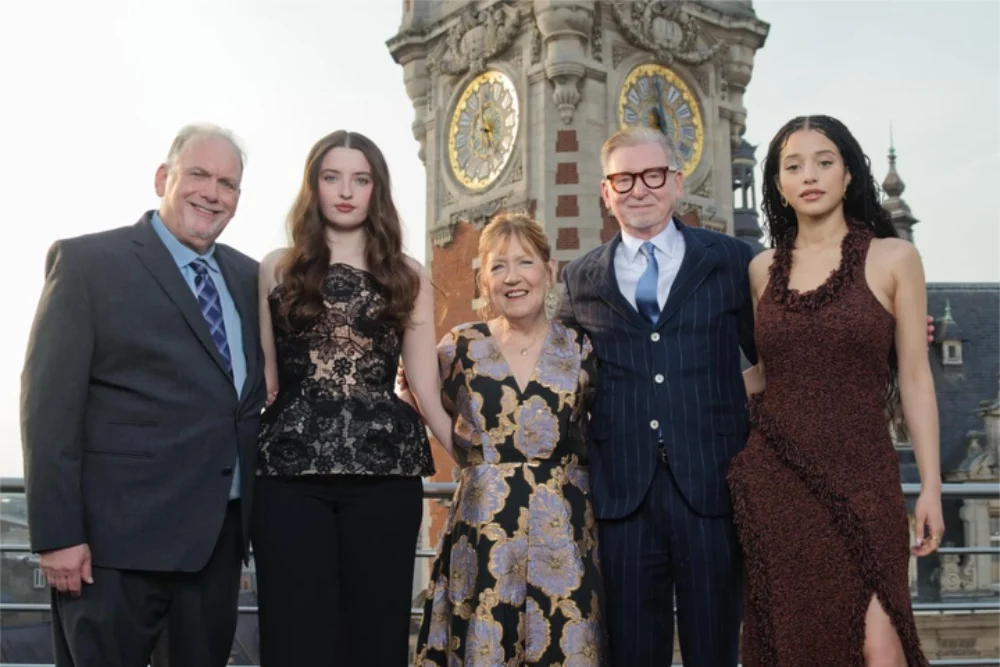
For the younger cast members stepping into such a rich and established universe, the journey was both exhilarating and daunting. Lucy Halliday, who plays Daisy, expressed immense gratitude for the wealth of source material available to them. “We had such strong source material ready, and [with Chase Infiniti] we’ve both been fans of ‘The Handmaid’s Tale.’ We’ve seen the show and read the books,” Halliday explained. The foundational texts, coupled with the existing acclaimed series, provided a robust framework for understanding the intricacies of Gilead. Furthermore, the presence of the original creative team offered invaluable guidance. “Then we had Ann, Warren Littlefield, Bruce Miller and Elisabeth Moss [who exec produces], all involved in the creation of the show. We had so much to lean on,” she emphasized. This continuity from the original series, with key figures like creator Bruce Miller and executive producer Elisabeth Moss, undoubtedly helped the new cast navigate the immense legacy and expectations surrounding the franchise.
Halliday particularly highlighted the collaborative spirit fostered by Bruce Miller. She recalled, “Bruce is so open and willing to have a conversation. He would really sit down with you and [talk about] what the character should be, the ideas you had or just trying to know that his thoughts were your thoughts. That really created a wonderful environment where you felt: ‘Ok, there’s a responsibility stepping into this world that’s so beloved, but I feel reassured these people have trusted me and given me the space to step into it.’ I felt: ‘We can do a good job. I really hope the audience thinks so too’.” This testament to Miller’s leadership underscores the thoughtful approach taken in expanding the “Handmaid’s Tale” universe, ensuring that new voices are both supported and empowered to contribute to its enduring narrative.
Chase Infiniti, portraying Agnes, also shed light on a crucial element of the show’s world-building: its iconic costumes. The distinctive attire in “The Handmaid’s Tale” — from the Handmaids’ red to the Marthas’ grey and the Wives’ blue — is more than just clothing; it’s a visual manifestation of Gilead’s oppressive social hierarchy and the stripping away of individual identity. Infiniti elaborated on the practical and symbolic impact of these garments. “For all of us, since we are wearing a variety of costumes in the show, it’s your first piece of armor,” she noted. While the meticulously crafted costumes were tailored to perfection, they also served a dual purpose. “All of our costumes were made to fit us perfectly, but they can be restrictive at times. It helped to get into the physicality of our roles.” This physical restriction undoubtedly aided the actors in embodying the constrained lives of women in Gilead, where even personal expression through clothing is denied, and every stitch reinforces their designated societal function.
The creative architects behind “The Testaments,” creator Bruce Miller and producer Warren Littlefield, were also present at Series Mania, offering their perspectives on the series’ expansion of the Gilead narrative. Miller articulated the distinct focus of the new show, contrasting it with its predecessor. “‘The Handmaid’s Tale’ covered people who are at the bottom of Gilead, and this shows women who are at the top of Gilead,” Miller explained. He then delivered a chilling insight that underscores the pervasive nature of Gilead’s patriarchy: “But it also shows how for women, the top and the bottom are very similar.” This statement highlights the central tenet of Atwood’s world: that even those seemingly in positions of power within Gilead’s female hierarchy are ultimately subservient and trapped. He further detailed the show’s thematic core: “This is a story about awakening and rebellion among younger women in Gilead and those who have grown up there. That’s the expansion of the world.” This promise of nascent rebellion among a new generation offers a glimmer of hope, a stark contrast to the often bleak despair of the original series.
Despite the inherent darkness of Gilead’s world, producer Warren Littlefield emphasized the critical importance of infusing the narrative with humanity. “We live in a world that’s a dark place, and hope comes from their strength and their resilience,” Littlefield stated, connecting the fictional dystopia to contemporary global realities. He reiterated the significance of Ann Dowd’s returning character: “Ann crosses over from ‘The Handmaid’s Tale’ as Aunt Lydia — she knows that world.” This continuity allows for a deeper exploration of the past and its impact on the future. Looking towards the new protagonists, Littlefield expressed optimism: “These young women have an awakening in our season one, and they will come to fight it. Let’s hope they take it down.” His words resonated with the audience, embodying the collective desire for liberation and justice, themes that remain profoundly relevant in our own world.
The premiere of “The Testaments” was not just a celebration of a new series but also a key event within the broader context of Series Mania, a festival renowned for showcasing the best of international television. The opening ceremony itself served as a platform for reflection on the power of storytelling and the role of culture in challenging times. Managing Director Laurence Herszberg welcomed the esteemed jury of the International Competition, led by the acclaimed Icelandic director Benedikt Erlingsson. Erlingsson, known for his unique cinematic voice, humorously recalled a past festival experience. “When I came here, ‘The Danish Woman’ didn’t get any prizes. It was a scandal!” he quipped, drawing laughter from the crowd. He continued, “Now, I’m here to take revenge. And by ‘revenge,’ I mean that I will make sure the best series wins.” His playful declaration set a lighthearted tone, despite the serious themes often explored in the festival’s selections. Erlingsson was joined on the jury by a diverse and talented group of artists, including Alice Braga, Hatik, and Cécile de France, reflecting the festival’s commitment to global perspectives.
However, the celebratory atmosphere was tempered by a profoundly somber note that underscored the stark realities of the world beyond the festival’s lights. One of the esteemed jurors, Iranian filmmaker Ida Panahandeh, was tragically unable to attend Series Mania due to the ongoing war in her region. Despite her absence, Panahandeh sent a powerful and moving message to the audience, a poignant reminder of the fragility of peace and freedom. “I’m deeply happy to know that somewhere in the world, there are people like you, people who strive to make this world a better place to live,” her message began, a heartfelt acknowledgement of the festival’s mission and the global artistic community. She shared a glimpse into her people’s harrowing reality: “You know, if I come out of this war alive, perhaps I will make a series that tells the story of the bitter days and nights my people are dealing. People who have been crushed for decades under the weight of social or political discrimination, economic sanctions, and who are now also living under fallen missiles, emancipated.” Her words painted a vivid picture of enduring suffering, resilience, and the desperate need for storytelling as a means of bearing witness and fostering understanding.
Panahandeh’s message further highlighted a bitter irony faced by artists in times of conflict. “Whenever soldiers begin crossing their country’s borders, artists suddenly find themselves forbidden to leave theirs. It’s a bitter irony, isn’t it?” she mused. She then articulated a powerful vision for a world liberated from the shackles of war: “I wish all the soldiers to stay within their own borders and take a rest. While, you know, all the artists could cross borders freely, without a doubt, we would have a far better world.” This eloquent plea for artistic freedom and the cessation of military aggression resonated deeply, drawing a direct parallel between the fictional oppression of Gilead and real-world geopolitical struggles. She concluded her message with an urgent and universal call to action: “My dear friends, let us condemn war, any war, whether it’s in Ukraine, Iran, or Gaza. Let us condemn the brutal killing of children and civilians, regardless of the color of their skin or their eyes. And let us not allow the promise of peace and democracy to become an excuse for the re-emergence of fascism.” Her brave words served as a powerful reminder of the universal struggle against tyranny and the enduring importance of compassion and human dignity.
Responding to Panahandeh’s poignant message, Laurence Herszberg reiterated the fundamental role of cultural institutions like Series Mania in an increasingly fractured world. “In a world rife with violence coming from all sides and deepening divisions, it is essential to remember the role of culture — as a source of guidance and enlightenment — and the role of festivals as a place where we can come together when everything else is in flux,” Herszberg affirmed. She championed Series Mania as an essential platform that “gives a voice to artists and their work,” emphasizing its commitment to fostering open dialogue and mutual respect. “It is a week that fosters the exchange of perspectives and opinions, and allows artists to express themselves freely, regardless of their nationality. Here, we do not judge by passport; we look at the works of the mind.” This declaration stood as a powerful counterpoint to the forces of division and censorship that Panahandeh had bravely addressed.
Herszberg concluded with a stirring defense of creative freedom, a cornerstone of human expression that is often among the first casualties in times of conflict. “We would like to remind everyone of a truth that is often forgotten. Creative freedom is fragile, and wherever that freedom is threatened, artists are among the first victims,” she stated, echoing the sentiments of Panahandeh. In a final, powerful message of solidarity and hope, Herszberg pledged Series Mania’s unwavering support for artists worldwide: “To all these artists, we want to say one simple thing. Their works will always find a place at Series Mania. Because we know that culture is not a luxury reserved for peaceful times. It allows societies to weather storms without losing their soul. It is the thread that connects human beings, transcending borders, languages, and fears.” The premiere of “The Testaments,” therefore, became more than just an unveiling of a new series; it transformed into a profound affirmation of art’s enduring power to challenge, to unite, and to inspire hope in a world desperately in need of both.