
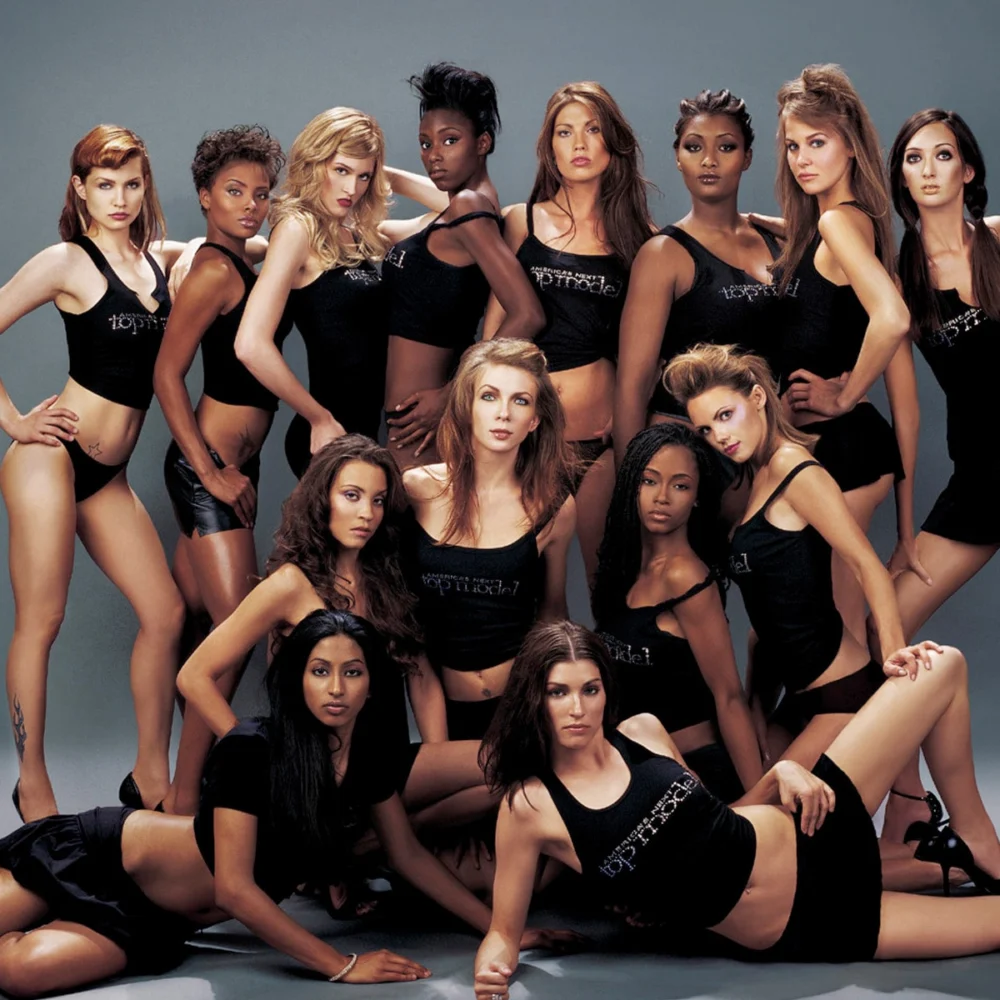
For fifteen years, America’s Next Top Model stood as a pillar of the reality television landscape, a glossy, high-stakes competition that promised to turn "starry-eyed hopefuls" into global icons. Led by the incomparable Tyra Banks, the series was marketed as a trailblazing force for inclusivity, challenging the fashion industry’s rigid standards and opening doors for women of all backgrounds. However, in recent years, the show’s legacy has undergone a radical and painful re-evaluation. What was once viewed as a "guilty pleasure" or a masterclass in "smizing" is now being dissected through a modern lens, revealing a darker narrative of psychological trauma, systemic cruelty, and a production environment that many former contestants now describe as "toxic AF."
The catalyst for this cultural reckoning was, ironically, a period of global stillness. During the COVID-19 pandemic, a wave of binge-watching led to a viral dissection of the series on platforms like TikTok and Twitter. Audiences armed with the perspective of 2024 began to notice patterns that felt increasingly indefensible: the public shaming of bodies, the manipulation of personal traumas for ratings, and a fundamental disregard for the well-being of the young women the show claimed to empower. This shift in public sentiment has been further cemented by E!’s Dirty Rotten Scandals, a docuseries that delves into the alleged "dark side" of the ANTM machine, featuring voices from those who lived through it.
For many winners, the crown came with a heavy price. Yoanna House, the victor of Cycle 2, recently spoke about the lasting impact of the judges’ critiques. During her time on the show, the feedback loop was a dizzying pendulum of praise and degradation. House described the experience as akin to a "narcissistic relationship," characterized by a cycle of "love-bombing" followed by immediate devaluation. One moment, she was the epitome of beauty; the next, her body was being scrutinized for perceived "issues." This environment took a devastating physical toll; House revealed she developed a workout disorder, pushing her body to such extremes that she stopped menstruating for two years. It was only after a doctor warned her that her fertility was at risk that she began the long road to recovery. While she has since built a successful career in fashion reporting and broadcasting, the scars of that "cruelness" remain.
Lisa D’Amato, who won the Cycle 17 "All-Stars" season, echoed these sentiments of manipulation. D’Amato initially competed in Cycle 5, where she felt she was intentionally portrayed as "crazy." When she returned for the All-Stars season, it wasn’t just for the title; it was for "redemption" and "revenge." She wanted to prove to the world that she was more than the "alcoholic" caricature the editors had created. However, the experience left her feeling more used than before. She alleged that the show exploited her history of childhood abuse to trigger emotional outbursts, and she ultimately felt like a "throwaway" winner, used to fill a gap after the controversial disqualification of the original winner, Angelea Preston.
The Preston scandal remains one of the most glaring examples of the show’s questionable ethics. During the Cycle 17 finale shot in Greece, Preston was originally declared the winner. However, she was later summoned to New York and informed she was disqualified because production had learned of her past involvement in sex work—an industry she entered out of desperation after her first stint on the show failed to yield the career she was promised. Preston has since alleged that the production team was aware of her history before the All-Stars season even began, suggesting they "dangled" the dream of success in front of her only to snatch it away for dramatic effect. Instead of the $100,000 prize, she was sent home with $300 in "pity money."
The architecture of the show itself seemed designed to break the contestants’ spirits. Behind the scenes, the "marathon" nature of the production was grueling. Sarah Hartshorne, a Cycle 9 alum, revealed that the elimination panels—which appeared as brief segments on television—actually lasted anywhere from 12 to 18 hours. Contestants were forced to stand for hours on end, often until 3:00 or 4:00 in the morning. The physical strain was so intense that fainting became a regular occurrence; Hartshorne recalled being warned on her first day that someone always passed out, and soon enough, she was the one collapsing.
Life inside the "Model House" offered no reprieve. The environment was described as a psychological experiment, with contestants living under constant surveillance, bright lights that were never dimmed, and a total ban on cell phones or even the simple act of opening a window. "You’re almost an animal for spectator sport versus a human being," House reflected. This sentiment was shared by Janice Dickinson, the "World’s First Supermodel" and a judge for the show’s first four cycles. Dickinson claimed that producers, including Banks, actively encouraged her to be "harsher and cruel," modeled after the persona of Simon Cowell. Looking back, Dickinson admitted that the constant criticism of the girls’ hair, walks, and faces "tore their ego and identity." While she later apologized to Banks for some of her past outbursts, she maintained that the environment was inherently damaging.
The show’s creative choices have also aged poorly, particularly the infamous "Got Milk?" photo shoot from Cycle 4, where contestants were styled in makeup to represent races other than their own. At the time, Banks defended the shoot as an attempt to show that "brown and black is beautiful." However, contestants like Brittany Brower and Keenyah Hill recall feeling unable to voice concerns about the political correctness of the concept. "Whatever Tyra says to do, we did," Brower noted, highlighting the immense power imbalance at play. Banks has since acknowledged that this was an "off choice," admitting that she may have "lost [her] damn mind" in her attempt to push boundaries.
Jeana Turner, the runner-up of Cycle 24, provided a more recent example of this perceived manipulation. Turner, who has alopecia, was initially told her makeover would involve a high-end wig. Instead, she was pressured to remove her wig and shave her head on camera for a "liberating" scene. While the edit portrayed this as an empowering moment of self-acceptance, Turner felt "small" and manipulated. She also pointed out the inherent irony of her season: the primary sponsor was a hair care company, Pantene. "How was I ever going to win once I was told Pantene was the sponsor?" she asked, suggesting that her narrative was predetermined by commercial interests rather than her talent.
In the face of these mounting allegations, Tyra Banks has maintained a complex defense. While she has used social media to acknowledge that some past moments were "insensitive" and "problematic," she remains fiercely protective of the show’s legacy. At a 2025 ESSENCE event, Banks fought back against the "viral dissection" of the show, reminding the audience of how hard she fought for diversity in 2003 when it was virtually non-existent in the fashion world. "Did we get it right? Hell, no," she admitted. "But I refuse to have my legacy be about some stuff linked together on the internet." Her representatives have also pointed out that many aspects of the production fell outside her personal "purview," noting that ANTM was a reality show featuring "heightened aspects of real life."
However, for the women who stood on those panels and lived in those houses, the "heightened" reality had very real consequences. As Cycle 8 winner Jaslene Gonzalez pointed out, the show was ultimately designed to center on Tyra Banks herself. "I don’t think she’s gonna try to make you more famous than her," Gonzalez remarked. This tension between the host’s brand and the contestants’ humanity is at the heart of the ANTM controversy. As the fashion industry continues to evolve toward a more genuine form of inclusivity and mental health awareness, the "dirty rotten scandals" of America’s Next Top Model serve as a cautionary tale of what happens when the pursuit of "great TV" comes at the expense of the people making it.