Tunisian filmmaker Fatma Riahi embarks on a profoundly personal and historically resonant journey with her sophomore feature, “My Father Killed Bourguiba.” This compelling documentary delves into the shadowed chapters of her family’s past, meticulously examining her father’s pivotal, albeit ultimately failed, role in a 1987 plot to overthrow Tunisia’s first president, Habib Bourguiba. More than a historical recounting, Riahi’s film is a tender yet unflinching exploration of how political choices ripple through generations, profoundly shaping individual lives, family dynamics, and the very fabric of a nation. Her narrative offers an intimate lens into the enduring legacy of a tumultuous political era, seen through the eyes of a daughter seeking to understand the man and the events that irrevocably altered her destiny.
The film, a testament to collaborative spirit and a significant voice in contemporary Arab cinema, is produced by Riahi herself, in co-production with the esteemed Dora Bouchoucha and Lina Chaabane of Tunisian outfit Nomadis Images. Nomadis is renowned for its impactful works such as “The Voice of Hind Rajab” and “Aisha Can’t Fly Away,” underscoring their commitment to powerful storytelling. Omar Ben Ali of SVP Production also joins the producing team, bringing additional expertise to the project. This potent collaboration has already garnered international recognition, with “My Father Killed Bourguiba” earning a coveted spot in the Pitching Forum at the prestigious Thessaloniki International Documentary Festival, which illuminated screens from March 5 to March 15.
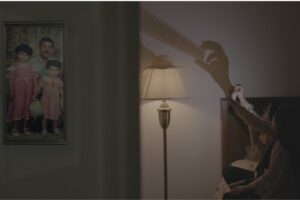
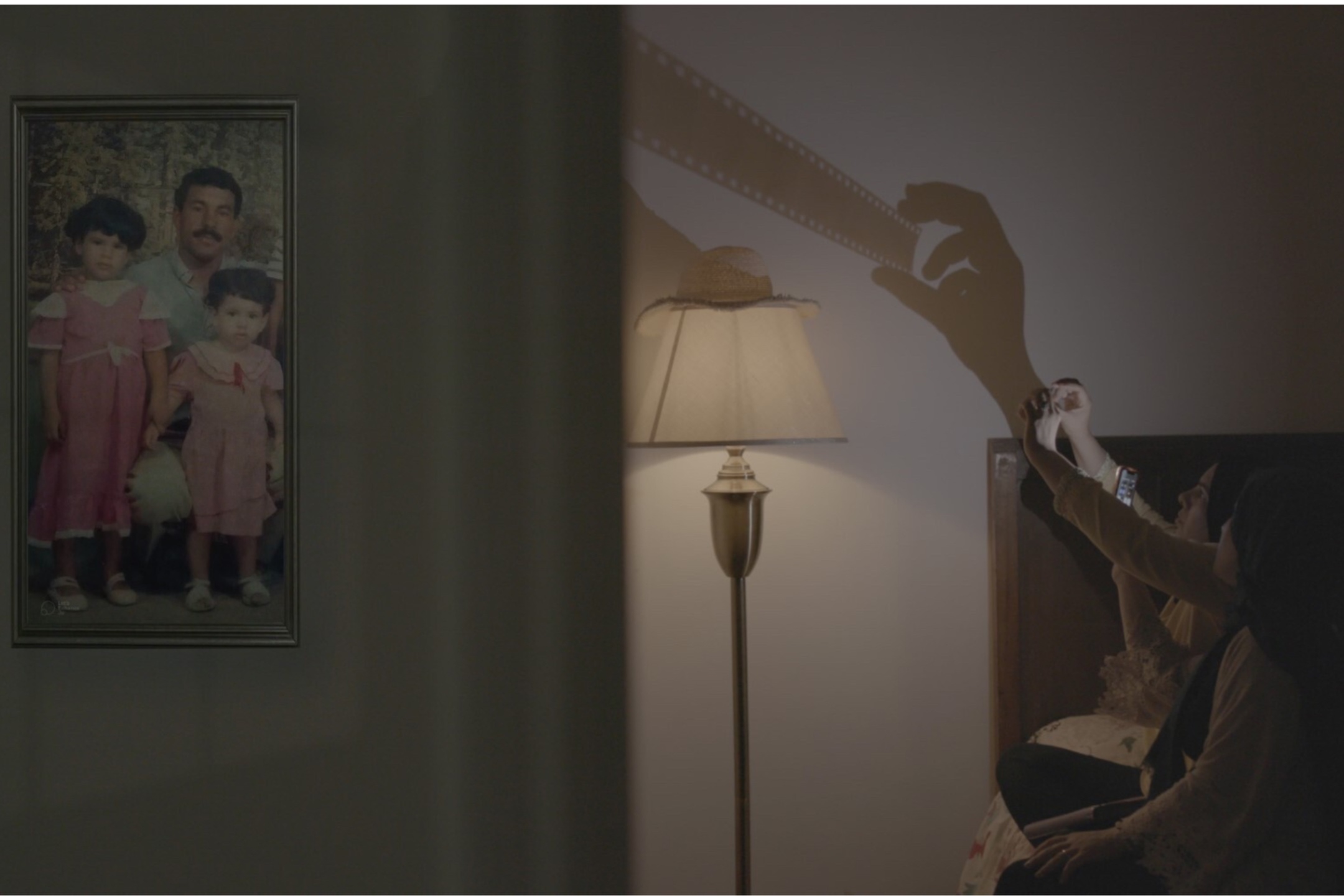
For Riahi, “My Father Killed Bourguiba” transcends the conventional bounds of filmmaking; it is an excavation of self, memory, and national identity. The film’s genesis lies in a deeply personal quest, compelling the director to sift through her family’s carefully preserved archives. These invaluable relics—faded photographs, handwritten letters, and unspoken anecdotes—form the bedrock of a narrative that reconstructs the story of a father entangled in a military coup plot designed to dismantle the regime of Habib Bourguiba. Bourguiba, revered by many as the architect of modern Tunisia after its independence from France, was nonetheless a controversial figure whose long rule culminated in widespread discontent, setting the stage for the dramatic events of 1987.
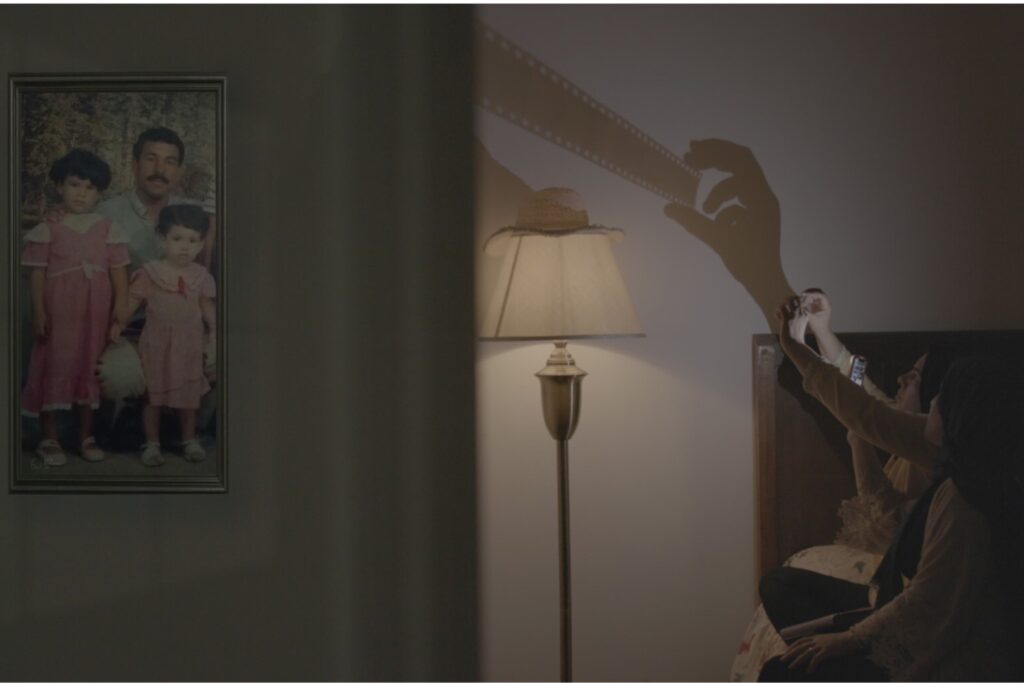
The film’s evocative title, “My Father Killed Bourguiba,” itself carries a poignant history, stemming from an innocent yet haunting utterance by Riahi’s five-year-old sister to a prison guard. This seemingly errant choice of words, born of childhood confusion and the traumatic circumstances of their father’s imprisonment, became a symbolic weight, encapsulating the profound and often devastating ramifications that cascaded through Riahi’s family and personal life. The plot, as history records, failed to achieve its objective. Yet, its failure inaugurated a new era of hardship and fear for the Riahi household. Through the intimate fragments of her family’s past—the silent narratives embedded in old photographs, the yearning voices echoing in letters exchanged with her father during his incarceration over three decades ago—Riahi endeavors to comprehend the motivations behind his choices. Simultaneously, she reflects on the indelible imprint these decisions left “on the little girl I was then and the woman I have become,” a testament to the intergenerational impact of political upheaval.
Speaking with *Variety* from the vibrant setting of Thessaloniki, Riahi, whose acclaimed first feature, “A Haunted Past,” premiered at IDFA in 2018, clarified a crucial distinction about her new work. While “My Father Killed Bourguiba” is undeniably and intimately interwoven with the complex political tapestry of its time, she insists, “it’s not a political film.” This statement speaks volumes about her artistic intent, signaling a focus not on partisan analysis but on the human experience at the heart of political strife. Riahi articulates a childhood shaped by a profound ideological schism: “I grew up between two seemingly opposing ideas: the political vision my father believed in and the one Bourguiba defended.” For many, such a contradiction would demand resolution, a choice of allegiance. Yet, Riahi found a different path through her creative process. “Rather than resolving this contradiction,” she explained, “the film allowed me to sit with it and accept its complexity.” This acceptance, she hopes, extends beyond her personal reconciliation, envisioning her film as a catalyst for broader societal healing. By confronting these deeply rooted, often painful, opposing viewpoints, she believes it can “help us to understand each other and to accept each other, even if we are different and even if we are coming from different points of view.” It is a plea for empathy and dialogue in a nation still grappling with its post-revolution identity.
To fully grasp the magnitude of Riahi’s personal narrative, one must understand the historical currents that defined Tunisia in the late 20th century. Habib Bourguiba, often eulogized as the “father of Tunisia,” led the country for three transformative decades after it declared independence from France in 1956. His rule was characterized by ambitious modernization projects, progressive reforms particularly in women’s rights and education, and a fierce commitment to national sovereignty. However, this progressive facade often masked an increasingly authoritarian grip on power. As years turned into decades, Bourguiba’s regime became synonymous with despotism, suppressing dissent and consolidating power in a manner that bred resentment among various segments of society. This growing dissatisfaction provided fertile ground for opposition movements, one of which Riahi’s father, Mabrouk, was a part.
Mabrouk Riahi was a key member of the “Security Group,” an ideologically conservative movement that fundamentally disagreed with Bourguiba’s secularist and increasingly centralized rule. This group harbored a deep-seated determination to dismantle the Bourguiba regime, believing that only a radical shift could steer Tunisia towards a path they deemed more authentic and just. Their planned military coup, meticulously orchestrated, was slated for November 1987. However, fate, or rather, another ambitious political player, intervened. Just one day before Mabrouk and his co-conspirators were poised to launch their decisive strike, then-Prime Minister Zine El Abidine Ben Ali executed his own successful plot. In a swift, bloodless maneuver often referred to as a “medical coup,” Ben Ali declared Bourguiba medically unfit to rule, placing the ailing president under house arrest and seizing power himself. This sudden turn of events dramatically altered the trajectory for Mabrouk and his group. Two months later, in January 1988, under the nascent Ben Ali government, Mabrouk and his fellow plotters were arrested and imprisoned, their dreams of a new Tunisia abruptly extinguished.
The arrest and imprisonment of Mabrouk Riahi marked a seismic turning point for Fatma Riahi and her entire family. In the years that followed, they were plunged into a harrowing existence, facing systematic harassment and surveillance from the pervasive Ben Ali regime and its network of loyalists. This period, characterized by fear and uncertainty, was a direct consequence of “a conflict which I did not choose, a conflict caused by my father’s choices,” as Riahi poignantly recalls. The state’s punitive measures extended beyond the individual, employing collective punishment tactics that sought to isolate and demoralize families associated with any form of opposition. This systematic pressure could manifest in countless ways: constant monitoring, denied opportunities, social ostracization, and the ever-present threat of further reprisal, all designed to enforce absolute conformity and silence. The psychological toll of living under such a regime, marked by the absence of a father and the constant shadow of state disapproval, etched itself deep into the family’s psyche.
Despite the immense hardships and the profound injustice they suffered, the Riahi family, like countless others in similar situations, retreated into a cocoon of silence. Throughout those tumultuous years, and even after her father’s death in 2005, the family rarely spoke openly about their ordeal. The reasons for this silence were manifold, rooted deeply in self-preservation. “I rarely spoke about what happened to our family, except with a very small circle of close friends,” Riahi admitted. The pervasive atmosphere of fear under the authoritarian Ben Ali regime was so profound that speaking out carried immense risks, both to personal safety and to the well-being of loved ones. “Silence was shaped by fear,” she stated, perfectly encapsulating the chilling reality of life under a dictatorship where dissent was met with severe retribution. This enforced quietude, while a survival mechanism, also meant that trauma remained unaddressed, stories untold, and wounds unhealed, passed down silently through the generations.
The suffocating silence that had long defined their lives finally began to dissipate in 2011, a year etched into the annals of history as the dawn of the Arab Spring. A popular revolt, ignited by widespread discontent and economic hardship, swept through Tunisia, culminating in the historic downfall of the reviled Ben Ali regime. This revolution, often termed the Jasmine Revolution, ushered in a new era of hope and democratic aspirations, albeit one fraught with its own challenges. In the wake of this monumental shift, Tunisia embarked on a courageous path toward transitional justice, establishing the Truth and Dignity Commission (IVD). This commission was mandated to investigate human rights abuses committed under previous authoritarian regimes, offering a platform for victims to finally share their stories and seek recognition. It was within this transformative national context, in the summer of 2017, that Fatma Riahi and her sister were called to testify. Their testimony, alongside thousands of other individuals who had been targeted and harassed for their views under the Ben Ali government, proved to be a pivotal, cathartic experience. Riahi described it as “the decisive moment that triggered me into making this film.”
The act of testifying before the Truth and Dignity Commission was a deeply transformative experience for Riahi. “It was the first time I spoke in front of a camera, in front of strangers, and even in front of my sister, about that period of our family’s history,” the director recounted. This public confession, after decades of enforced silence, was nothing short of revolutionary for her. As she articulated the harrowing details of how her family suffered under Ben Ali’s cruel policy of collective punishment, Riahi experienced a profound epiphany: she “discovered the power of confession.” The act of vocalizing their long-suppressed pain, of bearing witness to their own truth, unleashed a potent sense of liberation and agency. This experience ignited within her an urgent desire to explore these themes further, leading to the undeniable realization, “I wanted to talk more.” This newfound voice, empowered by the national reckoning, laid the groundwork for “My Father Killed Bourguiba,” transforming a personal trauma into a universal narrative of resilience and truth-seeking.
Yet, “My Father Killed Bourguiba” is not merely an archival journey into the past; it is a vibrant, ongoing conversation that resonates deeply with the present and looks discerningly towards the future. As Riahi herself navigates the complexities of motherhood, she finds herself increasingly contemplating the profound legacy she is shaping for her own two children. This reflection brings a new dimension to her understanding of her father’s choices, recognizing that, for better or worse, her decisions today will invariably influence the course of her children’s lives, much as her father’s actions irrevocably determined hers. This cyclical nature of legacy, of choices and consequences across generations, forms a powerful undercurrent throughout the film, inviting viewers to ponder their own inheritance and the narratives they perpetuate or break.
Conscious of the potential for inherited trauma, Riahi is deliberate in her approach to sharing her family’s difficult history with her sons. “I try not to pass on trauma, fear or sadness to my children,” she affirmed. This conscious effort to protect them while still educating them about their heritage is a delicate balancing act. “I speak to my eldest son about the revolution, Tunisia, and his grandfather, but I remain very selective.” This selectivity is not about concealment but about age-appropriate truth-telling, about fostering resilience rather than replicating past anxieties. However, Riahi also acknowledges the inherent paradox of her artistic endeavor. “At the same time, through this film, my children are indirectly involved in this past, even if only symbolically,” she continued. This symbolic involvement, while initially a source of internal conflict, has ultimately become a source of profound hope for her. “I sometimes feel conflicted about that, but I also see it as something positive. Learning history, practicing honesty and being encouraged to question the past may make them more aware, less afraid and less silent than we were.” It is a powerful aspiration: to empower the next generation with the tools of critical thinking and open dialogue, ensuring they are not burdened by the same fears that silenced their predecessors, but rather liberated by a deeper understanding of their collective history.
Ultimately, Fatma Riahi’s “My Father Killed Bourguiba” stands as more than a documentary; it is a vital act of remembrance, reconciliation, and intergenerational dialogue. It champions the power of personal storytelling to illuminate national narratives, reminding us that history is not a monolithic entity but a tapestry woven from countless individual experiences. Through her courage to confront her family’s past, Riahi offers a pathway for Tunisia to engage with its own complex legacy, fostering understanding across ideological divides. The film, having made its initial impact at the Thessaloniki International Documentary Festival, which concluded on March 15, is poised to resonate deeply with audiences worldwide, inviting them to reflect on the enduring echoes of political choice and the transformative power of a daughter’s quest for truth.