

In an era saturated with digital media, where a smartphone can transform any bystander into a chronicler of history, the documentary "#WhileBlack," from acclaimed filmmakers Jennifer Holness and Sidney Fussell, endeavors to dissect the profound and often painful implications of citizen journalism. Rooted in the stark realities of police violence against Black individuals over the past decade, with the brutal killings of Philando Castile and George Floyd serving as its harrowing touchstones, the film embarks on an ambitious journey to explore the multifaceted dimensions of digital witnessing. Yet, despite its weighty subject matter and moments of undeniable formal intrigue, the documentary ultimately struggles to coalesce its disparate threads into a cohesive narrative, leaving viewers with an impression that, while thought-provoking, feels curiously diffused and ultimately less impactful than its urgent premise demands.
The theoretical ambition of "#WhileBlack" is vast, promising to weave together a tapestry of interconnected ideas that define our contemporary digital landscape. From the pervasive specter of state violence and its disproportionate impact on Black communities, to the complex and often contentious issues surrounding the ownership of viral digital footage, and the deeply personal emotional ripples experienced by those who engage in what several featured experts term "Black witnessing"—the act of using social media to document injustice—the film aims to explore a crucial nexus. However, the execution often falters. The raw, almost unpolished assembly of these potent themes results in a noticeable lack of dramatic momentum and sustained energy. Instead of revealing these ideas as intricately related knots within a larger, fractured social fabric, the documentary frequently presents them as a series of obligatory bullet points, each touched upon but rarely fully explored or organically integrated into a holistic argument.
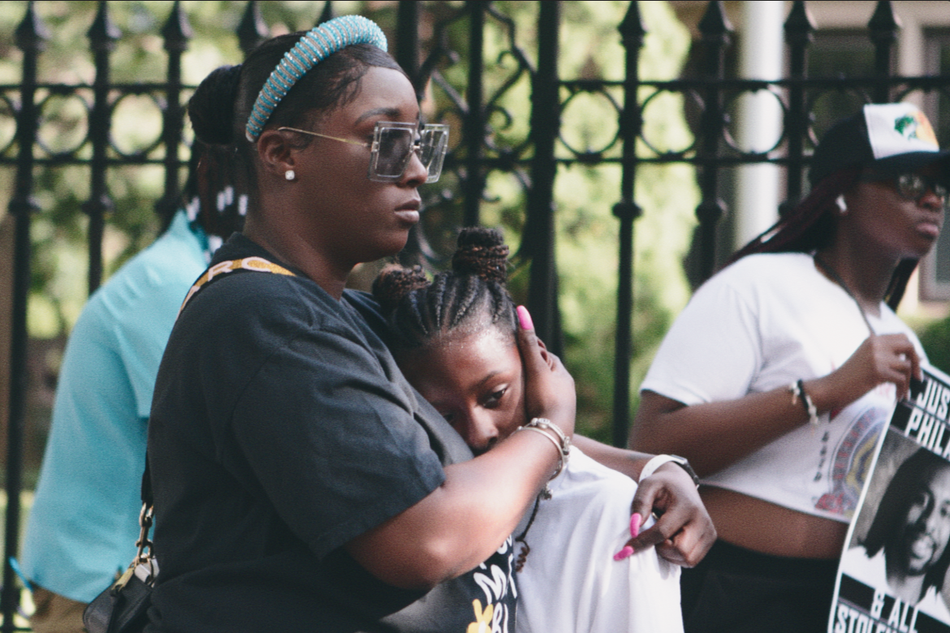
At the heart of "#WhileBlack" lie the stories of two remarkable women whose impromptu acts of digital witnessing fundamentally altered the course of justice and public discourse. Darnella Frazier, then a teenager, bravely filmed the 2020 killing of George Floyd in Minneapolis, a video that ignited a global reckoning on racial injustice and police accountability. Similarly, Diamond Reynolds live-streamed the agonizing aftermath of her boyfriend Philando Castile’s shooting by a police officer in a St. Paul suburb in 2016, offering a raw, unvarnished look at a moment of profound trauma. The documentary opens with an audiovisual flourish, immersing the audience in a heightened, anxious space through tense musical scores and dynamic montages of protest, signaling a promising start. It even employs a haunting, almost spectral use of sound, layering audio from Frazier’s pivotal footage over present-day shots of the exact location where Floyd was killed, effectively evoking the powerful echoes of traumatic memory embedded in physical spaces. These initial moments hint at a powerful cinematic exploration of memory, place, and trauma, particularly pertinent for a women-focused audience grappling with the burdens of witnessing. However, these compelling stylistic choices, capable of stirring deep emotional resonance, are regrettably fleeting, appearing only once or twice despite the film’s repeated references to the intense harassment and post-traumatic stress disorder (PTSD) Frazier endured in the aftermath of her courageous act.
This initial promise soon gives way to a noticeably less polished and often academic approach. The film transitions into a series of interviews with a range of talking heads—academics, activists, civil liberties attorneys, and local politicians—who, while undoubtedly knowledgeable, often discuss complex facts, figures, and academic concepts from an emotional distance. Their discourse delves into areas such as the intricate legalities of social media footprints, the murky waters of intellectual property rights surrounding citizen footage, and the contentious issue of who ultimately profits from ad revenue generated by videos depicting Black death. These are undeniably critical topics, yet their rapid-fire introduction, alongside snippets featuring various activist groups, is crammed into a scant 84-minute runtime. This ambitious breadth, without the necessary depth, means few of these vital subjects receive the requisite attention or sustained inquiry needed to truly resonate with an audience, especially one seeking a deeper, more empathetic understanding of the human cost involved.
One of the documentary’s most ethically commendable choices, and simultaneously its most challenging narrative decision, is the filmmakers’ intentional avoidance of explicitly sharing footage of Black deaths and anti-Black police violence on screen. This deliberate stance is rooted in a desire to circumvent the creation of morbid spectacle and to respect the dignity of the victims and their communities, a choice that many non-Black filmmakers might not have made. The filmmakers rightly assume that these harrowing videos are widely accessible to anyone who seeks them out. However, this ethical imperative inadvertently leads to a narrative that, in some ways, pulls its punches. The absence of these visceral images is not, in itself, the problem; rather, the issue lies in the film’s failure to substitute them with equally potent alternatives that could stir the viewer’s soul or awaken their moral compass. While the mere discussion of police killing unarmed civilians should inherently be enough to ignite fury and sorrow, the documentary’s predominantly sanitized and academic approach creates an emotional distance, denying viewers the necessary space to fully process these profound emotions. For an audience often tasked with navigating complex emotional landscapes, this intellectualization risks alienating the very empathy the subject matter demands.
Ideas such as reparative journalism—a form of reporting that acknowledges historical harms and actively works towards justice and healing within communities—and sousveillance—the inverse of surveillance, where individuals watch the watchers to hold power accountable—are mentioned in passing. These powerful concepts, which could form the backbone of a compelling and innovative documentary on citizen journalism, are unfortunately never developed into focal points of actual inquiry. The interviews themselves, while informative, maintain an unobtrusive quality, mirroring the film’s overall reticence. While intimate footage of Frazier and Reynolds’ personal lives offers glimpses into their circumstances, their emotional states in the aftermath of their unwitting digital breakthroughs are largely kept at arm’s length. This guarded portrayal, while perhaps a reflection of their own self-preservation, is a missed opportunity for deeper cinematic exploration.
The matter-of-fact cadence with which Frazier and Reynolds narrate their recollections presents a significant cinematic opportunity that the documentary, regrettably, does not fully seize. Their subdued delivery, a potential window into deep-seated psychological impacts, could have been probed further. Filmmakers Holness and Fussell had the chance to employ audiovisual contrasts—perhaps through evocative music, introspective visual metaphors, or more probing interview techniques—to unearth the unspoken emotions beneath the surface of their subjects’ narratives. Instead, the film largely matches the tonal casualness of their subjects’ speech, shying away from documentary emphasis or cinematic exclamation. This choice, while potentially aiming for authenticity, inadvertently dampens the emotional weight and prevents a deeper understanding of the profound psychological burdens these women carry.
Throughout the documentary, the interviews repeatedly circle back to the pivotal importance of footage as a means to reclaim power and demand accountability. Yet, the images that "#WhileBlack" itself crafts, or those it re-assembles from existing sources, often lack the vitality and visceral impact necessary to make this assertion feel inherently true. It seems as though a multitude of voices weigh in on the stories of these two Black women and the Black men whose deaths they filmed—stories that, for anyone with an internet connection, have already become synonymous with vital struggles for justice. However, the film ultimately does little to illuminate why these stories are vital in a new or expanded way, or to deepen the understanding that most people already possess. In its earnest attempt to cover vast thematic ground and maintain an ethical distance from explicit violence, "#WhileBlack" inadvertently sacrifices the emotional resonance and narrative focus that could have cemented its place as a truly unforgettable and transformative piece of cinema, particularly for an audience seeking to understand the enduring human cost borne by those who dare to document injustice.