


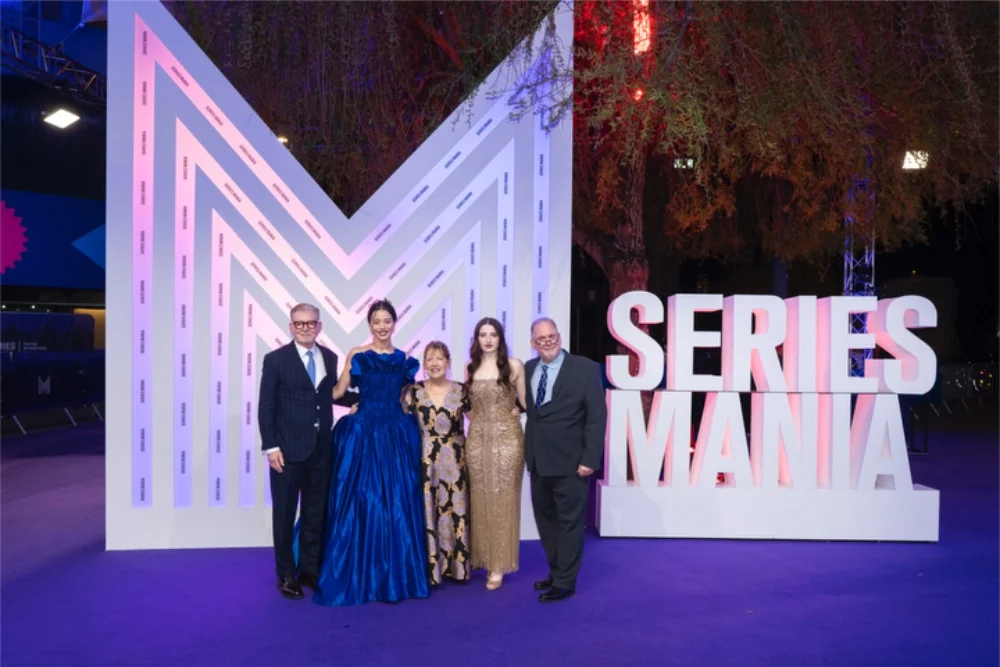
The oppressive, crimson-soaked world of Gilead, first brought to vivid life in Margaret Atwood’s seminal 1985 novel and later in the critically acclaimed television series, is poised for a profound expansion with the upcoming adaptation of her 2019 sequel, *The Testaments*. This highly anticipated series promises to peel back new layers of the totalitarian regime, shifting its gaze from the harrowing experiences of the subjugated Handmaids to the gilded cages of Gilead’s elite, offering a startling new perspective on power, complicity, and the enduring spirit of resistance. Unveiled at the prestigious French festival Series Mania, the world premiere of *The Testaments* has already ignited conversations about its bold narrative choices and the promise of a different kind of struggle within a familiar dystopia.
For years, viewers have been immersed in the terrifying reality of women stripped of their autonomy, forced into reproductive slavery under the watchful eyes of the Aunts and Commanders. *The Handmaid’s Tale* meticulously charted the lives of those at the very bottom of Gilead’s brutal social hierarchy, illustrating the starkest forms of oppression. Now, *The Testaments* invites audiences into a world where privilege, while seemingly offering sanctuary, still suffocates the human spirit. Series creator Bruce Miller, reflecting on this pivotal shift, shared his excitement at the premiere: “It was very exciting to see this other side of Gilead, with all these privileged people. ‘The Handmaid’s Tale’ was about those at the very bottom of the social structure. Here are the women who are at the absolute top. And it still kind of sucks.” This observation underscores the pervasive nature of Gilead’s control, demonstrating that even those ostensibly “favored” by the regime are not truly free, trapped by their own set of expectations, rules, and the constant fear of falling from grace.
The narrative of *The Testaments* unfurls within the austere yet strangely luxurious confines of Aunt Lydia’s elite preparatory school, a breeding ground for Gilead’s future wives. This institution serves as a crucible where the daughters of powerful Commanders, many forcibly separated from their birth parents and indoctrinated from a young age, are molded into compliant figures. Alongside them are the “Pearl Girls,” young women recruited from the outside world, lured by promises of status and security within Gilead’s seemingly impenetrable borders. This setting, a stark contrast to the sterile, often violent environments of the Handmaids, nevertheless reveals a different, more insidious form of control, where minds are shaped and spirits are subtly broken through rigid discipline and ideological conditioning, rather than overt brutality.
Central to this new exploration is the complex, often terrifying figure of Aunt Lydia, portrayed with chilling brilliance by Emmy winner Ann Dowd. Dowd’s reprisal of the role is one of the most anticipated aspects of the sequel, promising a deep dive into the character’s previously hinted-at internal struggles. Dowd elaborated on Lydia’s evolution, noting, “As Bruce said, it’s a different world entirely. And Lydia is a different person.” This transformation is not merely superficial; it stems from a profound reckoning. Dowd explained that at the close of *The Handmaid’s Tale*, Lydia finds herself in “a very crushed place.” Her journey has been one of immense pain and complicity, culminating in a moment where she was “brought to her knees, literally, in deep and profound remorse.”
This critical juncture, Dowd suggests, presented Aunt Lydia with a fundamental choice, a fork in the road of her tormented soul. “When that happens, you can say: ‘I don’t care. I will keep doing what I’m doing.’ Or you can change the way you see the world, acknowledge what you have done, live with the pain and the misery of that, and begin a new life,” Dowd mused. This internal conflict hints at a Lydia who, despite her outward adherence to Gilead’s tenets, harbors a secret, burgeoning rebellion, driven by a desire for redemption and a strategic understanding of how to dismantle the system from within. It’s a compelling prospect: a villain who, through a torturous process of self-reflection, might emerge as an unlikely, morally ambiguous savior.
Dowd offered further insight into Lydia’s psychological makeup, tracing it back to her own upbringing. “I remember those early scripts and how clear they were about who Lydia is. I was raised in a Catholic home and educated by Catholic sisters. They weren’t unkind, but you learn that you’re not special. You have a job to do, so don’t look for attention. Don’t walk away before it’s complete. Get it done.” This background, steeped in discipline, duty, and a rigid moral framework, provides a chillingly plausible foundation for Lydia’s ascent within Gilead’s oppressive structure. It explains her unyielding demeanor, her focus on order, and her ability to enforce draconian rules, all while perhaps wrestling with a deep-seated, often hidden, sense of justice. While the environment Aunt Lydia crafts for her students at the preparatory school might appear to offer “less pain and suffering” compared to the Handmaids’ brutal existence, Gilead’s strictures remain omnipresent, ensuring conformity and obedience through more subtle, psychological means.

Beyond its character arcs, *The Testaments* continues Margaret Atwood’s legacy of trenchant social commentary, a relevance that remains disturbingly prescient. Bruce Miller observed, “I don’t know if [the current political situation] makes the story more relevant today than at any other time, but the interesting thing about Margaret Atwood is that she puts her finger on the points of friction that exist forever.” Miller recalled his initial encounter with Atwood’s work in college, describing it as feeling perfectly timed even decades ago. “That was a long, long, long time ago, and it seemed like the right time to read that book. Then, 25 or 30 years later, I made the show and it still seemed as if it was built for that time. It’s the same with ‘The Testaments.’ I think it’s more of a reflection on Margaret’s sense of where women are and what things they’re always fighting.” This testament to Atwood’s enduring vision highlights the timeless nature of her exploration of patriarchal control, bodily autonomy, and the insidious erosion of rights that women have faced throughout history and continue to contend with today.
Crucially, Miller emphasized the underlying message of hope that Atwood wove into *The Testaments*. “As Margaret says, you can look back on any point in history and find horrible things being done to women. But I think having her write ‘The Testaments’ and say there’s hope in Gilead, is really her way of saying there’s hope for women in general. Women will move forward.” This powerful statement suggests that despite the horrors depicted, Atwood’s ultimate vision is one of resilience and progress, a beacon for those fighting for equality and justice in any era. It transforms the narrative from a mere dystopian warning into an affirmation of female strength and the unwavering pursuit of a better future.
The new generation of characters bringing this expanded world to life includes Chase Infiniti, celebrated for her compelling performance in the Oscar-winning film *One Battle After Another*, and Lucy Halliday. Infiniti portrays Agnes, one of the Commander’s daughters, while Halliday takes on the role of Daisy, a Pearl Girl. Their paths converge in an unexpected friendship, a vital bond forged amidst the strictures of Gilead’s elite school. This budding alliance promises to be a cornerstone of the narrative, showcasing how connections and shared experiences can become potent forces for change, even in the most oppressive environments.
Infiniti spoke of the unique experience of stepping into such a well-established, beloved universe. “We were very grateful to have Ann, [producer] Warren Littlefield, Bruce and also Elizabeth Moss, who’s an executive producer, as our encyclopedias for everything. We could ask them any question we had about Gilead. On top of that, they welcomed us into the world with such love and support.” She revealed her immediate connection to the material: “It was so intriguing, and so different from Willa and ‘One Battle.’ I thought I would have a hard time with the source material – it’s incredibly heavy. But because of the community that was built on set, anytime I struggled, they were there to catch me.” This speaks to the intense emotional demands of working within the Gilead universe, and the supportive environment fostered by the production team.
Halliday echoed Infiniti’s sentiments, articulating the profound responsibility felt by the new cast. “’The Handmaid’s Tale’ was so beloved. It really resonated with audiences, and the books were so brilliant. When you step into it, you want to do it justice. You don’t want to be the cog in the machine that disrupts what already existed.” This sense of stewardship highlights the immense pressure and dedication required to carry forward a story that has become a cultural touchstone, recognized globally for its powerful narrative and urgent themes.
The creative vision for *The Testaments* is also shaped by returning talent. Bruce Miller lauded Mike Barber, a veteran director from *The Handmaid’s Tale*, who helmed the first three episodes. “No one knows ‘The Handmaid’s Tale’ better than Barber. He also knew what things he would like to do differently and what he could do with a younger cast. He was amazing at building the world.” Barber’s intimate knowledge of Gilead’s intricate details, combined with a fresh perspective for the sequel, suggests a continuity of quality while embracing the new narrative directions.
Ultimately, the heart of the entire enterprise remains Margaret Atwood herself. Her continued, active involvement in the adaptation process is a testament to her dedication to her created universe. Miller shared, “Margaret’s very involved in the show, and she’s busier than all of you put together. She’s the busiest 86-year-old I’ve ever met!” He reflected on their evolving collaboration: “From the beginning, she was more used to her work getting adapted than I was adapting her work. ‘The Handmaid’s Tale’ was a play, an opera, a ballet, and a movie. She was very loose with it and I was a little stricter.” This anecdote offers a delightful glimpse into the dynamic between author and adapter, emphasizing Atwood’s trust in the creative team while affirming Miller’s commitment to faithfully translating her vision.

Atwood’s influence is not merely ceremonial; she remains deeply embedded in the production. “She still gets every script and watches every episode,” Miller confirmed. “She’s the first person I talk to – even before the studio, before Warren. She has to say: ‘Ok, that makes sense.’ When you see her eyes light up, you know you really got something.” This level of engagement ensures that the spirit and integrity of Atwood’s original work are meticulously preserved, giving the adaptation an authenticity that resonates deeply with fans. Producer Warren Littlefield echoed this sentiment, adding, “Every time we’ve spoken to Margaret, we’ve learned something about the world we live in. We always felt just a little bit smarter.”
Beyond narrative and character, *The Testaments* visually distinguishes itself from its predecessor through a deliberate expansion of its color palette. While *The Handmaid’s Tale* was dominated by the stark reds, blues, and grays symbolizing the Handmaids, Wives, and Marthas, the sequel introduces softer, yet equally symbolic, hues. Young female students at Aunt Lydia’s academy are cloaked in shades of pink and purple, while the enigmatic Pearl Girls are clad in pristine white. Miller explained the intention behind this visual evolution: “Margaret and I talked about it a lot. We had all these new characters and we wanted to underline they were still cloaked by Gilead. They were still categorized by Gilead, but they were different women.”
This nuanced approach to costume design speaks volumes about the different forms of subjugation present within Gilead. The vibrant, yet muted, pinks and purples for the students hint at a youthful femininity that is simultaneously cultivated and constrained, preparing them for roles as compliant wives. The white of the Pearl Girls, often associated with purity and innocence, takes on a chilling undertone in Gilead, suggesting a blank slate upon which the regime can imprint its ideology. Miller recalled the intense discussions around these visual elements: “We had discussions about shorts sleeves, tons of discussions about the length of skirts and how much skin you could show. It got weird. You start feeling like you’re naked when you’re wearing your regular clothes, because it’s so restrictive.” This anecdote perfectly illustrates how even seemingly minor details in Gilead’s sartorial code reinforce the pervasive control over women’s bodies and identities.
Warren Littlefield underscored the significance of this visual departure. “The red robe from ‘The Handmaid’s Tale’ is so iconic. It has been used as a symbol around the world, and it has made us tremendously proud. But you won’t find it in ‘The Testaments.’ That’s part of us saying: This is a new world.” This deliberate shedding of the iconic red signifies more than just a costume change; it’s a powerful declaration that *The Testaments* is carving its own distinct path, exploring new facets of Gilead while retaining the thematic urgency that made its predecessor so impactful. It’s a bold statement, promising a fresh visual and narrative experience that will undoubtedly resonate deeply with audiences.
The journey from concept to screen, for both series, carries a profound sense of continuity. Littlefield concluded with a poignant reflection: “Bruce and I had a wonderful experience watching June [played by Elisabeth Moss] come to life. We saw her on the monitor, and we said: ‘I think this is going to work.’ Now, all these years later, we were on the set of ‘The Testaments,’ looking at the monitor and watching Chase as Agnes. It was history repeating itself.” This sentiment encapsulates the enduring power of Atwood’s storytelling and the commitment of the creative team to bring her complex, vital narratives to a new generation, ensuring that the lessons and warnings of Gilead continue to echo in the contemporary world.