




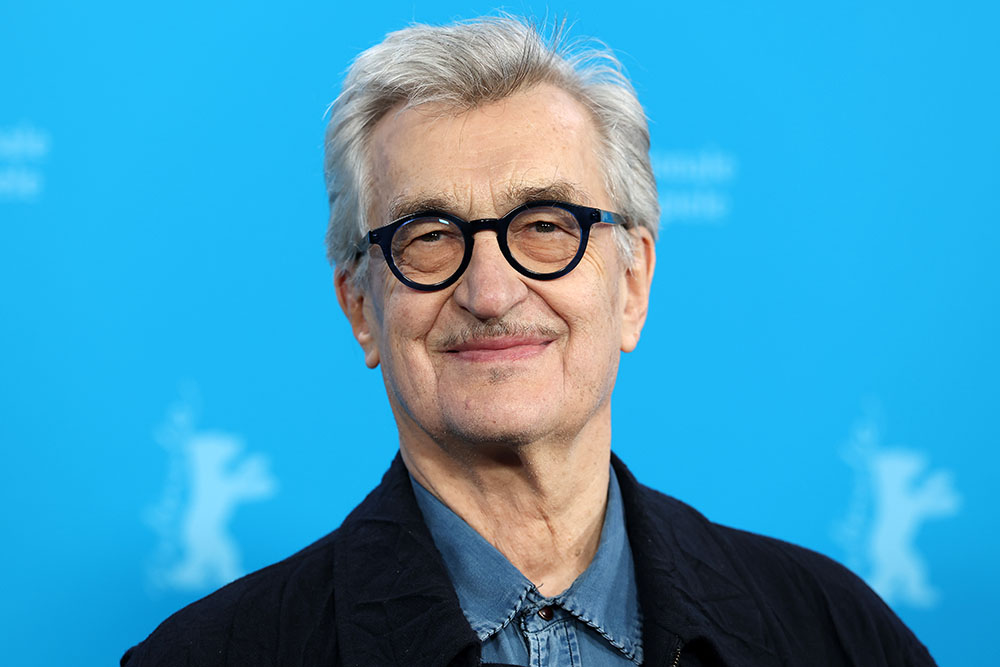
The Berlinale Begins: Wim Wenders and Jury Navigate the Complex Interplay of Cinema and Global Conflict
The highly anticipated Berlin Film Festival, a cinematic beacon renowned for its bold programming and often politically charged atmosphere, commenced its latest edition on Thursday, immediately plunging its esteemed competition jury into a profound discussion about the role of art in a fractured world. Led by the iconic German director Wim Wenders, the jury found itself at the nexus of culture and geopolitics, fielding an array of challenging questions that underscored the festival’s enduring commitment to engaging with contemporary global issues, particularly the harrowing conflict unfolding in Gaza.
The press conference, traditionally a platform for introducing the jury and their cinematic vision, quickly pivoted to a broader philosophical inquiry: can film truly instigate political change? Wim Wenders, a titan of European cinema whose career spans decades and includes masterpieces like “Paris, Texas” and “Wings of Desire,” offered a nuanced and thought-provoking perspective. While he firmly asserted that “movies can change the world,” he drew a critical distinction, adding, “but not in a political way.”
Wenders elaborated on this fascinating paradox, suggesting that the power of cinema operates on a deeper, more intrinsic level than the machinations of statecraft. “No movie has really changed any politician’s idea,” he mused, highlighting the often-impervious nature of political decision-making. Instead, he posited, the true transformative potential of film lies in its capacity to “change the idea people have of how they should live.” This subtle yet profound shift in individual consciousness, Wenders argued, is where cinema exerts its most potent influence. He identified a pervasive “big discrepancy on this planet between people who want to live their lives and governments who have other ideas,” asserting that “films enter that discrepancy.” By offering alternative perspectives, fostering empathy, and challenging established norms, cinema can reshape personal worldviews, which, over time, can cumulatively lead to societal shifts far more enduring than any direct political intervention.
Wenders’ reflections resonate deeply with the historical and ongoing debates surrounding art’s purpose. For centuries, artists have grappled with their responsibility to reflect, critique, and potentially influence their societies. His view suggests that cinema’s strength isn’t in campaigning or propaganda, but in its ability to cultivate a shared human experience, to reveal universal truths, and to broaden the horizons of individual understanding. In an era marked by increasing polarization and disengagement, Wenders’ philosophy offers a compelling argument for the enduring relevance of cinematic storytelling as a vital force for cultural evolution.
The jury itself is a testament to the global reach and diverse perspectives that the Berlinale champions. Presiding over this distinguished panel is, of course, Wim Wenders, whose legacy of poetic, often melancholic, yet profoundly human films has earned him international acclaim. His profound understanding of the human condition makes him a fitting leader for a jury tasked with evaluating stories from across the globe. Alongside him sits American helmer Reinaldo Marcus Green, celebrated for his powerful biographical drama “King Richard,” which brought to life the inspiring story behind tennis legends Venus and Serena Williams. Green’s work often explores themes of perseverance, family, and the pursuit of dreams against challenging odds, bringing a perspective rooted in contemporary American storytelling.
From Japan, we find Hikari, whose film “Rental Family” demonstrates her unique narrative voice and her ability to craft intimate, character-driven stories that explore modern societal nuances. Her insights into East Asian cinema and its evolving landscape are invaluable. Ewa Puszczyńska, a Polish producer, contributes an acute understanding of European independent cinema, having been instrumental in bringing critically acclaimed and often challenging films to the screen, including the recently lauded “The Zone of Interest.” Her involvement speaks volumes about the festival’s commitment to showcasing thought-provoking, often historically resonant, narratives.
Nepalese director Min Bahadur Bham, known for his compelling work like “Shambala,” adds a vital voice from South Asia, offering a lens into stories from regions often underrepresented in mainstream international cinema. His films frequently explore cultural identity, tradition, and the struggles of marginalized communities. South Korean actress Bae Doona, with her illustrious career spanning both acclaimed Korean films and international productions like “Cloud Atlas” and “Sense8,” brings an actor’s perspective, deeply understanding character development and performance. Her presence highlights the festival’s recognition of the multifaceted talents that contribute to cinematic excellence. Rounding out this global ensemble is Indian director-producer Shivendra Singh Dungarpur, celebrated for his documentary work like “Celluloid Man,” which delves into the rich history and preservation of Indian cinema. His expertise in documentary filmmaking and film archiving provides a crucial historical and analytical dimension to the jury’s deliberations.
This confluence of diverse talents, experiences, and cultural backgrounds forms a microcosm of the global film industry, ensuring that the films in competition are judged not just on technical merit, but also on their universal resonance and cultural significance. It is precisely this diversity that makes the Berlinale jury uniquely positioned to engage with the complex questions that inevitably arise when art intersects with the pressing realities of the world.
The intensity of the opening press conference escalated significantly when the jury was directly confronted with questions regarding the ongoing conflict in Gaza. The query specifically highlighted the German government’s vocal support for Israel, a position that carries particular weight given Germany’s historical context and the fact that the government serves as a significant funder of the Berlinale. This direct link between state policy and cultural funding placed the jury in a delicate and challenging position, prompting a collective reflection on the boundaries of artistic responsibility.
Ewa Puszczyńska was the first to articulate the jury’s collective sentiment, expressing her feeling that the question was “a bit unfair.” Her response was not an evasion, but rather an attempt to contextualize the immense pressure placed upon artists to become direct political advocates. “Of course, we are trying to talk to people — every single viewer — to make them think, but we cannot be responsible for what their decision would be to support Israel or the decision to support Palestine,” she stated. Puszczyńska’s point underscored the distinction between inspiring thought and dictating political allegiance, a fundamental tenet of artistic freedom.
Her subsequent observation further deepened the discussion: “There are many other wars where genocide is committed, and we do not talk about that. So this is a very complicated question and I think it’s a bit unfair asking us what do you think, how we support, not support, talking to our governments or not.” This crucial statement highlighted the selective nature of public discourse and media attention, suggesting that singling out one conflict, however tragic, while ignoring others, places an undue and often impossible burden on artists. Coming from a producer whose filmography includes “The Zone of Interest,” a searing and unflinching portrayal of the Holocaust, Puszczyńska’s perspective on genocide and historical atrocities carries profound weight. Her experience in bringing such a sensitive and vital historical narrative to the screen grants her an authoritative voice in discussing the complexities of moral responsibility and the ethical challenges of confronting human suffering through art.
Wenders then reinforced this stance, articulating a philosophy that champions artistic autonomy from overt political entanglement. “We have to stay out of politics because if we make movies that are dedicatedly political, we enter the field of politics,” he declared. This assertion is not a call for apathy or disengagement, but rather a strategic choice about the most effective way for art to impact society. Wenders believes that the moment art becomes overtly partisan or propagandistic, it risks losing its unique power to transcend boundaries and speak to universal human experiences. “But we are the counterweight of politics, we are the opposite of politics. We have to do the work of people, not the work of politicians,” he added, crystallizing his vision. For Wenders, art functions as a vital counterbalance, offering alternative narratives, fostering empathy, and providing spaces for reflection that political discourse, by its very nature, often cannot. It is in this role as a mirror, a provocateur of thought, and a conduit for shared humanity that cinema finds its most profound and enduring influence.
The 76th edition of the Berlin Film Festival, historically celebrated for its commitment to political engagement and social commentary, thus opened with a powerful reaffirmation of art’s unique, indirect, yet ultimately transformative power. The festival, which kicked off on Thursday night with the premiere of Shahrbanoo Sadat’s “No Good Men” and is scheduled to run until February 22, promises a rich tapestry of films that will undoubtedly continue to explore the intricate relationship between individual lives, societal pressures, and global events. While the jury members made it clear they are not political pundits, their thoughtful responses underscored their profound belief in cinema’s capacity to shape the human spirit and, through that, indirectly influence the trajectory of our shared world.