



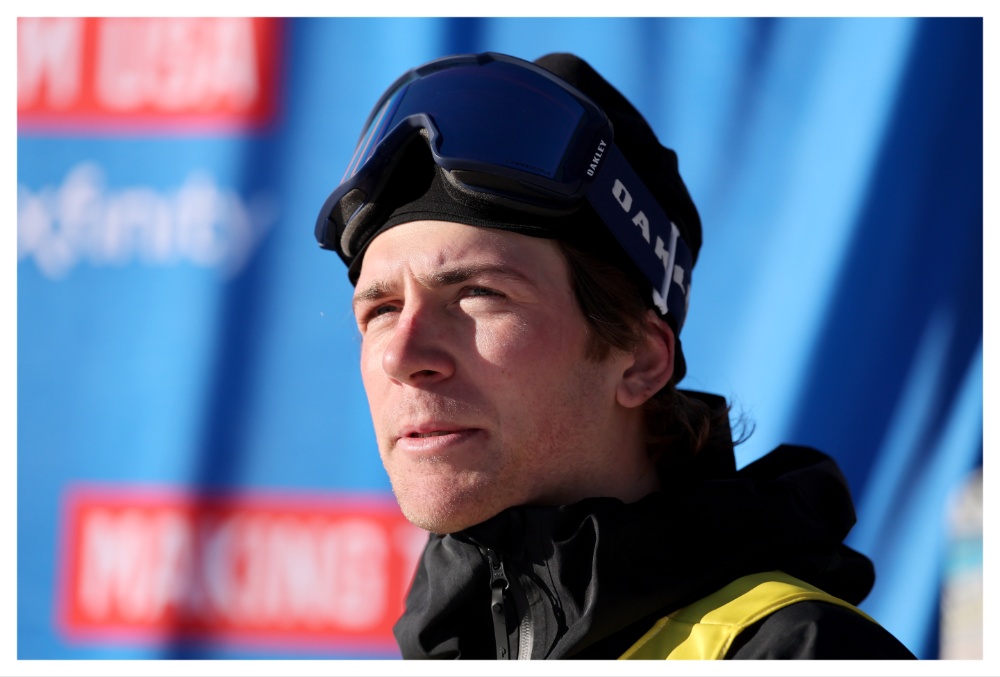
The world of elite sports, often perceived as an arena separate from the political fray, has once again become a battleground for national identity and individual expression. This dynamic was starkly illuminated recently when U.S. Olympic freestyle skier Hunter Hess found himself at the center of a swirling controversy, drawing sharp criticism from former President Donald Trump after expressing "mixed feelings" about representing the United States at the winter games. The incident quickly escalated, sparking a broader conversation among athletes and the public about the complex interplay between patriotism, personal values, and the immense pressure that comes with wearing the national colors on a global stage.
Hunter Hess, a formidable talent in the demanding discipline of freestyle skiing, had spent years honing his craft, sacrificing countless hours and enduring grueling training regimens, all with the singular dream of competing at the highest level. His journey to the Olympics was a testament to his dedication, resilience, and athletic prowess. Yet, in a pre-competition press conference, a moment typically reserved for expressions of national pride and athletic anticipation, Hess offered a more nuanced perspective that immediately captured headlines. He articulated that representing the United States brought forth "mixed emotions," suggesting that should he achieve the ultimate goal of an Olympic medal, its significance would resonate more deeply with his "family and the people that support me getting here" than with the nation as a whole.
Hess’s comments, delivered with a candor that perhaps surprised many accustomed to more straightforward patriotic declarations from athletes, quickly reverberated beyond the press room. They tapped into a vein of contemporary discourse that has seen an increasing number of public figures, including athletes, grappling with the complexities of national allegiance in an era of heightened political polarization and social introspection. For many, his statement was a refreshing display of honesty, acknowledging the personal sacrifices and community support that underpin an athlete’s success, often overshadowing abstract national ideals. For others, it was an unpatriotic slight, an unacceptable deviation from the expected narrative of unequivocal national pride.
The swift and forceful response from former President Donald Trump underscored the highly charged nature of such public statements. Known for his direct and often confrontational style, Trump took to social media to brand Hess a "real loser." This presidential rebuke, delivered through a platform that allowed for immediate and widespread dissemination, instantly amplified the controversy, transforming a skier’s thoughtful reflection into a national talking point. Trump’s history of publicly criticizing athletes and celebrities who expressed views he deemed unpatriotic or critical of the nation further solidified the pattern, reminding observers of past skirmishes with figures ranging from NFL players kneeling during the national anthem to prominent actors and musicians. His intervention ensured that Hess’s remarks would not simply fade into the background but would instead become a flashpoint in the ongoing culture wars.
In the wake of the presidential condemnation, Hess responded with a carefully articulated statement on his own social media channels, aiming to clarify his position and reaffirm his underlying sentiments. "I love my country," Hess declared, unequivocally. He continued, "There is so much that is great about America, but there are always things that could be better. One of the many things that makes this country so amazing is that we have the right and the freedom to point that out." This measured reply was a masterclass in nuanced patriotism. Hess acknowledged the inherent greatness of the United States while simultaneously upholding the democratic principle of constructive criticism – the very freedom, he implied, that makes the nation exceptional. He skillfully pivoted from the specifics of his earlier comments to a broader appeal for unity and the core values of the Olympic movement. "The best part of the Olympics is that it brings people together, and when so many of us are divided we need that more than ever," he added, concluding with an emphatic, "I cannot wait to represent Team USA next week when I compete. Thanks to everyone for their support." His words served as a powerful reminder that patriotism is not monolithic; it can encompass both profound love for one’s nation and a commitment to its ongoing improvement.
Hess was not alone in navigating these complex waters. The incident resonated deeply within the U.S. Olympic contingent, prompting other athletes to weigh in on the delicate balance between national representation and personal convictions. Among them was women’s halfpipe champion Maddie Maestro, a prominent snowboarder with strong prospects for her first Olympic medal. Maestro, speaking with a similar blend of pride and apprehension, articulated her own feelings: she was undeniably proud to represent the U.S., but also felt "saddened with what’s happening at home." Her statement echoed Hess’s underlying sentiment that an athlete’s commitment to their sport and country does not necessitate a blind eye to domestic challenges. "It’s really tough," she admitted, acknowledging the difficulty of reconciling national representation with personal concerns about societal issues. "I feel like we can’t turn a blind eye to that. But at the same time, I represent a country that has the same values as mine, of kindness and compassion. And we come together in times of injustice." Maestro’s words provided a crucial reinforcement to the idea that an athlete’s identity is multifaceted, encompassing both their role as a national representative and their conscience as a citizen. Her emphasis on "kindness and compassion" as core American values offered an alternative, perhaps more inclusive, vision of patriotism.
The discussions ignited by Hess and Maestro are not isolated incidents but rather part of a long and storied tradition of athletes using their platforms to speak on issues beyond the realm of sports. From Jesse Owens’s defiance of Nazi ideology at the 1936 Berlin Olympics to Tommie Smith and John Carlos’s iconic Black Power salute at the 1968 Mexico City Games, and Muhammad Ali’s principled stand against the Vietnam War, athletes have historically leveraged their visibility to challenge societal norms and advocate for change. In more recent times, figures like Colin Kaepernick kneeling during the national anthem to protest racial injustice sparked a nationwide debate, illustrating the enduring power of athlete activism and the public’s often polarized reactions to it.
The current generation of athletes operates in an even more hyper-connected world, where social media instantly magnifies their voices and allows for direct engagement with both fans and critics. This unprecedented level of scrutiny and access places immense pressure on athletes, who are increasingly expected by segments of the public to comment on social and political issues. The traditional adage of "stick to sports" is often met with the counter-argument that athletes are citizens first, with the same rights and responsibilities to speak their minds as anyone else, and perhaps an even greater moral imperative given their influential platforms. For many, the idea that an athlete must compartmentalize their identity – celebrating national achievements while silently ignoring national shortcomings – feels increasingly anachronistic.
The Olympic Games themselves, while ostensibly a celebration of athletic prowess and international camaraderie, have always been imbued with political significance. Nations vie not just for medals but for prestige, soft power, and the opportunity to project a particular image on the global stage. Every flag raised, every anthem played, carries symbolic weight. Against this backdrop, an athlete’s personal statement, however sincerely offered, can be interpreted through a highly politicized lens. The expectation of unwavering national pride can clash with the individual’s right to critical thought and freedom of expression, creating a tension that is both deeply personal for the athlete and profoundly resonant for the broader public.
What Hess and Maestro articulated speaks to a deeper societal reckoning: what does it truly mean to represent one’s country in a complex, often flawed world? Is patriotism a rigid adherence to an idealized image, or can it encompass a loving yet critical engagement with the nation’s realities? Their courage to voice these nuanced perspectives in a highly visible and high-stakes environment underscores a growing trend among public figures to move beyond simplistic declarations, embracing a more authentic and introspective form of national identity. As the Olympic flame burns brightly, illuminating both extraordinary athletic achievements and profound human dilemmas, the dialogue sparked by these athletes serves as a powerful reminder that the spirit of competition is inextricably linked with the spirit of critical inquiry and the ongoing pursuit of a more perfect union. Their voices, far from diminishing the national spirit, enrich it, inviting a deeper, more honest conversation about what we cherish in our nation and what we aspire for it to become.