


As the glittering spectacle of awards season descended upon London, casting its spotlight on cinematic excellence, a powerful and poignant narrative emerged from within its hallowed halls: the undeniable arrival and ascendance of South Asian cinema. Amidst the usual flurry of industry events surrounding the prestigious BAFTA Film Awards weekend, a groundbreaking gathering in the heart of the British capital marked a pivotal moment, not just for celebration, but for collective advocacy and the forging of future pathways for diverse voices.
The atmosphere at the BAFTA headquarters on Friday was charged with both excitement and a profound sense of purpose. Filmmakers, executives, and industry leaders from across the globe converged, not merely to network, but to amplify a message of solidarity and resilience in increasingly turbulent times. It was in this setting that double Oscar-nominated filmmaker Geeta Gandbhir delivered a stirring address, resonating deeply with every attendee. “We are living in a time, particularly in the U.S., an incredibly alarming and dangerous time,” Gandbhir asserted, her words carrying the weight of an artist deeply engaged with societal issues. Her reflections extended beyond immediate political anxieties, delving into the historical foundations of her own career and the crucial role of allyship. “The person who gave me my first opportunity to film was the great Spike Lee – it was the Black community in the U.S. that actually opened the door for me, and I stand on their shoulders. We fight this fight, but what happens in the U.S. has a ripple effect around the world.” Gandbhir’s call to action was clear and unequivocal: “We speak up for ourselves, we are here for us – but you must be there for others in this time. Together we are strong.” Her message underscored the interconnectedness of struggles for representation and justice, positioning the South Asian creative community not in isolation, but as a vital part of a broader, global movement for equity and understanding.
Gandbhir herself stands as a testament to the burgeoning impact of South Asian talent in the global cinematic landscape. Her remarkable achievements this awards season highlight a career dedicated to incisive, impactful storytelling. She is doubly represented at this year’s Academy Awards, a rare and significant feat. Her documentary, “The Perfect Neighbor,” has garnered both a BAFTA nomination and an Oscar nomination for Best Documentary Feature, testament to its profound resonance and critical acclaim. Simultaneously, “The Devil Is Busy,” a powerful short film she co-directed with Christalyn Hampton, is nominated for Best Documentary Short Film. Beyond these current accolades, Gandbhir’s distinguished career includes two Primetime Emmy Awards for her exceptional work in editing, showcasing her versatile mastery of the craft and her consistent ability to shape compelling narratives that challenge perceptions and foster empathy.
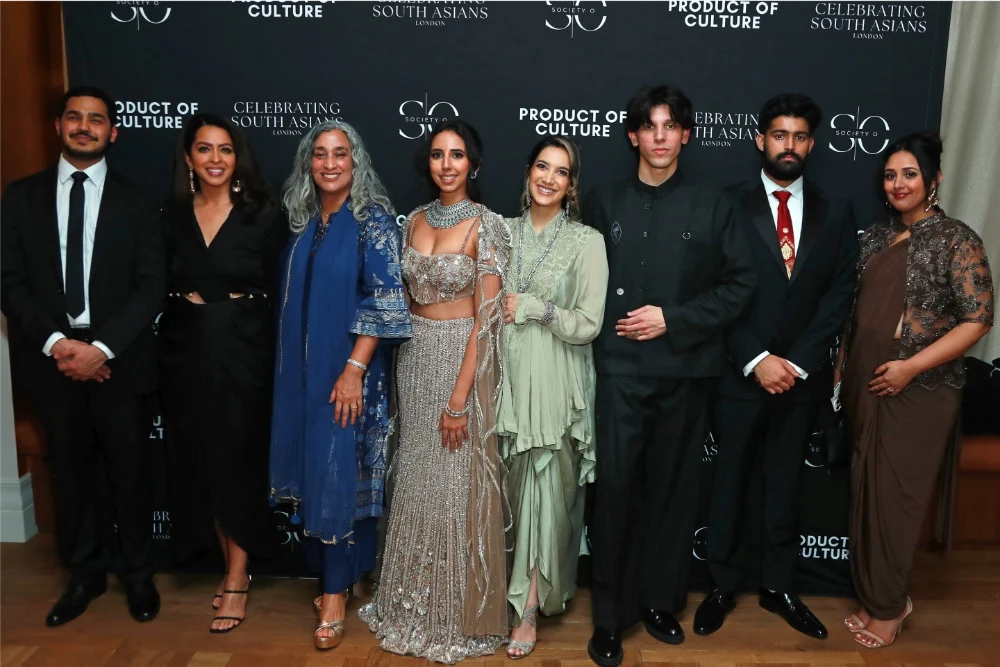
The industry gathering itself was a meticulously curated event, designed to create a dedicated, inclusive space within the often overwhelming grandeur of awards season. Co-hosted by Society O, a dynamic new British cultural platform committed to amplifying Asian voices across theatre, film, and television, and U.S.-based strategy and distribution powerhouse Product of Culture, the event at the BAFTA headquarters served as a nexus for dialogue, celebration, and strategic collaboration. Both organizations share a foundational commitment to fostering visibility and opportunity for underrepresented communities, making their partnership a natural and potent alliance. The gathering convened an impressive array of talent, including nominees poised on the brink of global recognition, established filmmakers, influential executives, and visionary industry leaders, all united by a shared vision for a more diverse and equitable entertainment landscape.
The evening provided a platform to recognize and celebrate other BAFTA-nominated titles that exemplify the breadth and depth of South Asian storytelling. Luís Hindman, the director of “Magid/Zafar,” a poignant nominee in the British Short Film category, offered a particularly stirring reflection on the profound significance of such recognition. His film, characterized as a “highly specific, unapologetically British Asian film,” embodies a genre that has historically struggled for mainstream visibility and validation. “When the work is a highly specific, unapologetically British Asian film, you don’t expect the recognition, you don’t feel entitled to it, and you can’t see any evidence of it,” Hindman articulated, capturing the historical marginalization experienced by many diverse creators. The BAFTA nomination, therefore, represented not just an honor for his film, but a powerful affirmation for an entire community. “For that evidence to be seen, and for it to be our own film, is incredibly humbling.” Hindman’s words also acknowledged the ongoing challenge, even amidst success: “Come Sunday, we will be taking this film into a space which is not South Asian dominated – and whilst we’re happy to be invited in to take our pick axes to the glass ceiling, I can’t overstate the importance of beginning this weekend here with all of you.” His powerful metaphor of “pick axes to the glass ceiling” highlighted the active, often arduous, work required to dismantle systemic barriers, while simultaneously emphasizing the invaluable strength derived from collective support and shared community.
Further underscoring the expanding global reach of South Asian narratives was Rahul Sharda, assistant director of “Boong,” nominated in the Children’s & Family Film category and directed by Lakshmipriya Devi. Sharda spoke to the growing international appetite for Indian regional cinema, a trend that signifies a profound shift in how global audiences engage with diverse cultural perspectives. “India has such diverse cultural perspectives to offer, and it’s wonderful that regional storytelling can emerge and be celebrated internationally at BAFTA,” Sharda noted. This recognition not only validates the artistic merit of regional productions but also opens doors for a wider array of narratives to transcend geographical and linguistic boundaries, enriching the global cinematic tapestry with untold stories from the subcontinent’s vibrant cultural mosaic.
Adding a layer of historical significance and nostalgic warmth to the evening was a rare reunion of the iconic cast of “Goodness Gracious Me.” The groundbreaking BBC sketch comedy series, which originally ran from 1998 to 2001 with special episodes in 2014 and 2015, stands as an indelible landmark in British Asian representation on television. For many, it was the first time they saw themselves reflected on screen with humor, nuance, and authenticity, challenging stereotypes and celebrating cultural identity. The show’s four principal leads – Sanjeev Bhaskar, celebrated for his roles in “Unforgotten” and “The Kumars at No. 42”; Meera Syal, a BAFTA Fellowship recipient, award-winning actor, novelist, and playwright behind “Anita and Me”; Kulvinder Ghir, a veteran of stage and screen; and Nina Wadia, beloved for her long-running role in “EastEnders” – were together for the first time in a decade. Their presence at the event was a powerful testament to the enduring legacy of their pioneering work and a symbolic bridge between generations of South Asian creatives. The reunion served as a poignant reminder of how far representation has come, while also inspiring future generations to continue breaking new ground. The guest list further underscored the event’s significance, featuring an impressive roster of influential figures from across the industry, including Aziz Ansari, Adil El Arbi, Daniel Francis, Adeel Akhtar, Varada Sethu, Alan McAlex, Richie Mehta, and Gurinder Chadha, whose collective presence signaled a powerful endorsement of the initiative and the growing influence of the South Asian creative community.
The visionary forces behind this pivotal gathering are Sukki Menon, filmmaker of “I See Her,” and Parvinder Shergill, filmmaker of “Kaur,” who co-founded Society O with a mission to carve out spaces for Asian narratives. Their British-based platform actively champions and elevates Asian voices across theatre, film, and television, recognizing the need for dedicated infrastructure to support diverse storytelling. Partnering with them was Product of Culture, a formidable U.S.-based company founded by women of color, Archana Misra Jain and Monika Sharma Abbas. Product of Culture has built an impressive track record, forging partnerships with major industry players such as Netflix, Universal Studios, Sony, HBO, and Meta. Their expertise extends to organizing impactful industry events, including the widely acclaimed South Asian Women Oscars Brunch and the South Asian Film Festival of America, demonstrating their profound commitment to fostering community and opportunity for South Asian creatives on a global scale.
In a joint statement, Menon and Shergill, alongside Product of Culture’s Archana Misra Jain and Monika Sharma Abbas, eloquently articulated the driving philosophy behind their initiative. “This year’s nominations highlight the breadth and impact of South Asian creatives across the industry – from internationally distributed documentaries and award-winning British shorts to groundbreaking regional cinema reaching new audiences worldwide,” they affirmed. Their words encapsulated the rich diversity of talent and storytelling that the South Asian community brings to the global stage. “By bringing together nominees, collaborators and industry leaders, we aim to create a meaningful space that celebrates artistic excellence while strengthening the connections shaping the future of the screen industries.” This sentiment perfectly encapsulates the event’s dual purpose: to honor current achievements and to strategically cultivate an environment where future generations of South Asian filmmakers, actors, and industry professionals can thrive, ensuring their unique and vital stories continue to enrich the world’s cinematic tapestry.