


Nine years after captivating audiences and critics alike with his acclaimed film “Félicité,” which earned him the prestigious Silver Bear at the Berlin International Film Festival, visionary French director Alain Gomis is poised to make a powerful return to the Berlinale. His latest cinematic offering, “DAO,” is heralded as his most deeply personal work to date – an expansive, three-hour family saga that intricately weaves together narratives spanning France and West Africa. This eagerly anticipated film promises a journey into the soul of identity, memory, and the unspoken bonds that define generations.
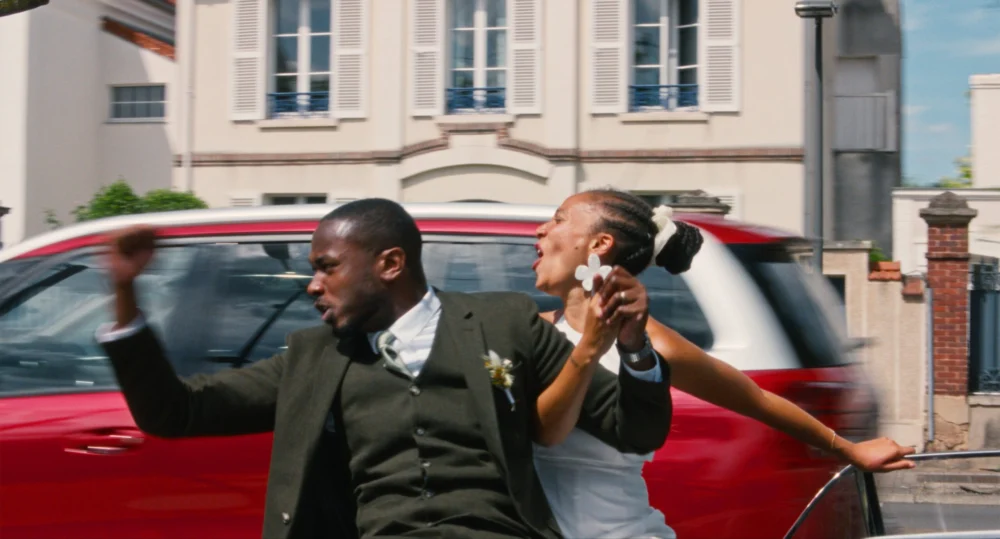
Gomis, whose rich heritage traces back to Bissau-Guinean and Senegalese roots, not only helmed the direction of “DAO” but also penned its intricate screenplay. The film showcases a compelling ensemble, blending seasoned actors with fresh, emerging talents. At its emotional core are Katy Correa and D’Johé Kouadio, who portray a mother-and-daughter duo whose lives unfold across two pivotal ceremonies: a vibrant wedding celebrated in the bustling heart of Paris and a solemn funeral held in the culturally rich landscapes of Guinea-Bissau. These two ceremonies act as powerful anchors, connecting disparate worlds and illuminating the complex tapestry of familial ties and cultural heritage.
In his inaugural interview discussing “DAO” with Variety, Gomis revealed that the film was not born from a singular, isolated concept, but rather from a profound, transformative life experience. This organic genesis speaks volumes about the film’s authenticity and emotional depth, suggesting a narrative steeped in lived truth rather than pure invention.
The initial spark for “DAO” ignited in 2018, following Gomis’s attendance at his father’s funeral ceremony in Guinea-Bissau. This experience left an indelible mark on him, resonating with a power that transcended the immediate moment. He recalls the genesis with striking clarity: “I remember thinking: I’d like to make a film out of this. I didn’t know how.” This sentiment underscores the intuitive, almost subconscious nature of his creative process. He further elaborated on the film’s construction, describing it as a meticulous assemblage of moments: “It’s a film made of small things you add together, that weave into a mosaic. It grew in size and volume through tiny details.” This ‘mosaic’ approach hints at a narrative structure that is perhaps non-linear, mirroring the way memories are pieced together, fragmented yet ultimately forming a coherent whole.
Despite its epic three-hour runtime, the physical production of “DAO” was remarkably swift, a testament to Gomis’s distinctive and agile filmmaking methodology. The principal photography spanned a mere 20 days, precisely divided between 10 days in the vibrant locales of France and another 10 amidst the evocative settings of Guinea-Bissau. This efficiency, however, belies the depth and complexity of the creative process that preceded and followed it. True to Gomis’s established artistic practice, the film’s dialogue was largely unscripted, allowing scenes to evolve organically in the present tense, shaped by the spontaneous interactions and emotional truths of the moment. This improvisational approach, deeply rooted in the realities of its on-location shoots across France and a rural village in Guinea-Bissau, imbues “DAO” with a raw, documentary-like authenticity. Gomis articulates the philosophy behind this method: “It’s the intentions that matter. What is happening inside the character at that moment? What’s at stake?” This focus on internal states and immediate stakes fosters performances that feel profoundly genuine, blurring the lines between fiction and lived experience. This commitment to fostering authentic cinematic expression also extends beyond his own projects; in 2018, Gomis founded the Yennenga Centre in Senegal, a vital cinema school dedicated to nurturing the next generation of African filmmakers and storytellers.
The improvisational approach, while yielding rich, authentic material, also presented a formidable challenge in post-production. Gomis found himself with an astonishing 200 hours of footage. “We had a five-hour film,” he shared with a chuckle, highlighting the sheer volume of material captured. The subsequent editing process became an intricate exercise in preservation and sculpting. The goal was to distill this vast reservoir of collective energy and raw emotion into a cohesive, three-hour narrative, while steadfastly retaining what Gomis terms “the real function of participation”—the vibrant, collaborative spirit that permeated the set. This careful curation ensures that the film’s hybrid nature, seamlessly blending elements of fiction with the immediacy of documentary, remains intact, offering viewers a uniquely immersive experience. The integration of non-professional actors, such as the luminous Katy Correa, further enhances this authenticity. Gomis praises Correa’s innate talent, noting her possession of “an intelligence of performance,” an instinctive ability to grasp and convey profound emotional stakes. Alongside these fresh faces, Gomis also skillfully integrated well-established actors, including Samir Guesmi and Thomas Ngijol, creating a dynamic interplay of experience and raw intuition on screen.
While “DAO” is fundamentally an intimate exploration of personal journeys, Gomis masterfully navigates and subtly illuminates timely and universal themes. The film delves into the enduring impact of colonization, the complexities of displacement, and the often-invisible burden of inherited trauma. These weighty subjects are not presented didactically but are woven into the fabric of the characters’ lives, revealing how historical forces continue to shape individual and collective identities.
Gomis eloquently articulates this thematic undercurrent: “Each family carries its secrets. Here, there’s something about people who were formed through an absence, whose image of themselves needs repairing.” This speaks to the profound psychological toll of historical ruptures and the persistent yearning for wholeness. He further elaborates on the generational chasm that often exists between those who remained in Africa and those who emigrated: “Some things weren’t explored, weren’t spoken. You grow up with the feeling that something is missing.” This poignant observation captures the essence of a diaspora experience – a perpetual sense of an incomplete narrative, a yearning for roots that may feel distant or fragmented. “DAO” offers a space for these unspoken narratives to surface, fostering understanding and perhaps, a path towards healing.
A distinctive hallmark of Alain Gomis’s cinematic vision, as profoundly showcased in “Félicité,” is the centrality of the female perspective. This focus remains steadfast in “DAO,” reaffirming his commitment to telling stories through the eyes of resilient, complex women. In “Félicité,” audiences followed a bar singer in Kinshasa embarking on a perilous journey across the Congolese capital, driven by the desperate need to raise money for her son’s urgent surgery. The film was a visceral exploration of maternal love, grit, and the socio-economic realities faced by women in bustling African cities.
In “DAO,” this powerful tradition continues, with Katy Correa portraying a single mother on the cusp of marrying off her daughter. This momentous life event acts as a catalyst, prompting the mother to profoundly reconsider her own future, her desires, and the life she has deferred. Gomis reveals that the decision to explore “DAO’s” narrative through a female lens, and to once again tackle the multifaceted theme of motherhood, was deeply personal and observational. He explains, “The film first came to me through a female character,” a choice rooted in his own life experiences. He reflects on a recurring pattern he observed: “something I’ve seen in our families – women who refused themselves another life before their child was grown – as if they didn’t have the right to think about themselves first.” This keen observation highlights a universal sacrifice, particularly prevalent in many cultures, where women often sublimate their own ambitions and desires for the sake of their children’s upbringing. The character portrayed by Correa embodies this very experience, having “postponed another life for herself until her child was older,” a narrative that will undoubtedly resonate with countless women who have navigated similar paths of selfless devotion.
Another striking similarity that links “DAO” to Gomis’s earlier works, notably “Félicité” and the critically acclaimed documentary “Rewind & Play,” is the profound and integral role of music. In “DAO,” music is not merely a backdrop but a vibrant, pulsating character in itself, providing the very tonal backbone of the film. The score masterfully alternates between the rich, resonant sounds of traditional ceremonial music and evocative jazz pieces. These jazz compositions, crafted by the talented saxophonist Keïta Janota and Gaspard Gomis, serve to frame the narration, adding layers of emotional depth and cultural texture. This fusion of indigenous and contemporary sounds mirrors the film’s overarching theme of cultural convergence and identity. Gomis passionately describes the transformative power of music in his work: “It gave the film its flesh. There’s something tender, nostalgic. A beautiful way of looking at the world.” Indeed, the music in “DAO” is expected to be more than just accompaniment; it is a narrative voice, an emotional guide, and a celebration of the diverse soundscapes that define the characters’ lives and heritage.
Set to premiere in competition at the Berlin International Film Festival on February 14, “DAO” stands as a significant international co-production, bringing together creative forces from France, Senegal, and Guinea-Bissau. This collaborative spirit underscores the film’s cross-cultural narrative and its ambition to bridge cinematic traditions. The project boasts the involvement of celebrated producers, including Sylvie Pialat at Les Films du Worso, renowned for critically acclaimed works like “Timbuktu,” and SRAB Films, known for powerful productions such as “Les Misérables.” They are joined by vital Senegalese co-producers Yennenga Productions and Nafi Films, and Telecine Bissau Produções in Guinea-Bissau, forming a robust international partnership dedicated to bringing this profound story to the screen. The global distribution of “DAO” will be handled by The Party Film Sales, ensuring that Gomis’s latest masterpiece reaches audiences worldwide, inviting them to partake in this deeply personal yet universally resonant exploration of family, memory, and the enduring strength of the human spirit.