


The Unscripted Heartbreak: Savannah Guthrie’s Mother’s Abduction Forces the ‘Today’ Show to Grapple with Grief on Live Television
For decades, broadcast morning shows have occupied a unique and cherished space in the American home. More than just purveyors of news and entertainment, they often cultivate an intimate persona, presenting their hosts and correspondents as an extended, congenial family. This carefully constructed illusion of domestic familiarity is beamed directly into living rooms for hours each day, establishing profound, albeit one-sided, connections with viewers. Long before the advent of podcasts made terms like “parasocial relationship” commonplace, or before marathon video sessions became a backdrop to daily routines, programs like NBC’s venerable “Today” show had perfected this delicate art of being a constant, comforting presence. Anchors, in particular, often assume an almost parental role – presiding over their on-air teams, offering a steadying hand, and deftly navigating the often-extreme tonal shifts of daytime infotainment. One moment might see them discussing a geopolitical crisis with gravitas, only to pivot seamlessly to a heartwarming human-interest story minutes later, all while maintaining an approachable, reassuring demeanor.
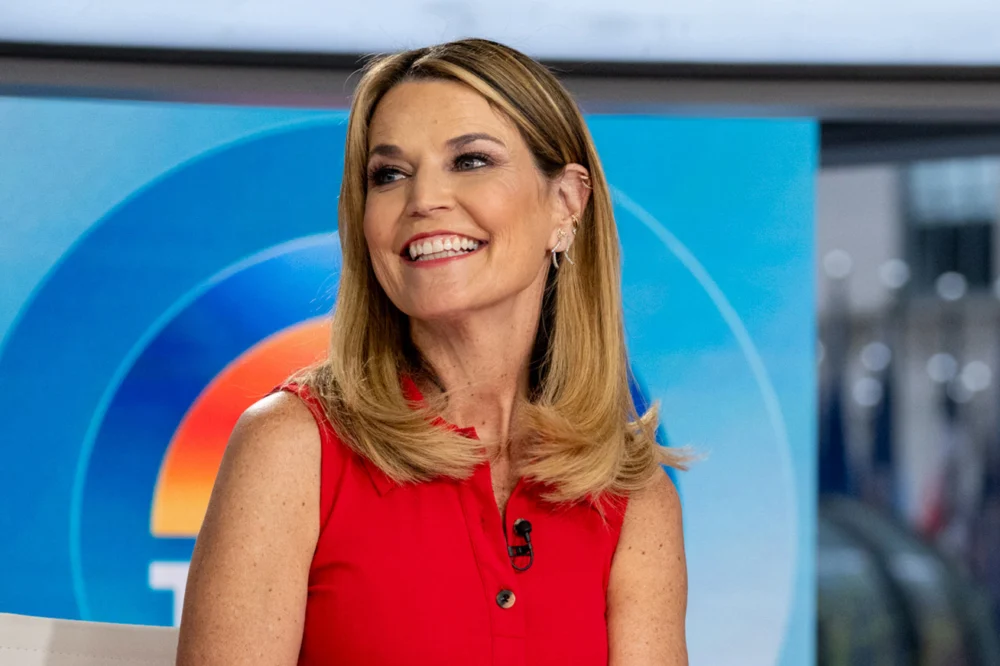
This meticulously maintained facade of stability and camaraderie has been profoundly tested recently, as the real-life family of “Today” co-anchor Savannah Guthrie has been plunged into an unimaginable tragedy. Since Sunday, Guthrie’s 84-year-old mother, Nancy, has been missing, abducted from her home in Tucson, Arizona. As of this writing, the search for Nancy Guthrie continues, casting a long shadow over the normally bright and bustling Rockefeller Center studios. Understandably, Savannah Guthrie has been absent from her anchor desk, her professional duties temporarily eclipsed by a personal nightmare that demands her full and undivided attention. Her only public statements have come through her Instagram account, offering a rare glimpse into her profound anguish. One post was a heartfelt plea to her vast audience for prayers on her mother’s behalf, a raw appeal for collective hope. Another was a tearful, poignant video recorded jointly with her siblings, a direct address to her mother’s abductors, begging for proof of life and an open channel for communication regarding next steps. These digital missives underscore the desperate urgency of her situation, laying bare the vulnerability of a public figure in the throes of private devastation.
Yet, even as one of its central figures grapples with this harrowing ordeal, the “Today” show itself has continued its daily broadcast, a testament to the enduring, often unyielding, demands of live television. In Guthrie’s absence, Sheinelle Jones has stepped into the co-anchor role for the show’s first hour, joining Craig Melvin. To watch “Today” this week has been to witness a broadcast navigate an unprecedented challenge: covering a news story that is simultaneously a deeply personal, upsetting event for its own personalities, and for the millions of viewers accustomed to seeing them as a jovial, harmonious team. The unspoken contract of camaraderie that is so integral to their on-air jobs has been stretched, revealing the human beings beneath the polished exteriors. On Monday, after delivering a sober update on the abduction, Sheinelle Jones turned directly to the camera, her gaze imbued with profound empathy, and addressed her absent colleague: “Sending love, my friend.” Fellow anchor Jenna Bush Hager has been even more openly emotional, recounting a vigil held in Nancy Guthrie’s honor through visible tears, her voice cracking with shared grief. These unscripted moments of genuine emotion pierce through the usual broadcast polish, offering viewers a rare and intimate look at the depth of the bonds within the “Today” family.
Savannah Guthrie’s journey at “Today” has been marked by a consistent ability to serve as a steadying presence, guiding the show through previous periods of turbulence and transition. Her initial promotion to co-anchor in 2012 placed her in the unenviable position of having to smooth over the widely publicized and disastrous pairing of Matt Lauer and Ann Curry, which culminated in Curry’s unceremonious departure. Guthrie, with her innate warmth and approachable demeanor, proved to be a more natural and authentic fit for the inviting tone that defines morning television. She successfully steered the show forward, fostering a sense of stability and moving past the preceding drama with minimal friction. This period of relative calm, however, was shattered in 2017 when Matt Lauer was famously fired for a pattern of sexual misconduct in the workplace. Once again, Guthrie, alongside her new co-anchor Hoda Kotb, was called upon to provide reassurance, to calm the storm, and to affirm to loyal viewers that the show remained in capable and trustworthy hands. Over nearly 15 years, Guthrie has cultivated a reputation for resilience, integrity, and journalistic prowess, growing so essential to the NBC brand that she is routinely entrusted with high-profile events, such as co-hosting the annual Thanksgiving Day Parade telecast—one of the most-watched and beloved spectacles on American television. Her consistent presence and unwavering professionalism have cemented her status as a pillar of the network.
Now, however, the tables have turned. Guthrie, who has so often been the beacon of stability for her colleagues and viewers alike, finds herself subjected to a personal nightmare that rightfully demands her complete and unwavering attention. This leaves her co-stars to assume the very role she has so skillfully played for years. Her professional duties, which would typically include regular hosting and preparing to cover imminent events like the Winter Olympics in Italy, have been temporarily set aside. The solidarity shown by her colleagues is not merely professional courtesy; it is deeply personal. Sheinelle Jones, who has stepped into Guthrie’s role, has herself navigated immense personal challenge in the public eye. Just last year, she took time away from “Today” before and after the devastating death of her husband from cancer. At that time, it was Guthrie who offered words of profound familial warmth, declaring, “We cannot wait to welcome Sheinelle home.” This shared history of public grief and mutual support underscores the genuine bonds that exist within the “Today” team. Together with Craig Melvin, Jones has opened each installment of the show this week with a dedicated segment on the ongoing search for Nancy Guthrie. These segments extend “thoughts and prayers” to “a beloved member of our ‘Today’ family,” often accompanied by touching clips and images of Nancy’s past appearances on the program, further cementing the idea that this is a tragedy affecting their collective, extended family.
The “Today” team, comprising Jones, Melvin, and the show’s producers, has masterfully balanced these heartfelt expressions of solidarity with a commitment to objective reporting. They have enlisted the expertise of NBC News correspondent Liz Kreutz, who has delivered dispatches from the ground in Tucson, providing crucial updates on the search efforts. Additionally, law enforcement and intelligence reporter Tom Winter has offered in-studio analysis, helping viewers understand the complexities of the situation. This unique position—covering one of its own marquee news presenters as a breaking news story—presents an unprecedented journalistic challenge. On Thursday, former ATF special agent in charge Jim Cavanaugh was brought in to analyze Guthrie’s own tearful video plea. He astutely pointed out its tactical intent: to “humanize” Nancy, whose captors might otherwise perceive her as “just an object.” While informative and insightful, the interview created an unusual juxtaposition with the interviewers’ undeniable, intimate connection to the case at hand. This blending of personal empathy and professional analysis, while commendable, highlighted the inherent awkwardness of the situation. Similarly, the transitions throughout the week to other current topics, from severe winter storms to the Grammy Awards and the upcoming Super Bowl, felt jarring at times, serving as stark reminders of the world’s continued rotation even as one of their own faces an unimaginable crisis.
This period of profound personal and professional challenge for the “Today” show unfolds against a broader backdrop of an embattled moment for broadcast news as a medium. Traditional news outlets are grappling with seismic shifts in media consumption, fierce competition from digital platforms, and evolving audience expectations. Newly installed CBS News head Bari Weiss has been described as “moving fast and breaking things” in her short tenure, signaling a period of significant upheaval across the industry. Just this week, NBC, the parent network of “Today,” announced the impending end of “The Kelly Clarkson Show.” While not a hard news product, it is a prominent daytime talk series that occupies a similar space along the spectrum of lighter, personality-led digests as morning shows. This decision underscores the intense pressure on traditional broadcast television to retain relevance and viewership in an increasingly fragmented media landscape. However, the “Today” show’s poignant and authentic coverage of Savannah Guthrie’s plight, and the rallying of its internal “family,” serves as a powerful testament to the enduring strength of the connections—both internal among colleagues and external with its audience—that have made morning shows a firmament of popular culture for so many years. In a world saturated with fleeting digital content, the consistent, human presence of a morning show anchor, particularly in times of crisis, fosters a sense of community and trust that is increasingly rare.
Even the inevitable awkwardness inherent in “Today” having to press on while awaiting crucial updates on Nancy Guthrie’s fate is, in a magnified sense, a reflection of a universal human experience. It mirrors the familiar, often painful, process of individuals having to continue with their professional duties while simultaneously navigating the most devastating personal trials at home. This profound challenge, played out on live television, underscores the deep-seated reason why morning shows have resonated so strongly with audiences for generations. They offer a mirror to life’s unpredictable nature, demonstrating how communities, even professional ones, come together in times of adversity. The “figurative family” of the “Today” show, with its shared laughter and tears, its triumphs and its heartbreaks, ultimately follows the contours of a literal one. In this moment of raw vulnerability, the show is not just reporting the news; it is embodying the very human story of resilience, empathy, and the enduring power of connection when the unscripted realities of life collide with the demands of the public stage.