


**Netflix Japan Redefines Reality TV with a Human-Centric, Emotionally Rich Approach**
In an era dominated by high-stakes competition and manufactured drama, Netflix Japan is quietly revolutionizing the unscripted television landscape. The groundbreaking success of its LGBTQ+ dating series, “The Boyfriend,” has not only captivated audiences worldwide but also ignited a fresh wave of innovation within the streaming giant’s Japanese unscripted division. At the helm of this paradigm shift is Ota Dai, the visionary overseeing Netflix’s Japan unscripted slate, whose strategy hinges on a deliberate and profound rejection of conventional reality television formulas. His philosophy, deeply rooted in authenticity and a nuanced understanding of human connection, has unlocked unexpected international resonance, proving that genuine emotional narratives can transcend cultural boundaries.
Netflix’s global strategy has long championed the “Local for Local, then Global” approach, investing heavily in content that speaks directly to regional audiences with the hope that its inherent specificity will ultimately find universal appeal. Japan, with its rich storytelling traditions and unique cultural nuances, has become a fertile ground for this experiment. However, Ota Dai’s division isn’t merely producing local content; it’s crafting a distinctive brand of reality programming that prioritizes the inner lives and genuine interactions of its participants over contrived plotlines or sensationalized conflicts. This commitment to emotional truth has become Netflix Japan’s signature, setting it apart in a crowded global market.
The impact of “The Boyfriend” has been immediate and far-reaching. Its breakout success has turbocharged Netflix’s commitment to its Japanese unscripted slate, paving the way for a diverse array of new and returning series that echo Ota’s core tenets. Among these are the critically acclaimed “Badly In Love,” which not only earned a renewal but also soared to No. 8 on Netflix’s Global Top 10 Non-English Series list. This series, focusing on Japan’s distinctive “yankii” (delinquent youth) subculture, showcased how intensely local narratives could resonate globally through shared human emotions.
Further expanding the slate are ambitious new launches such as “Final Draft,” Japan’s pioneering physical survival series, and “Offline Love,” an innovative dating show that completely removes smartphones from the equation, forcing participants into more direct and unfiltered interactions. “Love Village,” now in its second season, also stands out for its groundbreaking focus on participants aged 35 to 60, making it the first Japanese reality show to center on this demographic. Each of these series, while distinct in premise, is unified by Ota’s overarching vision: to create spaces where human beings can simply *be*, allowing their stories to unfold organically rather than being dictated by a pre-written script or a game-like structure.
Ota articulated this philosophy in an interview with *Variety*, stating, “What I’m most conscious of is not building in big game-like elements or a strong overarching plot. Instead, once I provide a basic setting, I try to simply watch over the participants so they can spend their time there as they are.” This statement encapsulates a radical departure from the established norms of reality television, where producers often intervene to escalate drama, create artificial tension, or force participants into predetermined roles. Ota’s approach, by contrast, is more akin to observational documentary filmmaking, granting participants the agency to shape their own narratives within a carefully curated, yet unmanipulated, environment.
This ethos extends across the entirety of Netflix Japan’s unscripted portfolio, from the raw emotional landscapes of “Badly In Love” to the tender explorations of mature romance in “Love Village.” Ota attributes the success of this approach to its deliberate avoidance of what he terms the “variety-show convention” – the tendency to reduce individuals to easily digestible, often caricatured, character symbols. Traditional reality TV often relies on tropes: the villain, the comedic relief, the hopeless romantic, the heartbreaker. These labels, while creating instant archetypes for viewers, fundamentally flatten human complexity.
“Once you stick labels like ‘the butt of the jokes,’ ‘the hopeless one,’ or ‘the love master’ onto someone, their story becomes fixed there,” Ota explained. He recognized that such reductive labeling not only limits the narrative potential but also undermines the authenticity of the participants’ experiences. His solution was to actively seek out individuals who defy easy categorization. “I deliberately chose people who are difficult to label — those with multilayered identities in terms of age, gender, background and romantic experience — and followed them over a long period.” This commitment to showcasing multifaceted individuals allows for a deeper, more empathetic connection with audiences, who see reflections of their own intricate lives rather than one-dimensional archetypes. The longer observation period further enables the subtle shifts, growth, and unexpected turns that define real human relationships, something often sacrificed in faster-paced, drama-driven formats.
The efficacy of this strategy has been particularly evident in its international reception. “Badly In Love,” despite delving into the highly specific subculture of Japanese “yankii” — a term referring to delinquent youth often associated with distinctive fashion, rebellious attitudes, and a strong sense of community — sparked significant social media buzz and landed in top 10 rankings across diverse markets like Korea, Singapore, Hong Kong, and Taiwan. This phenomenon deeply resonated with Ota. “What surprised me was that overseas viewers who presumably aren’t familiar with Japan’s yankii subculture got excited about the characters’ emotions at almost exactly the same points as Japanese viewers did,” he recounted. This confirmed his hypothesis: “I was able to confirm that moments like an outlaw or someone on the margins of society sincerely facing their own past or clumsy ways of expressing affection are received as something quite universal.” It underscored the power of authentic human vulnerability and emotional honesty to bridge cultural divides.
This breakthrough success unequivocally validates Netflix’s “Local for Local, then Global” philosophy. Ota firmly believes that the key to global appeal lies not in diluting specific cultural elements for broader palatability, but in preserving their inherent intensity. Rather than attempting to universalize content by stripping away its unique local flavor, he argues that the strength lies in allowing that flavor to shine, while carefully crafting accessible entry points through meticulous subtitles and thoughtful editing. “There’s no need to dilute or overemphasize a specific culture or character to make a global version,” he asserted. “Keeping the local intensity as it is and portraying things honestly — while carefully creating an an accessible entry point — can give you confidence that viewers around the world will willingly dive in.” This approach respects both the original culture and the global audience, fostering a sense of discovery and genuine engagement rather than passive consumption. It’s an invitation for viewers to immerse themselves in a different world, trusting that the underlying human experiences will be recognizable and moving.
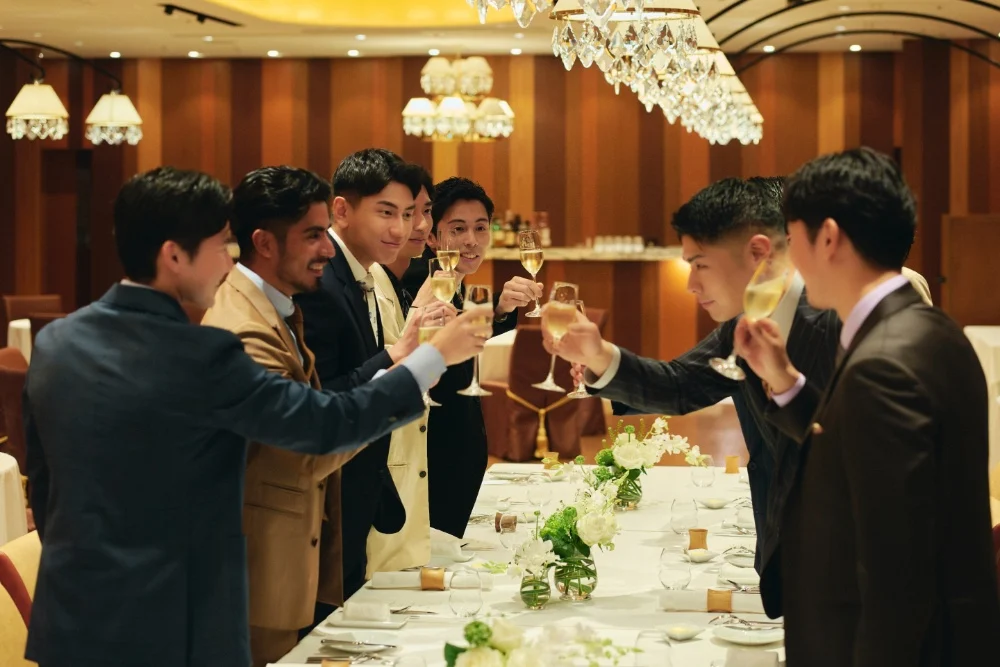
The second season of “The Boyfriend” served as a powerful testament to the benefits of extended timelines and deeper immersion. By doubling the cohabitation period from one to two months and relocating the setting to the picturesque landscapes of Hokkaido, the production created an environment where relationship complexity could truly flourish, surpassing the scope of the first season. Ota observed, “We were able to see developments that did not occur in Season 1, such as someone whose one romance ends and then moves on to a new love, and couples who form and then graduate partway through.” This longer duration allowed for a more realistic portrayal of romantic journeys, encompassing the joys of new beginnings, the pain of endings, and the often-messy, evolving nature of human connection. It mirrored real life, where relationships rarely follow a linear path and personal growth often emerges from navigating unforeseen challenges.
The cast members themselves reflected on how this extended format profoundly reshaped their understanding of love and relationships. Bomi, a 23-year-old participant who entered the show seeking his very first boyfriend, found his idealized notions of romance thoroughly challenged and ultimately enriched. “I was only looking at the bright side of love,” he admitted, a sentiment many can relate to at the start of their romantic journeys. His experience on the show, however, revealed a more complex truth: “In the process of nourishing love, you might fight or maybe have relationship issues — those are the parts that I have never even imagined. Love is not just about loving each other. That itself is not able to carry on the relationship.” Bomi’s realization speaks to the maturity gained through the program, understanding that lasting love requires work, communication, and the willingness to navigate difficulties alongside the joys.
For Izaya, a 32-year-old participant, the extended cohabitation provided an invaluable opportunity to confront and ultimately transform past relationship patterns. His previous long-term relationship had taught him hard lessons about the perils of unspoken feelings and hidden truths. “We tried to hide things. It became such a relationship that we hid some of the things we were not able to say,” he reflected, highlighting a common pitfall in intimate partnerships. The immersive environment of “The Boyfriend” pushed him to break free from these habits. “Going forward, I want to be able to face and communicate with a partner and be able to say things that I really think.” Izaya’s journey underscored the show’s capacity to facilitate genuine personal growth and foster healthier communication skills, which are crucial not just for romantic relationships but for all interpersonal connections.
The studio hosts, including the charismatic Durian Lollobrigida, who returned alongside Megumi, Yoshimi Tokui, Chiaki Horan, and Thelma Aoyama, play a crucial role in framing and interpreting the unfolding narratives for the audience. Durian describes their function as a blend of translator and viewer representative. “Basically, we are like one of the viewers, and we just follow and enjoy the drama of the boys,” Durian explained. Their reactions and insights provide a relatable lens through which viewers can process the emotional intricacies of the series. The extended timeline further empowered the hosts to engage with more nuanced portrayals. “If the time is longer, there’s more time in facing each other, spending time with each other. There’s more intricate depiction or portrayal of people’s feelings compared to Season 1,” Durian noted, emphasizing how the additional duration enriched the depth of discussion and analysis in the studio segments.
Central to Ota’s philosophy is an unwavering commitment to balancing emotional authenticity with the wellbeing of the participants. This ethical stance is particularly vital in the realm of reality television, where the line between compelling content and exploitation can sometimes blur. “We make it a rule not to introduce game-like elements or impose any forced overarching structure that would go against the participants’ genuine emotions,” Ota stated unequivocally. This commitment to non-intervention ensures that the emotional experiences depicted are truly their own, unmarred by external pressures. “The only way to create an authentic reality show is to have people participate just as they are, with their true selves, and simply keep filming them for as long as possible.” This approach demands patience, respect, and a deep understanding of human psychology from the production team.
To uphold this commitment, robust mental health support systems are integrated throughout the production process, with comprehensive aftercare explained to participants in advance. This proactive approach underscores Netflix Japan’s dedication to responsible storytelling. “I believe that delivering emotionally moving experiences to viewers and protecting the lives and wellbeing of the cast members are two things that must always be considered together,” Ota emphasized. This holistic view acknowledges that compelling entertainment should never come at the expense of an individual’s mental or emotional health, setting a high standard for ethical reality television production. It’s a recognition that the vulnerability participants share is a gift, and it must be treated with the utmost care.
Looking to the future, Durian Lollobrigida expressed a hope for even broader representation in subsequent seasons. “I want more feminine, ladylike type of person — we call it onē in Japanese — but also different body shapes or people with different backgrounds. I hope that there’s more breadth to that.” This desire for increased diversity reflects a growing global call for media that mirrors the full spectrum of human experience, especially within LGBTQ+ narratives. Expanding the types of individuals showcased would further enrich the show’s capacity for universal connection, allowing even more viewers to see themselves and their experiences reflected on screen.
Ota’s definition of success extends far beyond mere viewership data, delving into the qualitative impact of his productions. “What I personally focus on is: How many people watched it all the way to the end and came to love it? And after it’s over, how many people does the work continue to impact, and how deeply?” he mused. This perspective emphasizes lasting resonance over fleeting popularity. “Even if the numbers aren’t huge, if we receive reactions from viewers saying that the show nourished their life in some way, or that their heart was saved by it, I feel that is also a form of success.” For Ota, the true measure of achievement lies in the emotional imprint left on the audience, the ways in which these authentic stories inspire empathy, foster understanding, or even provide solace. In an increasingly fragmented world, Netflix Japan’s unscripted content offers a compelling vision: television that connects, heals, and celebrates the multifaceted beauty of the human spirit.