



**Set Decorators Guild Honors Cinematic Craftsmanship, Predicting Oscar Glory for “One Battle After Another” and Fellow Visionaries**
The Set Decorators Society of America (SDSA) recently unveiled its prestigious annual awards, celebrating the unsung heroes whose meticulous artistry transforms cinematic visions into tangible worlds. This year, the emotional drama “One Battle After Another” emerged as a clear frontrunner, clinching top honors and reinforcing the SDSA’s reputation as a prescient indicator of Academy Award success. The awards not only spotlight the extraordinary talent behind the scenes but also underscore the profound impact of set decoration on storytelling, character development, and immersive audience experiences. These professionals, working hand-in-hand with production designers, are the architects of on-screen reality, meticulously crafting every detail to transport viewers into the heart of a film’s narrative.
At the heart of “One Battle After Another’s” triumph was the masterful collaboration between set decorator Anthony Carlino SDSA and production designer Florencia Martin. Their joint efforts were recognized with two significant accolades: Best Achievement in Décor/Design of a Contemporary Feature Film and the coveted Best Picture award, a nod to the film’s director, Paul Thomas Anderson. This double win speaks volumes about the integral role that environment plays in shaping a film’s overall impact, proving that the spaces characters inhabit are as crucial as the performances themselves. The contemporary setting, often perceived as less demanding than period or fantasy pieces, actually presents its own unique challenges, requiring an acute observational eye and a deep understanding of human psychology to create spaces that feel genuinely lived-in and reflective of modern life.
The SDSA awards also cast a wide net, recognizing excellence across diverse genres. In the realm of the fantastical and scientific, “Frankenstein” captivated the judges, securing the Best Achievement in Décor/Design of a Fantasy or Science Fiction Film – an International Organization award. This honor went to the formidable team of set decorator Shane Vieau SDSA and production designer Tamara Deverell, whose work on the iconic monster tale promised to redefine its visual legacy. The fantasy and sci-fi categories are particularly challenging, demanding not just creativity but also a rigorous commitment to building believable worlds from the ground up, whether through futuristic technology or gothic grandeur. The recognition for “Frankenstein” highlights the global reach of exceptional set decoration and its ability to transcend cultural boundaries through universal visual language.
Stepping back in time, the intricate world of “Hamnet” earned its team, set decorator Alice Felton SDSA and production designer Fiona Crombie, the award for Best Achievement in Décor/Design of a Period Feature Film. Period pieces demand an almost archaeological level of research and authenticity, requiring decorators to meticulously recreate historical eras down to the smallest prop. Their success underscores the importance of historical accuracy fused with artistic interpretation to bring bygone eras vibrantly to life for a contemporary audience. This category often sees some of the most elaborate and historically faithful designs, as every piece of furniture, every textile, and every piece of art must tell a story of its time.
The world of musical enchantment also received its due, with “Wicked: For Good” taking home the award for Best Achievement in Décor/Design of a Comedy or Musical Feature Film. Set decorator Lee Sandales and production designer Nathan Crowley were lauded for their ability to translate the vibrant, often whimsical aesthetic of the beloved Broadway musical to the cinematic screen. Musicals, by their very nature, require sets that are not only visually stunning but also functional, supporting complex choreography and fantastical transformations. The creative challenge lies in maintaining the magical essence of the stage production while grounding it in a cinematic reality that feels both grand and intimate.
The SDSA awards carry significant weight within the film industry, often serving as a powerful harbinger of future Academy Award success. In recent years, a strong correlation has been observed between SDSA winners and recipients of the coveted Oscar for Production Design. This pattern underscores the discerning eye of the SDSA, which comprises industry veterans who intimately understand the nuances and complexities of exceptional set decoration. This year, the predictions hold particular promise: the set decorators and production design teams behind “Frankenstein,” “One Battle After Another,” and “Hamnet” all secured coveted Oscar nominations, signaling a potential mirroring of their SDSA triumphs on the grandest stage of all. This recognition validates the critical role these artisans play, not just in creating beautiful visuals, but in contributing fundamentally to a film’s narrative and emotional core.
The journey to creating the visually stunning world of “Frankenstein” was a testament to uncompromising artistic vision and meticulous craftsmanship. Director Guillermo del Toro, known for his distinctive aesthetic and profound appreciation for practical effects, personally enlisted the talents of production designer Tamara Deverell and set decorator Shane Vieau for his ambitious adaptation. Del Toro’s directive was clear and unequivocal: there would be no reliance on green screens. Every element, from the grandest laboratory apparatus to the most minuscule prop, was to be handmade from scratch. This commitment to tangible reality permeated every aspect of the production, pushing the boundaries of traditional filmmaking. Deverell recounted the sheer scale of this undertaking, revealing, “We had 20 sculptors at any given moment working.” This army of artisans meticulously carved, molded, and assembled countless components, ensuring that every texture, every shadow, and every physical interaction felt authentic and visceral. This dedication to handcrafted detail, a hallmark of del Toro’s style, allowed Vieau and Deverell to imbue the film with an unparalleled sense of authenticity, enhancing its gothic atmosphere and the creature’s tragic narrative. The tactile nature of the sets not only immersed the actors more deeply into their roles but also enveloped the audience in a world that felt undeniably real, making the fantastical elements all the more compelling and terrifying.
Bringing Chloe Zhao’s “Hamnet” to life, a poignant exploration of Shakespeare’s family life, was a collaborative triumph for production designer Fiona Crombie and set decorator Alice Felton. Their primary challenge was the formidable task of recreating the iconic Globe Theatre as it stood in the late 1500s. Given that the original structure has long since vanished, this undertaking required extensive historical research, creative interpretation, and a deep understanding of Elizabethan architecture and performance spaces. The Globe, a vibrant hub of theatrical innovation, was not just a backdrop but a character in itself, dominating the film’s climactic third act and serving as a powerful symbol of Shakespeare’s artistic legacy and personal struggles. Beyond the grandiosity of the Globe, Felton also highlighted the significance of smaller, more intimate details that grounded the story in its historical context. The glove workshop within the Shakespeare household, for instance, was a small but crucial element. It provided a tangible connection to the family’s trade, offering insight into their daily lives and the economic realities of the era. Such details, often overlooked, are vital in establishing the authenticity and emotional resonance of a period piece, transforming a historical setting into a living, breathing world for the audience.
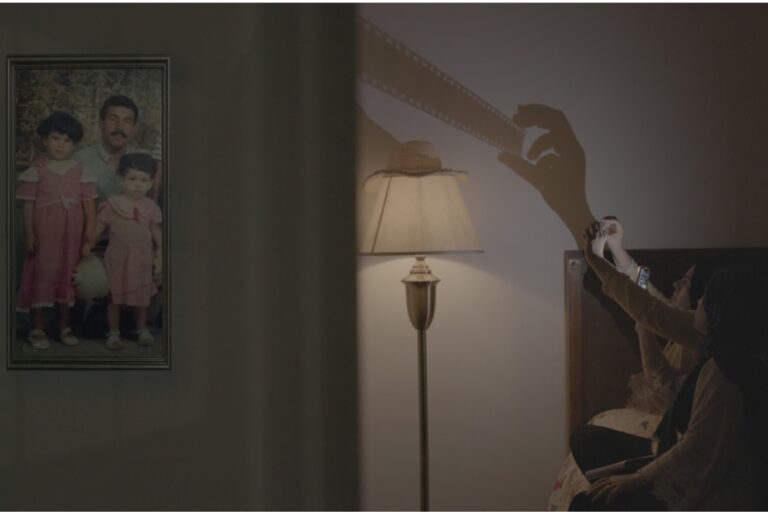
For “One Battle After Another,” the set decoration was instrumental in conveying the profound emotional arc of its characters, particularly the enduring bond between a father and daughter. Anthony Carlino SDSA and Florencia Martin focused on creating environments that subtly narrated the passage of time and the accumulation of shared memories. A pivotal setting was Willa’s bedroom, which was not merely decorated but thoughtfully built onto the existing small house, creating a sense of organic growth and adaptation. The entire cottage was meticulously “dressed” to reflect the years the father and daughter had spent together within its walls. This involved layering details that spoke of their history – worn furnishings, faded photographs, and personal effects that told an unspoken story of their lives. Carlino and Martin drew inspiration from deeply personal sources to achieve this authenticity. They incorporated a wealth of artwork created by Paul Thomas Anderson’s own children, infusing the set with a genuine sense of familial creativity and innocence. Additionally, Chase Infiniti, presumably a key contributor or family member related to the film’s narrative, provided childhood photos for Carlino to integrate into the decor. These intimate touches elevated the set from a mere background to an active participant in the storytelling, allowing the audience to feel the weight of shared experiences and the quiet beauty of a life unfolding within those carefully curated spaces. The set became a silent witness, its every detail echoing the film’s poignant exploration of family, memory, and the passage of time.