


Kumail Nanjiani’s DGA Awards Monologue: A Masterclass in Satire, Sentiment, and Shaking Up Hollywood
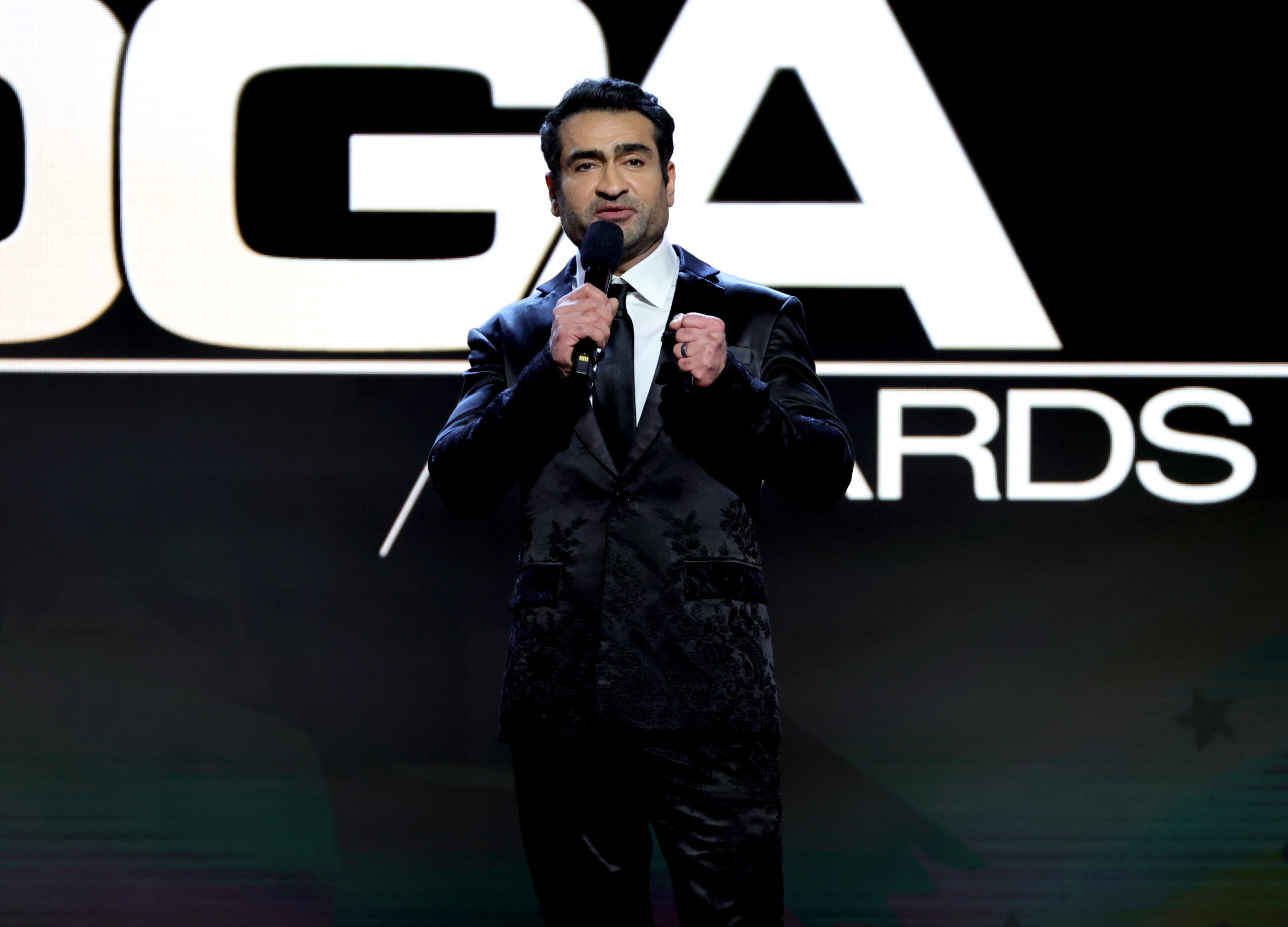
In a night typically reserved for celebrating cinematic visionaries and their intricate craft, comedian and actor Kumail Nanjiani delivered a bracingly honest and uproariously funny opening monologue at the Directors Guild Awards, proving that sometimes, the sharpest insights come wrapped in the guise of humor. Addressing a ballroom teeming with Hollywood’s directorial elite, Nanjiani navigated a minefield of industry anxieties and cultural flashpoints with a gentle, yet incisive, touch, leaving no sacred cow unskewered – from the ghost of D.W. Griffith to the economic realities of global film production.
The DGA Awards, a pivotal stop on the prestigious awards season circuit leading up to the Academy Awards, often serves as a barometer for Oscar predictions, bringing together the most influential names in filmmaking. Yet, Nanjiani, known for his nuanced comedic performances in projects like HBO’s *Silicon Valley* and the Oscar-nominated film *The Big Sick*, and his recent foray into blockbuster superhero territory with Marvel’s *Eternals*, approached his hosting duties with a distinct outsider-insider perspective. His 20-minute address was a masterful blend of self-effacing charm and pointed social commentary, reflecting the evolving landscape of an industry grappling with its past, present, and uncertain future.
From the outset, Nanjiani challenged the very notion of “Hollywood’s biggest night,” quipping, “Excuse me, Vancouver, Budapest, and sometimes Atlanta.” This seemingly lighthearted jab underscored a significant shift in the industry: the widespread practice of “runaway production,” where filmmakers increasingly seek tax incentives and lower costs outside of California, often relocating major shoots to international hubs or other U.S. states. This economic reality, impacting local crews and infrastructure, is a growing concern for guilds and creative professionals, and Nanjiani’s joke resonated deeply with an audience intimately familiar with its implications. His observation that the room, packed with directors, assistant directors, and unit production managers, resembled “if a movie was just the credits,” further highlighted the unseen labor and complex hierarchy that underpins every cinematic endeavor.
One of the more audacious and recurring threads in Nanjiani’s monologue was his unflinching critique of the DGA’s own history. He repeatedly referenced the fact that the guild’s top honor was, until 1999, named in honor of D.W. Griffith. For those unfamiliar with film history, David Wark Griffith remains a controversial figure, often credited as “the father of film grammar” for his pioneering advancements in cinematic technique. However, his most infamous work, the 1915 epic *The Birth of a Nation*, is a deeply racist film that glorifies the Ku Klux Klan and propagates harmful stereotypes. Nanjiani’s willingness to bring this uncomfortable truth to the forefront, weaving it into both his comedic beats and his more earnest reflections, served as a powerful reminder of the importance of confronting and learning from the past, even within institutions dedicated to art.
Nanjiani also didn’t shy away from broader societal issues, making an oblique, yet unmistakable, reference to the “Epstein files” – a subject that has sent ripples of discomfort through various elite circles. This daring choice showcased his commitment to using his platform for more than just superficial laughs, signaling a desire to hold power accountable, even in a room full of it.
A poignant moment arrived when Nanjiani, a native of Karachi, Pakistan, acknowledged his unique position as the first person from his homeland to host the Directors Guild Awards. “You don’t have to know where I’m from to know I’m the first person from there to host this show,” he declared, a line that subtly underscored the persistent need for greater diversity and representation within Hollywood. His presence on that stage, a testament to his talent and hard work, served as a beacon of progress in an industry historically dominated by a narrow demographic. His journey from a childhood in Pakistan to hosting a major Hollywood awards show is a powerful narrative of ambition and the universal appeal of cinema.
The 20-minute monologue unfolded before an esteemed audience that included DGA President Christopher Nolan, the legendary Steven Spielberg, and a roster of DGA nominees representing the year’s most impactful films, such as Ryan Coogler, Paul Thomas Anderson, Chloe Zhao, and Josh Safdie. Nanjiani deftly balanced his biting wit with moments of genuine appreciation for the art form, particularly when he spoke about the transformative power of filmmaking. He recounted a personal anecdote about seeing Spielberg’s 1993 blockbuster *Jurassic Park* as his first theatrical experience in Pakistan. Looking directly at Spielberg, Nanjiani shared, “You made an audience of people on the other side of the world explode with laughter.” This heartfelt tribute beautifully articulated the profound, global impact of storytelling and how a single film can transcend cultural and geographical boundaries, fostering a shared human experience.
Nanjiani then seamlessly transitioned into a more profound message about the role of art in an often-divided world. “This is why what you all do is so important right now. We are in a moment where people are focused on the differences between us, but your beautiful art reminds us that we have all have much more in common than we don’t,” he stated. He elaborated on this by citing examples of how films transport audiences, allowing them to empathize with diverse experiences: “I can watch your work and know what it feels like to be in a juke joint in the Mississippi Delta or to try to patch up people in an ER in Pittsburgh.” In a characteristic pivot back to comedy, he added, “You even made me give a shit about ping pong. I’m kidding. I’m Asian. I have always given a shit about ping pong,” drawing laughter while subtly acknowledging and playing with stereotypes.
He concluded his heartfelt segment with a powerful reaffirmation of cinema’s unifying potential: “In this challenging moment is more important than ever, and I genuinely, sincerely thank you for doing it. You remind us of our shared humanity while also celebrating our differences, because our commonality may make us human, but our differences make us beautiful — and that is what D. W. Griffith represents,” he deadpanned, punctuating his earnest message with one final, perfectly timed jab at the problematic historical figure, bringing the house down.
Nanjiani’s monologue was also replete with sharp observations about the craft itself and the personalities within the room. He quipped about the notoriously long running times of many contemporary films, a common lament among critics and audiences, telling the directors, “I’d ask you to keep your speeches short but I’ve seen your movies we all know that’s not going to happen.” He playfully targeted specific nominees, though the films themselves remained somewhat veiled. Referring to a hypothetical nominee, “Sinners,” he joked, “Every bad guy in ‘Sinners’ is a white person, which makes it the most realistic movie of the year. No offense to almost everyone here. No film has so effectively captured the true horror of white people dancing.” This kind of humor, both pointed and self-aware, allowed him to push boundaries without alienating his audience.
Another clever zinger involved Michael B. Jordan, the acclaimed star of “Sinners,” and his name sharing with the NBA legend. Nanjiani extended this into a meta-commentary on industry roles: “‘Sinners’ starred Michael B. Jordan and his brother Scottie B. Pippen. For those who don’t know, Michael Jordan was a basketball player, and Scottie Pippen did as much work as he did for a fraction of the praise and money. He was like his first AD.” This joke, while humorous, subtly highlighted the often-unseen and undervalued labor of assistant directors and other crucial crew members who contribute immensely to a film’s success, drawing a parallel to the basketball duo’s dynamic.
Steven Spielberg found himself in Nanjiani’s comedic crosshairs once more, this time for his apparent prescience. Nanjiani noted how Spielberg’s filmography — from the dystopian vision of *Minority Report* (AI and surveillance) to the historical gravitas of *Schindler’s List* (Nazis) and the tender alien narrative of *E.T. the Extra-Terrestrial* (government overreach) — seemed to anticipate many of the tumultuous events and technological advancements of recent decades. “He’s made movies about everything we’re talking about right now: AI, Nazis, the government coming after harmless aliens. It’s like you’ve predicted the last 10 years of our lives,” Nanjiani remarked. He then delivered another politically charged punchline, albeit without naming names, by asking, “Steven, can your next movie be about an 80-year-old on the Epstein list who gets shot into space?” This daring quip drew both gasps and laughter, showcasing Nanjiani’s willingness to tackle sensitive topics with a comedic edge.
Following Nanjiani’s memorable opening, DGA President Christopher Nolan, one of Hollywood’s most influential and revered filmmakers, took the stage to address the pressing challenges facing the creative community. His remarks offered a sober counterpoint to Nanjiani’s comedic observations, shedding light on the serious economic and structural shifts impacting the industry. Nolan spoke to the prevailing contraction in film and television production and the ongoing consolidation among major players, issues that have created a climate of uncertainty for many. His leadership comes at a critical juncture, as Hollywood’s three major creative unions — SAG-AFTRA, the Writers Guild of America (WGA), and the DGA itself — were on the cusp of a new and potentially contentious contract negotiation cycle, with SAG-AFTRA slated to begin talks with the Alliance of Motion Picture and Television Producers (AMPTP) on February 9.
Nolan painted a stark picture of the economic downturn, stating, “In 2024 our employment was down about 40% and that was followed by another decline in 2025.” These figures, indicative of significant job losses and reduced production volume, highlighted the urgent need for the guild to advocate effectively for its members. Despite these challenges, Nolan emphasized the enduring commitment of audiences to the entertainment industry. “The complicated part of this is that we as directors have to talk to our employers, talk to the people who run our business, and really get to grips with that the amount of money that people spend on our work, on entertainment, is very, very steady. Audiences are invested in us. We have to be sure that we are able to repay that investment,” he asserted.
He underscored the fundamental role of directors as storytellers and innovators. “We are the storytellers. We are the people who have to innovate on the screen. And it’s very, very important that as our industry progresses, new technologies and new forms of distribution come along that we are always sensitive to. How are our voices being put across? How can we get our messages across? How can we engage with that audience and repay that investment that they continue to give us?” Nolan’s words served as a rallying cry, urging the industry to adapt and innovate while staying true to the core mission of captivating and moving audiences. His message resonated as a call for collective responsibility, reminding everyone present that the future of storytelling depends on their ability to navigate complex changes while preserving the integrity and impact of their art.