

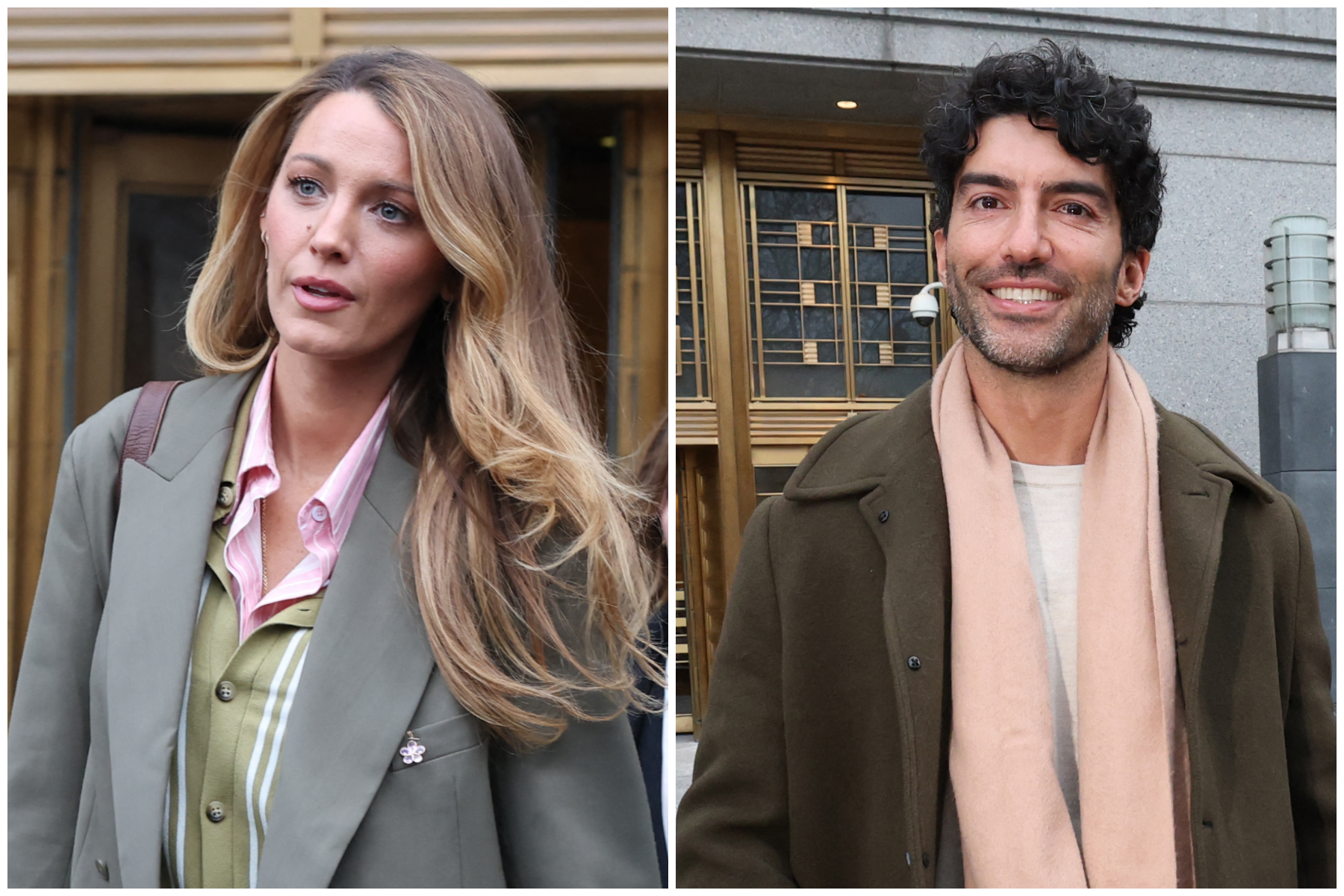
A high-stakes legal battle between two of Hollywood’s prominent figures, Blake Lively and Justin Baldoni, intensified this week as a day-long mediation session in federal court concluded without a settlement in Lively’s sexual harassment lawsuit. The former co-stars of the highly anticipated film “It Ends With Us” are now firmly on a collision course for a trial slated for May 18, a development that sends ripples through an industry still grappling with accountability and workplace conduct.
The intense day unfolded on Wednesday at a New York courthouse, where both Lively and Baldoni arrived early, navigating a gauntlet of media and photographers. For hours, the actors remained sequestered in separate courtrooms on the 14th floor, engaged in a concentrated effort to find common ground under the guidance of Magistrate Judge Sarah L. Cave. The air outside was thick with anticipation, but as the day drew to a close, the lack of a public statement from either party as they exited the building hinted at the impasse. Each passed silently through the throng, their expressions revealing little of the day’s arduous discussions.
Bryan Freedman, the attorney representing Justin Baldoni, later confirmed to waiting reporters that the mediation had indeed failed to yield a resolution. While he acknowledged the theoretical possibility of a last-minute deal, his demeanor suggested a strong conviction that such an outcome was improbable. When directly questioned about the likelihood of the case proceeding to trial, Freedman’s response was unequivocal: “I do. We’re looking forward to it.” This declaration signals a determined stance from Baldoni’s legal team, indicating their readiness to face the allegations in open court.
The mediation itself, overseen by Magistrate Judge Cave, represents a standard, albeit often pivotal, component of the federal court system’s procedural framework. While both Lively and Baldoni’s legal teams had previously engaged in in-person sessions with Judge Cave, there had been no overt signs or expressions of high optimism that this particular round of talks would culminate in a breakthrough. The entertainment industry, and indeed the broader public, now watches closely as the legal process moves inexorably toward a public trial, promising to unveil the complexities and deeply personal narratives at the heart of the dispute.
At the core of this escalating legal confrontation are serious allegations leveled by Blake Lively against Justin Baldoni. Lively claims that she experienced harassment at Baldoni’s hands during the production of their film, “It Ends With Us.” Beyond the alleged on-set misconduct, Lively’s complaint further asserts that Baldoni, in concert with his publicists, orchestrated a deliberate smear campaign against her after she brought her concerns to light. These allegations paint a picture of not just an uncomfortable working environment, but also a retaliatory response to her complaints—a scenario that, if proven, carries significant legal and professional ramifications within an industry striving for safer and more equitable workplaces.
Adding another layer of complexity to the impending trial, Judge Lewis Liman is currently deliberating a summary judgment motion filed by Baldoni’s legal team. This motion seeks to either dismiss Lively’s complaint entirely or substantially pare back its scope before it ever reaches a jury. Baldoni’s attorneys contend that Lively’s lawsuit amounts to little more than a collection of “petty grievances” that demonstrably fall short of the legal threshold required to constitute harassment under prevailing statutes. Their argument centers on the premise that the facts, as presented, do not establish a genuine dispute of material fact that would necessitate a full trial, thus advocating for a pre-trial resolution in their client’s favor.
Conversely, Lively’s legal representatives have robustly countered this assertion, emphasizing that the allegations are far from trivial and indeed meet the stringent criteria for a jury’s consideration. Crucially, Lively’s side has highlighted that her experience was not isolated, noting that “other actors also had complaints about Baldoni’s conduct on set.” This detail, if substantiated with credible testimony and evidence, could significantly bolster Lively’s case by demonstrating a pattern of behavior and undermining the argument that her claims are merely subjective or minor. The inclusion of corroborating accounts from other cast members could shift the perception of the events from individual grievances to a more systemic issue, elevating the gravity of the allegations to a level that a jury would be compelled to evaluate.
The saga surrounding “It Ends With Us” began with immense anticipation, fueled by its origin as a bestselling novel by Colleen Hoover, a literary phenomenon known for her emotionally charged and often dark romantic narratives. The book delves into themes of domestic violence, generational trauma, and difficult choices in relationships, making the irony of on-set allegations of harassment all the more stark. Baldoni, who not only stars in but also directed and produced the film through his company, Wayfarer Studios, has often positioned himself as a champion of positive masculinity and authentic human connection through his various projects, including his “Man Enough” podcast and movement. This public persona creates a profound dissonance with the accusations now levied against him, drawing a sharp contrast that will undoubtedly be scrutinized as the legal proceedings unfold. The film, which promises to be a powerful exploration of challenging themes, now finds its release shadowed by the very real-world drama unfolding between its lead actors, potentially impacting its reception and legacy.
Blake Lively, a beloved figure in Hollywood, has built a career defined by diverse roles, from her breakout in “Gossip Girl” to leading roles in films like “The Shallows” and “A Simple Favor.” Known for her impeccable style, business acumen, and public persona as a devoted mother and wife, Lively has cultivated an image of strength and resilience. Her decision to come forward with these allegations underscores the enduring challenges even established actresses face in advocating for their safety and well-being in the workplace. For Lively, this lawsuit represents not just a personal quest for justice but also a public stand against misconduct, potentially inspiring others within the industry and beyond.
Justin Baldoni’s journey in Hollywood has been equally impactful, most notably through his role as Rafael Solano in “Jane the Virgin.” Beyond acting, Baldoni has emerged as a filmmaker and advocate, using his platform to explore masculinity, vulnerability, and social impact. His directorial debut, “Five Feet Apart,” and his work with Wayfarer Studios, which focuses on creating purpose-driven content, have cemented his reputation as an artist committed to meaningful storytelling. The allegations of sexual harassment and a subsequent smear campaign thus pose a severe threat to his carefully constructed public image and the ethos of his production company, forcing a reevaluation of the narratives he has championed.
The legal process itself, from mediation to summary judgment and potentially trial, is designed to methodically dissect the claims and counterclaims. Mediation, while voluntary, is often encouraged by courts to conserve judicial resources and allow parties to craft their own resolutions. Its failure in this high-profile case means that the dispute’s intricacies, which might have been privately resolved, will now be laid bare for public scrutiny. The summary judgment motion is a critical juncture: if Judge Liman rules in Baldoni’s favor, it could significantly curtail or even end Lively’s case without a trial, based on the argument that no reasonable jury could find for Lively given the evidence presented. Conversely, if the judge denies or only partially grants the motion, it signals that the court believes there are genuine issues of fact that a jury must weigh, thereby clearing the path for the full trial in May.
The “smear campaign” allegation is particularly complex, requiring proof of intent and coordinated actions to damage Lively’s reputation. This would involve examining communications, public statements, and potentially the testimony of publicists or other individuals involved in media relations. Proving such a claim can be challenging, as it requires demonstrating not just critical or negative press, but a deliberate and malicious effort to undermine a person’s standing, especially in retaliation for a complaint. The assertion that “other actors also had complaints” is a potent element, as corroborating evidence from multiple individuals can be highly persuasive in harassment cases, lending credibility to the claims and potentially establishing a pattern of conduct that transcends individual interactions. Such testimony would be crucial in illustrating that Baldoni’s alleged behavior was not an isolated incident, but potentially part of a broader pattern of conduct that contributed to a hostile work environment.
This case unfolds against the backdrop of the #MeToo movement, which fundamentally reshaped the entertainment industry’s approach to workplace conduct, power dynamics, and accountability. Since 2017, there has been an increased emphasis on creating safer sets, establishing clearer reporting mechanisms, and holding individuals in positions of power responsible for their actions. Lively’s decision to pursue legal action, particularly given her stature, reinforces the ongoing cultural shift and the determination of many to challenge long-accepted norms of behavior. The outcome of this trial will undoubtedly be watched closely by industry professionals, legal experts, and the public, potentially setting new precedents or reinforcing existing ones regarding harassment claims in high-profile creative environments.
The stakes for both Blake Lively and Justin Baldoni are astronomically high. For Lively, beyond the emotional toll and financial costs of litigation, the pursuit of justice is paramount. A favorable outcome would validate her experience and send a powerful message about accountability. For Baldoni, the allegations threaten not only his career and reputation but also the very essence of his public persona as an advocate for positive change. A finding against him could have devastating consequences for his acting career, his production company, and his ability to secure future projects. Conversely, a successful defense would aim to clear his name and restore his standing. For the film “It Ends With Us,” the legal battle casts a long shadow, potentially impacting its box office performance, critical reception, and the perception of all involved. The industry, still navigating its post-#MeToo landscape, watches keenly as this dramatic confrontation prepares to move from closed-door mediation to the open forum of a federal courtroom, where reputations, careers, and the pursuit of justice will all be on the line.