



In an industry often bound by convention, it’s a rare and exhilarating moment when a filmmaker dares to describe their own creation as the “most naughty, feral, fucking crazy ensemble film about a group of kids in remission who go to a summer camp and all they want to do is takes loads of drugs and have a fun time.” Yet, this is precisely the unvarnished, audacious vision that 26-year-old British writer-director George Jaques brings to the screen with his sophomore feature, “Sunny Dancer.” Premiering as the opening film for the Berlinale’s Generation 14plus strand, this coming-of-age comedy is a vibrant, unapologetic exploration of adolescence under extraordinary circumstances, promising an emotional rollercoaster that defies typical genre expectations.
Far from the solemn, often tragic portrayals that dominate the “cancer film” sub-genre, “Sunny Dancer” offers a refreshing, uplifting, and genuinely surprising narrative. Its official synopsis, though more diplomatically phrased, hints at this revolutionary approach, promising a story that redefines what it means to live, laugh, and find oneself after a life-altering illness. Critics and early audiences have already lauded its remarkable ability to elicit both boisterous cheers and heartfelt tears, often within seconds of each other, establishing a laugh-to-cry ratio that is arguably unmatched in recent cinema. This unique emotional tapestry is a testament to Jaques’ fearless storytelling and his commitment to portraying the full spectrum of human experience, even when confronting the darkest of shadows.
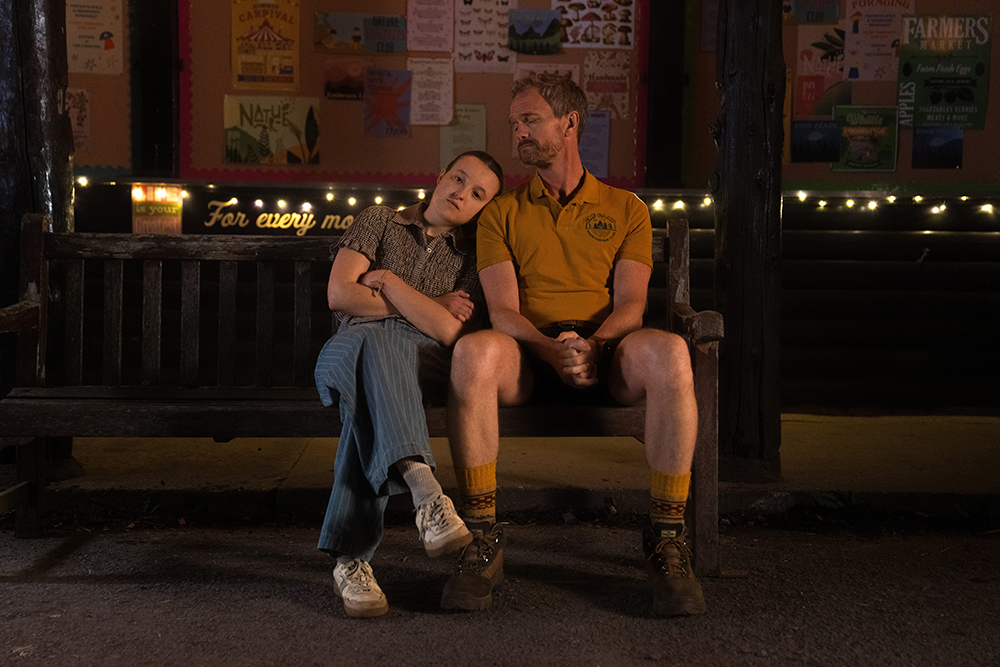
The heart of “Sunny Dancer” beats in the Scottish Highlands, where the film was shot, bringing a rugged, untamed beauty to its spirited narrative. Leading this vibrant ensemble is the immensely talented Bella Ramsey, who embodies Ivy, a 17-year-old protagonist grappling with the aftermath of beating leukemia. Ivy’s journey is one many young women can resonate with: the yearning for a rebellious adolescence, the struggle to find one’s place, and the complex emotions that arise when life takes an unexpected turn. Having navigated the harrowing corridors of illness, Ivy now faces the equally daunting challenge of embracing a “normal” life, a task made all the more complicated by the looming shadow of her past. Her loving parents, played with nuanced warmth by Jessica Gunning and James Norton, send her to what Ivy cynically labels a “Chemo Camp” – a summer retreat designed for kids in remission.
What Ivy discovers at camp, however, is far from her initial expectations. It’s not a place of pity or somber reflection, but a crucible where shared experiences forge unbreakable bonds. Here, amidst a group of wonderfully misfit friends, Ivy finds not just acceptance, but a renewed, exhilarating lust for life. This awakening is raw, unapologetic, and decidedly R-rated, embracing the full spectrum of teenage rebellion: sex, booze, and drugs. It’s a defiant celebration of youth, pushing boundaries and challenging societal norms about how young people, especially young women, are expected to behave after facing a life-threatening illness. For Ivy and her friends, these acts aren’t self-destruction but a visceral reclaiming of their bodies, their desires, and their stolen adolescence. Yet, even as her happiness soars, Ivy is never truly free from the sobering reality that this precious, newly found life can be cruelly snatched away at any moment. This delicate balance between exuberant joy and poignant vulnerability is what gives “Sunny Dancer” its profound emotional depth and makes Ivy’s journey so compelling.
George Jaques’ inspiration for “Sunny Dancer” is deeply personal and rooted in a profound empathy for his subjects. The seeds of the film were sown from two pivotal experiences: his mother’s courageous battle with cancer, which instilled in him a deep understanding of the disease’s impact, and a conversation with his editor, who shared her own experiences attending a similar camp for young cancer survivors. Driven by a desire to tell an authentic story, Jaques immersed himself in the world of these young people. He attended a three-day retreat tellingly named “Find Your Sense of Tumor” and spent time in hospitals, listening intently to the unfiltered narratives of teenagers. What he heard were not tales of quiet suffering, but vibrant, often irreverent anecdotes: kids racing down hospital corridors with their IV drips like trophies, and even candid confessions of “getting their first hand job” in a hospital ward. These raw, honest accounts painted a picture of young individuals bursting with life, desire, and an irrepressible spirit that transcended their diagnoses.

“It really hit me that these young people were so much more interesting than their diagnoses,” Jaques reflects, articulating the core philosophy that would shape “Sunny Dancer.” He was resolute in his mission to craft a film that would neither patronize younger audiences nor fall into the “weird sub-genre of films about cancer” that often sensationalized or sentimentalized the illness. Crucially, Jaques consciously chose to eschew any scenes depicting sick-looking kids languishing in hospital beds. This deliberate artistic decision was not about denying the reality of their struggles, but about empowering his characters and, by extension, his audience, by focusing on their resilience, their humor, and their vibrant lives beyond the clinical environment. It was a conscious effort to shift the narrative from victimhood to vitality, from illness to identity.
Beyond its thematic daring, Jaques also sought to infuse “Sunny Dancer” with a particular cinematic energy. He aimed to recapture the “ensemble energy” that defined beloved 1980s classics like “The Breakfast Club,” where a diverse group of young individuals, initially strangers, come together to form an unlikely, unforgettable bond. This vision extended to his casting, where he meticulously sought out what he describes as “the coolest young actors” to bring his riotous camp gang to life. Alongside the formidable Bella Ramsey, the film features a constellation of rising British stars, each bringing their unique talent and charisma to the screen: Daniel Quinn-Toye (“Voltron”), Ruby Stokes (“Rocks”), Earl Cave (“The Sweet East”), Conrad Khan (“County Lines”), and the compelling newcomer Jasmine Elcock. This carefully curated ensemble not only amplifies the film’s dynamic but also underscores Jaques’ commitment to showcasing fresh, authentic talent.
The journey to assemble such a dream cast and crew for an independent film speaks volumes about Jaques’ remarkable tenacity and persuasive power. When Bella Ramsey was first suggested for the lead role, Jaques admits his initial reaction was, “Fat chance.” Fresh off the global phenomenon of “The Last of Us,” Ramsey was, as Jaques himself acknowledged, “possibly the most famous young person on the planet.” Yet, operating on his unwavering “If you don’t ask, you don’t get” philosophy, Jaques sent a hopeful, heartfelt letter and a sizzle reel that was anything but conventional. This reel, a quirky montage of a “crap camp video” spliced with a popular meme of Joe Pesci exclaiming “What the fuck is this piece of shit?”, perfectly encapsulated the film’s irreverent spirit. To Jaques’ delight, Ramsey responded. Their subsequent Zoom call, described simply as a “chat about life,” sealed the deal, demonstrating that beyond the fame, Ramsey was drawn to the authenticity and profound human connection at the heart of the project. This early commitment from such a high-profile young talent was a pivotal moment, signaling the magnetic appeal of Jaques’ vision.
Indeed, to anyone who knows George Jaques, often described as a “force of nature,” his ability to draw people into his creative orbit is nothing short of miraculous. His audacious approach didn’t stop with Ramsey. The role of Patrick, the camp’s wonderfully cringe and perpetually dad joke-delivering president, was another ambitious casting punt. Jaques set his sights on Emmy winner Neil Patrick Harris. Against all odds, a Zoom call quickly charmed the seasoned actor, who has since become “like family” to Jaques, with the two even plotting future projects together. The bond runs so deep that Jaques, leveraging his fashion industry contacts, even helped his new friend get impeccably kitted out in Hermès for the Berlinale premiere – a charming anecdote that highlights the personal touch Jaques brings to his professional relationships.
The film’s extraordinary roster of talent continues with a comically self-effacing cameo from musician James Blunt, performing his iconic hit “You’re Beautiful.” This seemingly impossible casting coup began almost a decade prior when a teenage Jaques struck up a casual conversation with Blunt’s manager in a local pub. Keeping the manager’s number, Jaques, years later, made the audacious call. “Remember me?” he asked. The manager did, arranging a Zoom call with Blunt himself. Jaques recounts Blunt’s incredible generosity: “He was amazing, and just the kindest man – and he came and did it all for free!” The surreal nature of his achievement wasn’t lost on Jaques, who vividly recalls looking at his monitor during the shoot: “there was Neil Patrick Harris in there, plus James Norton and Jess Gunning, and then James Blunt singing ‘You’re Beautiful,’ and I thought, what the fuck, this is mental. I don’t actually know how I did this.”
Blunt may have graced the screen with his voice, but the film’s entire soundtrack was entrusted to another music luminary: Este Haim of the Grammy-nominated sister trio, Haim. Jaques admits his initial reaction to the suggestion was a disbelieving “No fucking way is a Grammy-nominated artist gonna do this.” Yet, once again, his manager made the connection. Haim, after reading the script and speaking with Jaques, was utterly convinced. The clincher? Haim revealed a deeply personal connection: “She was like, ‘George, I’m actually Type 1 diabetic, and I used to go on diabetes camps’ and I just knew then she was in…” Her personal experience with health camps resonated profoundly with the film’s themes, solidifying her commitment. She further enriched the project by bringing on co-composer Zachary Dawes, renowned as Lana Del Rey’s bassist, ensuring a soundtrack that is as vibrant and eclectic as the film itself.

And the serendipitous encounters didn’t end there. Jaques’ magnetic personality even extended to securing the rights for Alison Goldfrapp’s hit “Ooh La La.” Simply by striking up a conversation with the artist when she happened to be sitting next to him at a gig, he secured permission to use the track in the film, entirely for free. These anecdotes collectively paint a vivid picture of a filmmaker whose sheer passion and audacious spirit are his most potent tools, transforming improbable aspirations into tangible cinematic realities.
“It’s hard to make these indies, so we need as much support as we can get,” Jaques states, reflecting on the current landscape of independent filmmaking. He laments the scarcity of films like “Juno” and “About Time,” which once graced screens with their unique blend of humor, heart, and unconventional narratives. In an era often dominated by tentpole franchises and algorithm-driven content, “Sunny Dancer” stands as a bold testament to the enduring power of original storytelling and the vital importance of independent cinema. Through Jaques’ relentless determination and his ever-expanding network of industry contacts – coupled with the crucial early backing of Embankment Films – “Sunny Dancer” not only got made but now arrives as a vital piece of “counter-programming” at the Berlinale. A film set in the sun-drenched Scottish summer (a minor miracle, as Jaques jokes that it “shockingly didn’t rain once” during filming), it radiates enough warmth to combat the chill of any winter festival.
Ultimately, while “Sunny Dancer” unflinchingly confronts the gravity of a terrible killer disease, and is undeniably tinged with moments of extreme sadness, it is overwhelmingly saturated with an abundance of loud, chaotic, and utterly infectious youthful joy. It’s a film that isn’t afraid to lean into the irreverent, even delivering some seriously un-PC jokes about cancer, thereby normalizing conversations around an often-taboo subject and empowering its characters to find humor and defiance in the face of adversity. It is a powerful narrative, especially for women, demonstrating that vulnerability can coexist with strength, and that joy can be found even in the most challenging of circumstances.
The joyous spirit that permeates the film also extended to its production. One particularly memorable moment during the shoot saw the cast, with the help of Neil Patrick Harris, attending a Kylie Minogue concert at the start of her world tour, even going backstage to meet the iconic singer. Such experiences not only fostered a profound camaraderie among the young cast but also underscored the unique, life-affirming energy that Jaques cultivates on his sets. Given Jaques’ proven track record of manifesting the seemingly impossible, few would be genuinely shocked if Kylie Minogue herself were to appear in his next film, whatever “fucking crazy idea” that might be about. “Sunny Dancer” is more than just a film; it’s a vibrant declaration of independence, a celebration of life’s fierce resilience, and a testament to the boundless creativity of a filmmaker who truly believes that the most extraordinary stories are found beyond the expected.