

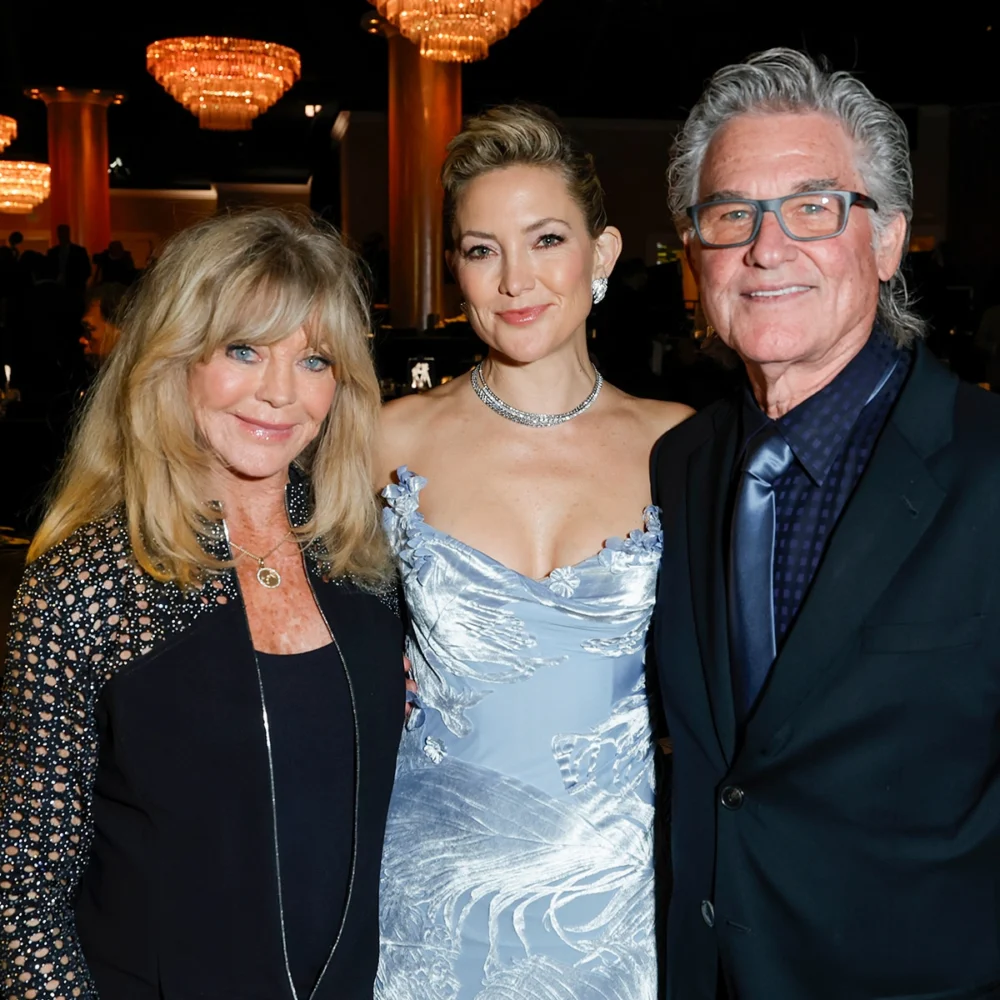
In the glittering landscape of Hollywood, the term "nepotism" has become a frequent subject of debate, often used to dismiss the successes of those born into famous families. However, for Kate Hudson, the journey to becoming a household name was defined not by the doors opened by her parents, but by a fierce determination to keep them closed until she could walk through them on her own merits. Despite being the daughter of Academy Award winner Goldie Hawn and the legendary Kurt Russell, Hudson’s rise to stardom was a calculated exercise in independence, fueled by a parenting philosophy that prioritized work ethic over inheritance.
Appearing on a recent episode of the Happy Sad Confused podcast with Josh Horowitz, the 46-year-old actress opened up about the reality of growing up in one of the industry’s most high-profile households. While she acknowledges the inherent privilege of her upbringing, she is quick to clarify that her childhood was far from the pampered "coasting" often associated with Tinseltown’s elite. According to Hudson, her parents were adamant that their wealth and status were theirs alone, leaving Kate and her brother, Oliver Hudson, to build their own lives from the ground up.
Growing up in Los Angeles, Hudson was surrounded by the children of the rich and famous. She witnessed firsthand a culture where some of her peers were given everything on a silver platter, a path that her parents refused to let her follow. "I’m being really honest with you, I grew up in L.A. where I saw kids coast by with parents who gave them everything," Hudson shared during the interview. "And I had the opposite parents."
Goldie Hawn and Kurt Russell, who have been together since 1983, instilled a rigorous set of values in their children. They were clear that while the family lived a life of comfort, that lifestyle was a privilege earned by the parents’ decades of hard work, not a birthright for the children. Hudson recalled her parents’ firm stance: "We were clearly privileged kids, but I do think that my parents were so adamant about how none of it belonged to us, that we didn’t earn it." They made it known that the life they were living would never be available to the children unless they demonstrated the same level of grit and professional dedication.
This mindset became the bedrock of Hudson’s identity as she entered the entertainment industry. For many young actors, a famous last name is a golden ticket, but for Kate, it was something she initially sought to distance herself from. Her biological father is the musician Bill Hudson, and she noted that she felt a sense of relief that her surname didn’t immediately scream "Goldie Hawn." This separation allowed her to feel that her early auditions and eventual breakthrough roles were her own victories. "I was like, ‘No, I will never rely on my parents,’" she remembered. "That was my big thing. I didn’t want anybody knowing they’re my parents."
This desire for autonomy even influenced her professional decisions, including her approach to major franchise roles. While her career eventually skyrocketed with her Oscar-nominated performance as Penny Lane in Almost Famous, every step was taken with the goal of being recognized as an individual talent. The independence she craved was a direct reaction to the "nepo baby" stigma, long before the term became a viral buzzword.
Her exposure to the film industry was constant, yet strictly regulated. While many celebrity children might spend their days lounging in trailers, the Hudson-Russell household had different rules for set visits. "We either had to work, we had to do something to earn being on set, or we had to really stay out of everybody’s way," Kate explained. "We couldn’t just hang around." This environment taught her to respect the mechanics of filmmaking—the long hours, the technical precision, and the collective effort of the crew.
Despite the strict boundaries, Hudson views her childhood as a gift, not because of the material wealth, but because of the "magical" perspective it afforded her. She describes seeing the industry through the eyes of a little girl, watching the alchemy of storytelling happen in real-time. This immersion gave her a unique education in the craft, allowing her to appreciate the "most magical industry on the planet" from the inside out.
The bond between Kate and her mother, Goldie Hawn, has only strengthened as they have both navigated the complexities of fame. Their relationship is built on a foundation of radical honesty and mutual respect. In past interviews, Hudson has described Hawn as her primary confidante, someone from whom she never felt the need to hide the truth. This openness is a two-way street; Hawn has admitted that she has learned a great deal from her daughter, noting that Kate is, in many ways, "tougher" than she was as a parent. Hawn has praised Kate’s commitment to the truth, even when it is difficult to hear, citing it as a vital component of their family dynamic.
At the heart of the Hawn-Russell-Hudson family is a concept they call "the tribe." During Goldie and Kurt’s joint Hollywood Walk of Fame ceremony in 2017, Kate gave an emotional speech about the true legacy her parents are leaving behind. It wasn’t about the box office hits or the awards, but about the "deep feeling of love and nurturing" they reserved for their family. She credited them with fiercely protecting their relationships and instilling a sense of loyalty in their children that transcends the fickle nature of the movie business.
These lessons of compassion and kindness are ones that Kate is now passing down to her own children. Her eldest son, Ryder Robinson, now 20, has grown up witnessing the same work ethic that his mother did. Ryder has expressed immense pride in both his mother and his grandmother, calling them "inspiring" and noting the impact of the Hawn Foundation’s philanthropic work. It is clear that the "legacy of family" Kate spoke of at the Walk of Fame is being successfully transmitted to the third generation.
Kate Hudson’s story is a compelling counter-narrative to the assumption that children of celebrities have it easy. While she never denies her luck or the opportunities her background provided, she emphasizes that opportunity is nothing without the discipline to back it up. By choosing to use her biological father’s name, by working her way through sets as a child, and by refusing to accept handouts, she ensured that when she finally stood on a stage to accept an award, she was standing there as Kate Hudson—not just as Goldie Hawn’s daughter.
Today, as a successful actress, entrepreneur, and mother, Hudson remains a testament to the power of a grounded upbringing. Her journey serves as a reminder that even in an industry built on illusions, authenticity and hard work remain the most valuable currencies. Through the lens of her parents’ strict but loving guidance, she didn’t just find a career; she found a sense of self that no amount of fame could provide. For Kate, the greatest "handout" she ever received wasn’t a movie role or a bank account—it was the realization that she had to earn her own way to the top.