The spotlight at this year’s Berlinale Series Market on February 16 shone brightly on Germany’s burgeoning television landscape, with the “Up Next: Germany” showcase revealing a captivating slate of four upcoming titles. From gritty urban crime dramas rooted in real-life events to fantastical thrillers exploring interdimensional rifts, the presentations underscored a dynamic shift towards ambitious, internationally appealing storytelling. Producers unveiled three scripted series and one compelling documentary, each promising to push boundaries and captivate audiences with their unique narratives and strong creative visions.
Leading the charge in the scripted drama category is “Westend Girl,” a series that masterfully weaves together the intricate threads of a crime thriller with the poignant emotional depth of a family drama. Set against the often-unseen backdrop of Düsseldorf’s underworld, this fact-based narrative introduces viewers to Ronja, a 19-year-old whose seemingly ordinary life is shattered when her parents are abruptly arrested. The shocking accusation? They are suspected of orchestrating the city’s largest cocaine ring. The series promises to delve into the devastating ripple effects of such a revelation on a young woman’s world, forcing her to confront a reality far darker than she ever imagined.
The role of Ronja is brought to life by the acclaimed Helena Zengel, known internationally for her powerful performance in “System Crasher.” Zengel’s involvement signals the series’ commitment to raw, authentic portrayals of complex characters, promising a nuanced exploration of a teenager grappling with betrayal, identity, and the sudden collapse of her family unit. Her casting alone elevates the project, hinting at a central performance that will anchor the series’ emotional core.
Pola Beck, the visionary creator and director behind “Westend Girl,” shared her deeply personal connection to the project, revealing that it has been a labor of love spanning some 15 years. Her inspiration stemmed from a close friend who experienced a similar, life-altering crisis within her own family. This intimate connection promises a narrative imbued with empathy and authenticity, moving beyond mere sensationalism to explore the profound human cost of hidden lives. Beck recounted her initial reaction to hearing the true story: “I was quite shocked, but then I thought, ‘Wow, what a diamond of a story.'” This sentiment speaks to the irresistible narrative potential she recognized—a story ripe with dramatic tension, moral ambiguities, and the universal themes of family loyalty and shattered innocence.
Initially envisioned as a feature film, the project found its true home as a series after Beck partnered with seasoned producer Martin Heisler of Flare Film. This strategic pivot allowed for a more expansive and detailed exploration of the characters, the complex criminal underworld, and the intricate family dynamics that unfold over time. A series format provides the necessary canvas to truly unravel the layers of deceit and resilience, offering viewers a more immersive experience into Ronja’s journey. “Westend Girl” is a testament to collaborative storytelling, produced by Flare Film in co-production with prominent German broadcasters WDR and Arte. Further support comes from Beta Film, with significant funding contributions from Film- und Medienstiftung North Rhine-Westphalia (NRW), Medienboard Berlin-Brandenburg, and the German Motion Picture Fund (GMPF), underscoring the industry’s confidence in its compelling premise and creative team.
Shifting gears from gritty realism to the unsettling realm of speculative fiction, “The Dark Ones” presents a high-concept fantasy thriller poised to captivate audiences with its eerie premise. Set on a remote North Sea island, the series unveils a terrifying phenomenon: a mysterious crack between dimensions allows dangerous entities, known only as “The Dark Ones,” to infiltrate our world. These sinister visitors are not merely strangers but shadowy doppelgangers, intent on subtly replacing the island’s unsuspecting inhabitants. The chilling echoes of classic sci-fi thrillers like “The Invasion of the Body Snatchers” are undeniable, promising a slow-burn narrative of paranoia, identity erosion, and existential dread.
At the heart of this unfolding mystery is Soma, a young woman embarking on a personal quest to uncover her own origins. She soon discovers that she is the only one equipped to confront and ultimately halt the encroaching threat of “The Dark Ones.” Her journey intertwines personal discovery with the fate of humanity, positioning her as a reluctant hero in a world teetering on the brink. The choice of a North Sea island provides a naturally atmospheric and isolated setting, enhancing the sense of claustrophobia and the creeping horror of an external invasion.
Despite its distinctly German setting, “The Dark Ones” ventured beyond national borders for its production, ultimately filming in Belgium. This decision, as explained by Andi Wecker of Network Movie, was driven by pragmatic considerations regarding funding conditions. “We have a great, very unique hook in the story and filmed in an iconic landscape, but still with a very universal conflict, so we truly believe that this is something that will speak to audiences worldwide,” Wecker articulated, emphasizing the series’ international ambitions. He stressed, “So we want to go out there. Of course, we want to show it in Germany, but we want to go out there as well.”
The pursuit of a larger budget, crucial for delivering the high-end production values demanded by such a visually ambitious show, led the producers to Belgium, which offers an attractive tax rebate of 30% or higher. Wecker elaborated on the impact of this financial incentive: “With 30% plus, some very smart decisions by some very good creatives, we were able to create the standard we were looking for.” This candid admission highlights a critical challenge faced by German producers: the need for competitive funding mechanisms to keep high-profile productions within the country. Wecker openly stated their preference to have shot in Germany, but acknowledged the absence of comparable financing instruments at the time, which other nations like Belgium readily provide.
However, there is a palpable sense of optimism for the future. Wecker expressed hope that new funding initiatives are on the horizon for Germany, which would “actually attract money to Germany and many more productions” and foster “some healthy co-production relationships.” This anticipated shift could significantly bolster Germany’s position as a global production hub. “The Dark Ones” is produced by Studio Zentral with Network Movie for ZDFneo, benefiting from international support from Screen Flanders in Belgium and Austria’s FISA+, further illustrating the collaborative nature of contemporary European television production.
Returning to the crime genre, “4 Blocks Zero” promises to be a highly anticipated prequel to the critically acclaimed and award-winning gangster drama “4 Blocks.” The original series, celebrated for its unflinching portrayal of organized crime in Berlin, concluded its three seasons having thoroughly explored the Hamady family saga. This prequel endeavors to rewind the clock, chronicling the origins of the powerful Hamady clan after their flight from war-torn Lebanon and their subsequent struggle to forge a new life in the tumultuous landscape of 1990s Berlin. It will meticulously detail their ascent to becoming the most influential extended Arab family in the city, and, crucially, illuminate the transformation of young Ali into the formidable figure known as Toni.
Quirin Berg of W&B Television, the producing force behind both the original and the prequel, explained the narrative logic behind this new chapter. He noted that the original “4 Blocks” had meticulously completed its family saga, making a prequel set in the formative 1990s the most natural and compelling direction for further exploration. Berg highlighted the groundbreaking impact of the original series in Germany, which dared to tell the story of a crime family in a way that resonated deeply with contemporary newspaper headlines. “The decision was made in ‘4 Blocks’ to tell the story from the perspective of Tony, the head of the family and the face of the family. And that was very new in Germany,” Berg explained, pointing to the innovative narrative approach that challenged traditional perspectives on crime and justice.
Indeed, the original series achieved a rare feat: audiences became deeply invested in the Hamady clan, often finding themselves rooting for the very “bad guys.” Berg acknowledged this complex audience engagement, stating, “While it’s a great thing storytelling-wise and thrilling and fascinating, at the same time we know in real life, if you’re living a thug life, you pay a price for it.” This nuanced understanding of audience empathy versus real-world consequences is expected to carry into the prequel, offering a richer, more morally complex viewing experience.
Director and executive producer Özgür Yildirim elaborated on the prequel’s unique focus. While “4 Blocks” always maintained a strong commitment to realism, Yildirim revealed that for “4 Blocks Zero,” it was the political dimensions of the family’s origins—their displacement from war-torn Lebanon—that particularly resonated with him personally and served to distinguish the new series from its predecessor. The prequel offers a crucial opportunity to examine the broader societal and political forces at play, specifically how German policies and societal structures may have inadvertently exacerbated the conditions that led to the proliferation of criminal clans. This deeper dive into the socio-political context promises to add layers of commentary and a more profound understanding of the Hamady family’s journey.
“4 Blocks Zero” is produced by W&B Television, with funding from the GMPF and Medienboard Berlin-Brandenburg, and is slated for release on HBO Max, signaling its reach to a broad international audience eager for compelling crime sagas.
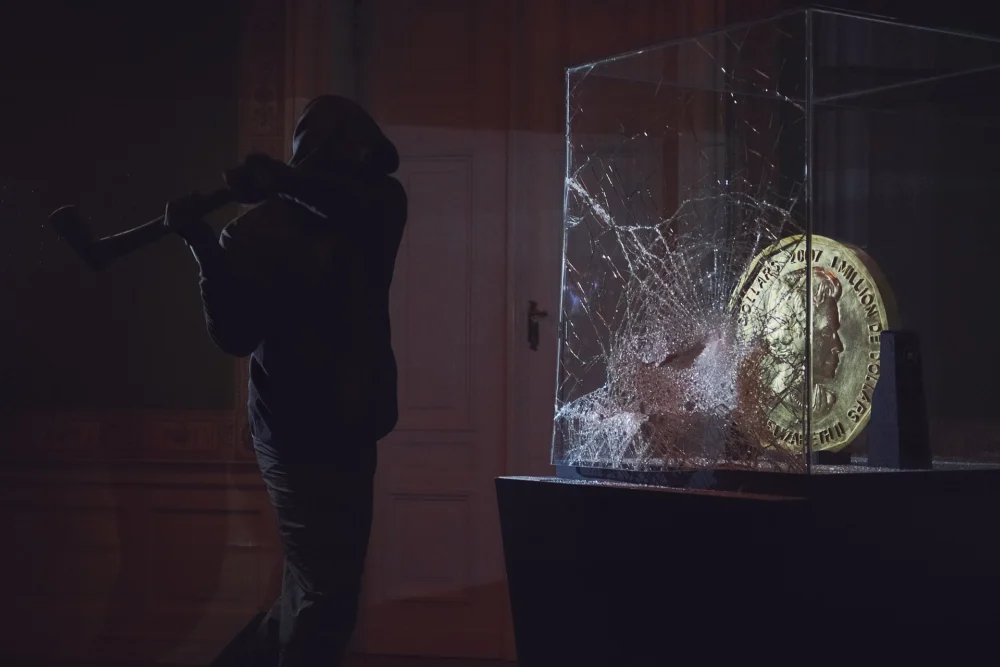
Finally, the Berlinale Series Market also showcased “Clangold,” a documentary series delving into one of the most spectacular and audacious crimes in recent German history. Tentatively titled, “Clangold” meticulously explores the real-life story of a Berlin crime family’s involvement in the theft of the “Big Maple Leaf”—a colossal, 100-kilogram Canadian gold coin—from Berlin’s prestigious Bode Museum. The series promises an intimate, often surprisingly humorous, look at the gripping cat-and-mouse game that unfolded between diligent investigators and the audacious perpetrators.
Director Jan Zabeil admitted to initial reservations about embarking on a project centered on “clan crime” in Germany, acknowledging the sensitive and often polarizing nature of the subject. “I was aware that to do something about the so-called clan crime in Germany is also a minefield here, you know? It’s very, very easy to lose and very hard to win,” he confessed. This caution reflects the public discourse surrounding such topics in Germany, where discussions can quickly become fraught with stereotypes and misrepresentations.
However, Zabeil’s perspective shifted after engaging in candid conversations with friends within Berlin’s Lebanese-German community. He realized there were indeed positive and constructive avenues for openly discussing the heist, which, for many, was perceived as more entertaining and less gravely serious than typical violent crime. Zabeil highlighted the distinct nature of the crime itself: “There’s no one being murdered, which you normally have in all these crime shows. This is spectacularly light-hearted, from what actually happened. People refer to Robin Hood when they talk about it.” This observation points to the documentary’s potential to offer a fresh, nuanced, and even humanizing portrayal of a crime that captured public imagination without involving bloodshed.
For Dirk Engelhardt, Senior Director of Local Original Productions at HBO Max for German-speaking territories, “Clangold” perfectly aligned with the streamer’s strategic vision. He noted that HBO Max was actively seeking high-quality true crime shows and expressed immense trust in documentary specialists Beetz Brothers Film Production to deliver a compelling narrative. This collaboration underscores the global appetite for meticulously researched and engaging true crime content, especially when it offers unique cultural insights.
“Clangold” is produced by Beetz Brothers Film Production for HBO Max, benefiting from the support of the GMPF and Medienboard Berlin-Brandenburg. The series is poised to offer viewers a fascinating glimpse into a singular criminal event, blending investigative rigor with a unique cultural lens, and perhaps, even a touch of unexpected charm.
The “Up Next: Germany” showcase at the Berlinale Series Market ultimately painted a vivid picture of a German television industry that is bold, diverse, and increasingly ambitious on the global stage. From deeply personal dramas to expansive fantasy and incisive true crime, these productions, many featuring strong female voices both in front of and behind the camera, are poised to redefine perceptions and captivate audiences worldwide, demonstrating the enduring power of compelling storytelling.