


The Unfillable Shoes: Why Hollywood’s A-Listers Are Shying Away from the New ‘American Psycho’ Lead
Twenty-four years after its initial release, Mary Harron’s “American Psycho” remains a cinematic touchstone, its dark satire and chilling portrayal of 1980s excess indelibly etched into popular culture. Now, as a new film adaptation helmed by visionary director Luca Guadagnino enters production, the shadow of its predecessor looms large, particularly over the pivotal role of Patrick Bateman. The task of stepping into the tailored suits of the homicidal investment banker is proving to be a formidable challenge, with reports indicating that a string of high-profile actors have politely declined the opportunity.
Bret Easton Ellis, the celebrated author of the controversial 1991 novel upon which the films are based, recently shed light on the casting predicament during a segment on his popular podcast. “A couple of high-profile actors, whom I can’t name, have turned it down,” Ellis revealed, offering a tantalizing glimpse into the behind-the-scenes struggles. His candid observation suggests a potent force at play: “I think maybe because they don’t want to be in the shoes of Christian Bale.” This sentiment underscores the immense pressure and the almost mythic status that Bale’s original portrayal has achieved, making it a role that is both coveted and, paradoxically, intimidating to embrace.
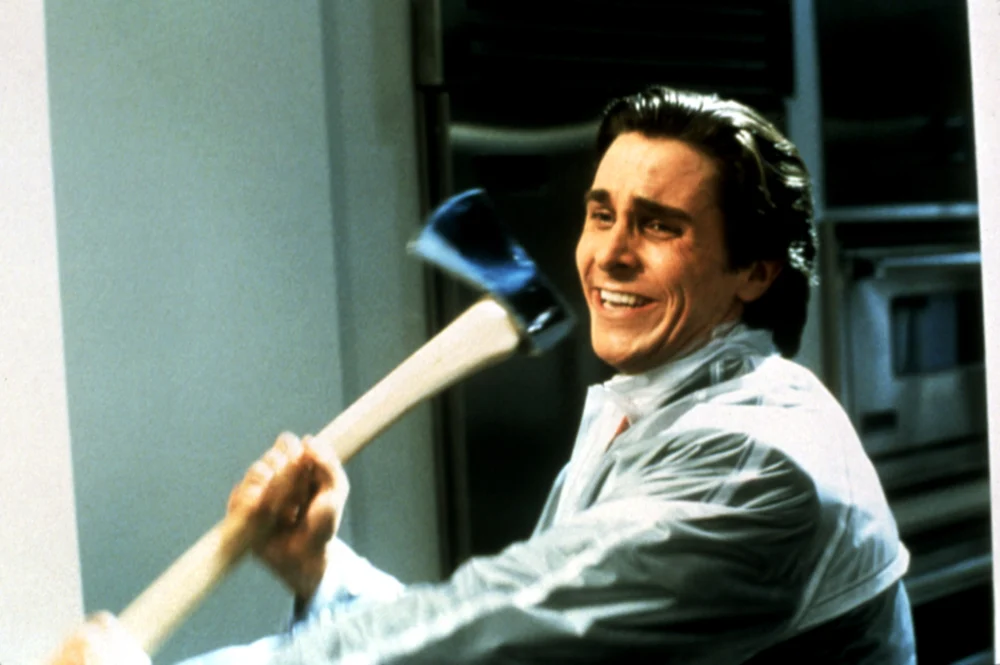
Christian Bale’s embodiment of Patrick Bateman in the 2000 film was nothing short of a career-defining performance, a masterclass in controlled chaos that cemented his status as a leading man capable of profound transformation. More than a quarter-century ago, Bale brought to life the character of Bateman, a man outwardly obsessed with designer brands, gourmet food, and meticulous grooming, yet inwardly consumed by an insatiable hunger for violence and an alarming detachment from reality. His performance, a delicate balance of menacing intensity and darkly comedic self-absorption, resonated deeply with audiences and critics alike, earning the film its cult classic status. Bale’s Bateman has since transcended the screen, becoming a pervasive fixture in global pop culture. From ubiquitous Halloween costumes that mimic his sleek, blood-splattered aesthetic to countless internet memes dissecting his bizarre routines and chilling monologues, his interpretation has become the definitive image of the character, a benchmark against which any new iteration will inevitably be measured. The sheer weight of this legacy, combined with the character’s morally reprehensible actions, presents a unique hurdle for any actor considering the role.
The original novel itself, published in 1991, ignited a firestorm of controversy upon its release. Ellis’s unflinching depiction of gratuitous violence, misogyny, and the soulless consumerism of 1980s Manhattan shocked many, leading to protests and boycotts. Yet, it also garnered critical acclaim for its satirical depth and its stark commentary on toxic masculinity and the superficiality of a certain segment of society. Mary Harron, as a female director, brought a particularly incisive lens to the material, deftly navigating the novel’s darkest elements while amplifying its satirical bite. Her film was praised for its ability to critique Bateman’s world without glorifying his actions, a delicate balance that few could have achieved. The film’s commercial success, grossing over $34 million worldwide on a modest $7 million budget, further solidified its impact and proved that a challenging, provocative story could find a wide audience.
The 2000 film’s ensemble cast, a constellation of talent that included Justin Theroux, Josh Lucas, Chloë Sevigny, Reese Witherspoon, Jared Leto, and Willem Dafoe, each contributed to its lasting appeal. These actors, many of whom were on the cusp of major stardom, delivered nuanced performances that grounded Bateman’s surreal world in a chilling reality. Sevigny’s portrayal of Jean, Bateman’s unassuming secretary, provided a crucial human counterpoint to his depravity, while Witherspoon and Leto embodied the superficiality and privilege of Bateman’s social circle with chilling accuracy. Their collective efforts helped craft a film that was not merely a horror flick but a sharp, psychological thriller with profound social commentary.
With Luca Guadagnino now at the helm, expectations for the new “American Psycho” are undoubtedly high. Guadagnino, known for his aesthetically rich and emotionally resonant films like “Call Me By Your Name,” “Suspiria,” and “Bones and All,” possesses a distinctive directorial vision. His work often explores themes of desire, obsession, and the complexities of human nature, making him an intriguing choice to reinterpret Ellis’s dark narrative. His ability to craft visually stunning worlds imbued with a sense of unease and psychological depth suggests a potential for a truly unique take on Bateman’s inner and outer turmoil. However, the path to bringing this new vision to life has already seen significant shifts.
Bret Easton Ellis confirmed that the reimagined “American Psycho” has received a completely new script, penned by acclaimed screenwriter Scott Z. Burns. This development occurred after several unnamed actors reportedly passed on the role, hinting at the creative team’s commitment to finding the right narrative angle to justify a fresh adaptation. Burns, known for his sharp, intelligent screenplays for films like “Contagion,” “The Informant!,” and “The Report,” brings a reputation for crafting intricate narratives with a keen sense of social commentary. His involvement suggests that this new iteration might delve into different facets of Bateman’s psychology or the societal conditions that create such a character.
Ellis’s comments on the new script are particularly revealing, emphasizing a deliberate departure from its predecessor. “From what I’m told, this movie is completely different from Mary Harron’s 2000 movie. It’s a completely different take, and going to bear no resemblance to that movie,” Ellis noted. This statement implies a radical reinterpretation, moving beyond a mere remake to explore new thematic territories or narrative structures. It raises questions about whether the film will remain a period piece set in the 1980s, or if it will be updated to a contemporary setting, reflecting modern forms of consumerism, social media narcissism, and evolving definitions of toxic masculinity. Such a departure could either liberate the new film from direct comparison or alienate fans of the original’s specific tone and satirical focus.
The rumor mill, as it often does in Hollywood, had previously churned with speculation regarding potential candidates for the role of Bateman. Actors such as “Elvis” star Austin Butler and “Wuthering Heights” lead Jacob Elordi were among those whispered to be in contention. Both actors possess the charisma, striking looks, and burgeoning talent to command such a complex role, having demonstrated their ability to inhabit intense characters. Butler’s transformative performance as Elvis Presley showcased his range and commitment, while Elordi’s work in projects like “Euphoria” and “Saltburn” has cemented his status as a compelling young talent capable of portraying dark, alluring figures. However, their rumored passes, if true, further underscore the unique challenges and perhaps the perceived risks associated with taking on a character so thoroughly defined by another actor’s iconic performance.
The enduring fascination with “American Psycho” lies in its ability to hold a mirror up to societal flaws – particularly unchecked capitalism, superficiality, and the insidious nature of toxic masculinity. In an era increasingly grappling with issues of identity, mental health, and the darker side of online personas, the themes explored in Ellis’s novel and Harron’s film remain disturbingly relevant. A new adaptation, especially one promising a “completely different take,” has the potential to offer fresh insights into these persistent societal anxieties. It could explore how Bateman’s particular brand of nihilism and consumer obsession might manifest in the digital age, or it could delve deeper into the psychological underpinnings of his madness with a contemporary understanding of mental health.
Guadagnino’s version of the cult classic is slated for Lionsgate, a studio known for its diverse slate of films, from blockbusters to more niche, character-driven projects. The film will be produced by Frenesy Films, a company often associated with Guadagnino’s previous works, indicating a strong creative alignment with the director’s vision. Sam Pressman will serve as an executive producer through his company, Pressman Film, adding another layer of industry expertise to the project. The combination of these forces suggests a commitment to producing a high-quality, thought-provoking film, even as the search for its central, deeply unsettling protagonist continues.
As the production moves forward, the question of who will ultimately dare to don Patrick Bateman’s meticulously tailored suits and confront the shadow of Christian Bale’s iconic performance remains. It’s a role that demands an actor of extraordinary talent, courage, and perhaps a touch of madness – someone willing to not just fill Bale’s shoes, but to forge an entirely new, equally unforgettable path into the heart of darkness.