

Hollywood’s Newest AI Battleground: Seedance 2.0 Ignites Fierce Copyright War, Sparking Existential Fears for Creators
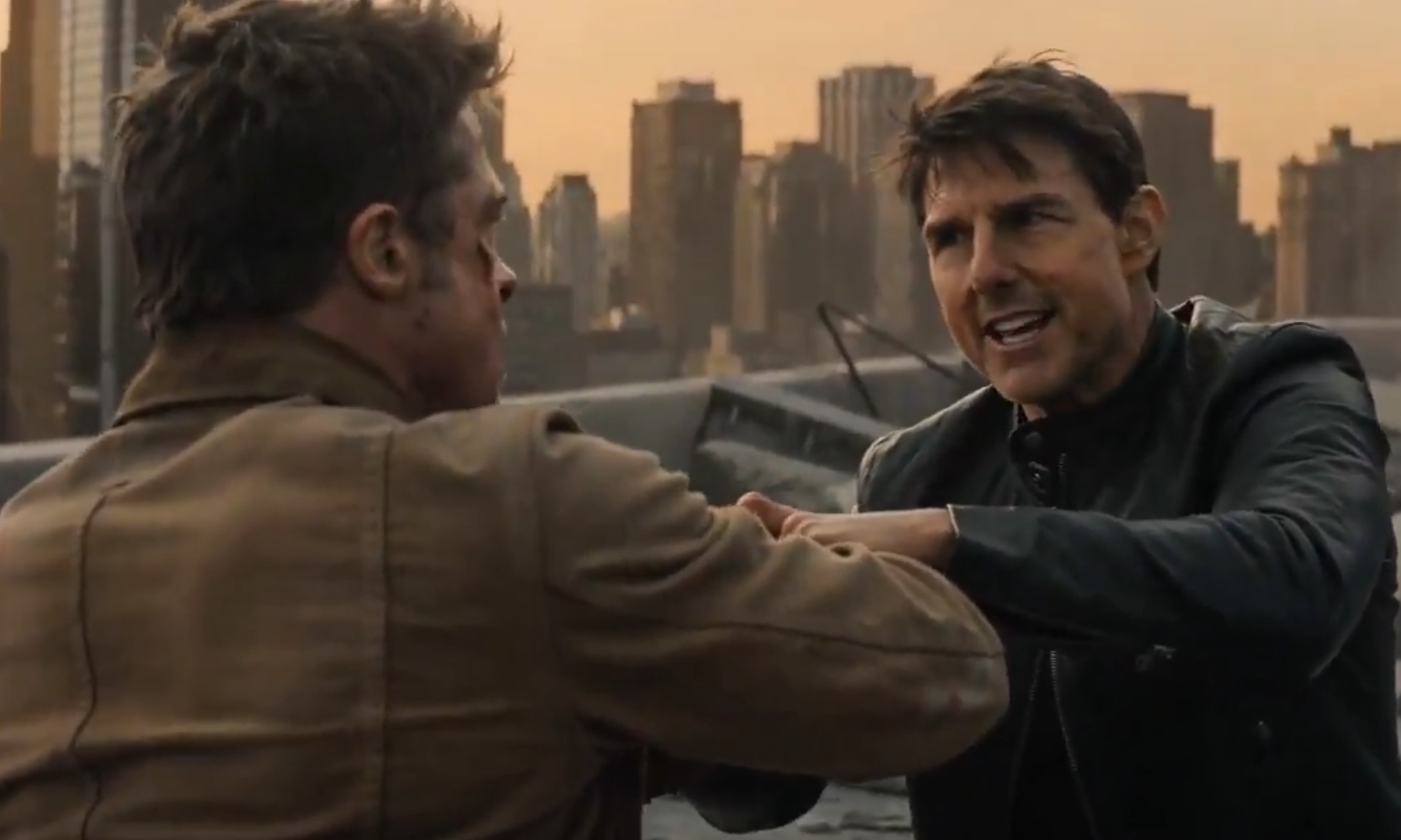
After AI Video of ‘Tom Cruise’ Fighting ‘Brad Pitt’ Goes Viral, Motion Picture Association Denounces ‘Massive’ Infringement on Seedance 2.0
The Motion Picture Association (MPA), the formidable voice of America’s film and television industry, has sounded a clarion call against what it describes as an unprecedented wave of copyright infringement, directly attributing the surge to the recent launch of Seedance 2.0. In a swift and unequivocal denunciation issued on Thursday, the MPA accused the cutting-edge AI video generator of unleashing a torrent of unauthorized use of copyrighted works within a mere day of its public availability, thrusting the ongoing debate over artificial intelligence and intellectual property into a new, urgent phase.
Seedance 2.0, developed by ByteDance—the Chinese technology titan behind the global social media phenomenon TikTok—has been touted by its creators as a monumental leap forward in AI-driven video generation. According to ByteDance’s official blog, this newest iteration represents a “substantial leap in generation quality” compared to its predecessor, promising a level of realism and creative flexibility previously unattainable. Indeed, the platform’s capabilities have quickly captivated the internet, generating viral content that showcases its remarkable fidelity. Among the most widely circulated examples is a strikingly realistic, albeit fabricated, video depicting Hollywood icons Tom Cruise and Brad Pitt engaged in a dramatic rooftop brawl. This particular clip, along with numerous others riffing on beloved franchises like *Spider-Man*, *Titanic*, *Stranger Things*, *Lord of the Rings*, and *Shrek*, swiftly propagated across social media platforms, serving as both a testament to Seedance 2.0’s prowess and a stark illustration of the MPA’s concerns.
The MPA’s condemnation was swift and unreserved, delivered through a spokesperson who articulated the industry’s profound alarm. “In a single day, the Chinese AI service Seedance 2.0 has engaged in unauthorized use of U.S. copyrighted works on a massive scale,” the spokesperson stated, emphasizing the sheer volume and speed of the alleged infringements. The statement continued, laying the blame squarely at ByteDance’s feet for what the MPA perceives as a deliberate disregard for established legal frameworks. “By launching a service that operates without meaningful safeguards against infringement, ByteDance is disregarding well-established copyright law that protects the rights of creators and underpins millions of American jobs. ByteDance should immediately cease its infringing activity.” This forceful declaration underscores the MPA’s dual mandate: to safeguard the intellectual property that forms the bedrock of its member studios’ business models and to protect the livelihoods of the countless individuals—from writers and directors to visual effects artists and craftspeople—who contribute to the creative economy.
This is not the first time the MPA has found itself on the front lines of the AI copyright battle. Just last fall, the association voiced similar criticisms following the release of Sora 2 by OpenAI, another advanced AI video generator that, like Seedance 2.0, sparked a flurry of AI-enabled copyright infringement. At that time, the MPA issued a stern warning to OpenAI, stating, “OpenAI needs to take immediate and decisive action to address this issue. Well-established copyright law safeguards the rights of creators and applies here.” The precedent set by the Sora 2 situation, however, offers a glimmer of a potential path forward. OpenAI, demonstrating a more responsive and collaborative posture, engaged with the MPA’s concerns and subsequently implemented robust safeguards designed to make it significantly more challenging for users to generate content that violated studio copyrights. This collaborative spirit culminated in a landmark deal between Disney and OpenAI, where Disney licensed access to 200 of its iconic characters for use within Sora 2. This agreement was widely hailed as a potential blueprint, offering a model for how major studios and AI developers could navigate the complex intellectual property landscape through licensing and partnership rather than constant confrontation.
The question now looming over Hollywood and the burgeoning AI industry is whether ByteDance will be amenable to a similar cooperative approach, or if the current standoff is merely the prelude to a protracted legal conflict. As of now, ByteDance has not publicly responded to the MPA’s accusations or to requests for comment, leaving the industry in a state of anxious anticipation. The lack of immediate engagement from the Chinese tech giant raises concerns that copyright owners may soon find themselves compelled to initiate formal takedown notices and, potentially, comprehensive infringement lawsuits, escalating the dispute from public statements to legal action. This dynamic is further complicated by the international nature of the conflict, pitting a U.S.-based industry protector against a company operating under a different legal and regulatory framework in China, potentially making enforcement and negotiation more intricate.
Beyond the legal and corporate skirmishes, the rapid advancement of AI video generation has stirred a profound sense of existential dread within the creative community itself. The ease with which Seedance 2.0 can conjure sophisticated, high-quality video content from simple text prompts has led many to question the very future of human-led creative endeavors in film and television. Rhett Reese, a celebrated writer known for his work on the blockbuster “Deadpool” films, articulated this sentiment with chilling clarity in a comment on the viral Tom Cruise-Brad Pitt video. “I hate to say it. It’s likely over for us,” Reese lamented, expressing a widely held fear among his peers. He elaborated on this grim prognosis, predicting a future where “in next to no time, one person is going to be able to sit at a computer and create a movie indistinguishable from what Hollywood now releases.” This perspective highlights the deep anxiety among writers, directors, actors, and countless other professionals whose crafts could be fundamentally reshaped, or even rendered obsolete, by increasingly sophisticated AI tools.
The very creator of the infamous Cruise-Pitt video, Ruairi Robinson, an Irish film and commercial maker, offered a different, albeit equally thought-provoking, perspective on the ease and implications of this new technology. Robinson revealed on X (formerly Twitter) that the viral clip was generated with astonishing simplicity: “This was a 2 line prompt in Seedance 2.” His subsequent reflection on the broader industry reaction further underscored the complexity of the debate: “If the Hollywood is cooked guys are right maybe the Hollywood is cooked guys are cooked too idk.” This quip, while seemingly flippant, captures the bewilderment and uncertainty facing those at the forefront of creative technology. When confronted with backlash over his role in demonstrating Seedance 2.0’s capabilities, Robinson posed a provocative question: “Today’s question is: should I be killed for typing 2 lines and pressing a button.” His comment highlights the emerging ethical dilemma: is the user of the AI tool responsible for the copyright implications, or is the onus primarily on the developer to build in safeguards and respect intellectual property?
The proliferation of Seedance 2.0 videos across social media, from fantastical interpretations of *Spider-Man* and *Titanic* to re-imaginings of *Stranger Things*, *Lord of the Rings*, and *Shrek*, serves as undeniable proof of the technology’s immediate impact and widespread accessibility. These examples, while demonstrating impressive technical feats, also act as digital flashpoints in the escalating conflict between technological innovation and established creative rights. For women creators and professionals across the entertainment spectrum, this debate carries particular weight. From screenwriters to cinematographers, directors to visual effects artists, the potential for AI to both empower and displace raises critical questions about equity, opportunity, and the preservation of human artistry. The industry has long grappled with issues of representation and fair compensation, and the advent of powerful AI tools introduces a new layer of complexity, demanding vigilance to ensure that technological progress does not inadvertently erode the value of diverse human talent.
The unfolding saga between the MPA and ByteDance represents more than just another skirmish over intellectual property; it is a pivotal moment in the ongoing redefinition of creativity, ownership, and labor in the digital age. As AI continues its inexorable march into every facet of artistic production, the industry faces an urgent imperative to forge new paradigms that balance innovation with respect for creators’ rights. Whether this equilibrium will be achieved through proactive collaboration, as seen with OpenAI, or through the arduous path of legal challenges and regulatory intervention, remains to be seen. What is clear, however, is that the future of storytelling, and the millions of jobs that underpin it, hinges on how these powerful forces are navigated in the months and years to come.