



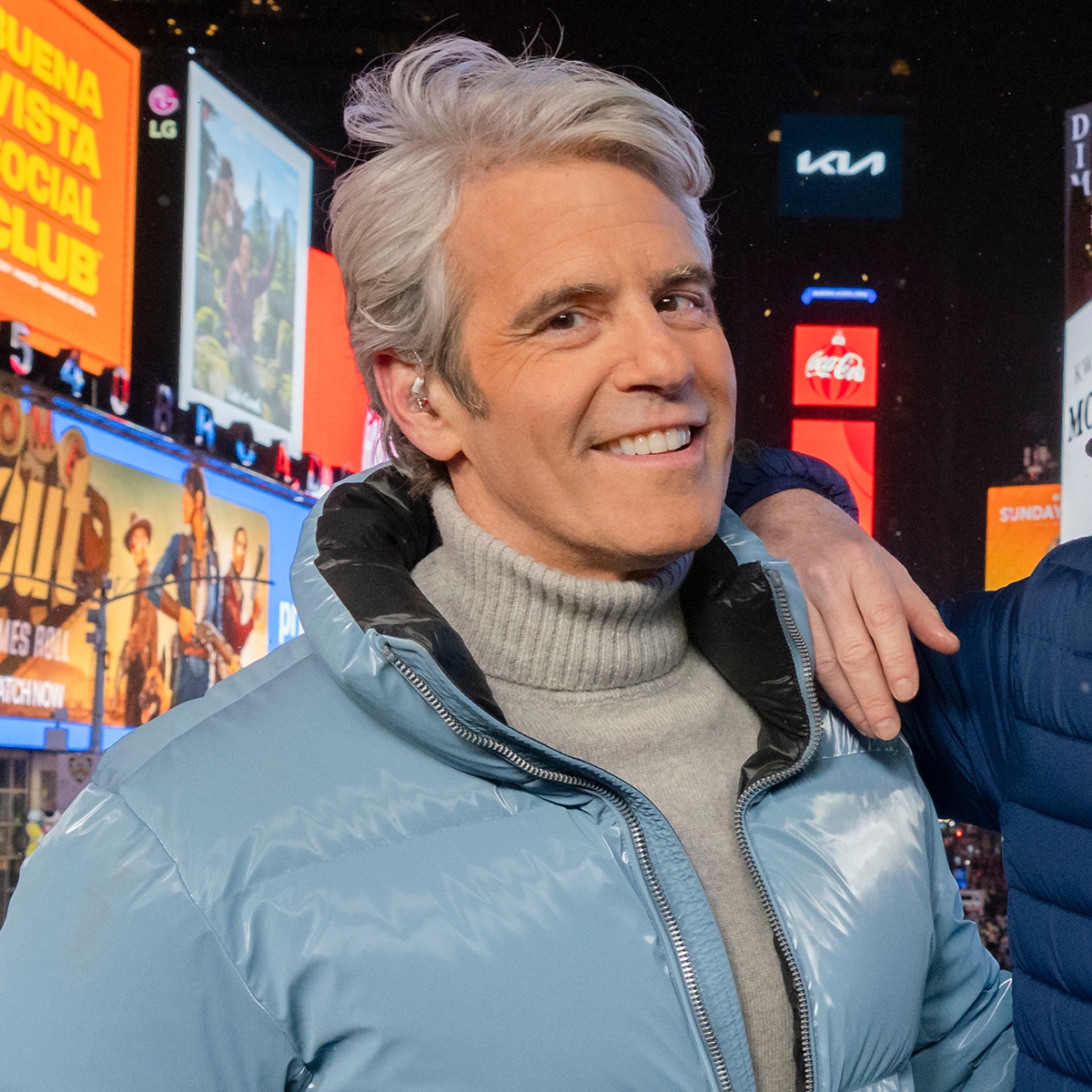
When Andy Cohen appeared alongside his longtime friend Anderson Cooper for CNN’s New Year’s Eve Live special, the internet didn’t just focus on the countdown; it focused on his face. The 57-year-old Bravo mogul, known for his sharp wit and high-energy hosting, sparked an immediate firestorm of digital speculation. Viewers across social media platforms began dissecting his appearance, with many suggesting that the "Watch What Happens Live" host had undergone a significant cosmetic overhaul or a full-scale facelift during his time away from the cameras.
The buzz reached such a fever pitch that Cohen felt compelled to address the "dramatically changed" face that had everyone talking. Speaking on a recent January episode of his SiriusXM show, "Andy Cohen Live," the father of two took the rumors in stride, expressing a mixture of amusement and appreciation for the attention. "I am so flattered," Cohen told his audience, leaning into the controversy with his signature humor. "I love the speculation that I have dramatically changed my face."
However, for those looking for a confession of a secret surgical retreat, Cohen offered a more grounded explanation. He clarified that while he hadn’t "gone under the knife," he did indulge in a few minor cosmetic enhancements to freshen up his look for the new year. The "glow-up," he explained, was the result of the "teeniest bit of Botox" and a set of four minor veneers on his front teeth. Beyond the dental work and the light injectables, Cohen pointed to a more temporary culprit for his altered appearance: a heavy hand with the bronzer.
Recalling the backstage atmosphere at the CNN special, Cohen shared an anecdote about the makeup chair. "Anderson’s makeup gal comes in and she’s like, ‘Are you OK?’" he laughed. His response at the time was to lean further into the aesthetic, asking her to "warm me up a little bit" and provide more tanner. Looking back at the broadcast, Cohen admitted the combination of the makeup and his recent physical changes led to some harsh online critiques. He noted with a laugh that some commenters went as far as to describe him as looking like a "beaten-down lady."
The conversation around Cohen’s appearance is inextricably linked to his physical transformation throughout 2024 and 2025. Beyond the dental and dermatological tweaks, the host has been remarkably transparent about his weight loss journey. Cohen revealed that he lost a "good chunk of weight" by "micro-dosing" a GLP-1, the class of medications originally designed for type-2 diabetes that has become a cultural phenomenon under brand names like Ozempic and Mounjaro.
For Cohen, the decision to use the medication wasn’t purely about aesthetics. As a father to son Ben, 6, and daughter Lucy, 3, health longevity was a primary driver. He shared that his doctor had recommended the treatment several times over the past year to address not just his weight, but also high blood pressure and plaque in his arteries. "This is a medication that actually is beneficial to a lot of elements of health," Cohen explained, noting that he finally said "yes" after initially feeling unhappy with his physical state. He emphasized that the drug was only one part of the equation, as he also cut out "excess snacking" and maintained a "pretty rigorous" workout routine, claiming his fitness has "never been better."
Cohen is far from alone in this new frontier of celebrity wellness. The rise of GLP-1 medications has divided Hollywood into those who embrace the "skinny shot" and those who view it with deep skepticism. The conversation has moved from hushed whispers in dressing rooms to loud, public debates about body image, health, and honesty.
On one side of the aisle are the advocates for transparency. Comedian Nikki Glaser has been a fierce defender of the medication, calling for an end to the "shame" surrounding its use. She suggested that the backlash often comes from a place of gatekeeping, where people are "mad that you’re getting thin now" because they previously used their own fitness as a status symbol. Similarly, Sharon Osbourne has been an open book about her 42-pound weight loss via Ozempic, arguing that there is no need to "bulls–t" the public when medical interventions are used. Her daughter, Kelly Osbourne, echoed this sentiment, calling the medication "amazing" and a viable alternative to "boring" traditional workouts.
Others have found the medication to be a necessary tool for specific health milestones. Singer Meghan Trainor and her husband, actor Daryl Sabara, embarked on the journey together following the birth of their son, Riley. Combining the "75 Hard" fitness challenge with a low dose of Mounjaro, the couple used the medication as a kickstart to a broader lifestyle shift. Jonathan Van Ness of "Queer Eye" also turned to a GLP-1 after a 2023 health scare. While Van Ness has lost 70 pounds and celebrated newfound muscle definition, they remain a staunch advocate for body neutrality, reminding fans that "the way that you look does not define your worth."
However, the "miracle drug" narrative is often complicated by severe side effects and personal regrets. Lottie Moss, sister of supermodel Kate Moss, shared a harrowing account of her experience, which resulted in a seizure caused by extreme dehydration after taking a dosage meant for a much heavier person. "It was the worst decision I ever made," she warned, describing the terrifying moment her body grew tense and her face began clenching up in the emergency room.
Similarly, Amy Schumer, who has always been vocal about her cosmetic procedures like liposuction, tried Ozempic but found it "unlivable." The actress recalled being so nauseous and weak that she couldn’t even play catch with her son, Gene. Schumer has used her platform to call out fellow celebrities who attribute their dramatic weight loss to "smaller portions" rather than admitting to medical help. "Just stop," she told Cohen during a past appearance on his show. "Be real with people."
The medication has also seen varying levels of success. "Real Housewives of Atlanta" alum Kandi Burruss shared a disappointing experience where the drug failed to curb her appetite at all, leading to feelings of depression as she watched it work for others. Comedian Tracy Morgan joked about "out-eating" his Ozempic prescription after gaining 40 pounds, though he later clarified that the medication had actually been a positive part of his journey.
In the world of fashion and reality TV, the pressure to maintain a certain look remains immense. Caroline Stanbury of "The Real Housewives of Dubai" admitted to using Ozempic to combat a "midlife crisis" and the metabolic changes that come after age 45. Meanwhile, her "Real Housewives of New Jersey" counterpart Jennifer Aydin hilariously corrected a host by clarifying she wasn’t on Ozempic, but Mounjaro, exclaiming, "I love being this weight!"
Conversely, some stars are drawing a hard line in the sand. Kate Winslet expressed horror at the concept of the injectable, while Sophie Turner slammed the pervasive advertisements for the drug in places like Times Square. "The Hills" star Heidi Montag emphasized the importance of "hard work" and "sustainable" habits over "shortcuts," and "Real Housewives of New York" star Jessel Taank stated she "f–king hates" the trend, citing a personal aversion to needles.
Even those with a history of body image struggles are treading carefully. Jade Thirlwall of Little Mix admitted to a "daily battle" with the temptation to use the drug but resists due to her past struggle with anorexia, fearing where such a path might lead her. Lizzo, too, experimented with the medication but ultimately decided that "mind over matter" and eating right provided the same results without the need for a pharmaceutical crutch.
As Andy Cohen moves into 2025 with a refreshed face and a leaner physique, his story serves as a microcosm of the current cultural moment. It is an era where the boundaries between "natural" beauty, cosmetic enhancement, and medical intervention are increasingly blurred. Whether it’s a "teeniest bit of Botox," a new set of veneers, or a "micro-dose" of a controversial medication, the transparency of figures like Cohen continues to fuel a much-needed conversation about the realities of aging and the lengths to which people will go to feel their best in the spotlight.