
As the 2026 Critics Choice Awards prepare to take center stage this evening, January 4, the industry is buzzing with the competitive energy surrounding frontrunners like "Sinners," "One Battle After Another," and the cinematic spectacle of "Wicked." These films represent the pinnacle of modern storytelling, yet for those who have followed the awards circuit for decades, the current nominations evoke a profound sense of nostalgia. To understand the prestige of tonight’s ceremony, one must look back exactly twenty years to a time when the landscape of Hollywood was undergoing a seismic shift, and the Critics Choice Awards were cementing their reputation as a bellwether for the Academy Awards.
In 2006, the ceremony was a vastly different affair, focused exclusively on the silver screen. It is a detail often forgotten by younger viewers that the inclusion of television categories—now a cornerstone of the broadcast—did not occur until 2011. Two decades ago, the spotlight was trained solely on a roster of films that have since become modern classics. The 2006 event was dominated by the cultural phenomenon "Brokeback Mountain," a film that challenged societal norms and showcased the raw, vulnerable talents of Heath Ledger and Jake Gyllenhaal. The drama swept the major categories, securing Best Picture and earning Ang Lee the trophy for Best Director. The film’s success at the Critics Choice Awards was a pivotal moment in its journey toward cinematic immortality, proving that critics were ready to embrace bold, boundary-pushing narratives.
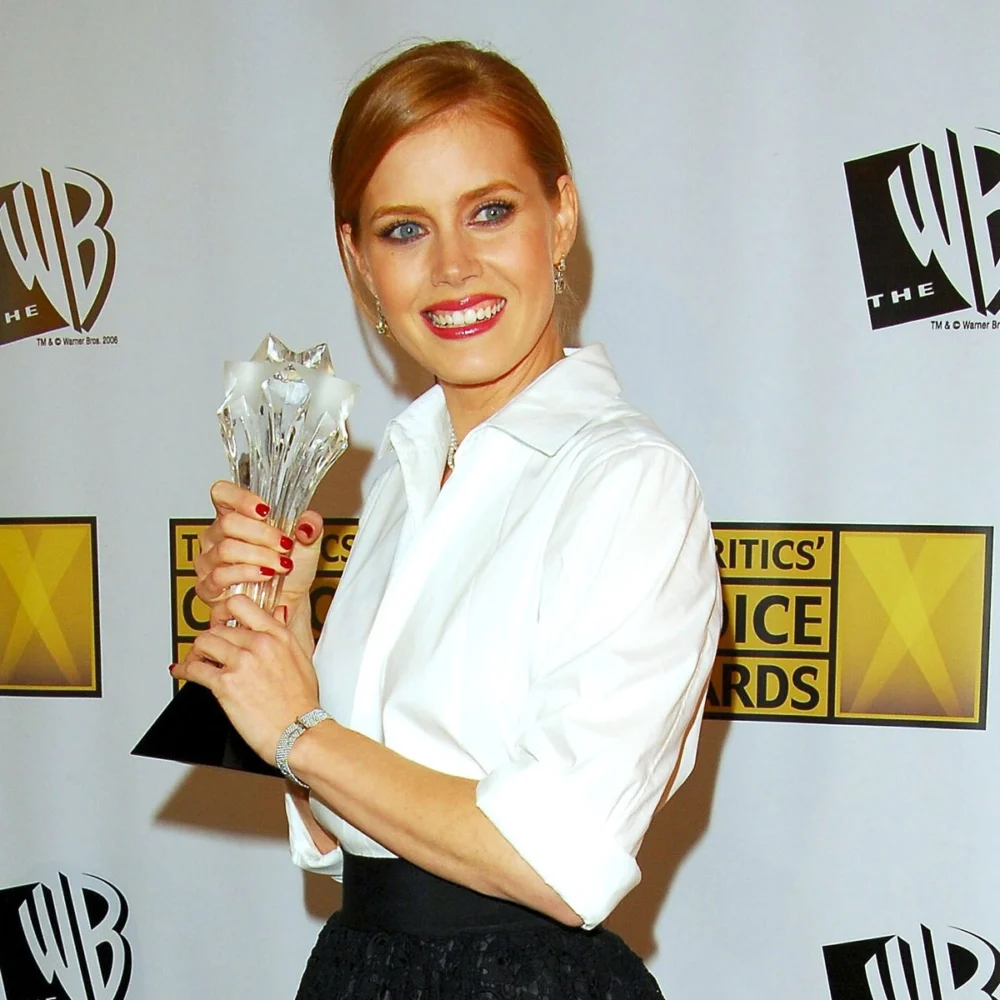
The acting categories that year were equally stacked with talent that would define a generation. In a rare and memorable moment of consensus, the Best Supporting Actress award resulted in a tie between two women who would go on to become industry titans. Michelle Williams was honored for her devastating turn in "Brokeback Mountain," while Amy Adams received equal acclaim for her breakout performance in the indie darling "Junebug." This tie served as a symbolic passing of the torch, identifying two actresses who would remain at the forefront of the awards conversation for the next twenty years.
The leading roles in 2006 were claimed by performers who fully immersed themselves in the lives of historical figures. Philip Seymour Hoffman, the late and deeply missed virtuoso, took home the Best Actor award for his uncanny portrayal of Truman Capote in "Capote." His win remains a benchmark for biographical performances. On the female side, Reese Witherspoon solidified her status as a powerhouse by winning Best Actress for her portrayal of June Carter Cash in "Walk the Line." Her win was not just a victory for her performance, but a celebration of the film’s ability to bridge the gap between the past and the present—a theme that continues to resonate as we look back from the vantage point of 2026.
Perhaps the most heart-tugging moments of the 2006 ceremony came from the "Young Actor" and "Young Actress" categories, which featured faces that are now legendary. Dakota Fanning, who is now 31 years old and a seasoned veteran of the industry, was just 11 when she stood at the podium to accept her second Critics Choice Award. Having previously won at the age of seven for "I Am Sam," her 2006 win for Steven Spielberg’s "War of the Worlds" was a testament to her precocious talent. Despite her growing experience, she still required a step stool to reach the microphone—a charming visual that became one of the night’s most viral moments long before the age of social media.
During her acceptance speech, Fanning expressed deep gratitude toward Spielberg and her co-star, Tom Cruise. She described Cruise as a "gracious and generous man," a sentiment she has maintained throughout her adult life. In recent interviews, Fanning has fondly shared that her bond with the "Mission: Impossible" star never faded; Cruise has reportedly gifted her a pair of high-end shoes every year for her birthday since they worked together in 2005. This enduring friendship serves as a reminder of the personal connections forged behind the scenes of Hollywood’s biggest blockbusters.
The 2006 nominations for young performers also included Freddie Highmore, who won Best Young Actor for "Charlie and the Chocolate Factory." At the time, Highmore was just beginning a career that would later lead him to a long and successful run on "The Good Doctor." Looking back at the list of nominees, one finds other names that have since become household staples: Jesse Eisenberg was recognized for "The Squid and the Whale," and Daniel Radcliffe was honored for "Harry Potter and the Goblet of Fire." Seeing these names in the archives highlights the Critics Choice Association’s uncanny ability to identify future icons in their earliest stages.
The 2006 red carpet and ceremony were also marked by significant personal milestones for Hollywood’s A-list. Julia Roberts made a rare and highly anticipated public appearance, her first since welcoming her twins, Phinnaeus and Hazel, with husband Danny Moder. The twins are now 21, but in 2006, the world was eager to see the "Pretty Woman" star return to the spotlight. Roberts was there to honor her longtime friend and "Ocean’s Eleven" collaborator George Clooney, presenting him with the Freedom Award for his directorial work on the journalistic drama "Good Night, and Good Luck!"
The chemistry between Roberts and Clooney was on full display as Clooney accepted the honor. Ever the wit, Clooney took a moment during his speech to check in on his friend’s new life as a mother, asking Roberts, "How are the twins?" This moment of genuine friendship remains a highlight in the awards’ history. Interestingly, Clooney’s connection to that specific film came full circle just last year when he made his Broadway debut in a stage adaptation of "Good Night, and Good Luck!" Despite his decades of success on screen, Clooney admitted to being "petrified" of the stage, noting that he hadn’t performed in a play in 40 years. His willingness to take such a risk late in his career mirrors the spirit of the Freedom Award he received two decades prior.
The 2006 ceremony also captured snapshots of couples and ensembles that defined the era. Brendan Fraser and then-wife Afton Smith attended together, months before the birth of their youngest son, Leland Francis Fraser. Reese Witherspoon and Jake Gyllenhaal, who starred together in "Rendition," were seen chatting inside the Santa Monica Civic Auditorium. While they wouldn’t confirm their romance until a year later, the 2006 ceremony captured the early sparks of a relationship that would fascinate the public until their split in 2009.
Musical theater also had a significant seat at the table in 2006. Long before the 2026 "Wicked" craze, the film adaptation of "Rent" was the talk of the town. Cast members like Taye Diggs, Rosario Dawson, and Tracie Thoms brought the energy of Broadway to the Critics Choice stage, earning three nominations and celebrating the enduring power of the late Jonathan Larson’s work. In the comedy categories, Judd Apatow’s "The 40-Year-Old Virgin" took home the top prize, signaling the rise of a new brand of relatable, R-rated humor that would dominate the late 2000s. Apatow was joined by his wife, Leslie Mann, for a "parents’ night out," leaving their young daughters Maude and Iris—now stars in their own right—at home.
Other notable winners from that evening included Paul Giamatti, who earned Best Supporting Actor for "Cinderella Man," and Ludacris, who represented the star-studded ensemble of "Crash" in a quintessentially mid-aughts outfit featuring a bold blazer and red trousers. Angela Bassett and Emmy Rossum also graced the event, with Rossum serving as a presenter after her own win the previous year for "The Phantom of the Opera."
As we look toward tonight’s winners for the 2026 Critics Choice Awards, the parallels are striking. Just as "Brokeback Mountain" and "Walk the Line" defined the cultural conversation in 2006, today’s nominees are grappling with the complexities of the human experience in a rapidly changing world. The stars of today, from the veterans to the newly discovered "young actors," stand on the shoulders of those who gathered in Santa Monica twenty years ago. The ceremony remains a vital celebration of artistic achievement, proving that while the technology and the categories may evolve, the heart of storytelling remains as vibrant as ever.