


SPOILER ALERT: This article contains major spoilers for Sam Raimi’s “Send Help,” now playing in theaters. Proceed with caution if you wish to experience the film unspoiled.
From Corporate Victim to Island Empress: Unpacking the Brutal Twists of Sam Raimi’s “Send Help”
Sam Raimi, the visionary director known for his distinctive blend of horror, dark humor, and psychological tension, delivers another masterclass in suspense with “Send Help.” Penned by the adept screenwriting duo Damian Shannon and Mark Swift, the film, now thrilling audiences in theaters courtesy of 20th Century Studios, is a relentless rollercoaster of shocking moments and moral ambiguity. For those who find themselves too apprehensive to brave the big screen — perhaps still reeling from multiple viewings of “Melania” — or simply wish to dissect the narrative intricacies, we’ve meticulously broken down every pivotal event in this gripping thriller. Prepare to delve into the heart of darkness, where corporate ambition collides with primal survival instincts, and the line between victim and villain blurs beyond recognition.
The Boardroom Battlefield: A Genesis of Grievance
At the core of “Send Help” lies Linda Liddle, portrayed with compelling depth by the ever-versatile Rachel McAdams. Linda is not merely an employee; she is a titan of her field, a brilliant mind with an unparalleled acumen for numbers. Her dedication and expertise had earned her a clear promise from the late CEO: a coveted Vice President position, a well-deserved ascent in the corporate hierarchy. This promise, however, becomes a cruel mirage with the arrival of Bradley Preston (Dylan O’Brien), the quintessential “nepo baby” CEO. Bradley, oblivious to Linda’s capabilities and dismissive of her track record, embodies the worst aspects of inherited privilege. His entitlement is palpable, his disregard for meritocratic principles infuriatingly blatant.
In a move that epitomizes the casual sexism and systemic injustice many women face in the corporate world, Bradley bypasses Linda, handing her long-awaited VP role to a “douchey college buddy.” The insult is compounded by his condescending “invitation” for Linda to join him and his cronies on an international trip. Her purpose? To “help do work” while the men indulge in leisurely rounds of golf. This initial setup is crucial; it establishes Linda’s deep-seated resentment and the profound professional humiliation she endures. Her brilliance is not just overlooked; it’s actively exploited and dismissed, planting the seeds for a dangerous reckoning that no one — least of all Bradley — could foresee. The film masterfully taps into a collective frustration experienced by countless women who have been underestimated, sidelined, or had their contributions appropriated in male-dominated environments.
Crash Landing into Chaos: The Island as an Equalizer
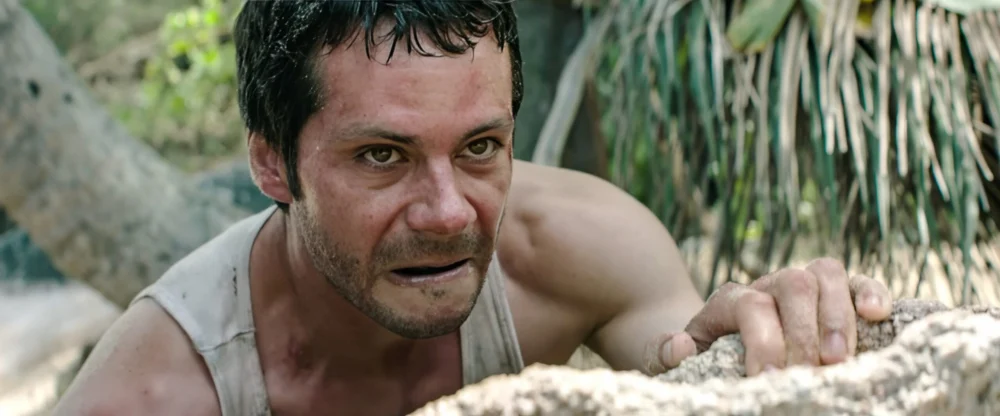
The turning point arrives abruptly and violently. The private plane carrying Linda, Bradley, and presumably his associates, plunges from the sky. In a cruel twist of fate, or perhaps a stroke of poetic justice, Linda and Bradley emerge as the sole survivors, cast adrift on a remote, unforgiving island. The immediate aftermath of the crash serves as a brutal equalizer. The corporate titles, the inherited wealth, the patriarchal power structures — all are rendered meaningless against the stark reality of survival. Bradley, accustomed to a life of luxury and effortless comfort, finds himself utterly helpless. His leg injured, his outdoor skills non-existent, he is a man stripped of his perceived authority.
Conversely, the island becomes Linda’s unlikely domain. Her “Survivor” fandom, once a mere hobby, transforms into an invaluable skillset. Where Bradley is useless, Linda is a force of nature. She possesses an encyclopedic knowledge of wilderness survival, honed through countless hours spent immersed in adventure books and reality TV. Her proficiency is astounding: she quickly establishes a rudimentary shelter, conjures fire from raw materials, and begins crafting increasingly sophisticated tools — hats, backpacks, anything necessary to mitigate the island’s harshness. This immediate reversal of roles is deeply satisfying, presenting Linda not as a victim, but as an extraordinarily capable individual whose true potential was stifled by the corporate world. The island, in its indifference, offers her a canvas to paint a new destiny, free from the confines of Bradley’s patronizing gaze.
The Shifting Sands of Power: A Dangerous Dance
Despite Linda’s undeniable competence and Bradley’s complete dependence on her, his ingrained arrogance proves remarkably resilient. Even in the face of imminent death, he continues to treat Linda with the same rude, bossy demeanor he exhibited in the office. The island may have stripped him of his power, but it hasn’t yet purged him of his entitled attitude. This dynamic is a critical element of the film’s psychological tension. Linda, though providing for his every need, eventually reaches her breaking point. She abandons him, a calculated move designed to force a painful realization. Bradley, left to fend for himself, quickly grasps the gravity of his situation. His survival is entirely predicated on Linda’s will. A desperate apology follows, and for a fleeting period, a fragile peace descends upon their strained relationship.
However, this truce is merely a prelude to a far more sinister game. As Linda, now more mobile, explores the island, she makes a crucial discovery: boats occasionally pass tantalizingly close to the shore. A rescue is possible, within reach. But the film takes a dark turn here, revealing Linda’s burgeoning embrace of her newfound authority. She keeps this vital information to herself, savoring her role as the undisputed leader, the architect of their survival. The power she wields on this desolate island is intoxicating, a stark contrast to the powerlessness she experienced in the corporate world. This decision marks a pivotal shift in her character, transforming her from a pragmatic survivor into a calculating manipulator, willing to sacrifice escape for control.
Escalation and Retribution: A Tit-for-Tat of Terror
The veneer of civility between Linda and Bradley quickly erodes. Bradley, despite his outward warmth, begins to suspect Linda’s true intentions, sensing her reluctance to seek rescue. His paranoia leads to a truly shocking act of betrayal: he prepares a meal for Linda, laced with poisonous berries, temporarily incapacitating her. His plan is to use her vulnerability to escape on a makeshift raft, a pathetic attempt that almost immediately leads him to the brink of death. Linda, in a display of twisted mercy or perhaps strategic self-preservation, saves him once more. This incident, however, ignites a fuse within Linda, setting her on a path of chilling retribution.
Her response is swift, brutal, and psychologically devastating. Linda feeds Bradley a poisonous fish, careful to choose a variant that paralyzes him, leaving his mind and eyes agonizingly clear and conscious. It’s a torment designed to break him, to make him fully comprehend his absolute helplessness. In a scene that will undoubtedly leave audiences gasping, she then stages a mock castration, drawing a knife and “performing” the act — only to reveal that she was merely killing a rat. The psychological impact on Bradley is profound, and the message from Linda is crystal clear: she is not to be trifled with. Her actions transcend mere survival; they are a deliberate assertion of dominance, a terrifying display of control over life and death itself. This moment cements Linda’s transformation into a formidable, morally ambiguous force.
The Uninvited Guest and a Ruthless Elimination
Weeks after the plane crash, the island’s isolation is shattered by an unexpected arrival. Bradley’s fiancée, Zuri (Edyll Ismail), driven by love and concern, has hired a private guide and embarked on a perilous journey to find him. Her devotion, however, seals her tragic fate. While traversing a treacherous, winding mountain trail, Zuri loses her footing. As the private guide attempts to save her, Linda, hidden in the dense foliage, emerges with a terrifying resolve. She attacks the guide, sending both him and Zuri plummeting to their deaths.
This act is a chilling testament to Linda’s complete immersion in her island persona. Zuri represents a link to Linda’s old life, a potential disruptor to her carefully constructed dominion. Linda eliminates the threat with cold efficiency, demonstrating a disturbing lack of empathy. Soon after, Bradley discovers Zuri’s hand, still adorned with her engagement ring, washing up in the surf. The gruesome discovery confirms his worst fears: Linda is a murderer. The fragile remnants of their relationship shatter, giving way to a desperate, primal brawl.
The Mansion’s Secret and a Golf Club’s Justice
In a desperate attempt to escape Linda, Bradley flees towards a part of the island she had explicitly warned him against, citing dangerous poisonous plants. His flight, however, leads him to an astonishing revelation: there is a colossal mansion nestled deep within the forbidden territory. This grand estate, owned by an absentee billionaire, is not just a structure; it’s the source of the boats Linda had secretly observed. The truth dawns on Bradley: Linda has been accessing supplies from this opulent hideaway for weeks, meticulously maintaining her facade of desperate survival.
Linda quickly catches up, confronting Bradley inside the mansion. The tables are once again turned, but this time, the stakes are final. Bradley, in a last-ditch effort to reclaim control, attempts to kill her. But Linda is quicker, grabbing a shotgun from within the luxurious confines of the home and aiming it directly at him. In his final, pathetic moments, Bradley begs for his life, uttering hollow promises of being a “changed man” and even declaring his love for her. Linda, however, is long past believing his lies. Her expression is one of cold, unwavering resolve. As he scrambles for the gun, he discovers it’s empty — another one of Linda’s cruel, calculated deceptions. With a chilling finality, Linda picks up a golf club, a symbol of Bradley’s privileged past, and brutally beats him to death. The circle of corporate injustice and island revenge is complete.
The Celebrity Survivor: Crafting a New Reality
The film’s epilogue, set one year later, is perhaps its most unsettling and thought-provoking segment. We find Linda Liddle not in a prison cell, but on a pristine golf course, participating in a celebrity tournament. She is radiant, poised, and utterly transformed. To reporters, she speaks of her thrilling escape, her harrowing “survival” story, and her excitement that her memoir — a carefully curated narrative of resilience and triumph — is being adapted into a major motion picture. She even mentions writing a self-help book, undoubtedly brimming with platitudes about overcoming adversity.
As she drives away in a luxurious car, living a life of celebrity and financial success, the credits roll. Linda has not only survived the island; she has mastered the art of narrative control. She has successfully rewritten her own history, transforming herself from an overlooked corporate employee into a celebrated author and public figure, lauded for her strength and determination. The film leaves audiences with a lingering, uncomfortable question: has Linda found justice, or has she merely become the very thing she despised — a ruthless opportunist, albeit one who built her empire on a foundation of blood and deception? “Send Help” is a powerful, disturbing commentary on ambition, the masks people wear, and the often-unseen savagery lurking beneath the veneer of civilization. It’s a film that demands discussion, forcing viewers to confront their own definitions of right and wrong, and the chilling satisfaction of watching a woman reclaim her power, no matter the cost.