

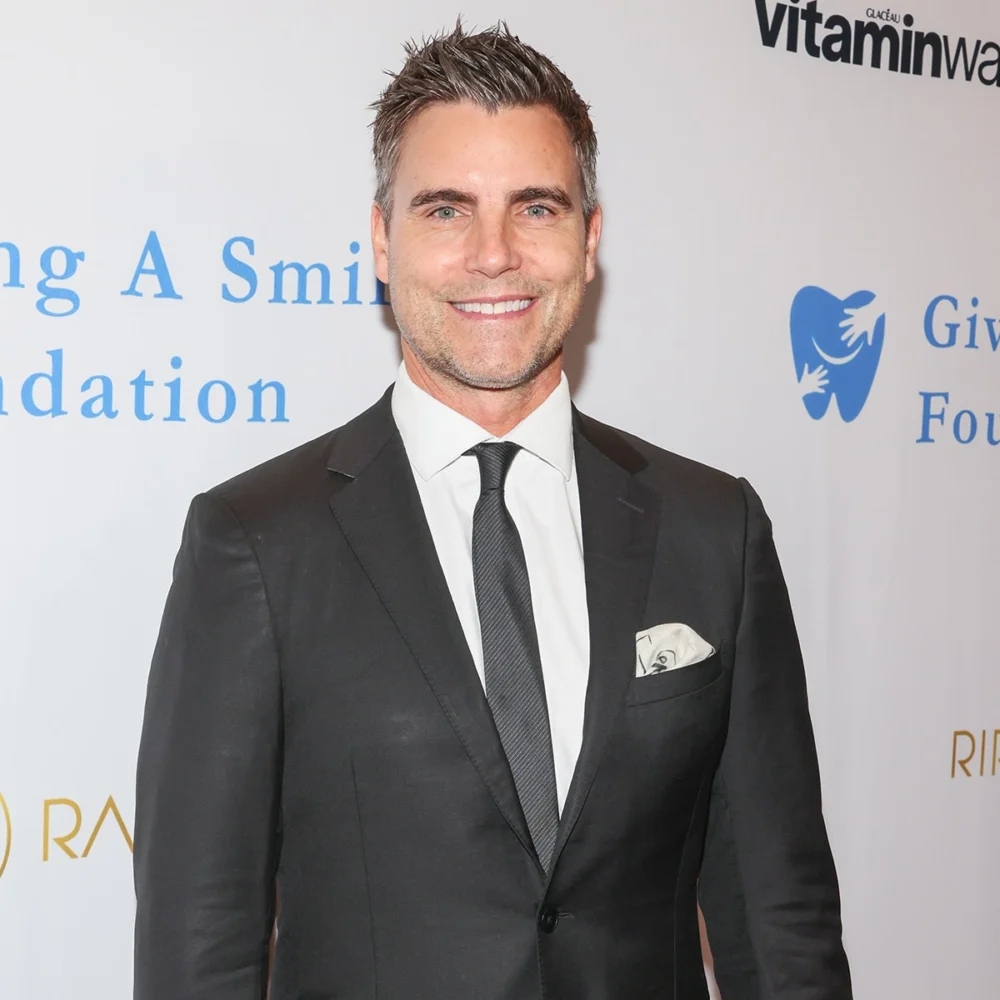
The journey of a Hollywood leading man is often characterized by a curated image of vitality and effortless charm, yet for Colin Egglesfield, the reality behind the scenes has been defined by a grueling, decade-long confrontation with his own mortality. At 52, the actor, beloved for his roles in Something Borrowed and All My Children, is stepping into a new chapter of his life—one marked by the profound relief of being cancer-free. This milestone comes after a third cancer diagnosis in early 2024, a challenge that tested his resilience but ultimately reinforced his commitment to health advocacy and the importance of early medical intervention.
In January 2024, Egglesfield received the news that he was facing prostate cancer. This diagnosis was a sobering echo of his past; the actor had previously battled testicular cancer twice, once in 2006 and again in 2007. However, the circumstances of this third fight were different. Having learned the hard way about the dangers of delay, Egglesfield acted swiftly. He underwent a prostatectomy shortly after the diagnosis, a move that proved life-saving. Reflecting on his current status, he shared that he has been living without the disease for nearly a year, with the one-year anniversary of his surgery approaching this February. The timing was critical; because the cancer was caught in its infancy, he was able to forgo the debilitating effects of radiation and chemotherapy—treatments he was desperate to avoid after his previous experiences.
The contrast between his recent recovery and his initial battle is stark. Back in 2006, Egglesfield admitted he waited until it was almost too late, allowing the cancer to spread to his lymph nodes. That delay necessitated intensive radiation, a process that left a lasting impression on his psyche. This time, the physical recovery has presented its own set of unique hurdles, including the humbling process of regaining basic bodily functions and addressing the complexities of erectile health. Despite these challenges, Egglesfield remains deeply grateful. He views the ability to move forward without the shadow of the disease looming over his future as a gift, one that has spurred him to help others navigate their own life-altering transitions.
Today, Egglesfield has pivoted his focus toward motivational speaking and his "Inspire Rejuvenation Retreats." His message is rooted in the "urgency of life," a philosophy that emphasizes that fulfillment must come from within rather than from external validation. He encourages his clients to view themselves as the screenwriters of their own lives, empowering them to "rewrite the script" when they feel stuck or unfulfilled. By stepping into the role of the "hero character," he believes anyone can create the legacy they desire, regardless of the hardships they have endured.
Egglesfield’s transparency is part of a growing trend among public figures who are dismantling the stigma surrounding illness. For many celebrities, the pressure to remain "camera-ready" often leads to a culture of silence, but a rising number of stars are now using their platforms to shed light on the physical and emotional realities of health crises. This vulnerability is particularly resonant in women’s health, where issues like reproductive disorders and body image are frequently shrouded in shame.
Lupita Nyong’o, for instance, recently broke a decade-long silence regarding her struggle with uterine fibroids. Diagnosed in 2014—the same year she celebrated an Academy Award win—the actress spent years "suffering in silence." Her decision to speak out was driven by a desire to challenge the normalization of female pain. She noted that women are often taught from puberty that intense pain is simply an inherent part of their biology, leading many to endure treatable conditions without seeking help. Similarly, Nikki Garcia has been candid about the intersection of her professional wrestling career and her physical health. After a 2025 wrestling injury caused a breast implant to shift significantly, Garcia spoke openly about the need for corrective surgery, balancing the demands of her career with the reality of her "newly divorced" life and her future health goals.
The unpredictability of health is a theme that resonates through many Hollywood stories. Hailey Bieber experienced a terrifying medical emergency in 2022 when she suffered a "mini-stroke" or Transient Ischemic Attack (TIA) while having breakfast. The ordeal led to the discovery of a patent foramen ovale (PFO)—a hole in her heart—which required a surgical closure. Not long after, her husband, Justin Bieber, faced his own crisis with Ramsay Hunt syndrome, which caused temporary facial paralysis and forced the cancellation of his world tour. Their shared year of medical scares highlighted the fact that even those at the pinnacle of fame and youth are not immune to sudden, life-changing ailments.
The narrative of recovery often involves a long-term commitment to healing, as seen in the experiences of Shailene Woodley and Adam Devine. Woodley spent a decade battling a mysterious chronic illness that left her unable to walk for more than a few minutes and sparked a difficult journey with body dysmorphia and a fear of food. By integrating both holistic practices and traditional medicine, she eventually found her way back to health, describing the resolution as a physical and mental triumph. Adam Devine’s health journey dates back even further, to a childhood accident involving a cement truck. Decades later, the actor still grapples with the long-term effects of those injuries, including muscle spasms and recent scares where doctors feared for his life.
In some cases, the public nature of a celebrity’s life can even lead to a diagnosis. Amy Schumer discovered she had Cushing syndrome after the internet scrutinized her "puffy" face during a press tour. While the comments were initially hurtful, they led her to consult doctors who identified that her steroid injections for scar tissue were causing a spike in cortisol. Finding out that her condition was manageable and not life-threatening was, in her words, the "greatest news imaginable."
The reality of health crises also extends to the high-stakes world of sports and reality television. Savannah DeMelo, a star for the United States Women’s National Team, gave fans a scare when she collapsed mid-game in September 2025. While she was stabilized quickly, the incident served as a reminder of the extreme physical toll of professional athletics. Similarly, Tracey Yukich, a former contestant on The Biggest Loser, recounted a harrowing experience where her organs began to shut down due to rhabdomyolysis during a challenge. Her story of "dying" and being resuscitated on the field remains one of the most sobering accounts of the risks associated with extreme physical transformation.
From Jamie Foxx’s terrifying 20-day memory gap following a brain bleed to Emilia Clarke’s survival of two life-threatening brain aneurysms during the height of her Game of Thrones fame, these stories underscore a universal truth: health is a fragile, precious commodity. Clarke’s account of having to undergo invasive surgery through her skull and relearning how to speak after experiencing aphasia is a testament to the human spirit’s ability to endure.
As Colin Egglesfield looks toward a future free of cancer, he does so with the wisdom of a man who has stared down his fears three times. His story, much like those of his peers, is no longer just about the diagnosis; it is about the reclamation of life. By sharing the "messy" parts of recovery—the bathroom issues, the fear, and the setbacks—these public figures are offering a roadmap for others. They prove that while the script of life can be interrupted by tragedy, the power to rewrite the ending remains firmly in the hands of the survivor. Through gratitude, early detection, and the courage to look inward, Egglesfield and others are turning their private battles into public legacies of hope and resilience.