



As the cinematic world converged on Park City, Utah, for the annual Sundance Film Festival, one title emerged with a particular blend of whimsical fantasy and profound social commentary, promising to be a standout: “Wicker.” This highly anticipated film, boasting an ensemble cast led by Oscar-winner Olivia Colman, Alexander Skarsgard, Elizabeth Debicki, and Peter Dinklage, offers a fresh, enchanting, and ultimately incisive look at love, societal judgment, and the courage to forge one’s own path. Directed by the married filmmaking duo Alex Huston Fischer and Eleanor Wilson, “Wicker” isn’t just a fantasy; it’s a meticulously crafted exploration of human desire and the often-cruel pressures of conformity, all wrapped in a visually stunning package that has already begun to generate significant buzz.
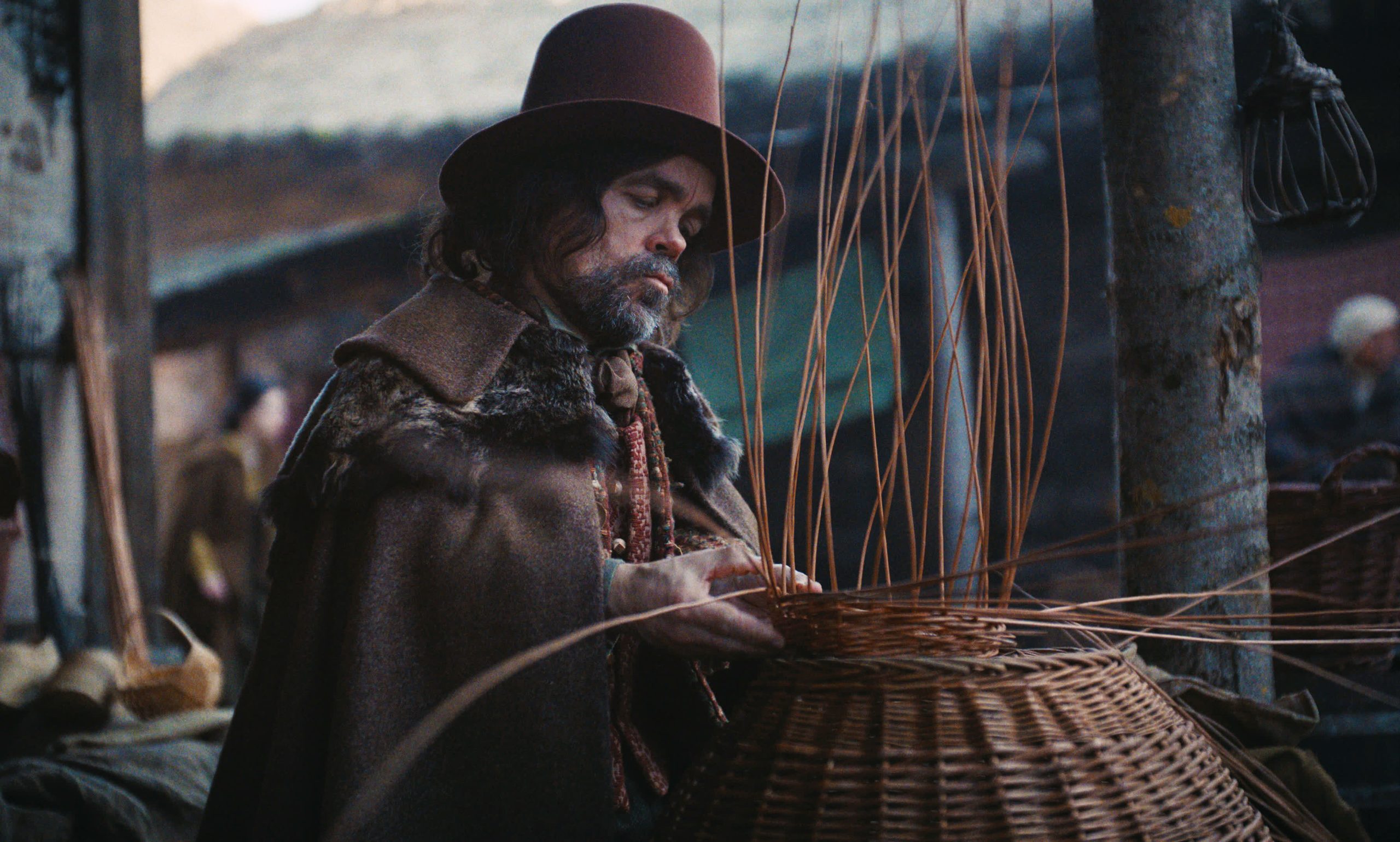
The premise of “Wicker” is as unique as it is resonant. Based on Ursula Wills-Jones’ acclaimed short story, “The Wicker Husband,” the narrative transports audiences to a fantastical, quasi-feudal world where the protagonist, a woman ostracized and frequently mocked by her community, takes an extraordinary step. Tired of isolation and the conventional avenues for companionship, she commissions a skilled basket weaver to construct a husband for her. This isn’t merely a doll or an effigy; through a touch of magic, the woven creation comes to life, evolving into a devoted, loving, and remarkably supportive partner. As her unconventional happiness blossoms, however, it inevitably draws the gaze of her narrow-minded neighbors, sparking a dangerous cocktail of jealousy, malice, and a fervent desire to enforce their rigid societal norms. The story, therefore, delves deeply into themes of enduring love in the face of adversity, the insidious nature of cruelty, and the relentless pressure to conform.
For many women navigating the complexities of modern relationships, the film’s core concept might strike a surprisingly familiar chord, albeit with a fantastical twist. Imagine the exasperation of endless swiping on dating apps like Hinge or Raya, the fatigue of superficial interactions, and the yearning for genuine connection. “Wicker” playfully, yet poignantly, posits an alternative: what if, instead of sifting through digital profiles, one could simply approach a master artisan and request a partner tailored to one’s deepest needs and desires? This delightful subversion of conventional romance underpins the film’s immediate appeal, inviting audiences to ponder the true essence of partnership beyond superficial appearances or societal expectations.
The stellar cast assembled for “Wicker” is undoubtedly a major draw. Olivia Colman, renowned for her transformative performances in everything from “The Favourite” to “The Crown,” takes on the central role of the lonely woman. Colman’s unparalleled ability to convey profound vulnerability, quiet strength, and a nuanced emotional landscape makes her an ideal choice to embody a character who defies convention in her quest for love. Her portrayal is expected to anchor the film, providing an empathetic lens through which to view her extraordinary journey and the subsequent backlash she faces.
Joining Colman is Peter Dinklage, who portrays the enigmatic basket weaver. Dinklage, an Emmy and Golden Globe winner celebrated for his roles in “Game of Thrones” and “Cyrano,” brings a gravitas and understated wisdom to his characters. His presence suggests a depth to the artisan beyond mere craftsmanship, hinting at the quiet power and insight required to bring such an unusual request to life. Alexander Skarsgard, known for his charismatic performances in “Big Little Lies” and “The Northman,” takes on the pivotal role of the gorgeous woven companion. The challenge for Skarsgard will be to imbue a non-human creation with warmth, devotion, and a captivating allure, making the audience believe in his genuine connection with Colman’s character. His casting emphasizes the visual appeal and compelling nature of the “wicker husband,” making his presence a source of both wonder and envy within the story. While her specific role is yet to be fully detailed, the inclusion of Elizabeth Debicki, an actress known for her striking presence in “The Crown” and “Tenet,” further elevates the ensemble, promising rich character dynamics and potentially adding another layer to the film’s exploration of societal interplay.
At the heart of “Wicker” is the directorial vision of Alex Huston Fischer and Eleanor Wilson, a married filmmaking team whose collaborative approach brings a unique intimacy to a story about relationships. Wilson eloquently articulated the film’s thematic core to Variety, stating, “It’s a very dressed-up movie about relationships and marriage. That’s really fun to kind of dig into all the desire and the envy, repression and misogyny.” This statement reveals the film’s ambition: to use the fantastical backdrop not merely for escapism, but as a heightened canvas to dissect the very real, often uncomfortable truths about human interaction, particularly within the confines of a community. The exploration of desire, not just romantic but also the desire for acceptance and belonging; the corrosive nature of envy and resentment; the societal repression of unconventional choices; and the pervasive undertones of misogyny that often target women who dare to step outside prescribed roles – these are the potent themes “Wicker” promises to unpack.
A crucial element in realizing the film’s fantastical premise is the creation of the wicker husband himself. The filmmakers understood that for audiences to invest in the love story, the woven companion needed to be utterly convincing, both as an artisanal marvel and as a captivating presence. For this formidable task, they enlisted the legendary Weta Workshop, the New Zealand-based special effects and prop company celebrated globally for their groundbreaking work on films like “The Lord of the Rings” trilogy, “Avatar,” and “Blade Runner 2049.” Weta’s involvement immediately signals a commitment to unparalleled craftsmanship and visual authenticity, a testament to the film’s ambition.
Alex Huston Fischer elaborated on the critical role of Weta Workshop, explaining, “We worked with WETA, the best people in the world. We engaged them really early, which was huge, because we knew that we needed to be able to show people what this was going to look like. It’s important to get the audience on board with the idea. We need to know this creation looks like the actor, and that he would be stunning.” This early collaboration allowed for extensive development, ensuring that Skarsgard’s costume transcended mere prop status to become a character in its own right. The sheer scale of the effort underscores this commitment: the costume for the wicker husband reportedly required the meticulous work of approximately 50 people. Such an intensive creative process is a testament to the filmmakers’ dedication to both practical effects and narrative integrity, ensuring that the visual spectacle serves the story rather than overshadowing it. The grand reveal of this intricate costume at the film’s Friday premiere at Sundance was undoubtedly a moment of significant anticipation, promising to be a visual highlight of the festival.
Beyond the compelling narrative and star power, “Wicker” also benefits from a distinguished crew behind the camera. Oscar-winner Lol Crawley, known for his evocative cinematography in films like “The Brutalist” and “Four Lions,” serves as the director of photography. Crawley’s keen eye for atmosphere and his ability to craft visually distinct worlds will undoubtedly contribute to the film’s unique aesthetic, marrying the fantastical elements with a grounding sense of reality. His involvement suggests a film that is not only thematically rich but also a feast for the eyes, perfectly capturing the delicate balance between the rustic feudal setting and the magical realism inherent in the story.
Making its debut at the Sundance Film Festival places “Wicker” in a prime position within the independent film landscape. Sundance is renowned as a launching pad for innovative and thought-provoking cinema, often serving as a crucial platform for films seeking distribution. The buzz surrounding “Wicker” at the festival, amplified by its stellar cast and intriguing premise, will be instrumental in attracting potential buyers and ensuring its wider release. For a film that challenges conventions and explores complex human emotions through a fantastical lens, a strong showing at Sundance is vital for reaching a broad audience hungry for unique storytelling.
Ultimately, “Wicker” promises to be more than just a fantasy film. It is a nuanced meditation on the universal human desire for connection, the courage required to defy societal expectations, and the resilience of love in the face of prejudice. For a women-focused audience, the story’s themes resonate deeply: the pressure to conform to traditional ideals of partnership, the judgment faced by those who choose unconventional paths, and the empowerment found in defining one’s own happiness. As Olivia Colman’s character discovers profound devotion in the most unexpected of forms, the film invites us to reflect on our own perceptions of love, beauty, and what truly makes a partner “real.” “Wicker” is poised to be a conversation-starter, a visually captivating journey that asks profound questions about acceptance, belonging, and the lengths to which one will go to find a love that is truly one’s own, even if it’s woven from straw and magic.