



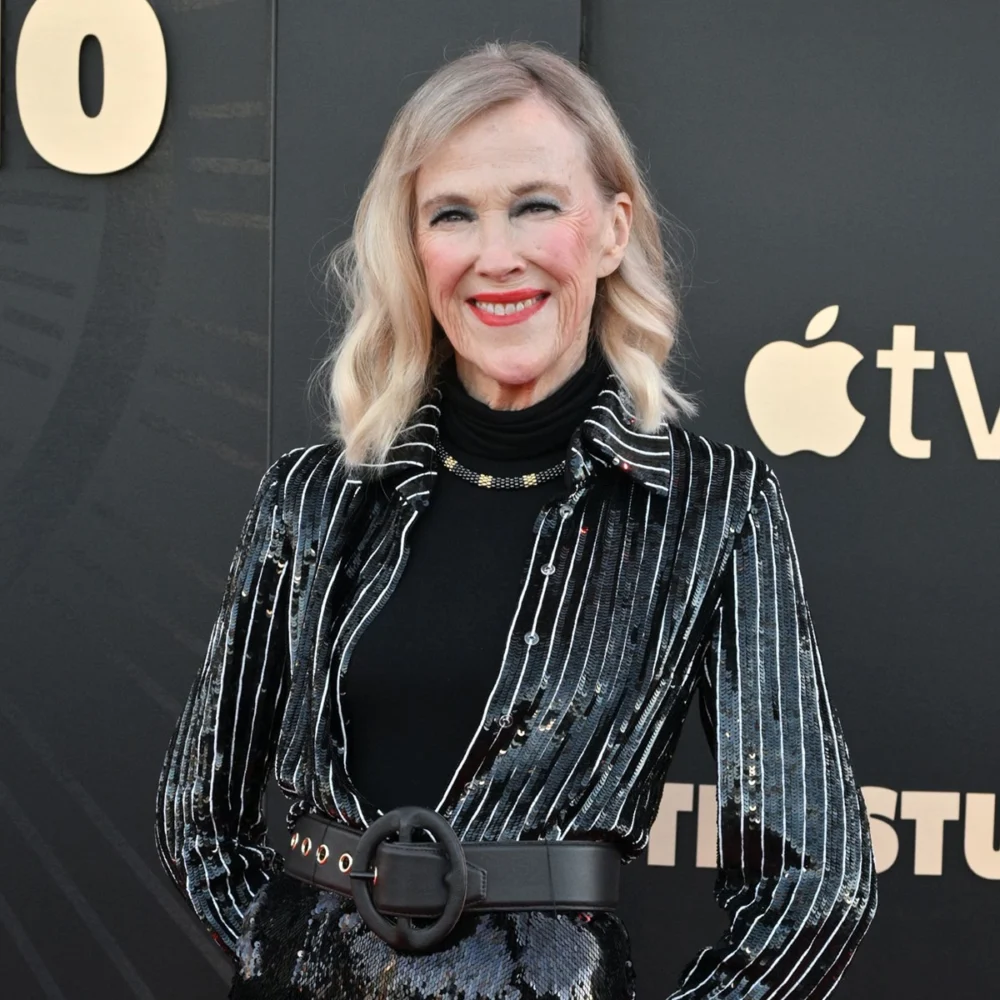
The entertainment world is currently navigating a profound sense of loss following the passing of Catherine O’Hara, the transformative actress whose career spanned five decades and redefined comedic excellence. New details have emerged regarding the final hours of the 71-year-old icon, who died in Los Angeles on January 30. While her representatives initially cited a "brief illness," recent reports from emergency responders provide a clearer, more somber timeline of the morning the world lost one of its most cherished performers.
According to records released by the Los Angeles Fire Department, emergency services were summoned to O’Hara’s residence at 4:48 a.m. on the day of her death. The call concerned an "approximately 70-year-old" female in serious condition. Upon arrival, paramedics worked to stabilize her before transporting her to a nearby hospital. Despite the efforts of medical professionals, the Schitt’s Creek star passed away later that day. While the specific nature of the illness remains private, the Creative Artists Agency (CAA), which represented the actress, confirmed that her battle was relatively short-lived. The news has sent shockwaves through the industry, particularly as O’Hara had remained active in the spotlight, recently promoting her work on the upcoming series The Studio.
O’Hara’s health had occasionally been a topic of public conversation, though she always approached the subject with her trademark wit and grace. She was born with a rare congenital condition known as situs inversus with dextrocardia. This meant that her heart and other internal organs were located on the opposite side of her body compared to the typical human anatomy. Rather than viewing this as a limitation, O’Hara often credited the condition with shaping her unique perspective on life and comedy. In a 2024 interview with Variety, she reflected on how being "inside-out" influenced her survival instincts, noting that her parents fostered an environment where laughter was the primary currency. "Looking for the light," as she put it, was not just a professional requirement but a personal philosophy.
To understand the weight of her passing, one must look at the immense footprint she left on global culture. For many, she was the quintessential "movie mom," forever immortalized as Kate McCallister in the Home Alone franchise. Her frantic "Kevin!" scream became a cultural touchstone that resonated across generations. Macaulay Culkin, who played her onscreen son, was among the first to offer a heartbreaking tribute. "Mama," he wrote in a public statement, "I thought we had time. I wanted more… I love you. I’ll see you later." His words mirrored the sentiments of millions who felt a familial connection to the actress.
However, O’Hara was far more than a single role. A titan of the Canadian comedy scene, she got her start with the legendary SCTV (Second City Television), where she honed her skills alongside other greats like Eugene Levy and John Candy. It was here that she developed her ability to inhabit characters so fully that the actress herself seemed to disappear. This talent culminated in her later-career renaissance as Moira Rose on Schitt’s Creek. As the eccentric, wig-wearing matriarch of the Rose family, O’Hara created a character that was both a caricature of high-society vanity and a deeply moving portrait of a woman rediscovering her heart. Her performance earned her an Emmy Award and cemented her status as a fashion and queer icon.
The outpouring of grief from her Schitt’s Creek family has been particularly poignant. Dan Levy, who co-created the show and played her son David, shared a moving tribute on Instagram, describing the "warm glow" of her brilliance. "Having spent over fifty years collaborating with my Dad, Catherine was extended family before she ever played my family," Levy shared. He noted that the world feels significantly smaller without her presence, a sentiment echoed by his father, Eugene Levy, and the entire cast.
Her filmography was a masterclass in versatility. From the Gothic whimsy of Tim Burton’s Beetlejuice and The Nightmare Before Christmas to the improvisational genius of Christopher Guest’s mockumentaries like Best in Show and A Mighty Wind, O’Hara was a chameleon. Michael Keaton, her longtime friend and Beetlejuice co-star, expressed his devastation, noting that she had been his "pretend wife, pretend nemesis, and real-life, true friend." Director Tim Burton also offered a succinct but powerful goodbye, stating that she was a "special part of my life and afterlife."
Beyond her professional accolades, those who worked with her frequently spoke of her immense kindness and lack of ego. Melanie Lynskey shared a story about working with O’Hara on a film set, noting that the actress treated everyone—from the director to the production assistants—with the same level of respect and genuine interest. "She was radiant; it was kind of otherworldly," Lynskey remarked. This humanity was a cornerstone of O’Hara’s reputation within the infamously fickle world of Hollywood. She managed to maintain a private, stable family life, having been married to production designer Bo Welch since 1992. Together, they raised two sons, Matthew and Luke, who survive her.
O’Hara’s influence extended beyond the borders of Hollywood, reaching the highest levels of her home country. Canadian Prime Minister Justin Trudeau issued a statement calling her a "beloved Canadian icon" who helped bring Canadian storytelling to the world. Singer Michael Bublé also weighed in, describing her as a "rare light" and an ambassador for Canada who represented the nation with "excellence and grace." He noted that she didn’t just make people laugh; she made them feel seen, a rare gift for any artist.
As the industry prepares to honor her at upcoming award ceremonies, the focus remains on the "brief illness" that claimed her life so unexpectedly. In an era where celebrities often share every detail of their personal struggles, O’Hara’s privacy in her final days felt consistent with her dignified approach to fame. She was a woman who preferred the work to speak for itself, and the work speaks volumes. From the high-camp "bébés" of Moira Rose to the grounded, desperate love of a mother in a Chicago suburb, O’Hara’s range was limitless.
Her passing marks the end of an era for comedic improv and character acting. Seth Rogen, who worked with her on her final project, The Studio, noted that she was the reason he wanted to make movies in the first place. "She was hysterical, kind, intuitive, generous," Rogen shared. "She made me want to make our show good enough to be worthy of her presence in it." This sentiment—that O’Hara elevated everything she touched—is a common thread among the hundreds of tributes that have flooded social media from stars like Rita Wilson, Jamie Lee Curtis, and Amy Schumer.
Catherine O’Hara’s legacy is one of laughter, but also of profound artistic integrity. She proved that a woman in Hollywood could be funny, beautiful, eccentric, and powerful all at once, without ever losing her sense of self. While the "brief illness" may have taken her from the physical world, her "warm glow" persists in the digital frames of the films and television shows that will continue to entertain and comfort audiences for decades to come. As the world mourns, her family—Bo, Matthew, and Luke—remains in the thoughts of the millions of fans who, like her characters, are now searching for the light in a world that feels a little darker without her. She was, as so many have stated in the wake of her death, simply "the absolute greatest."