


The age-old adage suggests that money doesn’t grow on trees, but in the digital era, it certainly seems to sprout from "likes," "shares," and "views." Throughout the last year, a phenomenon known as #RichTok has dominated social media feeds, characterized by a new breed of content creators who document every facet of their ultra-luxurious lives. From Becca Bloom’s caviar-heavy culinary adventures to the shimmering displays of Van Cleef & Arpels jewelry that saturate Instagram Stories, the display of wealth has become a primary form of entertainment. However, as the curtain is pulled back on the financial mechanics of stardom, a complex picture emerges: one where some creators rake in millions in hours, while others struggle to maintain the very lifestyles they project.
The cultural appetite for luxury content reached a fever pitch in late 2024, but it has not been without significant friction. Makeup influencer Mikayla Nogueira recently sparked a firestorm of conversation after showcasing a designer shopping haul so extensive she claimed to have "completely blacked out" during the spree. The collection, which included high-end bags, heels, and apparel from the likes of Louis Vuitton, Chanel, and Miu Miu, carried an estimated price tag of $186,000. While such displays once garnered universal awe, the tide of public opinion appears to be turning. When beauty mogul Jaclyn Hill questioned why her engagement metrics were dipping, her audience provided a blunt reality check. Commenters noted a growing "wealth fatigue," with one follower stating that it is difficult to connect with a $10,000 shoe haul when that same amount of money would be life-altering for the average person.
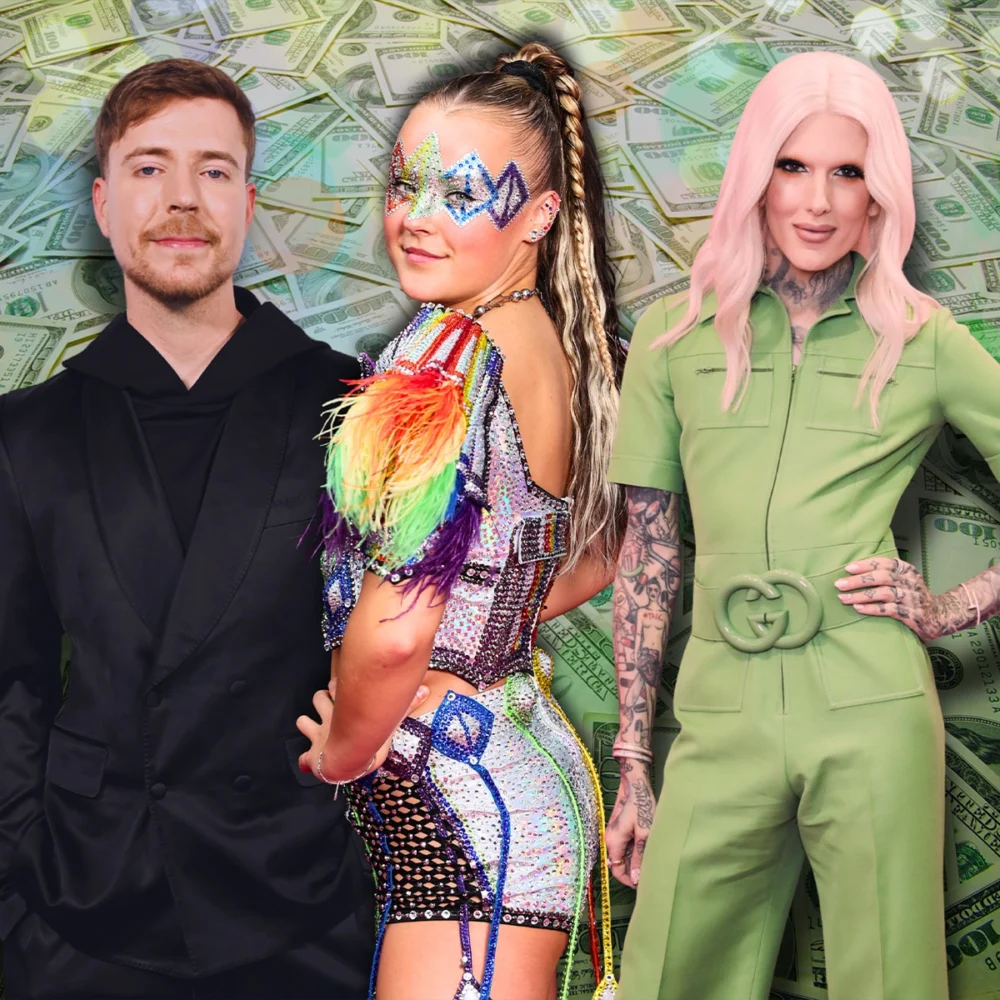
This disconnect raises a pivotal question: how much are these digital stars actually earning to sustain such opulent lifestyles? For the upper echelon of the creator economy, the figures are staggering. Many have transitioned from mere content creators to legitimate business owners. Jeffree Star, a veteran of the beauty industry who launched his eponymous brand over a decade ago, has found a new gold mine in TikTok Live. Star revealed that he can earn upwards of $50,000 during a single live stream. Interestingly, these earnings aren’t always tied to high-production sales pitches. Star noted on the Cancelled podcast that he sometimes makes that $50,000 just by "making bacon" in his bathrobe while chatting with fans and answering questions. The revenue flows in through a combination of direct product sales and "gifts"—digital currency purchased by fans and sent to the creator in real-time.
Brand partnerships remain the traditional backbone of influencer income, and the rates for top-tier talent have reached astronomical heights. Alix Earle, who has become the blueprint for the modern "it-girl" influencer, reportedly commands $450,000 for a single Instagram Story. This figure was disclosed by Vickie Segar, founder of the marketing agency Article 41, during a presentation at the University of North Carolina. Such a rate highlights the premium brands are willing to pay for direct access to a highly engaged, loyal audience.
However, the most explosive financial growth in recent years has occurred on adult-oriented platforms like OnlyFans. The subscription-based model allows creators to bypass traditional brand gatekeepers and monetize their likeness directly. Lily Phillips, who became a viral sensation after a highly publicized event in late 2024, confirmed to news outlets that her earnings are now "in the millions." The scale of success on the platform is even more evident in the case of Sophie Rain, who shared documentation proving she earned over $43 million in a single twelve-month period. One single subscriber reportedly accounted for $4.7 million of that total. Even younger creators are seeing immediate windfalls; Lil Tay claimed to have generated over $1 million in revenue within just three hours of launching her account upon turning 18 in August 2025.
Despite these headline-grabbing numbers, the influencer economy is not a guaranteed path to riches for everyone. There is a vast "middle class" of creators who, while successful by traditional standards, face significant overhead and fluctuating income. Ariana Biermann, daughter of reality star Kim Zolciak-Biermann, has been transparent about the hustle required to maintain a life in New York City. Despite having been in the industry since age 14, Biermann revealed that she currently earns about $1,000 per sponsored TikTok post. While lucrative compared to many entry-level jobs, it illustrates the gap between a rising influencer and a superstar like Alix Earle.
Even legacy celebrities have found the transition to social media monetization to be a double-edged sword. Heidi Montag and Spencer Pratt, famous for their roles on The Hills, turned to TikTok following the devastating Los Angeles wildfires of 2025 to recoup financial losses. While rumors circulated that the couple was earning millions a week, Spencer Pratt clarified the reality: in one particularly active week involving 5,000 videos, the payout was only $3,500. This disparity underscores a crucial truth about platform algorithms—high volume does not always equate to high value.
For some, the goal is not necessarily liquid wealth but long-term enterprise value. Jimmy Donaldson, better known as MrBeast, is perhaps the most successful YouTuber in history, boasting over 430 million subscribers. In early 2025, he acknowledged that he is a billionaire "on paper," yet his personal bank account often holds less than a million dollars. His strategy is one of constant reinvestment, pouring every cent of profit back into the astronomical production costs of his videos to ensure continued growth. This "all-in" approach has turned his channel into a global conglomerate, but it requires a level of financial risk that few others can afford.
On the other end of the spectrum is the "passive income" model. Julia, the ASMR creator known as @itsblitzzz, shared a refreshing look at the longevity of digital content. Without posting a single new video, she continues to earn approximately $56,400 a year in ad revenue from her existing catalog. Over 14 years, she has accumulated more than $610,000 from YouTube ads alone, proving that a dedicated niche audience can provide financial stability long after the initial viral moment has passed.
The diversity of income streams is further evidenced by creators like JoJo Siwa and Markell Washington. Siwa, who began her career as a child star, was already earning six figures a month from YouTube by age 13. Today, she maintains her relevance through a grueling schedule, sometimes posting up to 300 times a day on Snapchat to capitalize on the platform’s revenue-sharing programs. Similarly, Washington, known for his viral dance content, brings in between $500,000 and $700,000 annually, largely through Snapchat’s mid-roll advertisements and strategic brand deals.
Niche influence is also proving to be highly profitable. Gigi Robinson, a chronic illness advocate, earns an impressive $150,000 a year despite having a relatively modest following of 40,000 on Instagram. Her success demonstrates that brands are increasingly looking for "micro-influencers" who possess deep trust and authority within specific communities, rather than just massive follower counts. This sentiment is echoed by comedian Ben Brainard, who can charge up to $10,000 for a single sponsored video, and ASMR creator King Caitlin, who generates several thousand dollars a month across TikTok and YouTube by catering to a specific sensory audience.
Ultimately, the world of social media influence is far less standardized than it appears through a smartphone screen. While the #RichTok aesthetic suggests an effortless climb to the top, the financial reality is a spectrum ranging from billionaire entrepreneurs and multi-million-dollar subscription stars to creators working multiple angles just to pay the rent in a major city. As audiences become more critical of "wealth-flexing," the creators who survive the shift will likely be those who can balance the allure of the high life with the transparency and authenticity that followers are now beginning to demand. For the modern influencer, the real challenge isn’t just making the money—it’s staying relatable enough to keep it.