

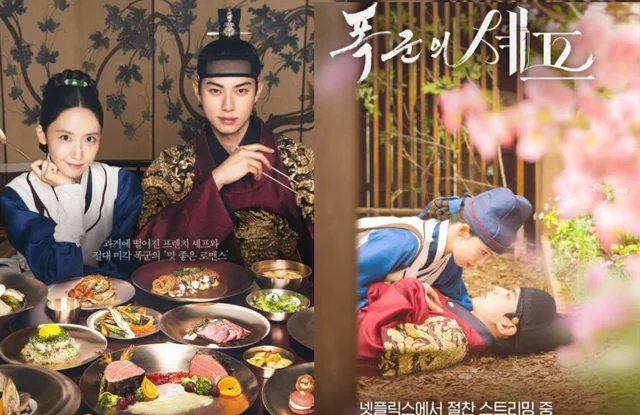
This summer’s television landscape has been undeniably captivated by the runaway success of the Korean drama Bon Appétit, Your Majesty. The series, a captivating blend of historical intrigue and compelling romance, has not only propelled its lead actors—Lee Chae Min, Im Yoon Ah, Kang Han Na, and Choi Gwi Hwa—into the upper echelons of stardom but has also thrust the original author, Park Guk Jae, into a well-deserved spotlight. While the drama’s critical and popular acclaim has been swift and undeniable, it has also dramatically reshaped the trajectory of its source material, the novel Surviving as Yeonsangun’s Chef. Initially a more historically focused narrative with subtle emotional undertones and a strong emphasis on culinary arts, the drama’s adaptation leaned heavily into the romantic entanglements and character dynamics, a strategic choice that resonated deeply with a broad audience.
The success of Bon Appétit, Your Majesty is a testament to the power of adaptation and the ability of skilled storytellers to reimagine existing narratives for new mediums. Park Guk Jae, the visionary behind the original novel, has openly expressed his profound gratitude for the cast’s exceptional performances, noting how each actor embodied their characters with remarkable fidelity and brought a unique vibrancy to the screen. He specifically lauded Im Yoon Ah’s portrayal of the female lead, highlighting her nuanced performance that infused the character with both a captivating warmth and an unyielding strength. Equally impressive, according to Park, was Lee Chae Min’s interpretation of the tyrannical Yeonsangun. Far from a one-dimensional villain, Lee’s performance imbued the monarch with an unexpected charm and complexity that transcended initial expectations, making him a compelling and multifaceted figure.
The overwhelming positive reception and the fervent desire for more from this beloved story have naturally led to widespread calls for a second season. In a recent exclusive interview, author Park Guk Jae directly addressed these burgeoning fan demands, confirming that the wheels are indeed turning behind the scenes for a potential Bon Appétit, Your Majesty Season 2. While official announcements remain on the horizon, Park revealed that the foundational structure and overarching narrative direction for the sequel have already been meticulously mapped out. This insider information has undoubtedly sent ripples of excitement through the drama’s devoted fanbase, who are eager to revisit the world and characters they have come to adore.
Beyond the promise of a continuation, Park Guk Jae offered tantalizing glimpses into what viewers can expect from a potential second season. He teased that the narrative will delve deeper into the intriguing premise of how Lee Chae Min’s character, a figure from a bygone era, managed to traverse the vast expanse of time to find himself in the modern world. This element of historical displacement, a cornerstone of the drama’s unique appeal, will likely be explored in greater detail, offering fans a more profound understanding of the temporal paradox that underpins the story. The exploration of these "side stories," as Park referred to them, suggests a commitment to enriching the established lore and providing satisfying explanations for the fantastical elements that have so enthralled audiences.
The journey of Surviving as Yeonsangun’s Chef from a niche novel to a mainstream sensation is a compelling case study in the symbiotic relationship between literature and visual media. When Park Guk Jae’s novel was first published, it garnered a respectable following, appreciated for its historical accuracy and its exploration of the culinary arts within the Joseon dynasty. However, it was the drama’s masterful reinterpretation that truly unlocked its widespread appeal. By amplifying the romantic threads and focusing on the character arcs of the central figures, the drama tapped into universal themes of love, destiny, and the clash of different eras. This strategic shift in emphasis, while potentially altering the original intent in some respects, proved to be a masterstroke, attracting a diverse viewership that might not have otherwise discovered the novel.
The success of Bon Appétit, Your Majesty is also a reflection of the growing global appetite for high-quality Korean content. The K-drama phenomenon, characterized by its sophisticated storytelling, stunning cinematography, and emotionally resonant narratives, has captivated audiences worldwide. Bon Appétit, Your Majesty stands as a prime example of this trend, showcasing the genre’s ability to blend historical settings with contemporary sensibilities, creating stories that feel both timeless and relevant. The drama’s ability to attract top talent, both in front of and behind the camera, further solidifies its position as a significant contribution to the K-drama canon.
The casting of Lee Chae Min as Yeonsangun was a particularly inspired choice. While the historical figure is often depicted as a stern and ruthless ruler, Lee’s performance introduced layers of vulnerability and a surprisingly disarming charisma. This nuanced portrayal allowed audiences to connect with the character on a deeper level, understanding the pressures and complexities that shaped his reign, even as they recoiled from his more tyrannical actions. His interactions with Im Yoon Ah’s character, whose strength and resilience provided a vital counterpoint to his often volatile nature, formed the emotional core of the series. The chemistry between the two leads was palpable, contributing significantly to the drama’s romantic appeal and driving much of the fan enthusiasm for a continuation.

Similarly, the supporting cast played a crucial role in the drama’s success. Kang Han Na, known for her versatile acting abilities, brought depth and gravitas to her role, adding further intrigue and emotional resonance to the narrative. Choi Gwi Hwa, a seasoned actor with a commanding presence, delivered a performance that was both powerful and memorable, anchoring the historical setting and contributing to the overall authenticity of the drama. The ensemble’s collective talent ensured that every character, regardless of their screen time, felt fully realized and integral to the unfolding story.
The decision to emphasize romance in the drama’s adaptation, while a departure from the novel’s primary focus, was a key factor in its broad appeal. In an era where audiences often seek escapism and emotional connection, the central love story provided a powerful anchor. The dramatic tension arising from the forbidden nature of the romance, coupled with the inherent dangers of the historical setting, created a compelling narrative that kept viewers invested. This focus on the emotional journey of the characters allowed for a more intimate viewing experience, fostering a sense of personal investment in their fates.
Park Guk Jae’s willingness to engage with fans and provide updates on the potential for Season 2 is a savvy move that demonstrates his understanding of the modern entertainment landscape. In an era of instant feedback and constant online discourse, directly addressing fan desires can significantly bolster anticipation and maintain engagement. His proactive approach suggests a genuine desire to nurture the burgeoning fanbase and to deliver a sequel that meets, and perhaps even exceeds, the high expectations set by the first season.
The concept of a historical figure being transplanted into a modern setting is a trope that has been explored in various forms of media, but Bon Appétit, Your Majesty has managed to imbue it with a unique charm and a compelling emotional core. The juxtaposition of ancient customs and modern sensibilities, the clash of past and present, provides a rich tapestry for storytelling. The prospect of exploring how Yeonsangun navigates the complexities of the 21st century, his reactions to technological advancements, social norms, and the very essence of modern life, offers a wealth of narrative possibilities. This exploration of temporal displacement can serve not only as a source of comedic relief and dramatic irony but also as a vehicle for examining societal progress and the enduring nature of human emotion.
The success of the drama has also had a tangible impact on the author’s career, opening new avenues for his creative endeavors. Park Guk Jae is now in a position to leverage this newfound visibility to further develop his literary work and potentially explore other creative projects. The experience of seeing his story brought to life on screen, and the subsequent surge in interest in his novel, is undoubtedly a rewarding validation of his talent and dedication. It highlights the powerful synergy that can exist between literature and visual media, where each can elevate and amplify the other.
The anticipation for Season 2 is further fueled by the inherent narrative potential of the original story. The historical context of Yeonsangun’s reign, a period marked by political turmoil and significant cultural shifts in Korea, offers a fertile ground for further dramatic exploration. While the drama may have focused on the romantic elements, the underlying historical backdrop provides a rich source of conflict, intrigue, and character development. Future seasons could delve deeper into the political machinations of the Joseon court, the societal impact of Yeonsangun’s rule, and the broader historical events that shaped the era.
Furthermore, the exploration of how Yeonsangun acclimated to the modern world in Season 2 could also serve as a platform for social commentary. His reactions to contemporary issues, his understanding of concepts like equality, democracy, and individual freedoms, could offer a unique perspective on our own society. This juxtaposition of historical and modern viewpoints can lead to insightful and thought-provoking narratives, adding an intellectual layer to the entertainment.
The success of Bon Appétit, Your Majesty is a powerful reminder of the enduring appeal of well-crafted stories that resonate with audiences on multiple levels. It demonstrates that by blending compelling characters, a captivating premise, and skillful execution, a drama can achieve not only critical acclaim but also a profound connection with its viewers. The author’s confirmation of Season 2’s development is a cause for celebration for fans worldwide, promising a return to a world that has captured their imaginations and a deeper exploration of a story that has, against all odds, become a television phenomenon. The journey from novel to hit drama, and now potentially to a beloved franchise, is a testament to the magic of storytelling in its myriad forms.